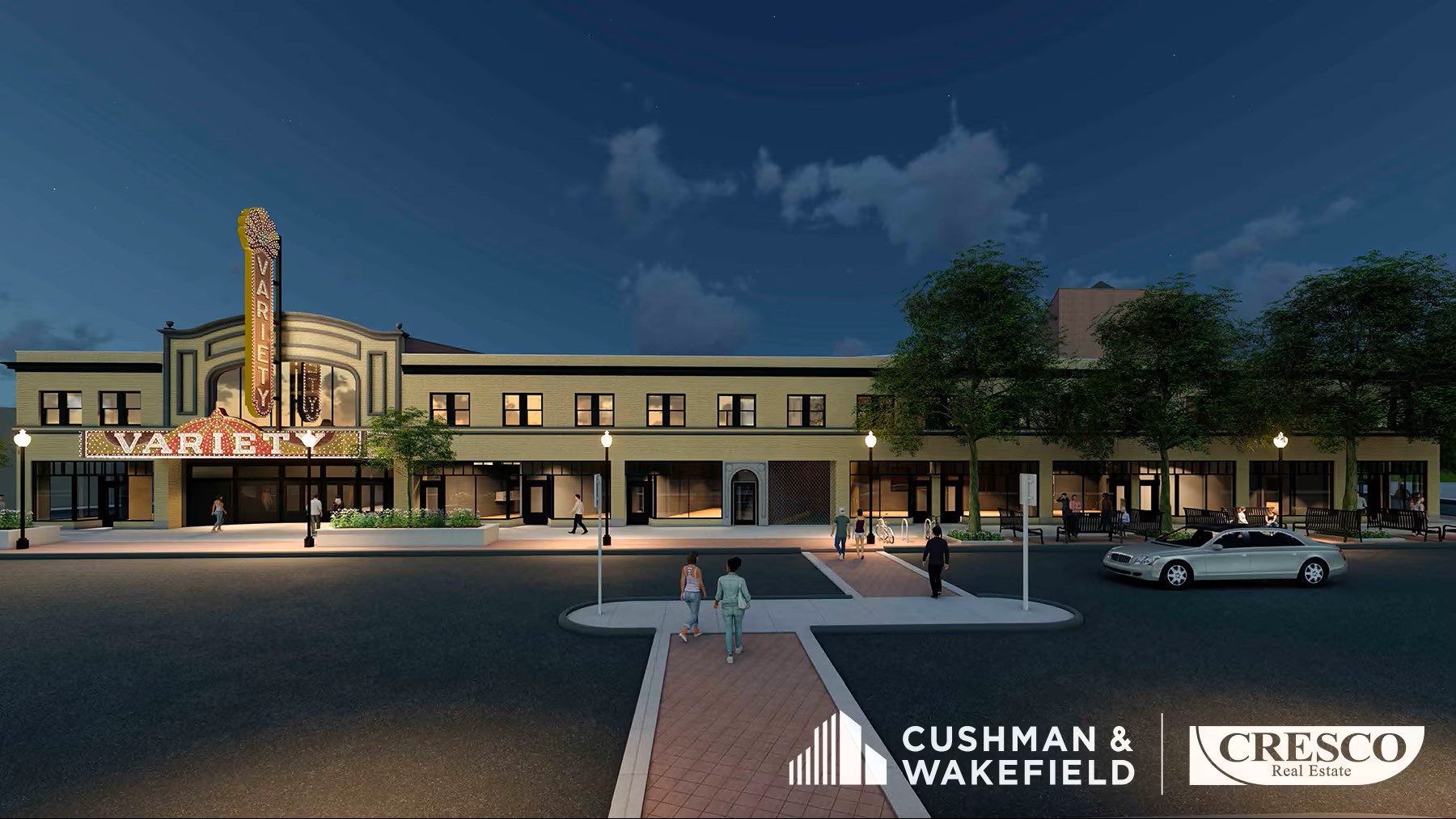
Following its pending sale, there is a new future for the Variety Theater, its ground-floor retail spaces and second-floor apartments. But what that future holds remains to be seen (LDA Architects). CLICK IMAGES TO ENLARGE THEM.
Historic rehab is in the playbill

In the 36 years following the Variety Theater’s closure, a parade of owners have sought things for the 99-year-old venue — new uses, money and luck. Sadly, each of those have been beyond the grasp of each proprietor. Now, another potential owner is bringing another opportunity to change the theater’s fortunes.
Stepping up on stage is Onro Property Solutions of Rancho Santa Fe, CA. Their partner in the deal is DCS Properties of Escondido, CA. David Rodriguez, an investor at DCS Properties, confirmed their intentions in an e-mail to NEOtrans.
“At this time, our plan is to restore everything the way it was,” Rodriguez said. “To restore the theater and the 12-unit apartments on top.”
The theater, located at 11815 Lorain Ave. in Cleveland’s Jefferson neighborhood, is actually part of a larger, 35,000-square-foot structure. The auditorium is the largest piece, measuring 20,675 square feet. But it also includes 6,000 square feet of ground-floor retail space topped by the 12 apartments. The building is vacant.
Terms of the deal were not revealed as the sale transfer has not yet closed. And a source who spoke on the condition of anonymity said the purchase agreement has not even been finalized yet.
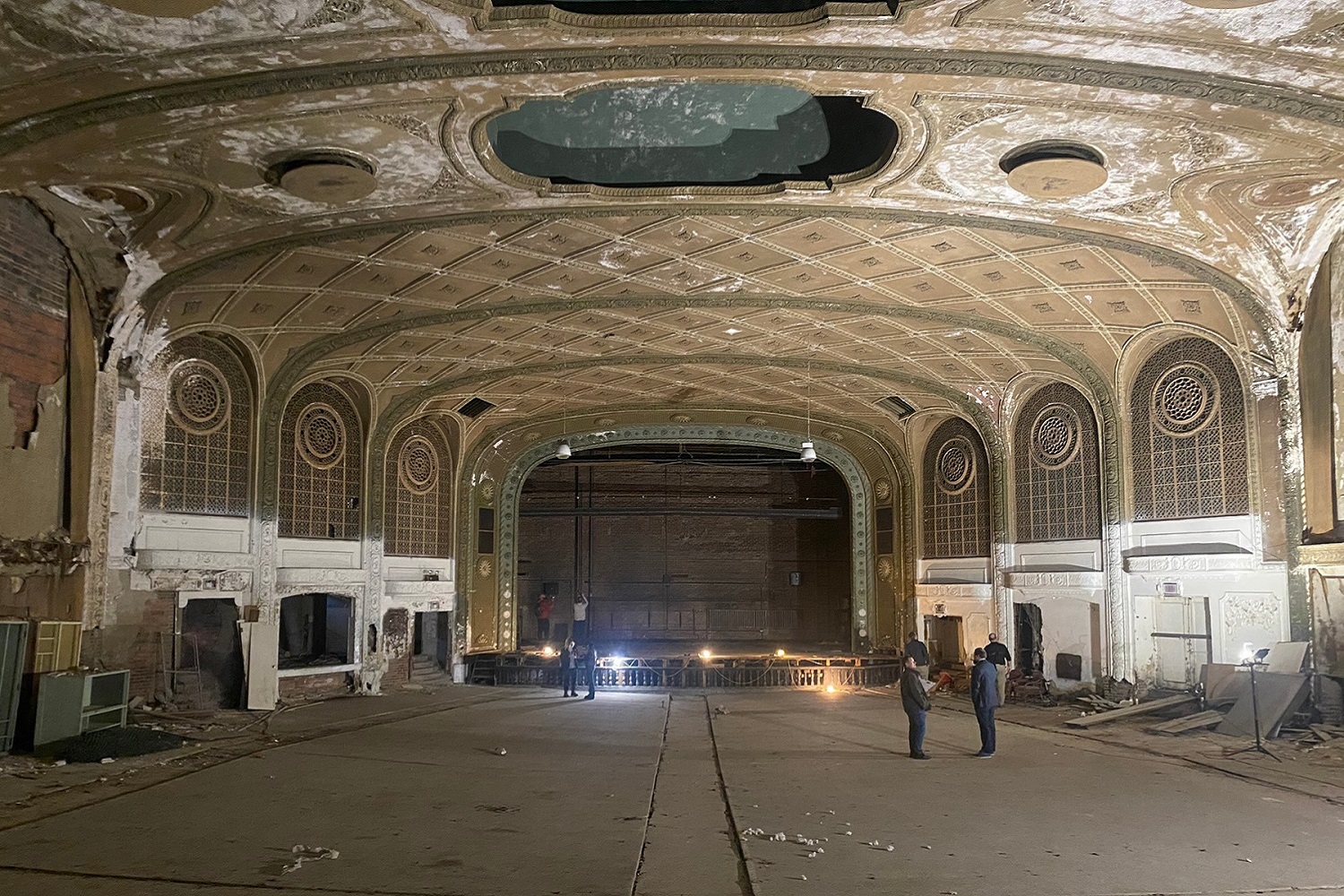
The Variety Theater’s auditorium once had 1,550 seats on the orchestra level and 350 in the balcony, plus three dressing rooms for vaudeville acts and, later, for rock concerts that shook loose plaster from the ceiling (CRESCO).
Who is Onro Property Solutions and DCS Properties? According to their Web sites and other online references, they buy distressed properties — usually homes. And they usually buy only California properties. So what drew a California home buyer almost all of the way across the country to acquire a cavernous theater in Cleveland?
“We have friends and family that live not far from there and we as investors are always looking for deals on Loopnet,” Rodriguez added. “I’m a great fan of historical projects and preservation.”
The 1927-built theater is listed on the National Register of Historic Places. And it has access to nearly $5 million in public-sector resources to aid in the restoration of the structure, a cost which was estimated by the prior owner, Variety Properties LLC, to be about $12 million.
Gathered resources include an Ohio historic tax credit award of $1.4 million and $1.6 million in federal historic tax credits including a part-two approval, according to Kelly Flamos, principal at Variety Properties. Those tax credits can be sold at 90 cents on the dollar.
Additionally, Variety Properties secured a $1.4 million Ohio Brownfield grant, an Ohio Capital Budget appropriations totaling $335,000, another $300,000 in predevelopment funding from the Cleveland Development Advisors, 75-percent-complete construction drawings, plus updated environmental testing and remediation plans.
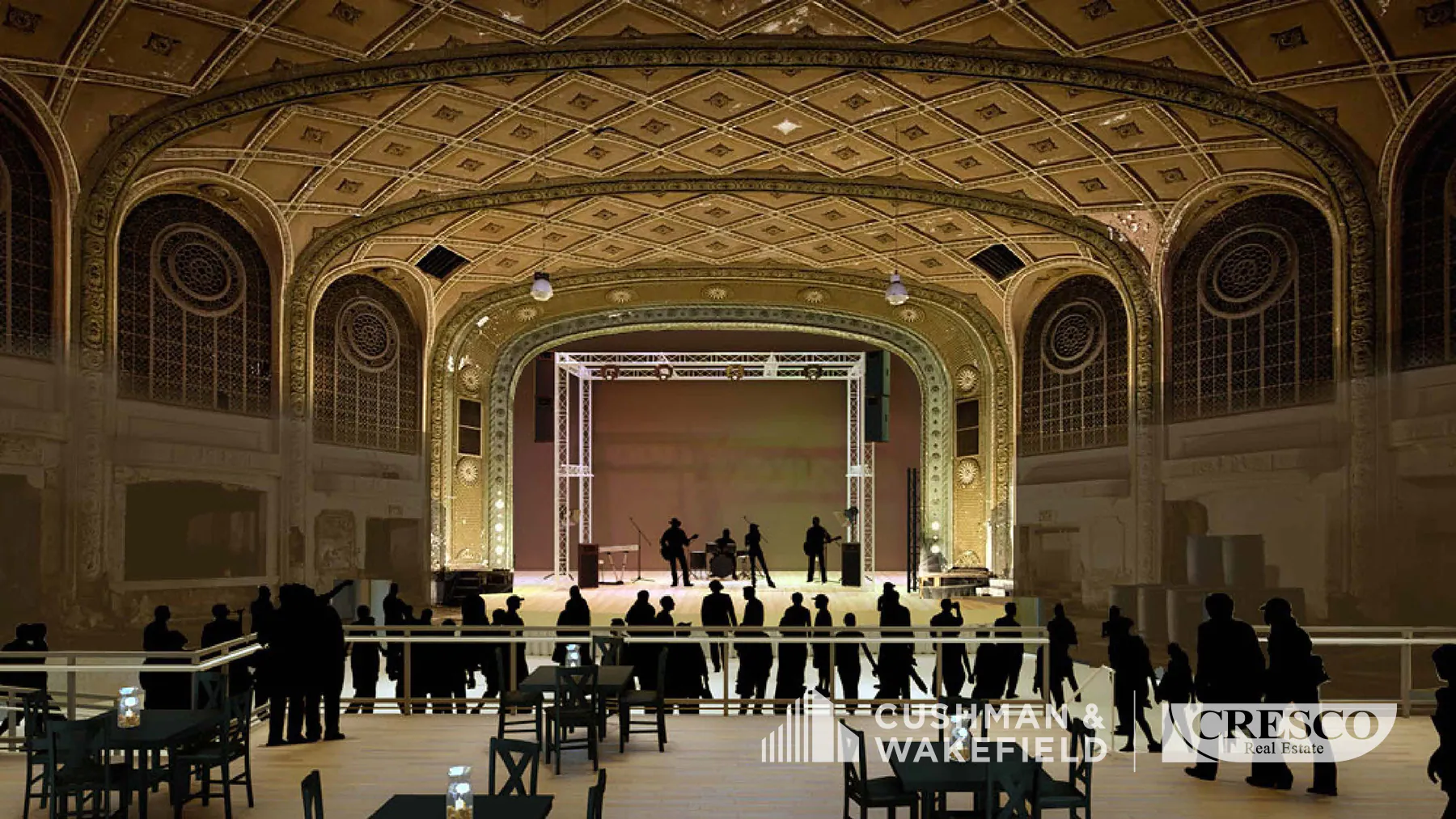
As an entertainment venue, the property’s real estate brokerage said the Variety Theater could fill a critical gap in the mid-market sector if the property can be renovated by a new owner (LDA Architects).
Flamos did not respond to an e-mail from NEOtrans seeking more information prior to publication of this article. When NEOtrans broke the story of the sale offering, Flamos said she was selling the theater because the restoration work was more complicated than she had anticipated.
“Three years ago, I took a huge leap and didn’t know what I didn’t know, namely the super complex world of commercial real estate development,” she said.
She relied on her prior experience in owning Mahall’s in Lakewood for 10 years. At the 1924-built venue, she booked live performances and ran the bowling, food and beverage business. Flamos wanted $1.2 million for the Variety Theater and its 0.72-acre property after buying it for $450,000 in 2022. She lowered the price to $850,000.
Rose Zitello, executive director at Westown Community Development Corp., said she and her staff have been in contact with Rodriguez and his partners to aid them in their purchase and restoration efforts.
The CDC has more than just a passing interest in the property. From 2009-17, Westown owned the theater property via an affiliate called Friends Of The Historic Variety Theatre Inc. Westown bought the theater to save it from being demolished.
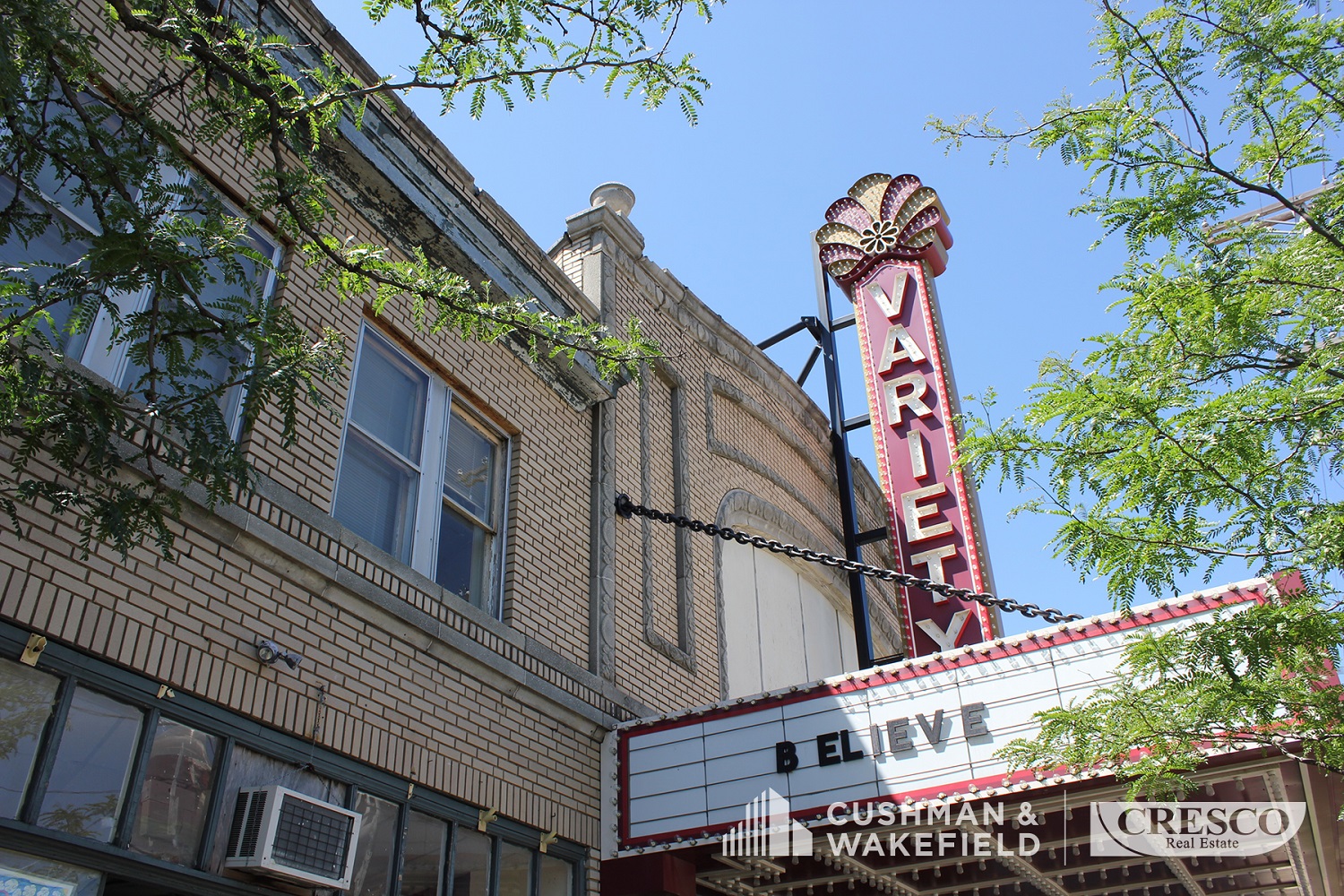
One of the most visible improvements made to the Variety Theater by the Westown Community Development Corp. was the restoration of its marquee which damaged by a 1953 tornado and had to be removed. But in reality, the fact that the theater is still standing is due to Westown’s ownership (CRESCO).
The nonprofit organization fixed the theater’s roof and electrical systems and restored a marquee sign that was damaged by a tornado in 1953. But the theater needed deeper pockets for restoration so ownership was transferred in 2017 to another CDC, the Detroit Shoreway Community Development Organization.
The CDCs invested in the surrounding area, a neighborhood with a growing Arabic and Latino population. Underutilized buildings across the street were razed to open up parking for the theater and its retail spaces.
Westown also instigated a $3.6 million streetscape along Lorain Avenue, including public art and an enhanced crosswalk with a pedestrian island on Lorain, linking the theater complex to the new parking lot. The Variety Theatre is also the centerpiece of the Lorain Avenue Master Plan.
Although the Variety was closed as a 1,900-seat rock music theater in 1986, it stayed open until 1990 as a performing arts school called Freedom Academy and as a boxing and wrestling gym called the Cleveland Wrestleplex.
As a music theater, owned by Russel Koz, it hosted up-and-coming bands like Metallica, Red Hot Chili Peppers, Ramones, Slayer and others. But it gained infamy in 1984 when Motorhead performed there. Its music was so loud it shook loose large chunks of plaster from the ceiling and generated noise complaints from neighbors.
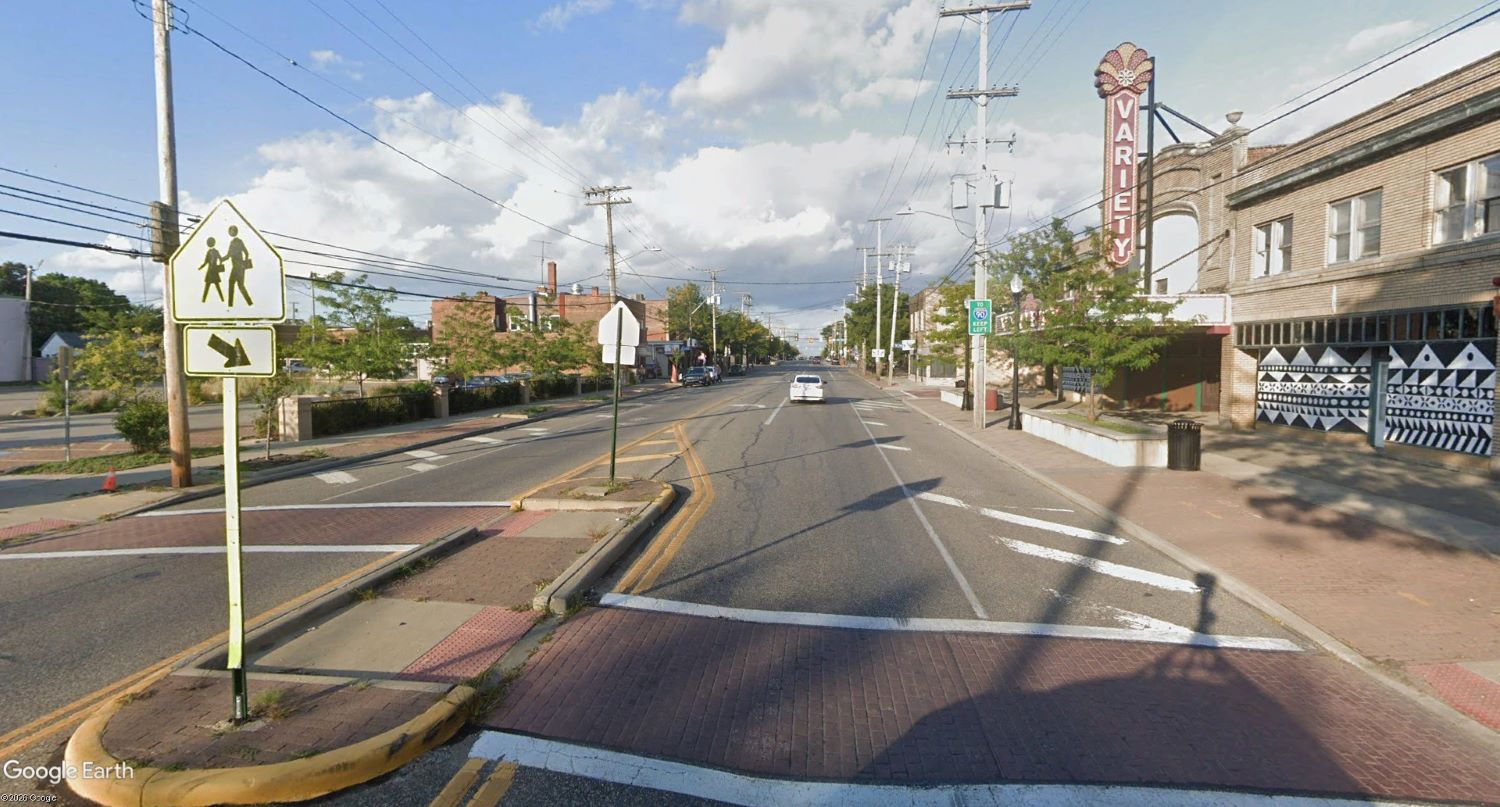
Several improvements were made not only to the Variety Theater but to the area surrounding it. That included the demolition of underutilized buildings across Lorain Avenue from the theater and a pedestrian crossing of Lorain with a safety island (Google).
Koz acquired the theater in 1976 from Uptown Variety Inc. which hosted second-run movies. Uptown Variety had that name because in 1954 it simultaneously bought the Variety and 3,580-seat Uptown Theater, 10545 St. Clair Ave. in Cleveland’s Glenville neighborhood. Both theaters were acquired from Warner Theatres of Ohio Inc.
The Variety Amusement Co. built and owned the theater until selling it to Warner in 1929, the same year its architect Nichola Petti died from illness. In addition to the Variety, Petti designed the Uptown, Kinsman, Cedar-Lee and Imperial theaters.
Opening night for the Variety was Nov. 24, 1927, featuring vaudeville acts and the silent movie “Hula” starring Clara Bow, accompanied by music from its Kimball organ played by a guest, Chicago’s famous organist Edward Benedict.
News of the theater’s sale became public on Tuesday when a certificate of disclosure was requested and appeared on the Cleveland Building & Housing Department’s Web portal. The certificate, issued today, was requested by Guardian Title & Guaranty Agency Inc. of Middleburg Hts.
A certificate of disclosure reveals whether there are any unresolved building code violations pending against a property that’s about to be sold or otherwise transferred. No violations were reported.
END