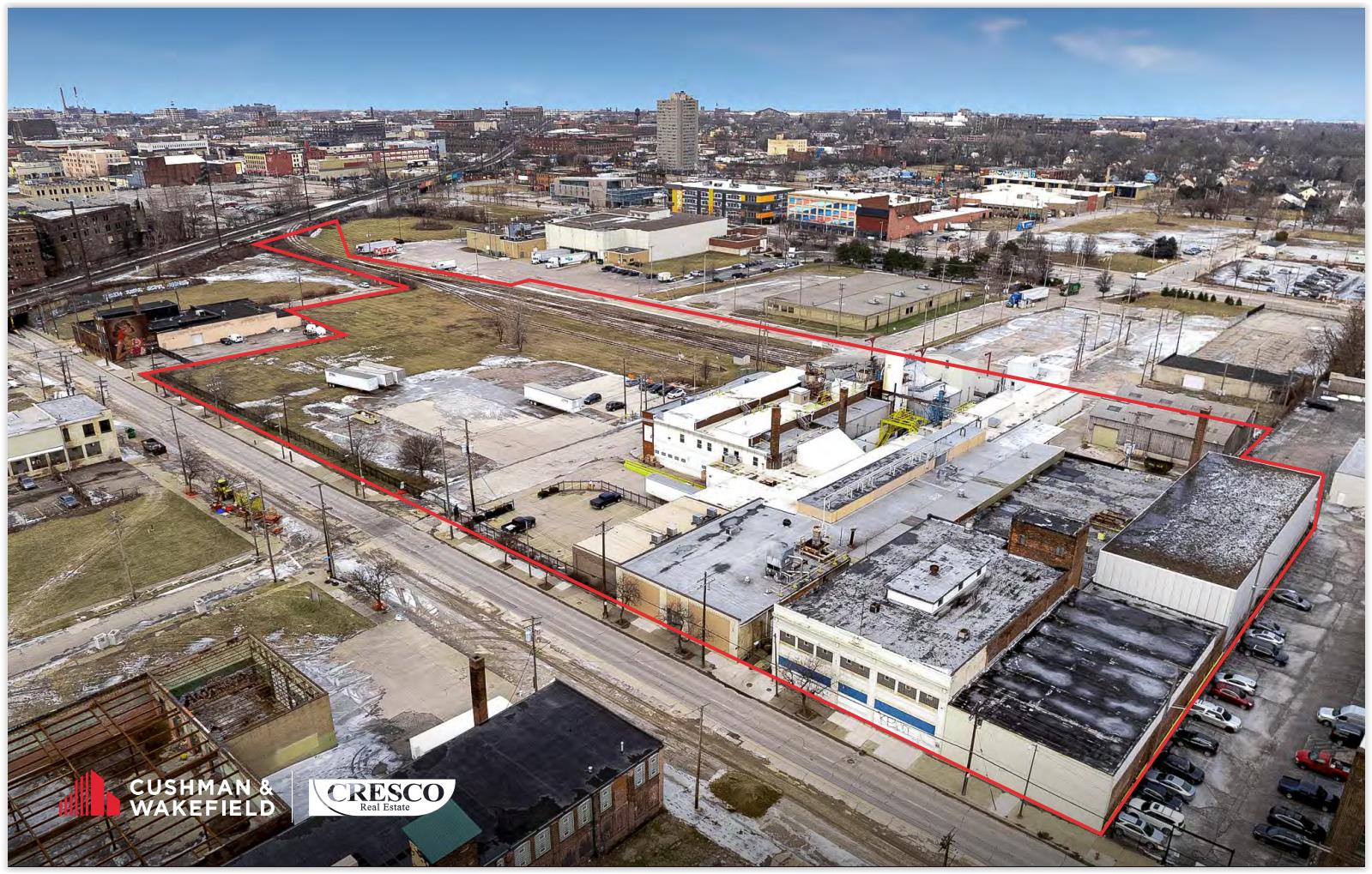
The former American Sugar Refining Co. plant on Carnegie Avenue in Midtown closed early last year, was sold last month and in the coming weeks will be demolished for an as-yet unidentified end user. The 10.3-acre property has joined many others in the Midline redevelopment district to be reactivated once again (CRESCO). CLICK IMAGES TO ENLARGE THEM.
American Sugar plant to be razed, redeveloped

Another big piece of land has been added to the Midline redevelopment district on the city’s near-East Side. And officials are wasting no time in clearing the site for future development.
Last month, the Site Readiness For Good Jobs Fund took title to the former American Sugar Refining Company plant, 6515 Carnegie Ave., in the Midtown portion of Cleveland’s Central neighborhood. Terms of the deal were not disclosed.
The site measures 10.3 acres and includes nine structures totaling 112,000 square feet, according to public records. Some of the structures date to the late 1800s with the newest built in 1994. One has a two-story terracotta façade with ornamental features on Carnegie.
Brad Whitehead, managing director of the Site Readiness Fund, acknowledged the property transaction and said he would have more to say about it soon, including potential end users.
On Tuesday, the Site Readiness Fund’s demolition contractor for this project, the Geis Companies of Streetsboro, submitted an application to the city to demolish the plant in its entirety — a job costing $1.49 million, city records show.
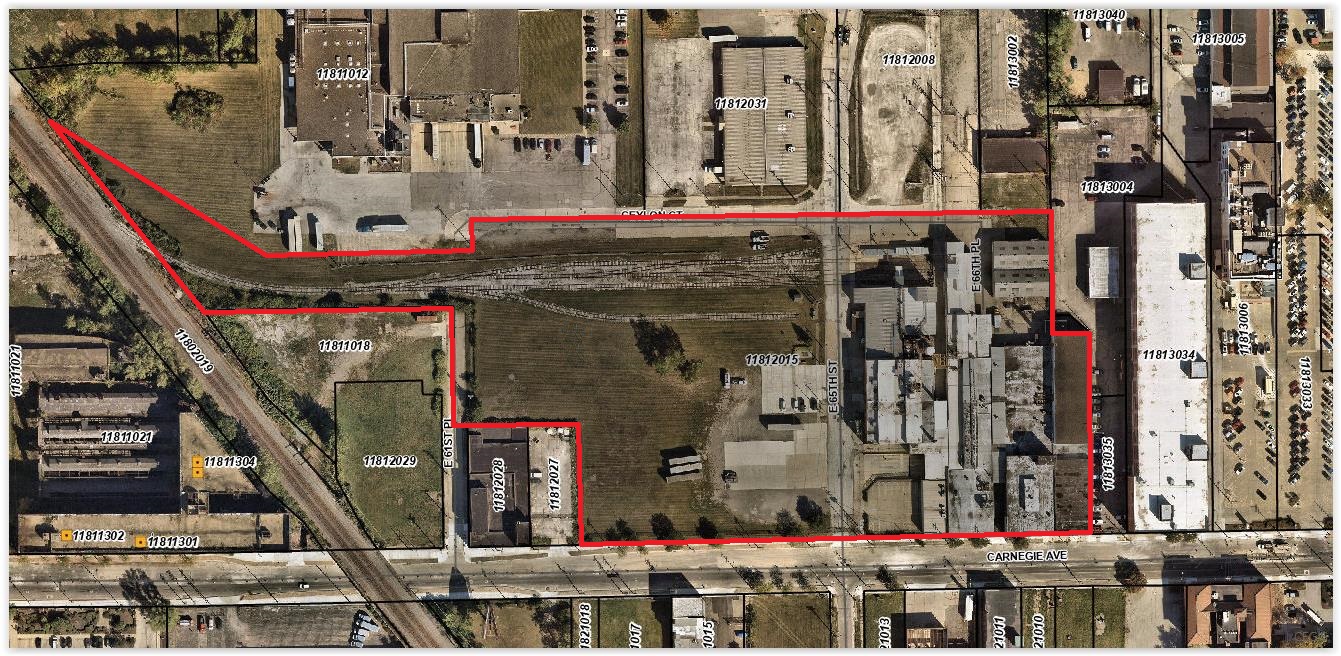
The 10.3-acre site on Carnegie Avenue that’s now in the hands of the Site Readiness Fund includes rail access to the Norfolk Southern mainline at left (MyPlace.CuyahogaCounty.gov).
“We’re sorting out the demolition game plan now,” Whitehead said.
“The proposed demolition includes former obsolete buildings, existing pavement, and a portion of the existing rail spur,” wrote Geis Companies Architect Mitchell Blakkolb.
“The purpose of the proposed demolition is to rework utilities and prepare the site with rough grading and seed with positive drainage,” he added. “The intent is to market the site as ‘pad ready’ and be able to move a project forward once a new industrial user comes along.”
The sugar factory closed early last year, laying off 90 workers, and almost immediately went on the market. The site is zoned as Midtown Mixed-Use District, allowing a variety of uses such as light industrial, office, retail or multi-family residential.
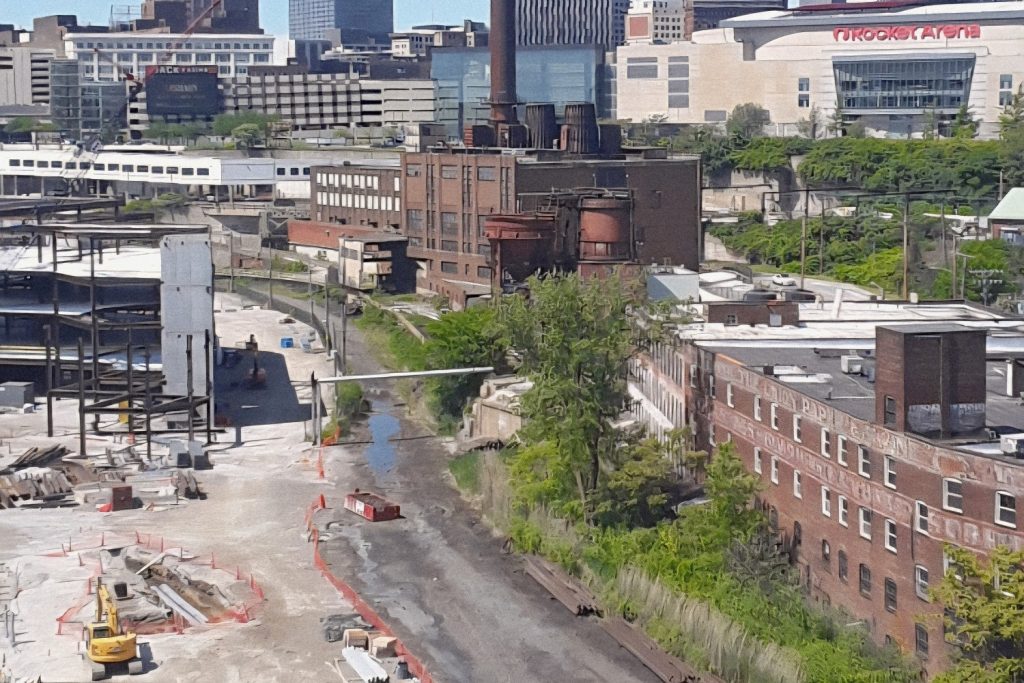
The site is just south of the Pierre’s Ice Cream Co. plant, 6200 Euclid Ave., and just east of the now-underway redevelopment of the Warner & Swasey machine-tool factory, 5701 Carnegie Ave., into apartments.
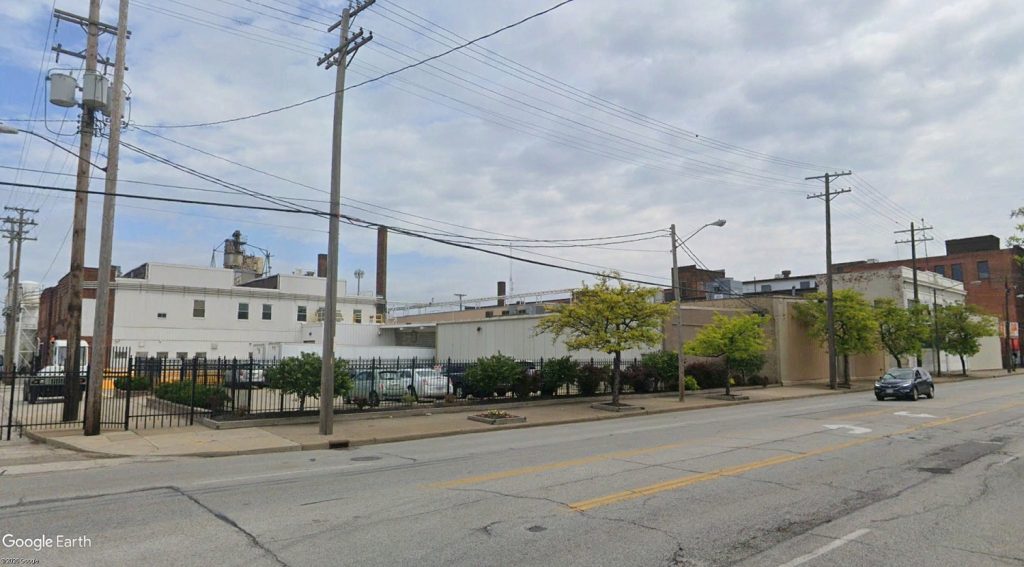
The former American Sugar Company on Carnegie Avenue in Cleveland’s Central neighborhood is now owned by the Site Readiness For Good Jobs Fund. It intends to raze the plant and clean the site, making it ready for redevelopment (Google).
George Pofok, a principal at Cushman & Wakefield | CRESCO Real Estate, oversaw the sale of the sugar plant to the Site Readiness Fund. He was excited to share the deal on social media.
“This was a 10.31-acre redevelopment opportunity and the former home of American Sugar, which processed bulk sugar and repackaged it into the small packets you would see on the table at a local restaurant,” Pofok said on LinkedIn.
He noted that the large scale of the site, its redevelopment potential, access to a very active Norfolk Southern rail line, and great visibility along Carnegie Avenue.
“Like many older industrial sites in the City of Cleveland, this property came with just about everything you would expect to work through from a due diligence and redevelopment standpoint,” Pofok added.
“The Site Readiness Fund was the right buyer for the assignment and is positioned to help move this site toward its next chapter,” he said.
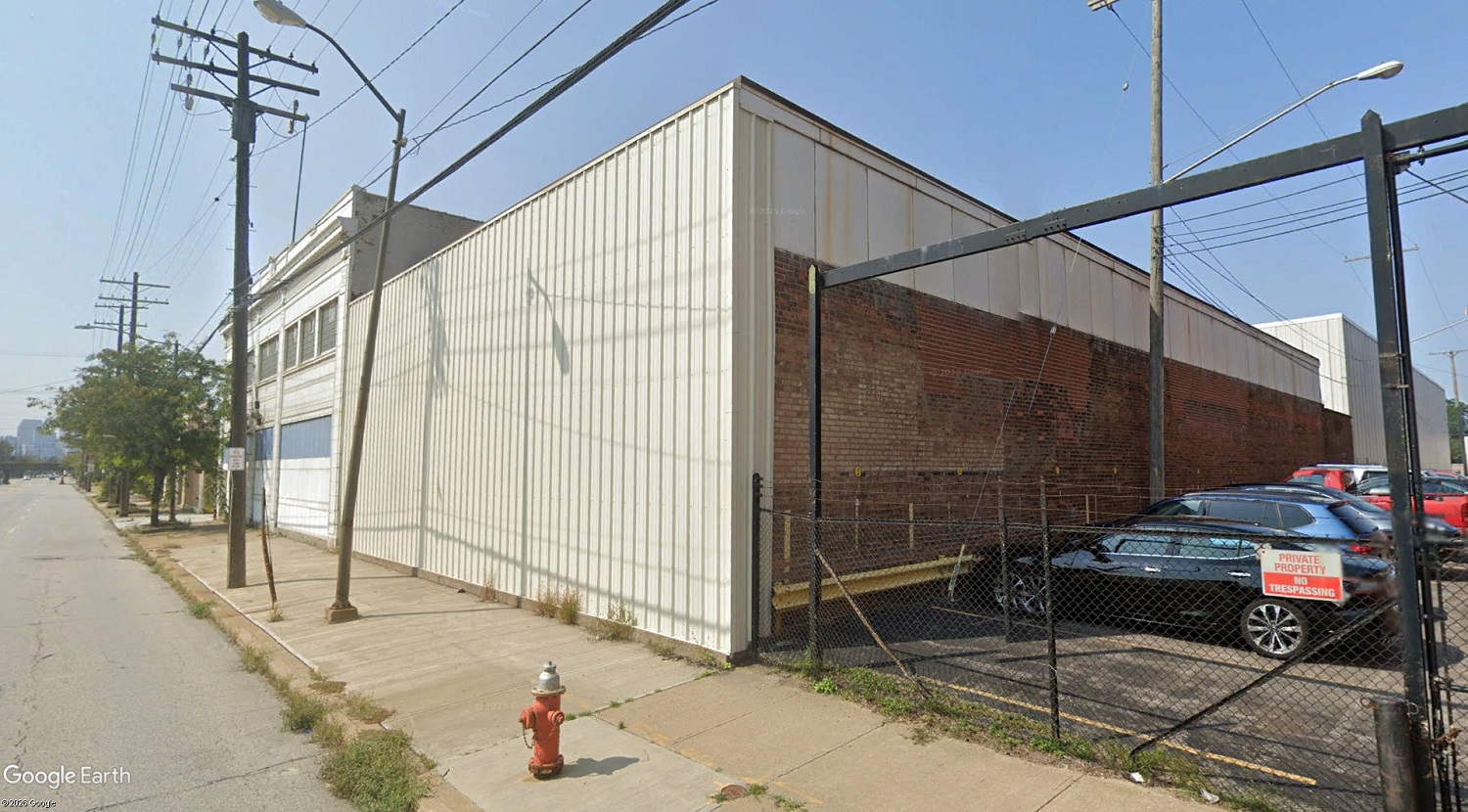
Looking west on Carnegie Avenue, the former American Sugar plant includes multiple structures ranging from this metal-cladded brick building to the terra-cotta-cladded building beyond (Google).
Pofok, CRESCO’s industrial real estate expert, also expressed thanks to CRESCO Senior Vice President Eliot Kijewski for helping him bring this property transaction across the finish line.
The Midline redevelopment district is a 350-acre area on the city’s near-East Side, along the Norfolk Southern tracks and the Opportunity Corridor Boulevard, where the city is focusing resources on reactivating long-fallow industrial sites.
Many of the sites were polluted and sitting empty, too expensive for new users to reactivate — especially when large swaths of clean-and-green land exist ready for development at the urban fringe.
But those sites are often far from supportive road, rail, water, sewer and utility infrastructure and, most importantly, labor resources. So the city of Cleveland and other partnering agencies are working to assemble properties, clear and clean them, then make them development-ready.
END