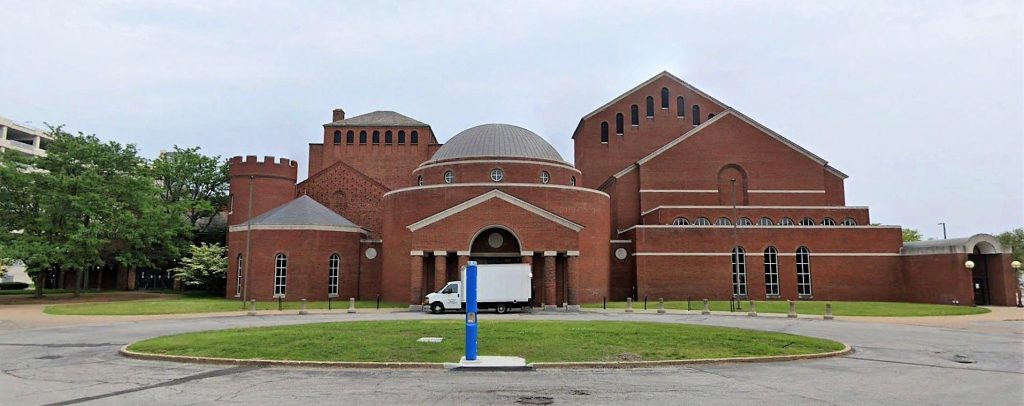

Things are looking up for Greater Cleveland’s economy as multiple indicators are showing growth for the region. Employment data is the latest to indicate good news (NEOtrans). CLICK IMAGES TO ENLARGE THEM.
Region’s employment data best since 2009

Greater Cleveland’s workforce and number of employed people have grown to the highest levels since the start of the Great Recession (2009-11), according to preliminary employment data for the region that was released this week.
The data adds to others recently released that show improving economic indicators for the Cleveland metropolitan area that includes Cuyahoga, Geauga, Lake, Lorain and Medina counties. They include growing population estimates, top 100 employers’ employment, and homebuying popularity among young adults.
The employment numbers are for July 2025 and come from the federal Bureau of Labor Statistics (BLS). And since they are preliminary they could be revised slightly next month either up or down.
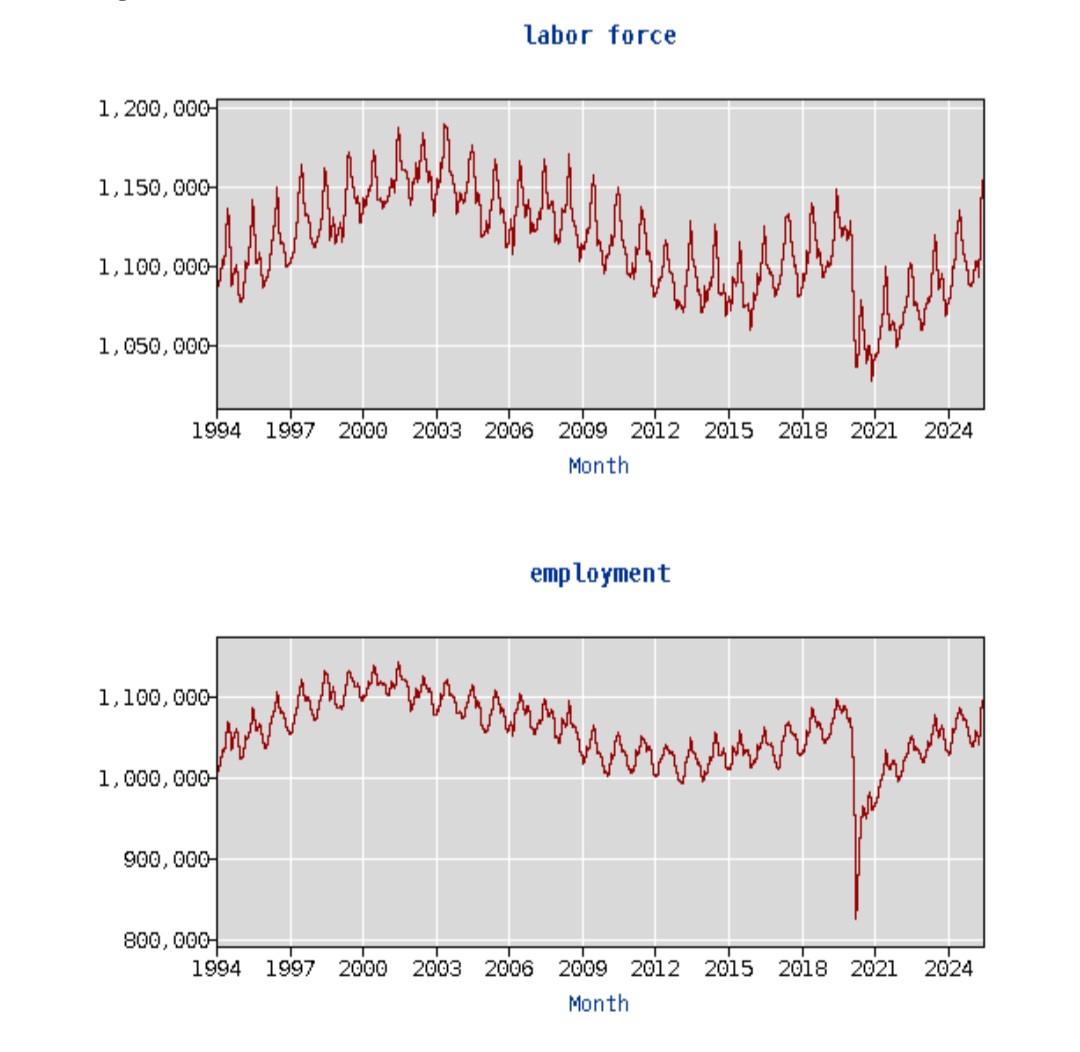
In these two 30-year charts, Greater Cleveland’s labor force and employment numbers are reaching highs, not seen in nearly 20 years (BLS).
But in July 2025, Greater Cleveland’s labor force was pegged 1,154,372 — the highest since July 2009. And the the region’s employed population reached 1,094,638 — the highest since July 2006, BLS data shows.
Unemployment was estimated at 5.2 percent which is the highest it has been since June 2022. Since other employment data compares favorably with that of the pre-Great Recession era, the unemployment rate is comparable with that seen in 2007 and before.
Data-based charts and their trendlines show that Greater Cleveland’s economy in the post-industrial era started turning upward in the mid-2010s. The pandemic reset that with the growth line continuing upward at least as steeply as it did before the pandemic.
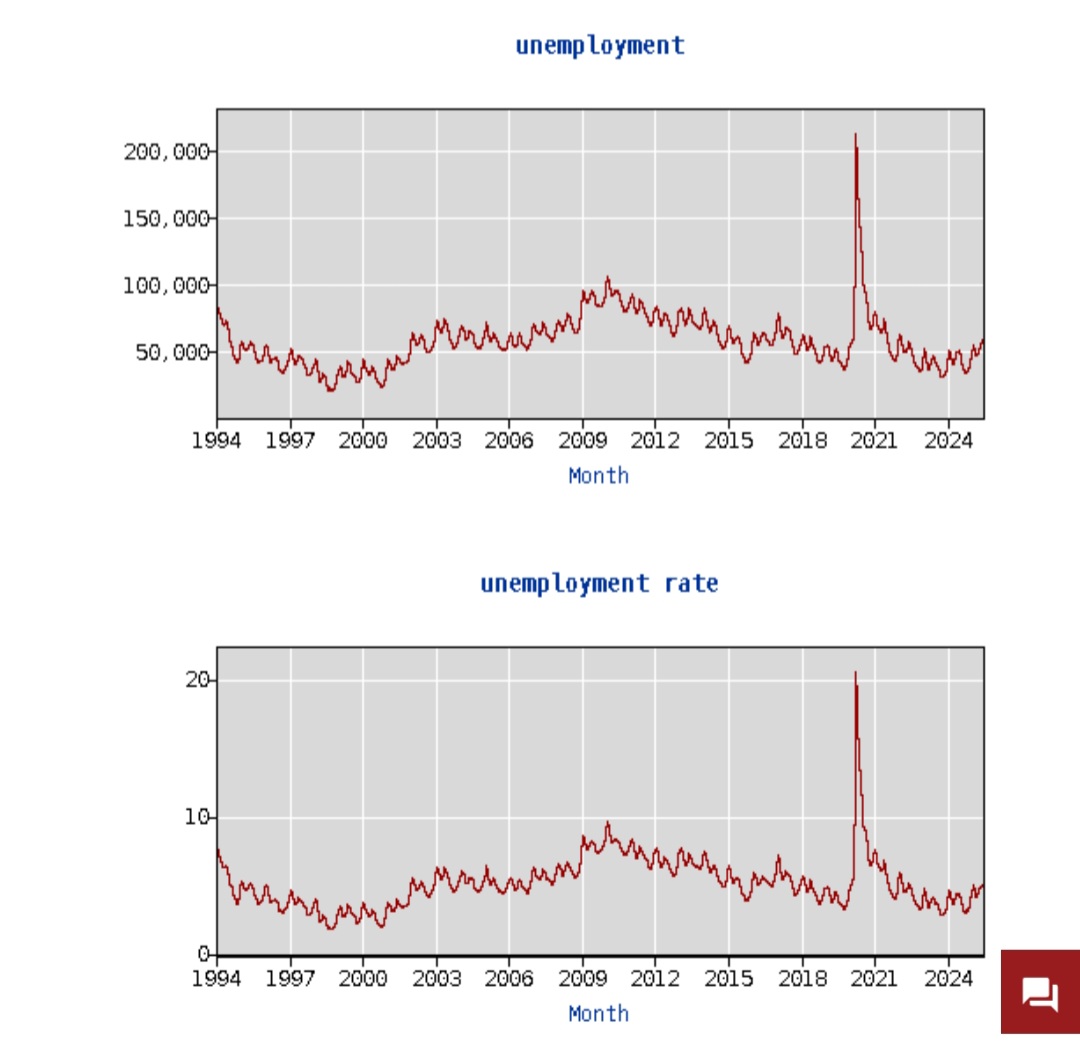
Having a larger labor force is welcome, but not if it comes with higher unemployment. Fortunately that doesn’t appear to be the case for Greater Cleveland (BLS).
This report follows another from May in which the U.S. Census Bureau estimated that population in Greater Cleveland edged up a bit for the second straight year. But the Census also said the metro area’s population is still down overall for the decade so far.
Crains Cleveland Business reported last week that the 100 largest employers in its index saw a 3.6 percent increase in employment from 2024 to 2025. The increase from 2023 to 2024 was just under 2 percent, meaning the job growth is increasing at an increasing rate over the past two years.
Greater Cleveland was also named as one of the most popular cities in the USA for homebuying by Generation Z (born 1997-2012). MSN reported that Greater Cleveland’s affordable homes, tech jobs, and a growing remote work scene put it at the top of their list.
END