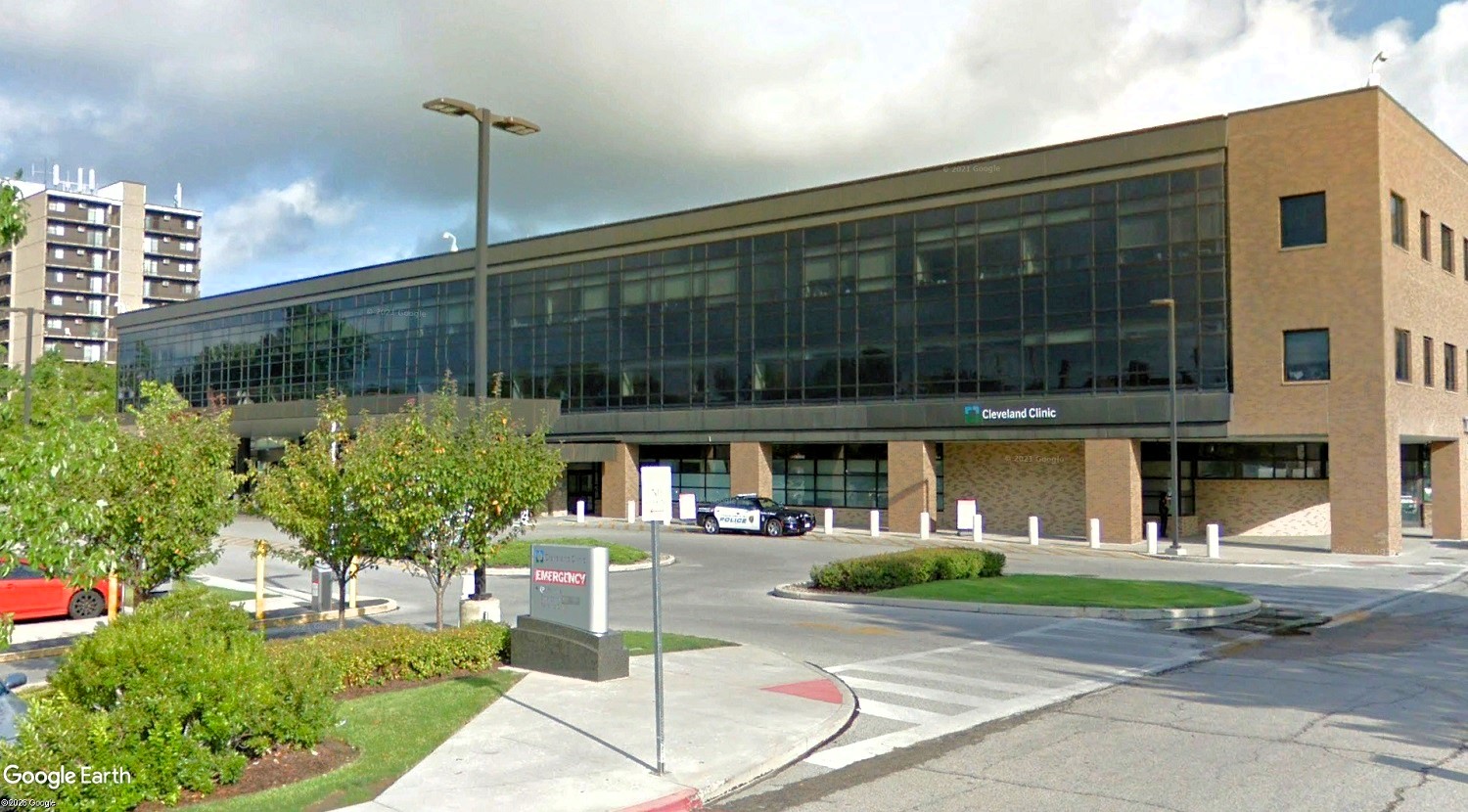
The Cleveland Clinic Main Campus’ existing Emergency Department on Cedar Avenue does not have trauma rating. The Clinic and the Mandel Foundation would like to change that (Google). CLICK IMAGES TO ENLARGE THEM.
Mandel gift a big boost to Clinic’s care
Cleveland Clinic’s Community Bridge to Care Initiative announced receiving a $50 million grant today from the Jack, Joseph and Morton Mandel Supporting Foundation. That grant will, among other things, help the health care system expand its Emergency Department and possibly gain a Level I trauma rating at its Main Campus.
The Clinic said the grant will advance what it called “a comprehensive, community-focused effort” that is intended to address and integrate three new ways of improving urgent health care.
They said the effort is intended especially for people living near the Clinic’s huge and growing Main Campus, which is spread across many blocks in the Fairfax and University Circle neighborhoods of Cleveland.
“We are deeply grateful to the Mandel Foundation for their partnership and support,” said Cleveland Clinic CEO and President Tom Mihaljevic in a written statement. “Their generosity allows us to expand the care we provide to our patients and the communities we serve.”
Plans and details about the proposed expansion of the Clinic’s 1994-built, 228,000-square-foot Maria & Sam Miller Emergency Services Building, 9105 Cedar Ave., are not yet publicly available.
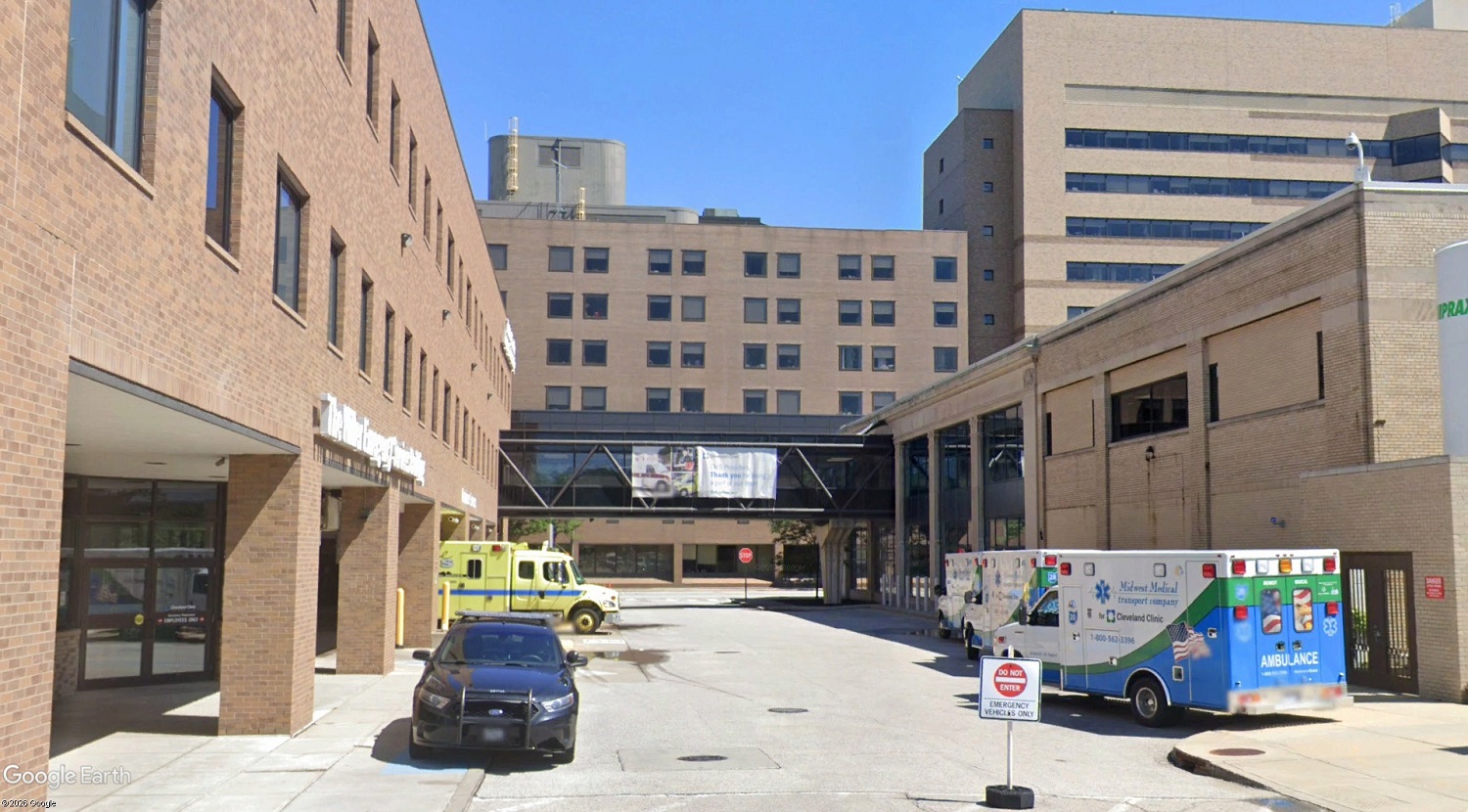
East 93rd Street between Cedar and Carnegie avenues is no longer a public right of way and belongs to the Cleveland Clinic. It offers an area of potential expansion for the Emergency Department, at left (Google).
However, the Clinic says its current facilities will be upgraded and expanded to include more treatment spaces, trauma resuscitation rooms, specialized equipment and clinical support areas.
The expanded Emergency Department will be able to provide trauma surgery 24 hours a day, seven days a week. And it will offer advanced imaging, critical care and specialized teams for adults and children.
“The expansion of our emergency services will help us better care for patients with the most serious injuries, ensuring they receive the specialized treatment they need, when it matters most,” Mihaljevic added.
The Clinic also is redesigning its entire immediate-care offerings, from first contact to final follow-up. That includes clearer signage, improved facility flow, better care team coordination, and upgraded IT systems to ensure smoother, more compassionate transitions between providers.
And it will offer an AI-powered “Digital Front Door” to help patients reach the right site of care – whether express care, online visit, urgent care, emergency care or trauma – before they arrive.
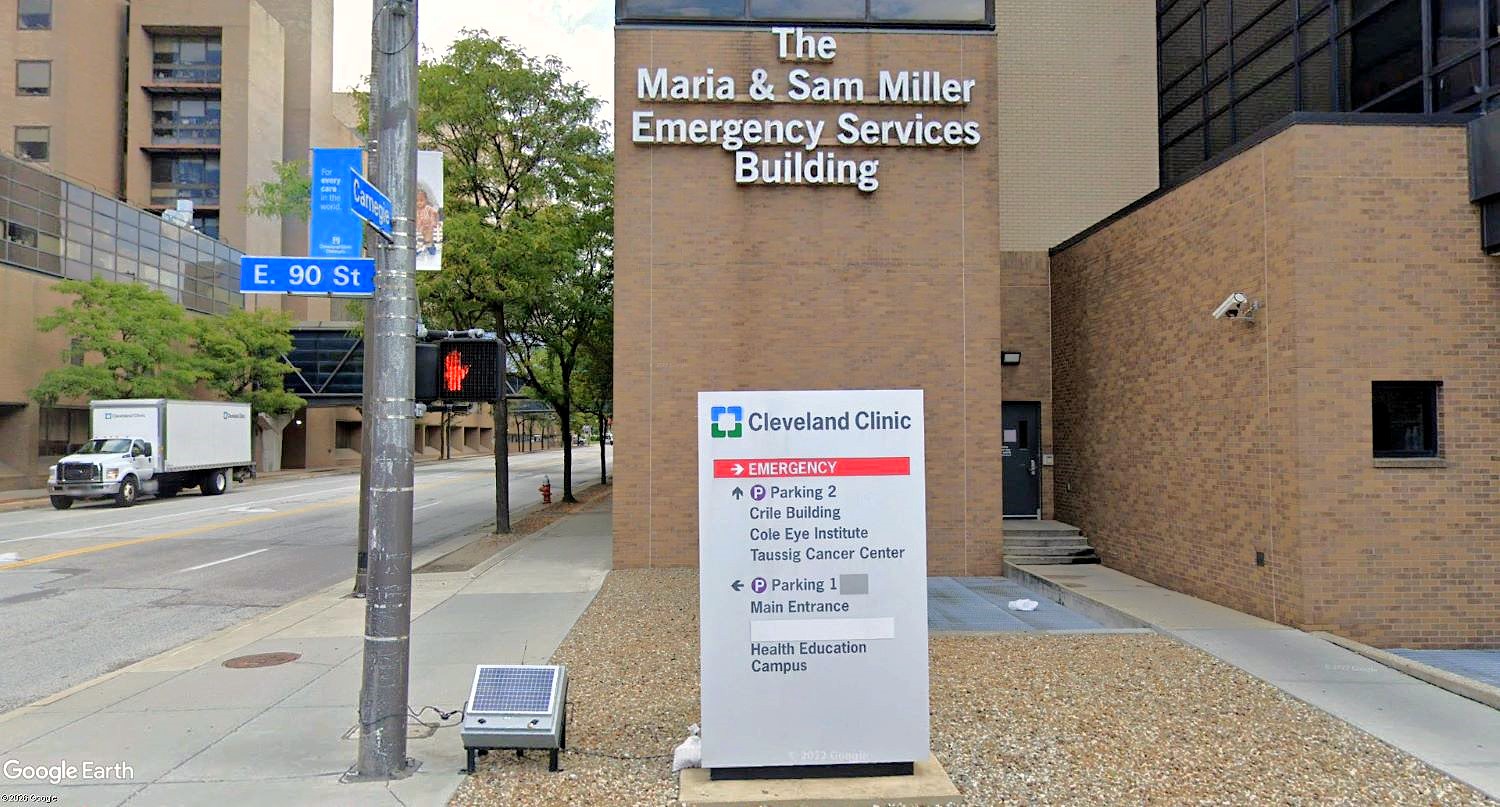
Plans for the expansion of the Maria & Sam Miller Emergency Services Building, constructed in 1994, are not yet available. But a significant part of the funding now is, thanks to the Mandel Foundation (Google).
But the Clinic has come under fire from MetroHealth Medical Center. Along with University Hospitals Cleveland Medical Center/Rainbow, they are the only two health care systems in Greater Cleveland that have trauma centers rated by the American College of Surgeons as offering Level I care.
“MetroHealth is alarmed for our community and calls on the Cleveland Clinic to reevaluate its plans,” the county-owned health system said in a statement. “Like similarly sized metropolitan areas, Greater Cleveland cannot sustain three Level 1 Trauma Centers. It will harm patient outcomes and increase costs for the entire community.”
MetroHealth staff told NEOtrans that a third Level I trauma center in Greater Cleveland would divert most of the remaining patients covered by Medicare and private insurance, leaving mostly people on Medicaid for MetroHealth.
They said it could result in a significant financial hit for MetroHealth which lost money in 2023 and 2024. And it would have lost $100 million in 2025 if it hadn’t been for reductions in charity care and staff layoffs, plus $80.4 million in state Medicaid payments.
But officials at UH’s Cleveland Medical Center/Rainbow, which has a Level I trauma care rating for its emergency department, did not express concern. It gained its Level I rating in 2015 after investing $40 million to upgrade trauma care facilities.
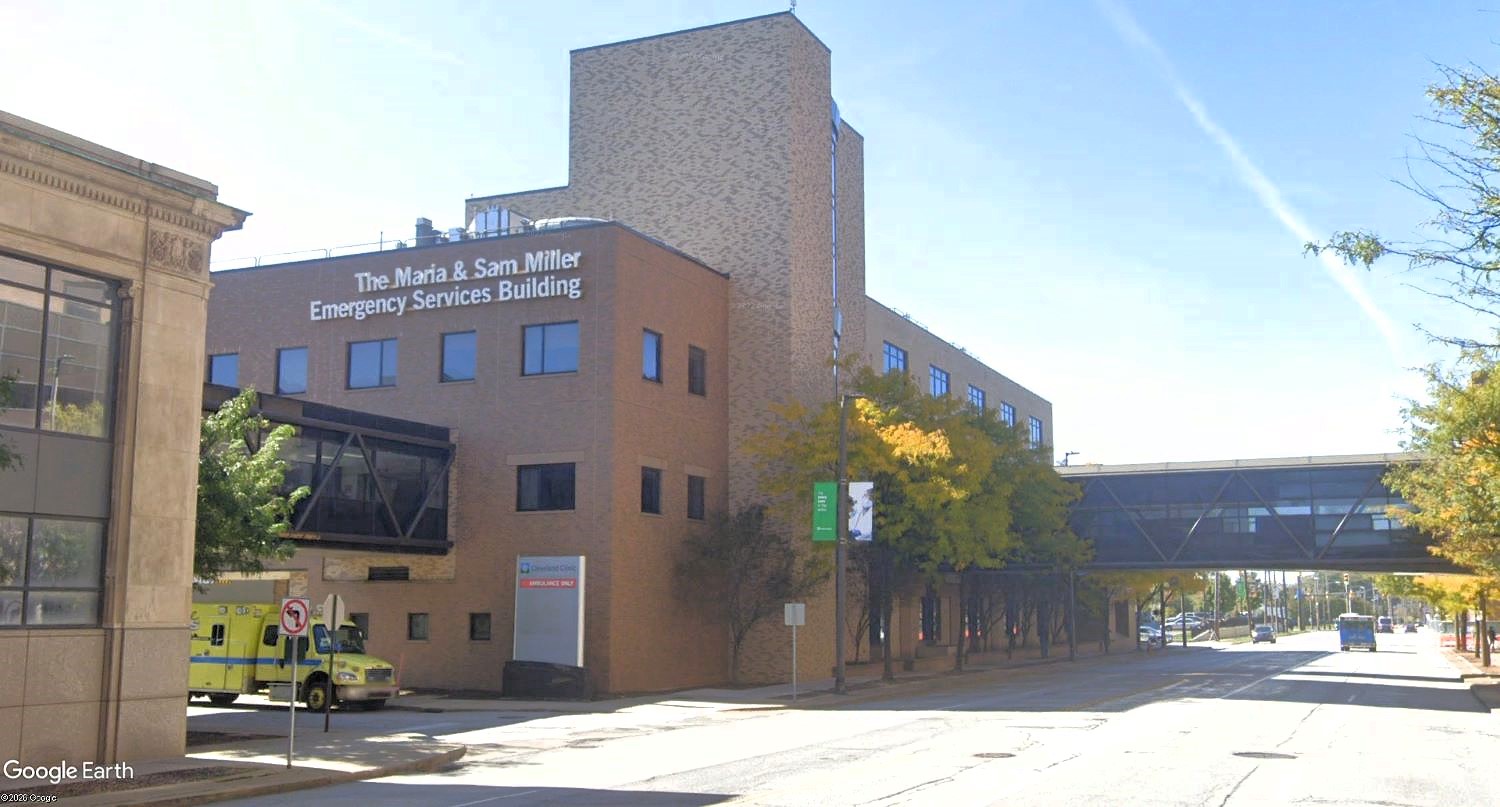
An expanded Emergency Department with enhanced trauma care is intended to benefit from its proximity to new facilities with expanded care options, such as that of the new Neurological Building just across Carnegie Avenue and to the right (Google).
Back then, MetroHealth and the Cleveland Clinic, which jointly ran the Northern Ohio Trauma System (NOTS), said one high-level trauma care center is sufficient to serve Greater Cleveland. UH’s Cleveland Medical Center/Rainbow and Southwest General Hospital later joined NOTS.
“Every resident of our city deserves access to the best care in the world and Cleveland is fortunate to be the home of one of the world’s great healthcare systems,” said Jehuda Reinharz, president and CEO of the Jack, Joseph and Morton Mandel Foundation.
“We are proud to help Cleveland Clinic fulfill that promise,” Reinharz continued. “This work will strengthen the future health of our entire community.”
Mandel Foundation Board Chair Steve Hoffman added, “With this grant, we are proud to support the efforts of the Cleveland Clinic to deepen their engagement with the surrounding neighborhoods.”
END