
As more companies embrace artificial intelligence to automate more jobs, more data centers will appear around the world. The question Cleveland is grappling with as more data center development plans arrive here is to how to effectively regulate them (NEOtrans). CLICK IMAGES TO ENLARGE THEM.
Moratorium faces speed bumps despite urgency
It’s a race against time between the City of Cleveland and developers seeking to construct new data centers. On one side is the city which has an outdated zoning code it has been wanting to update for years, with data centers being the latest new land use to add to the mix.
On the other side are developers seeking to add more data storage and computing capacity. Their goal is to accommodate data servers for everything from video gaming, to small businesses hosting Web sites and e-commerce to Fortune 500 companies trying to replace thousands of workers by automating entire departments.
Cleveland officials are working to buy themselves some time in reviewing and updating its zoning code by enacting into law a moratorium on permitting the establishment of new data centers. But it remains to seen whether the moratorium can be passed before new projects get approved under the city’s old zoning code.
As proposed, the legislation will be “Declaring a moratorium on the review and issuance of zoning permits, certificates of occupancy, and other license or permit applications, including licenses or permits issued by the Department of Public Utilities, for data centers in the City of Cleveland.”
“This council has reasonable concerns that new data centers will have an adverse effect by shifting costs to utility consumers and that the potential economic benefits of data centers are outweighed by adverse consequences, including harmful environmental impacts,” the moratorium legislation states.
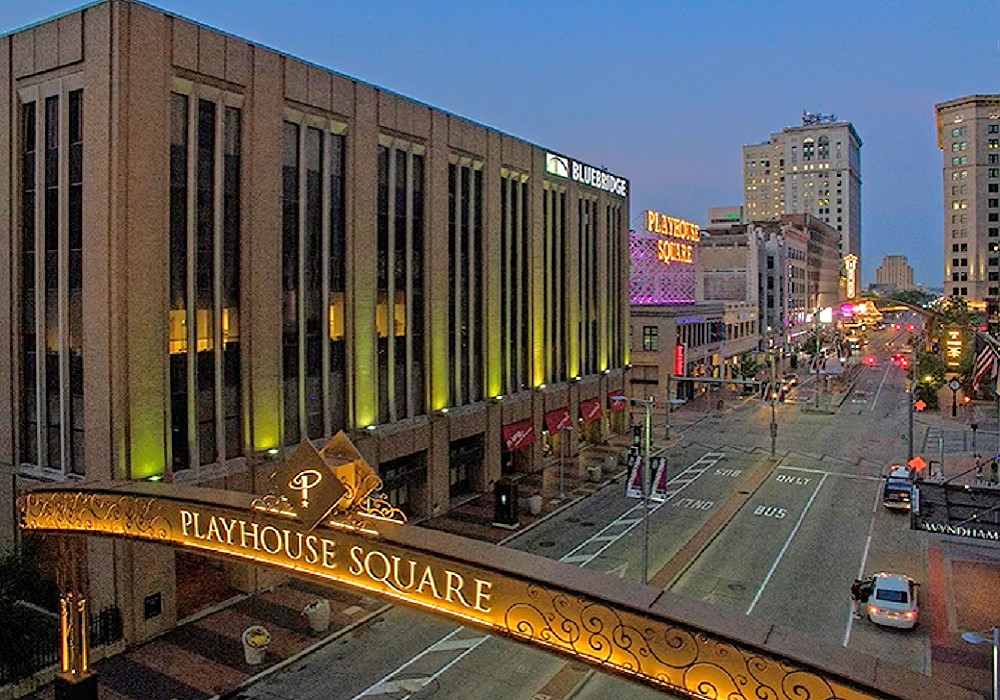
At left is a data center in Downtown Cleveland’s theater district, Playhouse Square. Still called the Sterling Building, the 250,000-square-foot structure was built in 1909, modernized in 1973 and renovated in 2000 as a data center with the headquarters for BlueBridge Networks and several floors of data servers (LoopNet).
The urgency of the moratorium was evident today at City Planning Commission which was forced to adjourn for an hour while an individual, upset at an unrelated project, disrupted the proceeding.
By the time the commission meeting restarted, one or more commissioners were due to leave — meaning there would not be a legal quorum for making binding decisions. So while roughly two-thirds of the agenda items were postponed, only one was chosen to be heard — the data center moratorium.
Several amendments to the moratorium were accepted by Planning Commission — the review of proposed data center project applications, the wording of “facility and building” relating to data centers, and the timeline of the moratorium is to be extended to one year upon passage.
On the inclusion of the wording “facility and building,” the city’s Chief Zoning Administrator Shannan Leonard told the commission that the wording of the moratorium is important in light of recent news.
“Data centers aren’t just buildings, as defined in our code,” she said. “They also include all of their accessory facilities, so all of their extra generators and things of that nature. So we want to make sure as we’re thinking about getting policies and regulations around this emerging use, that we do so and have everything clarified for the moratorium.”
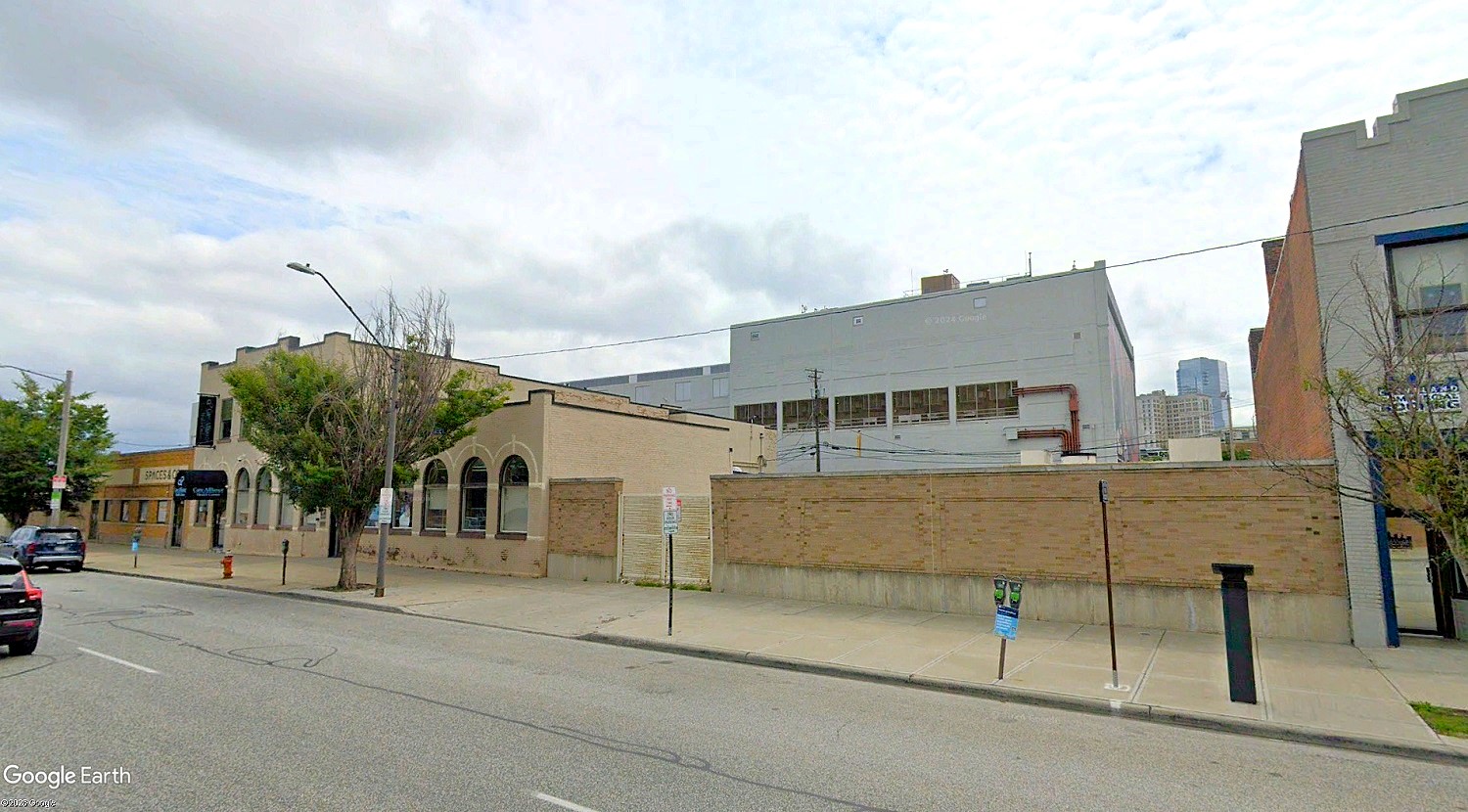
Behind this wall and gate on St. Clair Avenue at the east edge of Downtown Cleveland is a generator yard for the gray-structured H5 Data Center in the background. Two more generator yards are planned along St. Clair at far left, taking out five storefronts and forcing out as many small businesses (Google).
“And then the timeline will be changed to between three months to one year, giving time for council and planning and the rest of the administration to work together to get proper policies and regulations in place as we dealing with this evolutionary and emerging new use that hasn’t been contemplated before in our codes,” Leonard added.
The importance of the wording is borne out in the two publicly known data center projects that are in the works. One is an expansion and another is a new-construction project. Others may be happening but are much smaller and built within existing structures like BlueBridge Networks in the old Sterling Building, 1255 Euclid Ave. downtown.
A pending expansion is the addition of more electric generators for the 351,000-square-foot H5 Data Centers’ Cleveland Data Center, 1625 Rockwell Ave. at the east end of Downtown Cleveland. Its proposed project, submitted April 6, has been reported on exclusively by NEOtrans.
H5 plans to demolish five retail spaces among two parcels it acquired last year. One parcel is at 1536-40 St. Clair Ave. and another is at 1616-36 St. Clair, each of which housed a number of active businesses that had to quickly find new accommodations after losing eviction battles in Cleveland Housing Court.
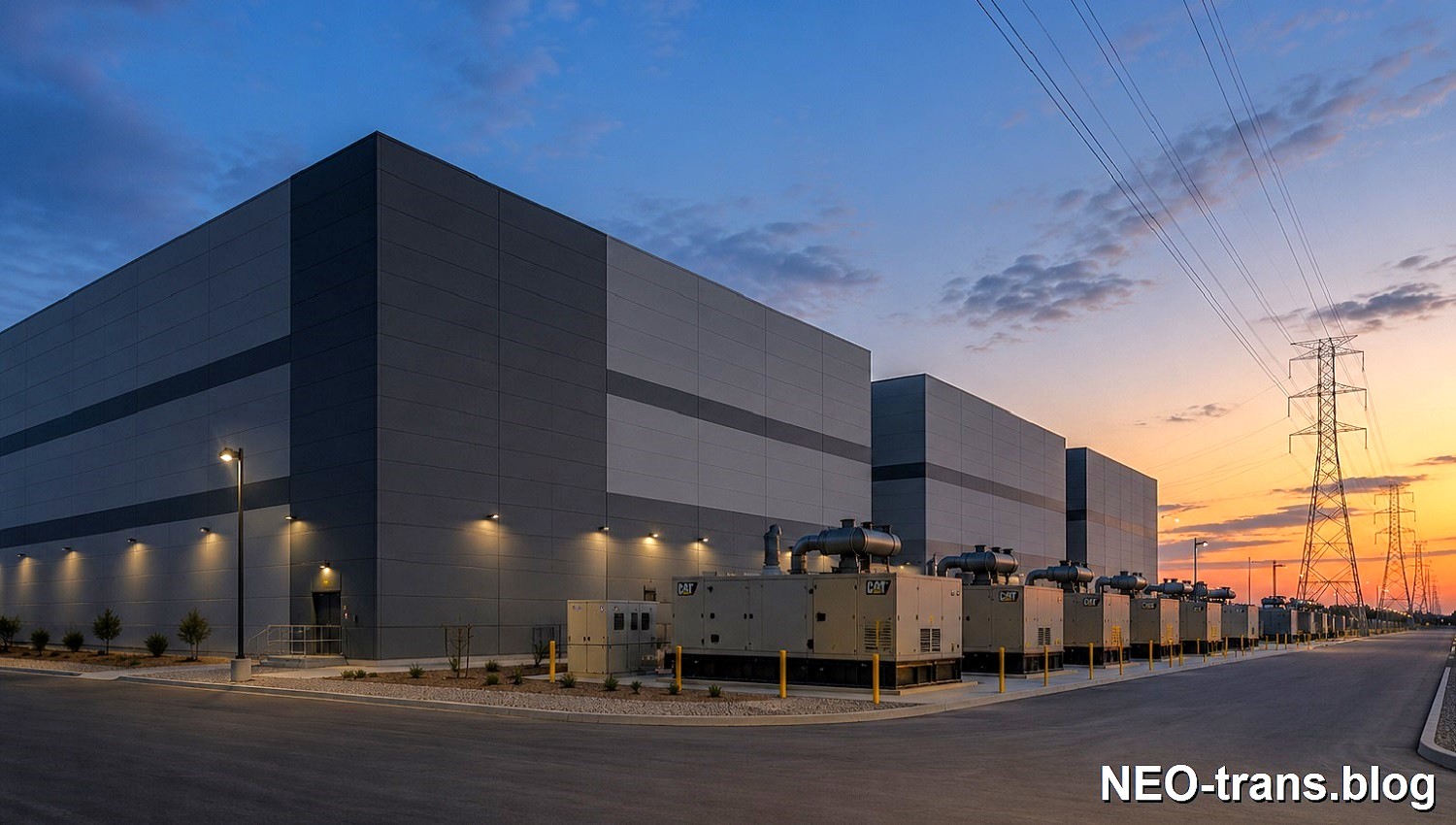
A three-building data center totaling 300,000 square feet is planned for Cleveland’s Slavic Village between Interstate 77 and adjacent neighborhoods. It was rejected by the city for a lack of planning documents. This is an unofficial rendering showing what the facilities could look like (NEOtrans).
A new-construction data center has been making headlines ever since May 6 when NEOtrans broke the story of Lakeland Equity Group’s proposed $1.6 billion hyperscale campus on a 35-acre property owned and used for 50 years by trucking firm Morabito Enterprises at 3560 E. 55th St. in Cleveland’s Slavic Village.
The data center would be in three, two-story buildings totaling 300,000 square feet but require roughly the same amount of electricity as 100,000 homes. Lakeland said it planned to invest heavily on beefing up the electrical grid.
But its application was rejected yesterday by the city’s Building Department because it did not include plans for staff to review, public records show. Because of that, staff couldn’t determine whether it would meet the city’s zoning codes regarding height, density, setbacks, parking and other features.
In a written statement, Lakeland Equity Group did not concede defeat at the rejection but it not offer clarity on its intentions. If the developer resubmits its application with plans included, it will be in a race to win a zoning or plan approval under current city codes before City Council can approve the moratorium.
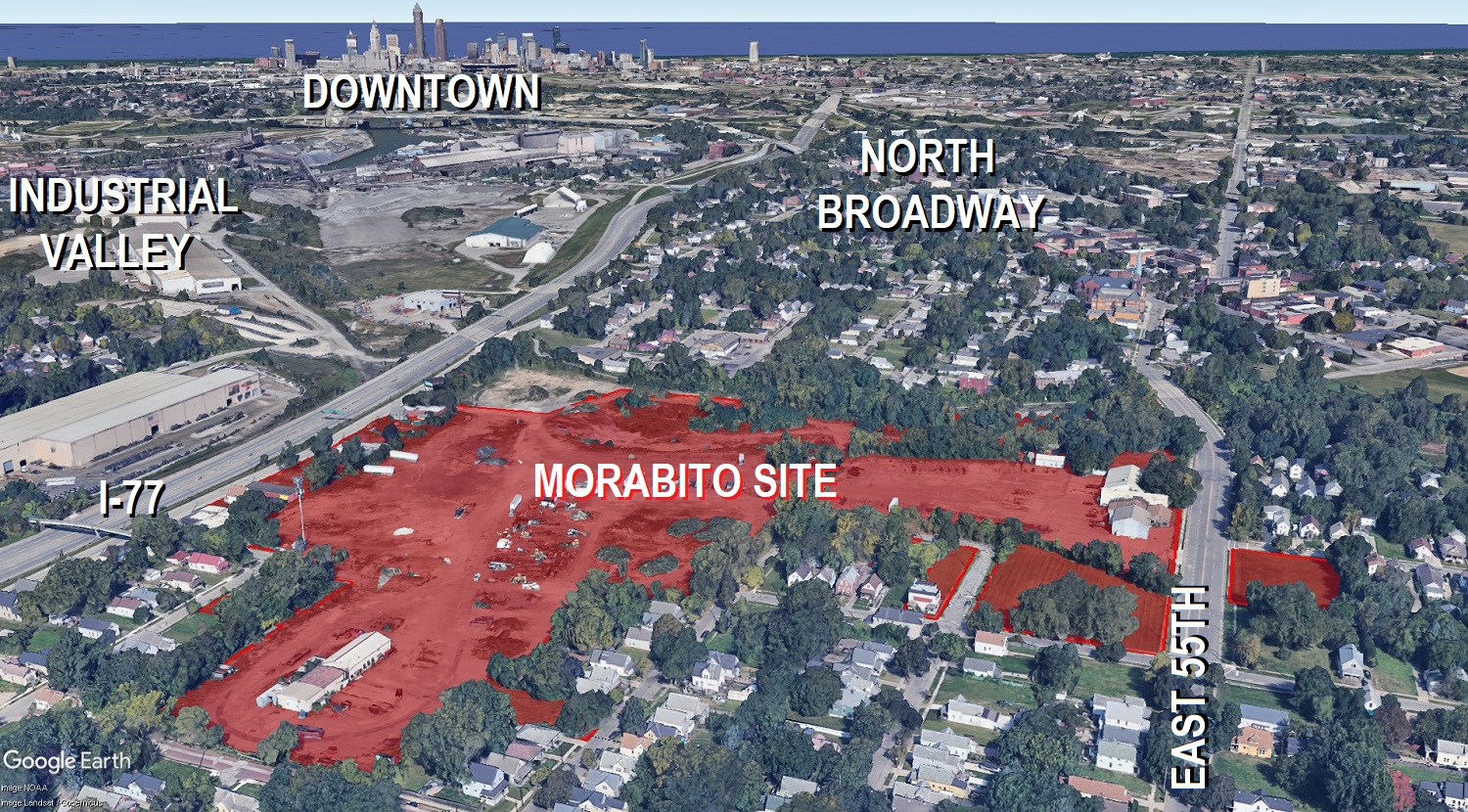
An aerial view of the 35-acre Morabtio Enterprises’ property shaded in red where Lakeland Equity Group wants to build a $1.6-billion, 150-megawatt hyperscale data center (NEOtrans/Google).
“We look forward to continuing to work with local government officials and community residents to help everyone consider this important, job-creating project’s merits,” the company said.
Terry Coyne, executive vice chair in the Cleveland office of real estate firm Newmark and a data center proponent, said the high real estate values that come with data centers will provide benefits to the Cleveland Metropolitan School District. It is losing tax revenue from downtown office towers getting sold at bargain prices.
“Rather than ban them, get a community benefits agreement in addition to the taxes they pay,” Coyne said. “The Morabito site was a vacant piece of dirt that could produce $6 million in taxes (per year) to the schools.”
City Council can expedite the passage of the moratorium by waiving its rule of having the title of a proposed law read at three separate regular council meetings. But the author of the moratorium, Ward 15 Councilman Charles Slife, said he wants the legislation to get input from the public and other stakeholders.
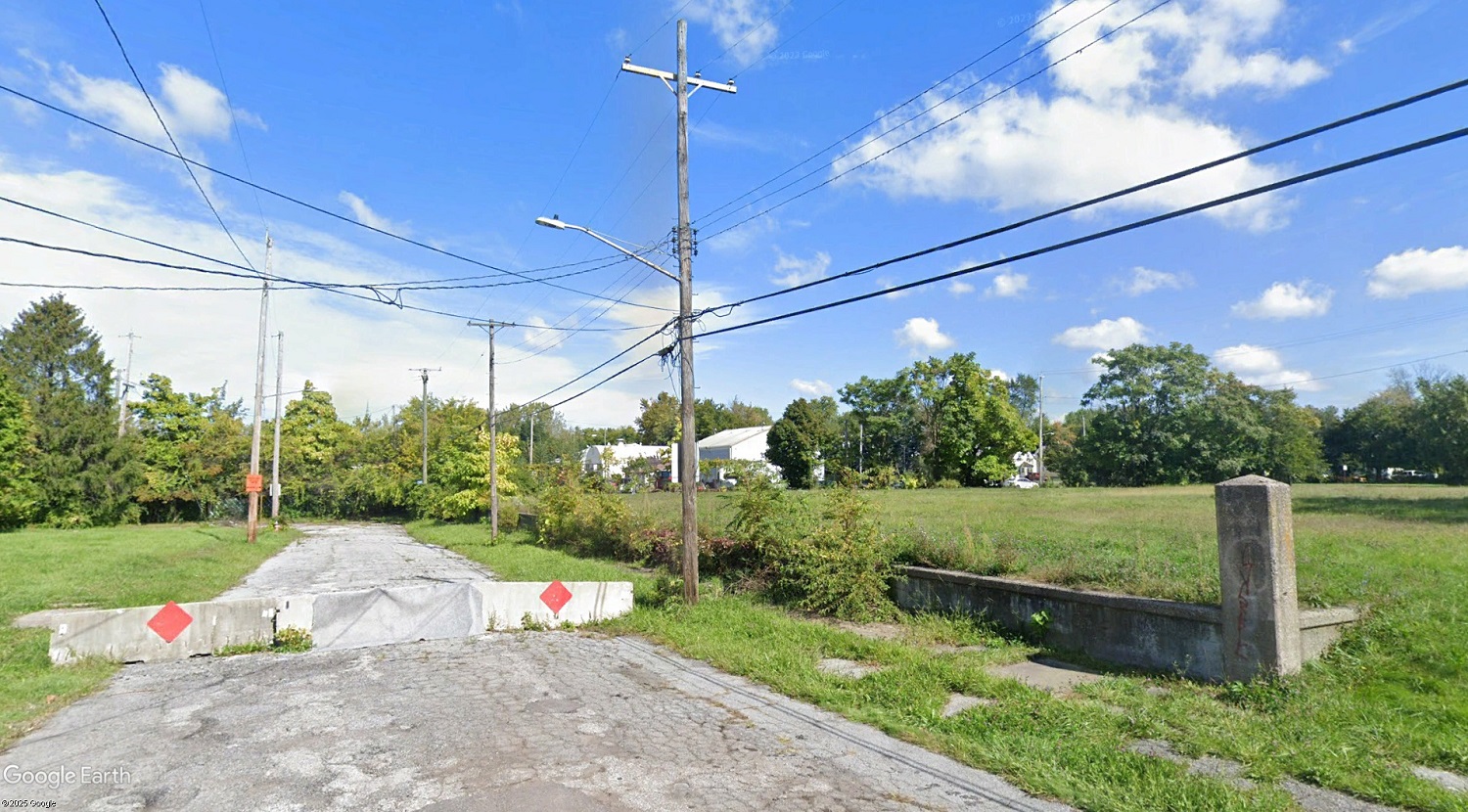
The Morabito Enterprises’ site in Cleveland’s Slavic Village as seen from East 54th Street next to where the old Mound Elementary School stood at right until 2013. The school property is now part of the Morabito site (Google).
“The plan is for it to be routed through committees,” Slife told NEOtrans in an e-mail.
That means it is unlikely the moratorium can be passed before City Council goes on summer recess after its June 1 meeting. Council holds regular meetings on Mondays, but no meeting will be held on May 25 which is Memorial Day.
After June 1, council is scheduled to hold special summer meetings on July 15 and August 19 before returning to its regular weekly sessions on Sept. 14. Slife said it was too soon to know when the legislation could be passed.
“At this point I don’t want to speculate on that, as we’re actively having conversations on how to move it forward,” he said. “I don’t want to sow confusion.”
END