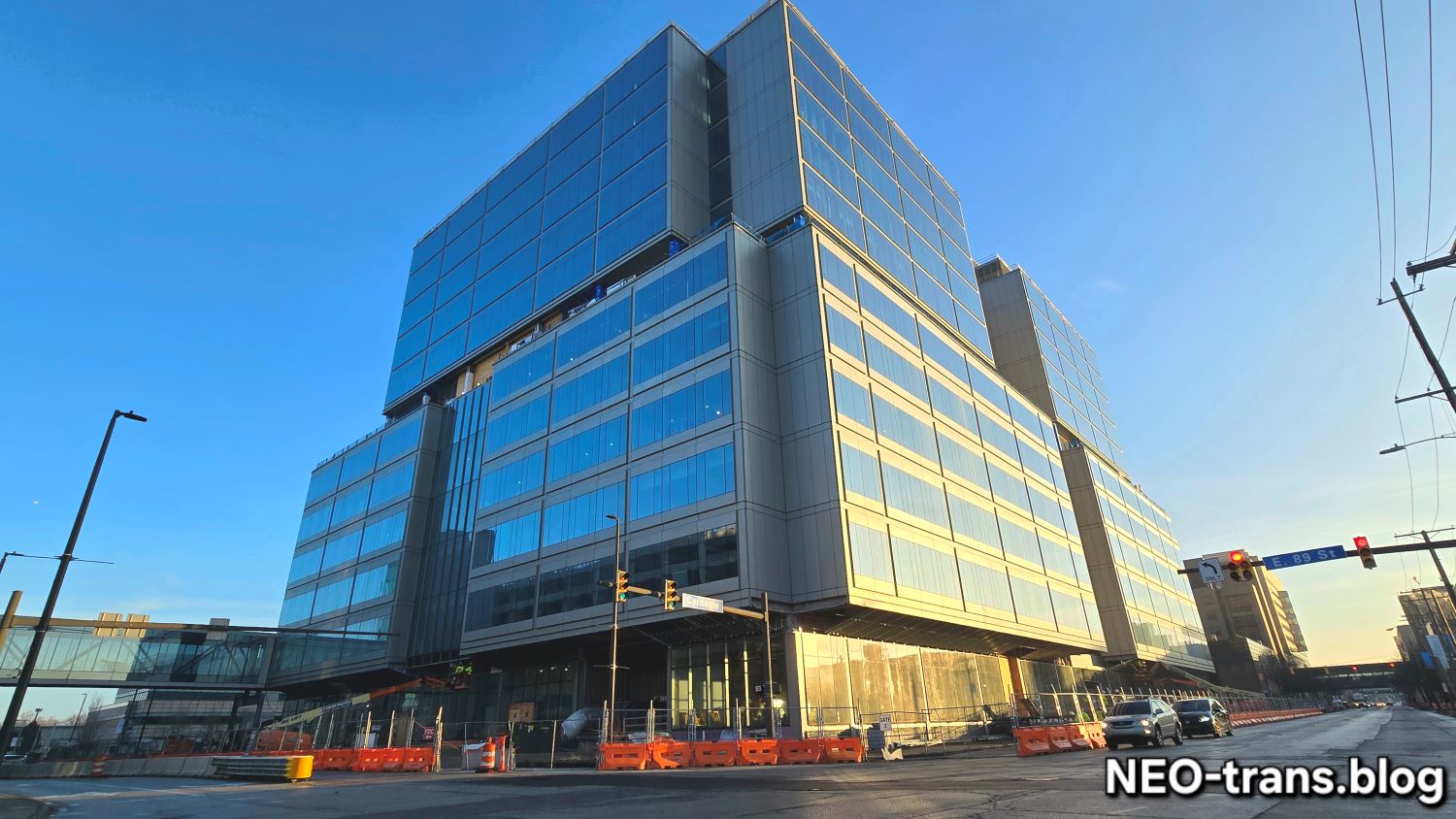
The Cleveland Clinic’s new Neurological Institute on Carnegie Avenue will, among other services, help the Clinic gain a Level 1 trauma center as early as 2028. But the 1-million-square-foot neuro building is expected to open in February 2027 (NEOtrans). CLICK IMAGES TO ENLARGE THEM.
Need for Clinic’s center disputed by MetroHealth
ARTICLE UPDATED JAN. 15, 2026 WITH METROHEALTH COMMENT

Expansion of the Cleveland Clinic’s Main Campus Emergency Department and the addition of its new Neurological Institute may help Greater Cleveland gain its third Level 1 trauma center as early as 2028 and relieve pressure on the region’s existing Level 1 centers. But not everyone agrees to the need.
And, if verified by the American College of Surgeons, the Clinic’s planned trauma center’s facilities, equipment, training and services would also be designated as Greater Cleveland’s second pediatric Level 1 center, easing the strain on the nearby UH Rainbow Babies and Children’s Hospital.
This would also be Northeast Ohio’s sixth Level 1 trauma center, capable of handling the most critically injured adult and/or children patients. Youngstown has one at Mercy Health St. Elizabeth Health Center. Akron has two including Summa Health System and Cleveland Clinic’s Akron General.
Greater Cleveland has two such centers — MetroHealth Medical Center and UH Cleveland Medical Center/Rainbow. With more than 6,000 annual patient visits, MetroHealth has triple the state’s average of over 2,000 patients per Level 1 trauma center. UH Cleveland has slightly more than the state’s average number of visits per center, according to state statistics.
“Adding a Level 1 trauma center to our Main Campus will extend our world-class care to patients in need of trauma care, provide continuity of care for our patients, and help us better meet the needs of our community,” said Cleveland Clinic President and CEO Tom Mihaljevic in a written statement.
But the need for a third Level 1 trauma care facility in Greater Cleveland is being disputed by the MetroHealth Medical Center officials. This article is updated with their comment.
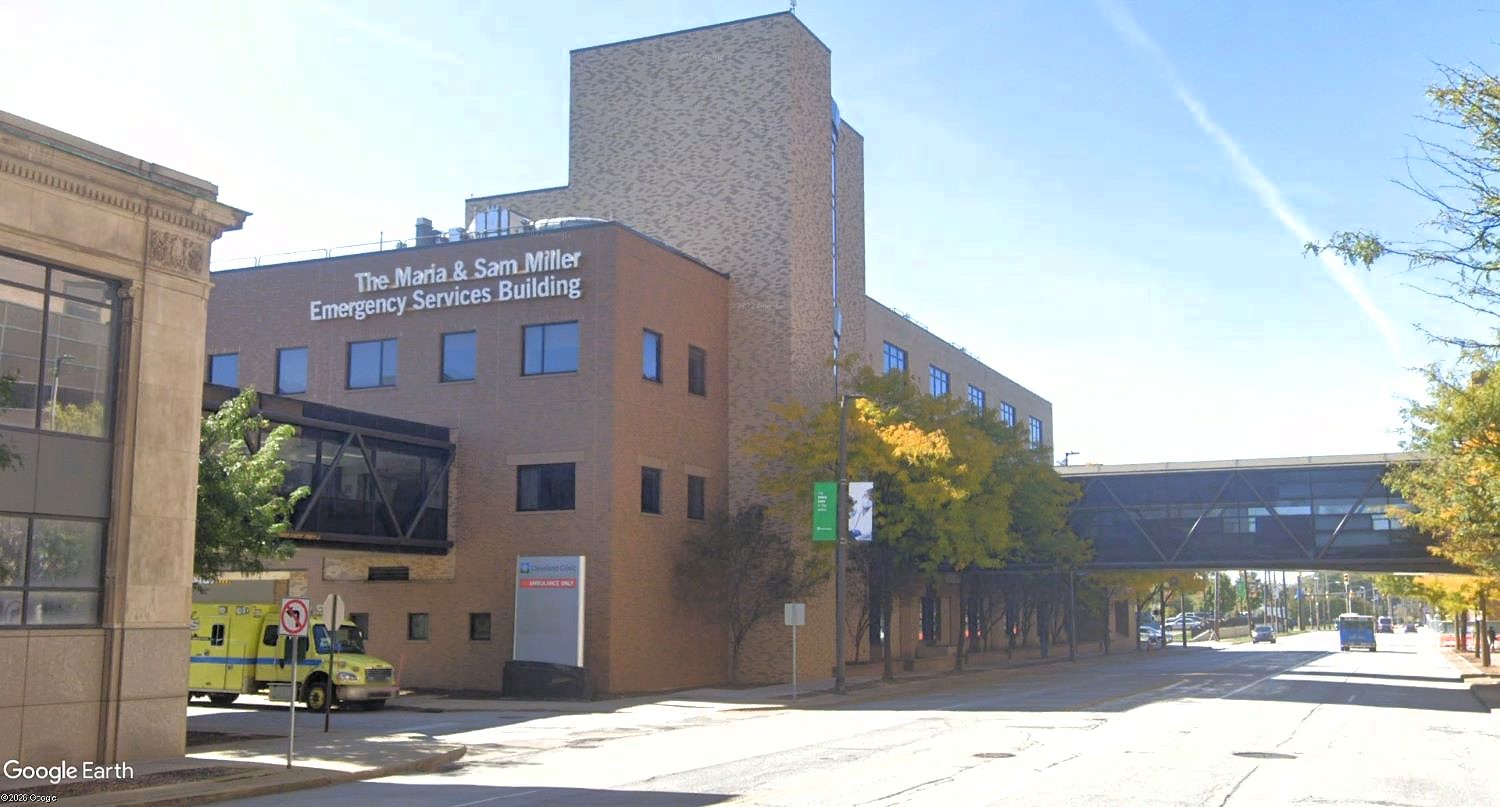
Looking west on Carnegie Avenue, the Cleveland Clinic’s Main Campus Emergency Department is at left with the new Neurological Institute at right, beyond the pedestrian bridge (Google).
“MetroHealth is alarmed for our community and calls on the Cleveland Clinic to reevaluate its plans,” the county-owned health system said in a statement. “Like similarly sized metropolitan areas, Greater Cleveland cannot sustain three Level 1 Trauma Centers. It will harm patient outcomes and increase costs for the entire community.”
Clinic officials said the need for the Level 1 trauma center was identified as necessary within the Clinic and would be supported by the health system’s new 1-million-square-foot Neurological Institute on Carnegie Avenue at East 90th Street.
The Neuro Building is the Clinic’s largest-ever building. And at $1.1 billion, it’s also the health system’s most expensive. The Clinic’s to-be-expanded Maria & Sam Miller Emergency Services Building is across Carnegie, just east of East 90th.
“Within our health system, we’ve observed a need for trauma care,” said Scott Steele, president of the Cleveland Clinic Main Campus Submarket. “We currently have the ability to care for a wide range of patient conditions. However, Level 1 pediatric and adult trauma care is a gap at our Main Campus. This would allow us to fulfill the full spectrum of our patients’ needs.”
“We know that reducing the risks associated with transfers outside of a health system supports safer treatment for patients in critical condition,” said Miguel Regueiro, chief of Cleveland Clinic’s Digestive Disease Institute, who will be one of the leaders of the center.
“We will ensure our team has the best training, equipment, and resources available,” he added. “In addition, the opening of Cleveland Clinic’s new neurological building in 2027 will further support our ability to care for these patients.”
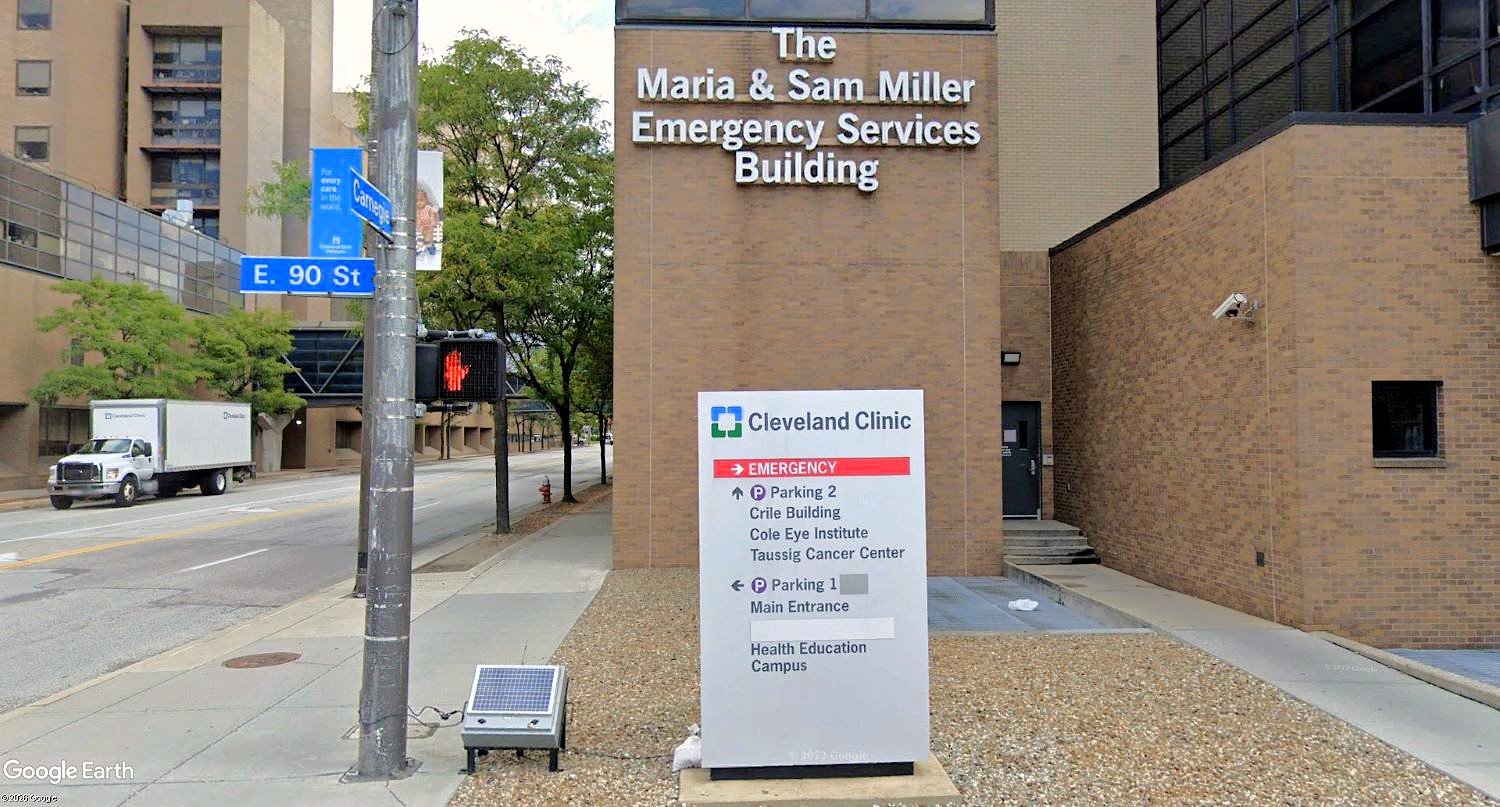
This area will be the nexus of the Cleveland Clinic’s efforts to gain a Level 1 trauma center designation. Central to this is an expansion of facilities at the Maria & Sam Miller Emergency Services Building, but whose main entrance is on Cedar Avenue (Google).
Level 1 trauma centers have emergency medical resources and capabilities to treat critical injuries threatening life or limbs. According to the Centers for Disease Control and Prevention, trauma is a leading cause of death for individuals aged 1-44.
Cleveland Clinic officials noted that Level 1 trauma centers treat injuries such as serious falls, traumatic brain injuries, injuries related to motor vehicle collisions, industrial and work injuries, blunt-force trauma as well as gunshot and stab wounds.
Data from the Northern Ohio Trauma System show that the majority of traumas in our region in 2024 were the result of falls (61 percent) and motor vehicle collisions (15 percent). But the lack of Level 1 trauma facilities means unecessary transfers between hospitals for critical patients.
Clinic officials also said Level 1 trauma centers also conduct ongoing research, train healthcare providers, serve as a teaching hospital, participate in quality improvement programs and offer community public health education including injury prevention.
The last Level 1 trauma center operated by the Cleveland Clinic was at the Huron Hospital on Terrace Road in East Cleveland. But the Clinic closed that 850-employee, 137-year-old hospital in 2011 and demolished it soon thereafter. The land has remained vacant ever since.
Cleveland Clinic said it will continue to work with local government, community leaders, accreditation and certification organizations and various internal departments over the next two years to prepare for and establish the new trauma center.
END