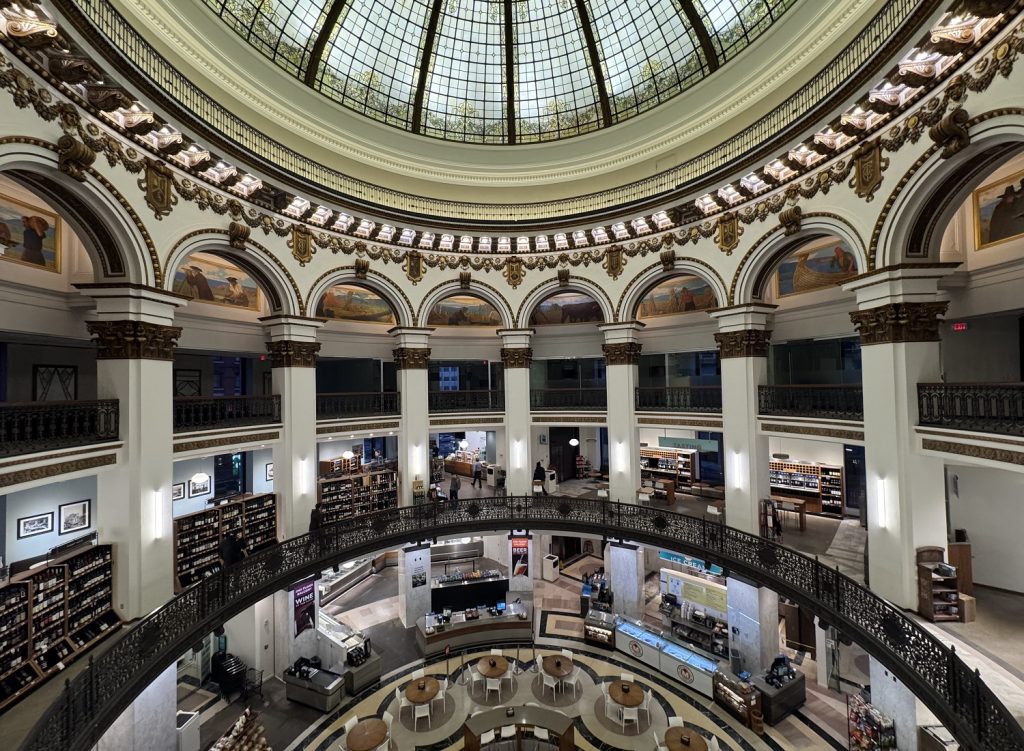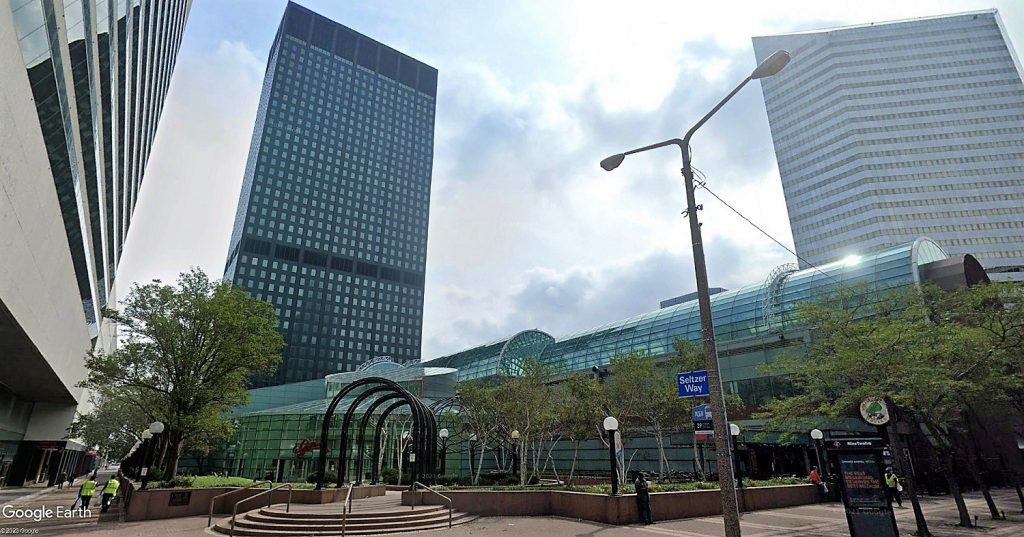
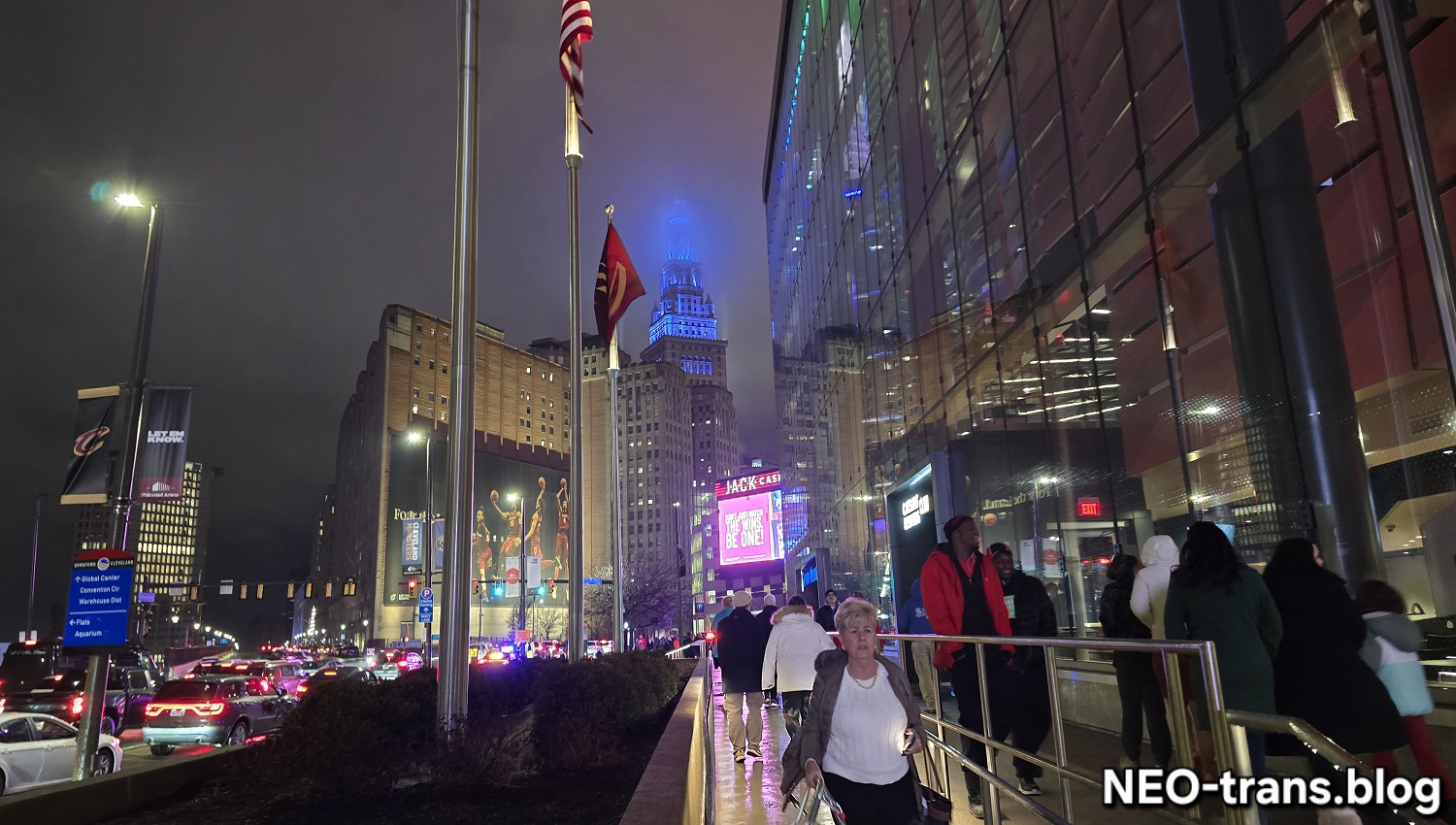
Sports and entertainment are part of the Experience Economy, the fastest-growing sector in the nation and is outpacing spending on material goods by a factor of over 1.5, according to McKinsey & Co. Downtown Cleveland’s Gateway District is the local heart of the Experience Economy, which sees millions of visits per year (NEOtrans). CLICK IMAGES TO ENLARGE THEM.
Baseball, basketball, soccer stadiums in need
The Cleveland Guardians Major League Baseball team is seeking $64,795,282 for Progressive Field. The Cleveland Cavaliers National Basketball Association team wants $40,308,811 for Rocket Arena. And the Cleveland Soccer Group is in the running for $19.9 million to build a new soccer stadium, according to the Statehouse News Bureau.
Those applications were made to the Ohio Sports and Cultural Facilities Fund which was created by the General Assembly last year with a fiscal year 2026 budget of $1 billion supported by $4.8 billion in unclaimed funds held by the state.
Of that initial $1 billion in 2026, $600 million was earmarked for the Cleveland Browns’ proposed new enclosed stadium in suburban Brook Park. Additional funding could be allocated in future years. So applicants that miss out this year could apply again.
All three Cleveland sports-entertainment venues that are seeking $400 million in state funds for sports, recreational and cultural facilities are in the running for them. But there’s still far too much need statewide for it to be satisfied by the funding available this year.
Some of the 22 initial applicants for facilities funding have already been eliminated from consideration in this year’s round. More will be eliminated from consideration this year or see their awards be reduced to less than what the applicants originally requested.
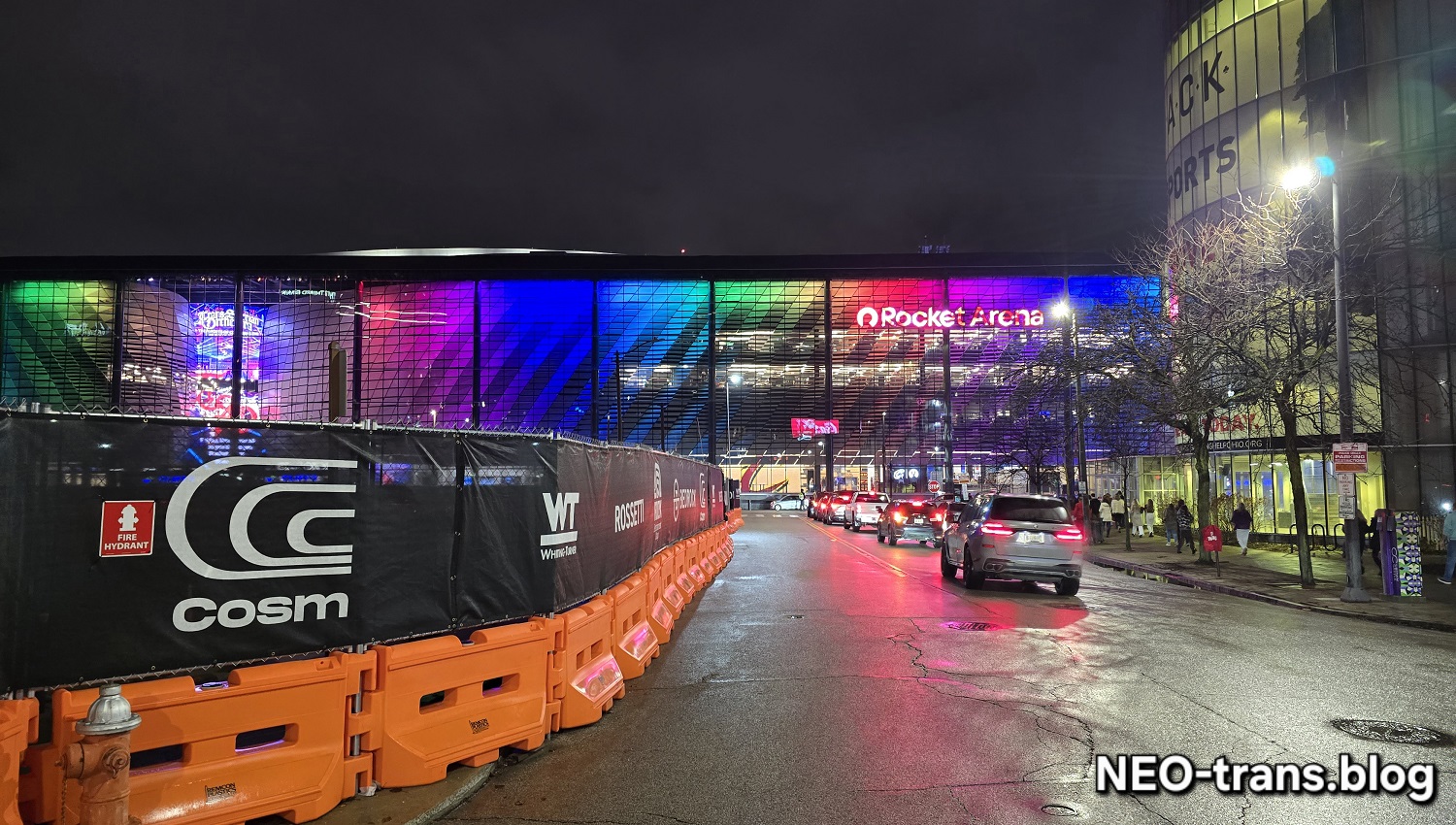
Downtown Cleveland is trying to increase a mix of sports and entertainment attractions that are smaller but more frequent than those of the Cleveland Browns, which are moving to suburban Brook Park. One of those is the Cosm shared reality venue under construction on East 4th Street. Beyond is Rocket Arena which will add a WNBA basketball team in 2028 (NEOtrans).
That’s because some of the applicants asked the state to fund more than 25 percent of their project’s cost, despite the state capping awards at that 25 percent ceiling. The other reason is the total dollar amount in the requests — $689 million — is too large to be supported from the $400 million pot this year.
For example, the three largest applications — Hamilton County/Cincinnati Bengals Paycor Stadium ($234,178,996), FC Cincinnati TQL Stadium ($136.3 million), and Franklin County/Columbus Blue Jackets Nationwide Arena ($100 million) — exceed this year’s available funding by nearly $70.5 million. All of those requests are still active.
So are the next largest applications — for Progressive Field and Rocket Arena, both of which are backed by their owner, the Gateway Economic Development Corp. Only governmental or nonprofit entities can apply for the Ohio Sports Facility Performance Grant from the state’s new facilities fund.
“Our grant application primarily focuses on pursuing supplemental support for the Progressive Field Preservation Project, which itself is based on a comprehensive third-party Facility Conditions Assessment completed in December 2025,” said the Guardians in a written statement to NEOtrans.
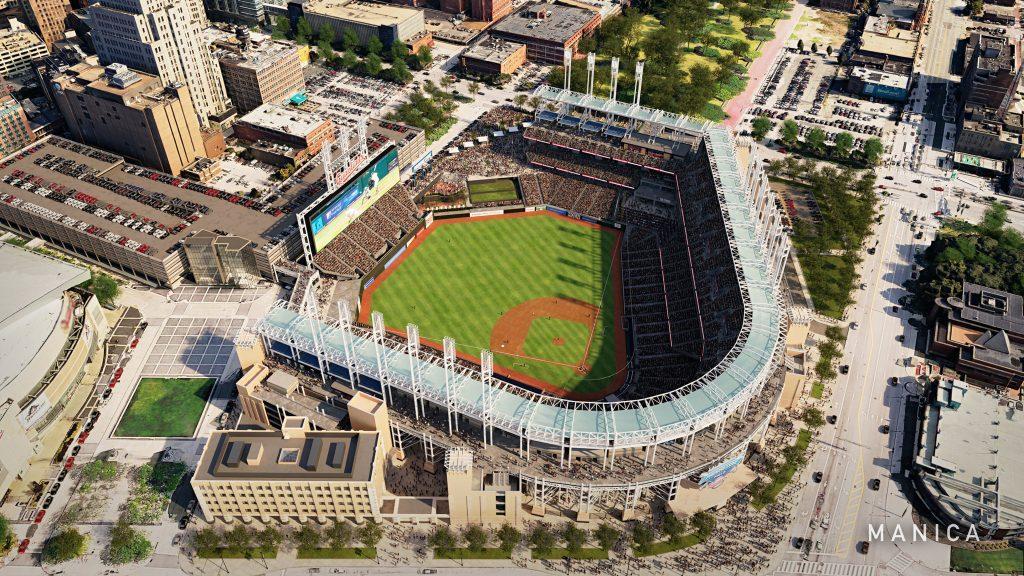
The 32-year-old Progressive Field is in the final phase of its $202 million renovation. But additional repairs and maintenance work is envisioned at Ohio’s oldest professional sports venue (Manica).
“The Preservation Project provides a strategic roadmap for those projects necessary to preserve and modernize Progressive Field—Ohio’s oldest major professional sports facility—for the remaining 11 years of the approved lease,” the Guardians continued.
Funds requested by the Cavs and Gateway would renovate and modernize Rocket Arena, to prepare the arena for the arrival of a WNBA team in 2028 and to maintain the 30-year-old venue’s competitiveness, according to their application.
In the next-largest applications, New London in Huron County wants the state to pay the entire $24.69 million cost of its recreation park. And Toledo wants $20.9 million in state funds to build an $83.6 million, 7,500-seat United Soccer League (USL) stadium.
Then comes the Cleveland Soccer Group’s $19.9 million application, to help pay for a nearly $80 million, 10,000-seat soccer stadium on 13.6 acres of land on East 9th Street Extension south of Interstate 90. The site is owned by the Ohio Department of Transportation.

All three of Cleveland’s sports-entertainment venues seeking state funds for their construction or improvement are in this view, starting with a new Gateway South soccer stadium in the foreground plus Progressive Field and Rocket Arena on the other side of Interstate 90 (CSG).
The Metroparks has an option to buy the land, but be paid by Cleveland Soccer Group. An earlier, preliminary estimate suggested the modular stadium might cost $50 million to build. Funding from other sources is pending.
“Our stadium project will be funded through a combination of private investment and public sources, consistent with how other major sports facilities in Cleveland have been structured,” said Gina Prodan Kelly, Cleveland Soccer Group’s chief marketing officer.
“We’re being deliberate about structuring our plan based on the resources available, including the state program and other sources — such as admissions taxes and similar net-new revenue streams that are not currently being generated and do not rely on general fund dollars,” she added.
The so-called Gateway South stadium would host two new pro soccer teams — a men’s Major League Soccer (MLS) Next Pro franchise and a Cleveland team in a new Women’s Premier Soccer League Pro (WPSL Pro) league.
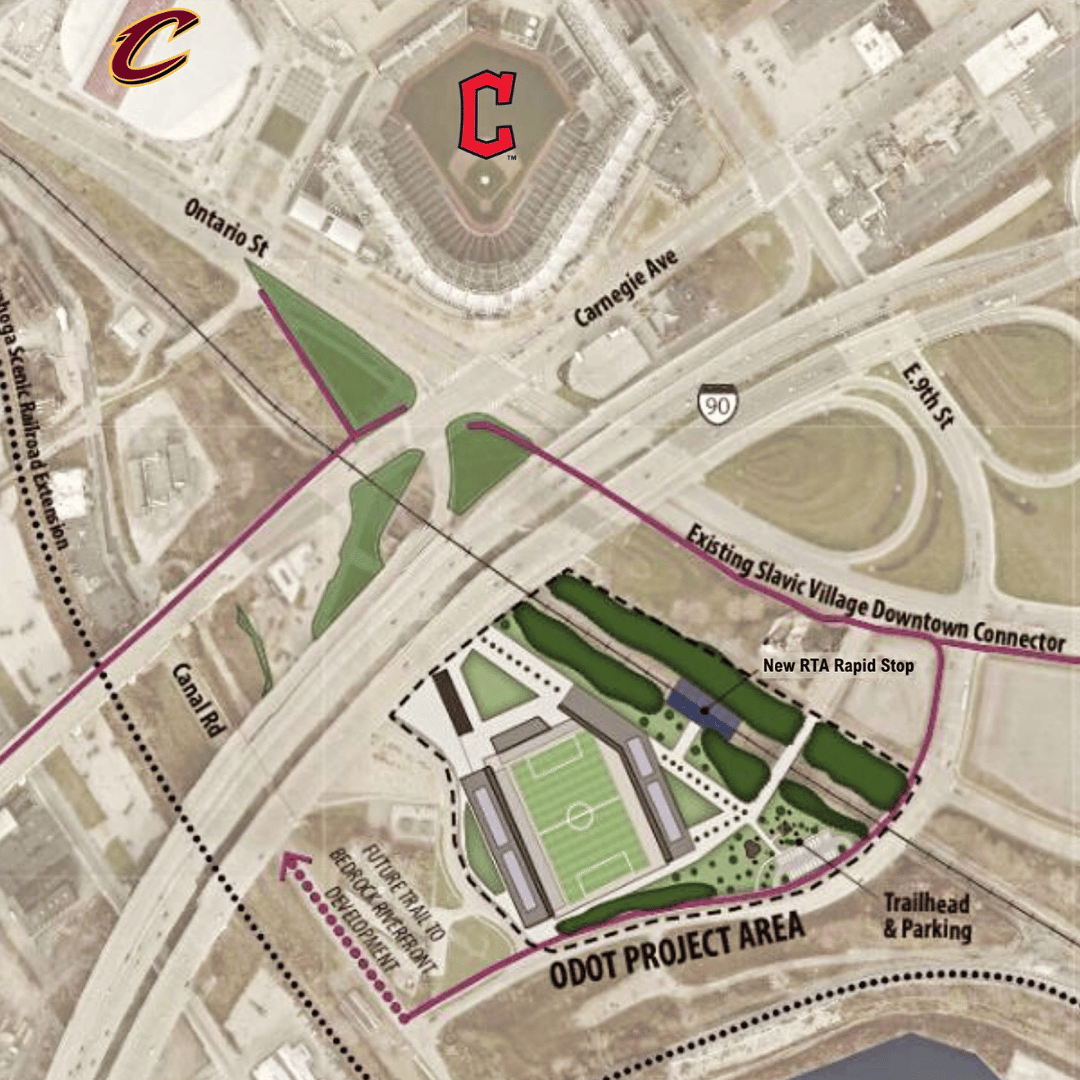
The Gateway South location of the propose soccer stadium is in contrast to the Gateway District locations of Rocket Arena at top-left and Progressive Field to the right of it (Metroparks).
A competing soccer stadium plan, this one for replacing Cleveland State University’s (CSU) Wolstein Center, was not among the funding applications to the state. NEOtrans reached out to CSU Communications Manager Olivia Fraser for more information but did not receive a response prior to publication of this article.
CSU, the USL and a local company called USL Cleveland LLC announced last year it would seek to redevelop the Wolstein Center site, 2000 Prospect Ave. in Downtown Cleveland, with a new stadium and supportive mixed-use development.
CSG anticipated its own stadium could generate more than $231 million in total tax revenue to the city, county and state over 30 years, by drawing more than 400,000 new visitors per year to Downtown Cleveland for up to 60 events annually.
“Cleveland is currently the last Top-40 market in the country without a purpose-built professional soccer stadium either built or under development,” Kelly said. “This project closes that gap and ensures Ohio remains competitive in the world’s fastest-growing sport.”
END