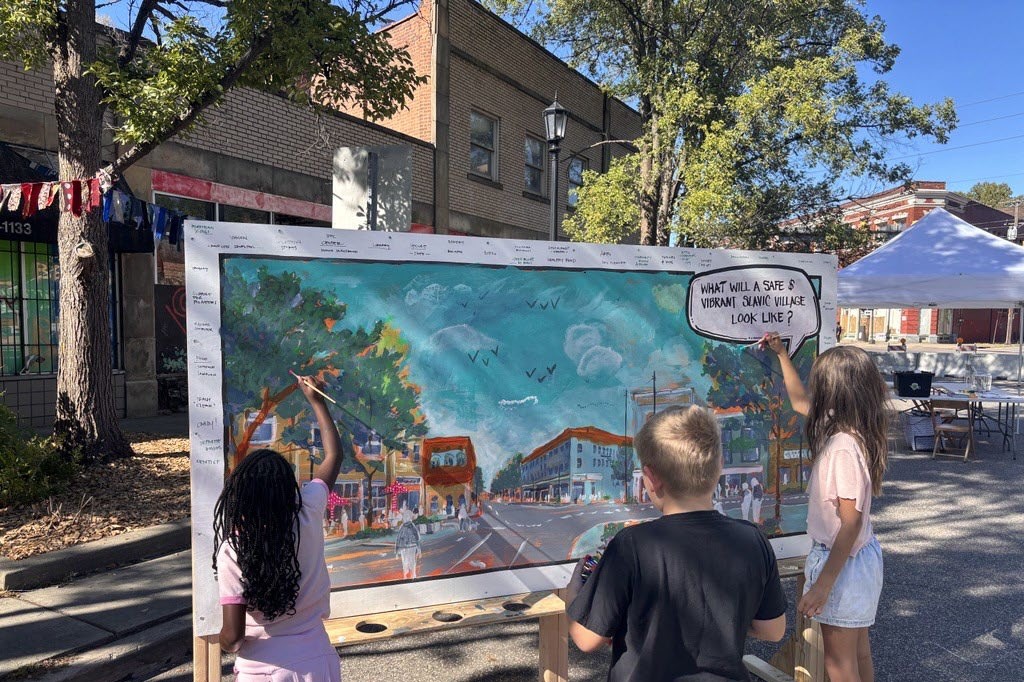
The Slavic Village Neighborhood Plan represents the culmination of a series of outreach events involving diverse members of the community (Slavic Village Development). CLICK IMAGES TO ENLARGE THEM.
Neighborhood, transit plans approved
On Friday, City Planning Commission approved not one, but two transformative plans developed alongside each other for Cleveland’s Slavic Village — which hasn’t seen a comprehensive neighborhood plan in almost two decades.
The Slavic Village Neighborhood Plan was presented by Slavic Village Development (SVD), the area’s community development corporation, and aims to guide decisions around development, investment, and neighborhood programs.
The other, the Greater Cleveland Regional Transit Authority’s (GCRTA) transit-oriented development (TOD) plan for the Broadway Avenue corridor, was developed with funding from the Federal Transit Administration’s (FTA) Pilot Program for TOD Planning.
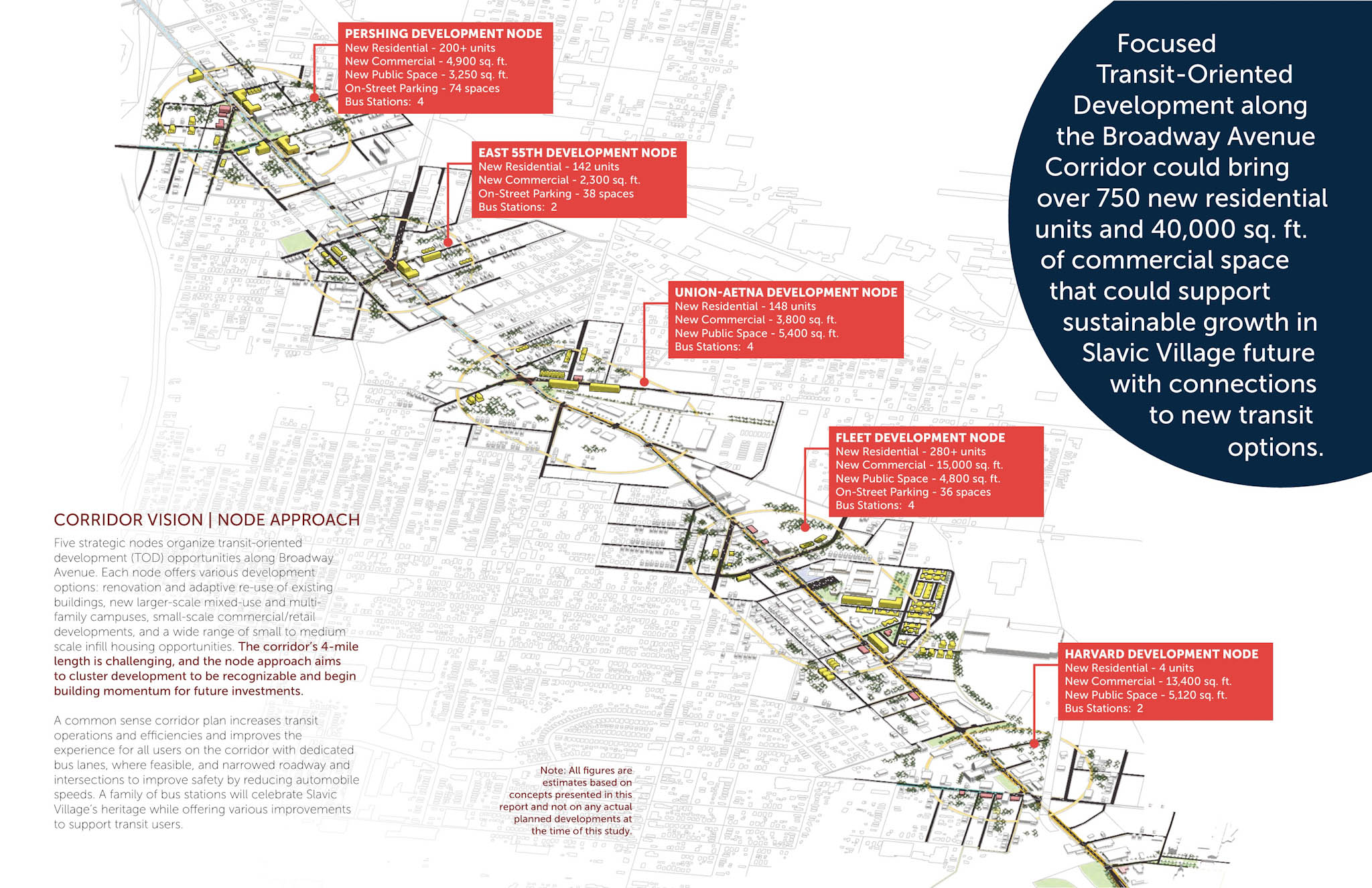
An overview of the Broadway TOD Corridor highlights five nodes positioned for supportive development (GCRTA).
The corridor is planned to be upgraded with bus rapid transit (BRT) infrastructure over the next two years, including traffic signal prioritization, consolidated bus stops, and bus-only lanes across more than 50 percent of its length.
The Broadway TOD Plan targets five nodes — Pershing, East 55th, Union-Aetna, Fleet, and Harvard — for developments supportive of transit ridership. GCRTA has identified 22.5 acres of publicly-owned vacant land within a quarter-mile walk of the corridor.
While the area targeted for TOD stretches from Finn Avenue south to Miles Avenue, the intersection of Broadway Avenue and East 55th Street will be the first priority.
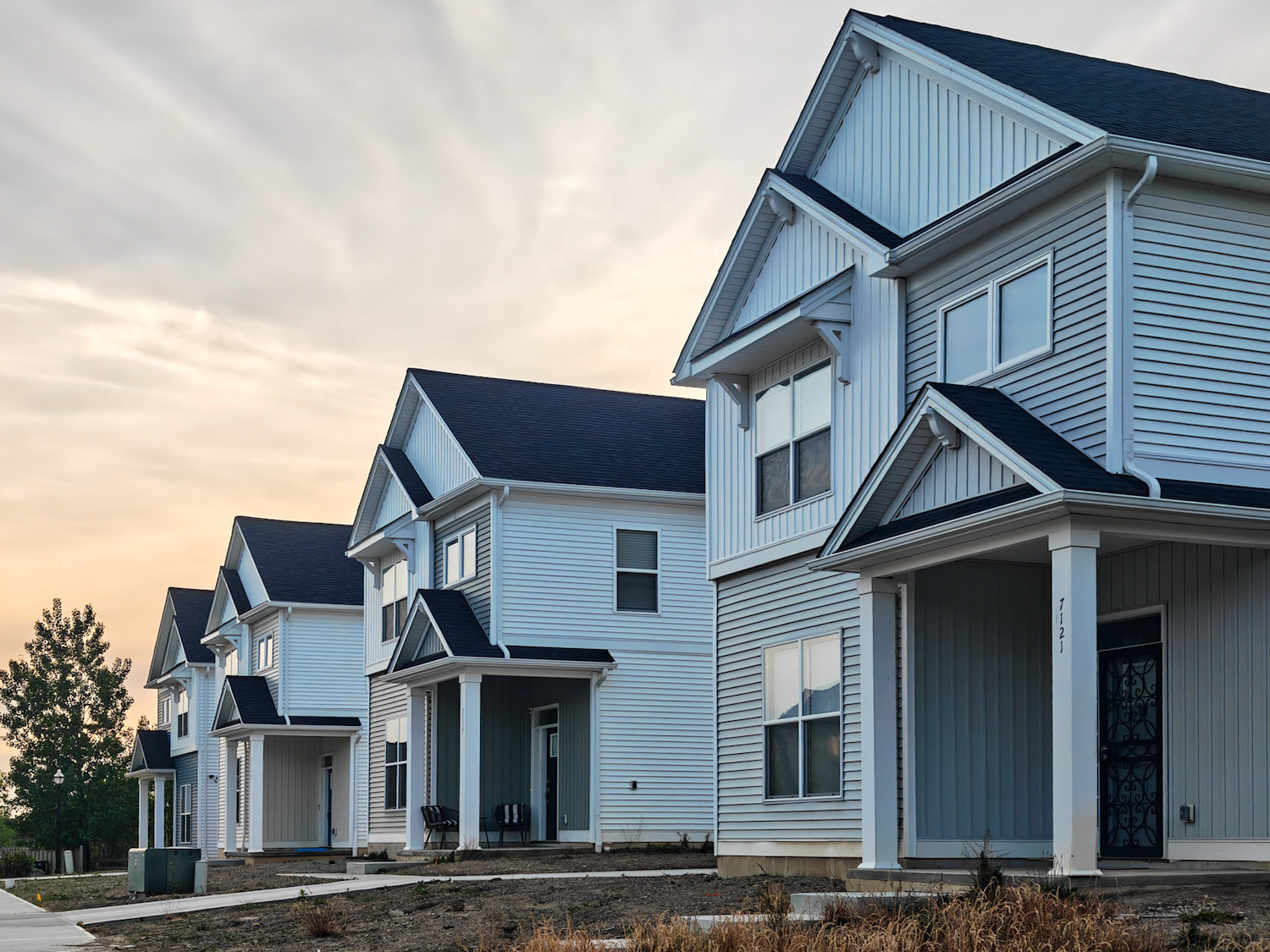
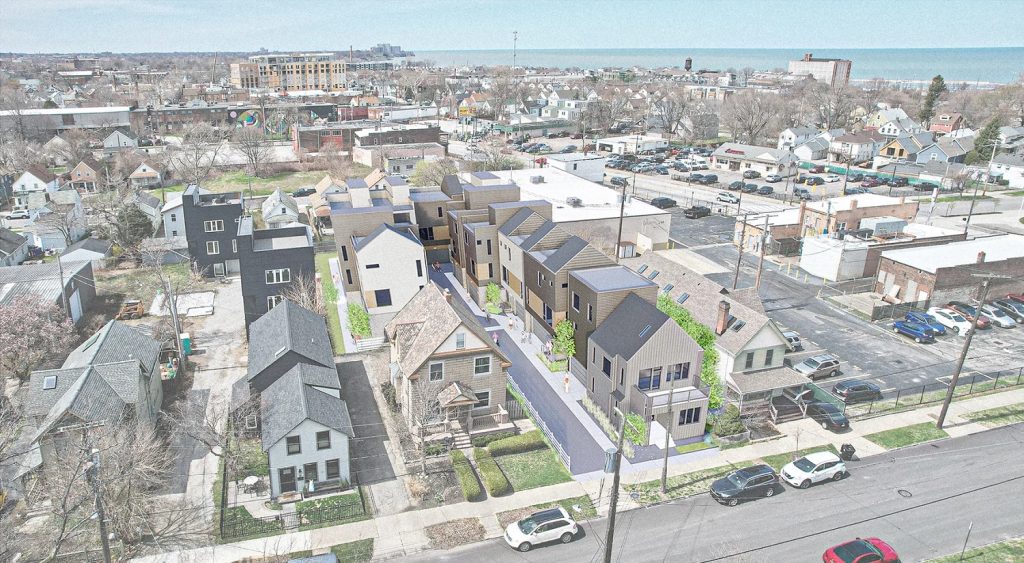
Four single-family residences by Knez Homes at Trailside Slavic Village serve as an example of how infill projects could transform vacant or underutilized sites (Harrison Whittaker).
Though the corridor studied extends further north to East 34th Street, the section was deemed unfit for TOD due to its industrial uses and proximity to a freeway interchange. Design and engineering for that section were handled separately for the planned Slavic Village-Downtown Connector trail through the RAISE East Side Trails grant.
The team for the Broadway TOD Plan was selected by Cleveland-based City Architecture and includes Urban Partners of Philadelphia for market analysis, transportation engineers WSP Inc. of Montréal and Mannick & Smith Group of Maumee, OH, landscape architecture firm Boulevard Studios of Macedonia, OH, and Neighborhood Connections of Cleveland for outreach and engagement.
The TOD Plan’s momentum not only helped motivate SVD to pursue their Neighborhood Plan, but also encouraged a collaborative relationship between the two planning efforts. When a market analysis was conducted for GCRTA, for example, the report was passed along to SVD to reduce redundant efforts.
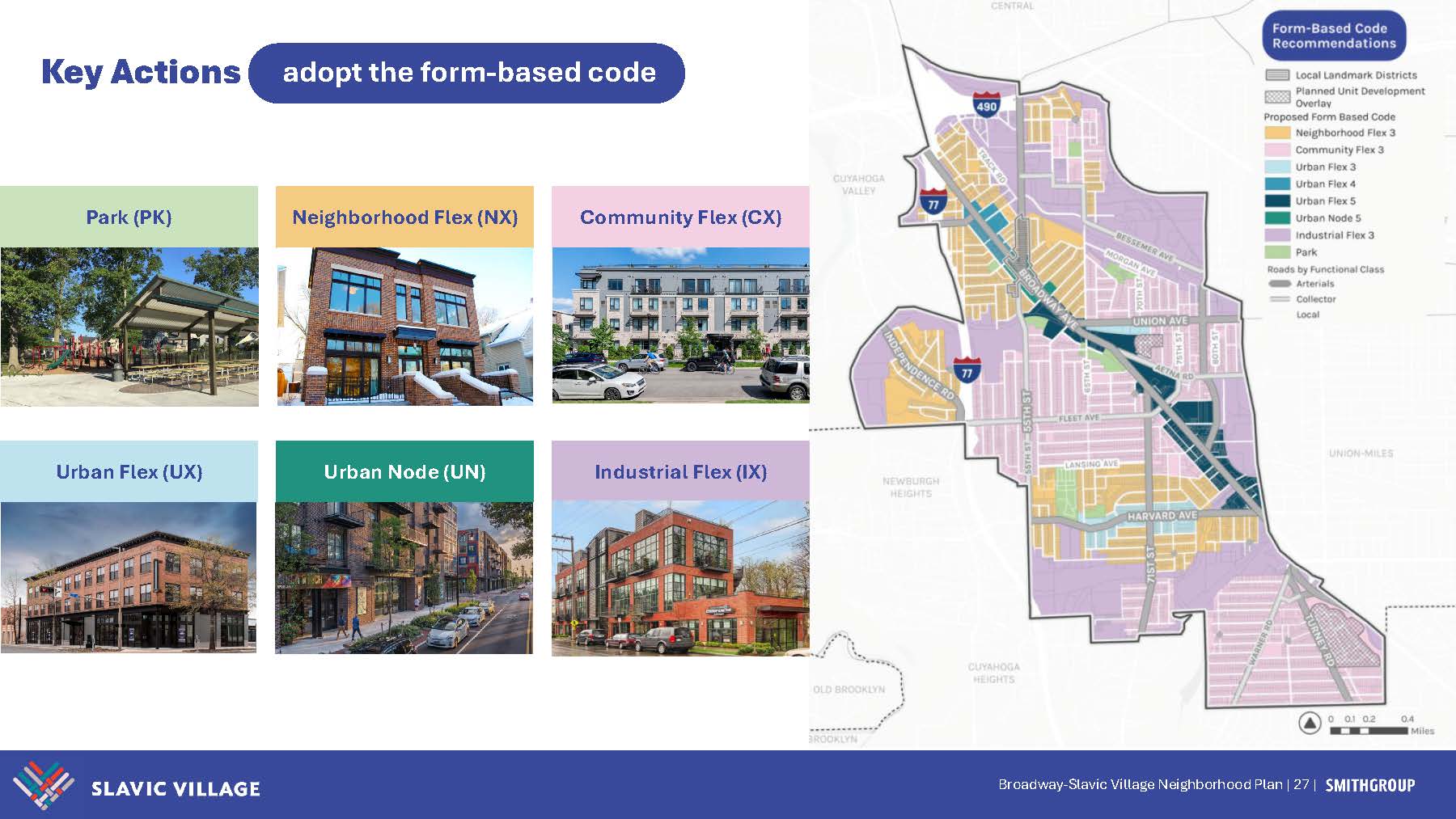
In the Slavic Village Neighborhood Plan, a slide outlines Form-Based Code recommendations, providing examples of compatible uses (Slavic Village Development).
The Slavic Village Neighborhood Plan relied heavily on community engagement to shape its values and goals. In creating a roadmap toward its vision, neighbors consistently ranked “Where We Live” and “Where We Do Business” as top areas of concern.
The plan outlines key actions, including activating vacant land, encouraging development in key locations, strengthening the neighborhood’s corridors, and adopting the city’s upcoming Form-Based Code (FBC).
SVD worked closely with the City of Cleveland to develop recommendations for the FBC, which will streamline the city’s zoning regulations and make it easier for developers to build structures compatible with walkable neighborhoods.
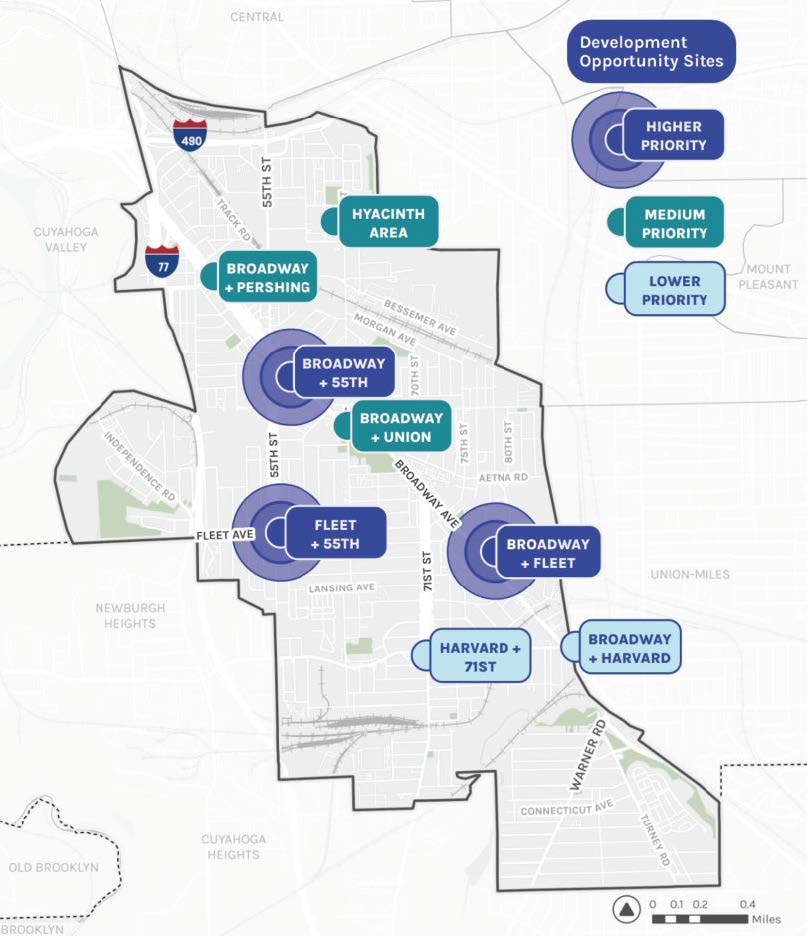
A map of the Slavic Village neighborhood identifies locations prioritized for new development (SVD).
Policies around housing focused on affordability and preservation as well as new development. “Flexibility for housing options” was identified as one of the neighborhood’s key needs.
In addition to housing, the community also expressed a desire to expand in-demand retail options — such as groceries or specialty foods, home improvement, and health or personal care stores.
Understanding that a neighborhood-wide transformation could take decades to realize, the plan identifies three “development opportunity sites” as higher-priority: Broadway + 55th, Broadway + Fleet, and Fleet + 55th. Successful redevelopment projects in these high-visibility locations could set the tone for future efforts.
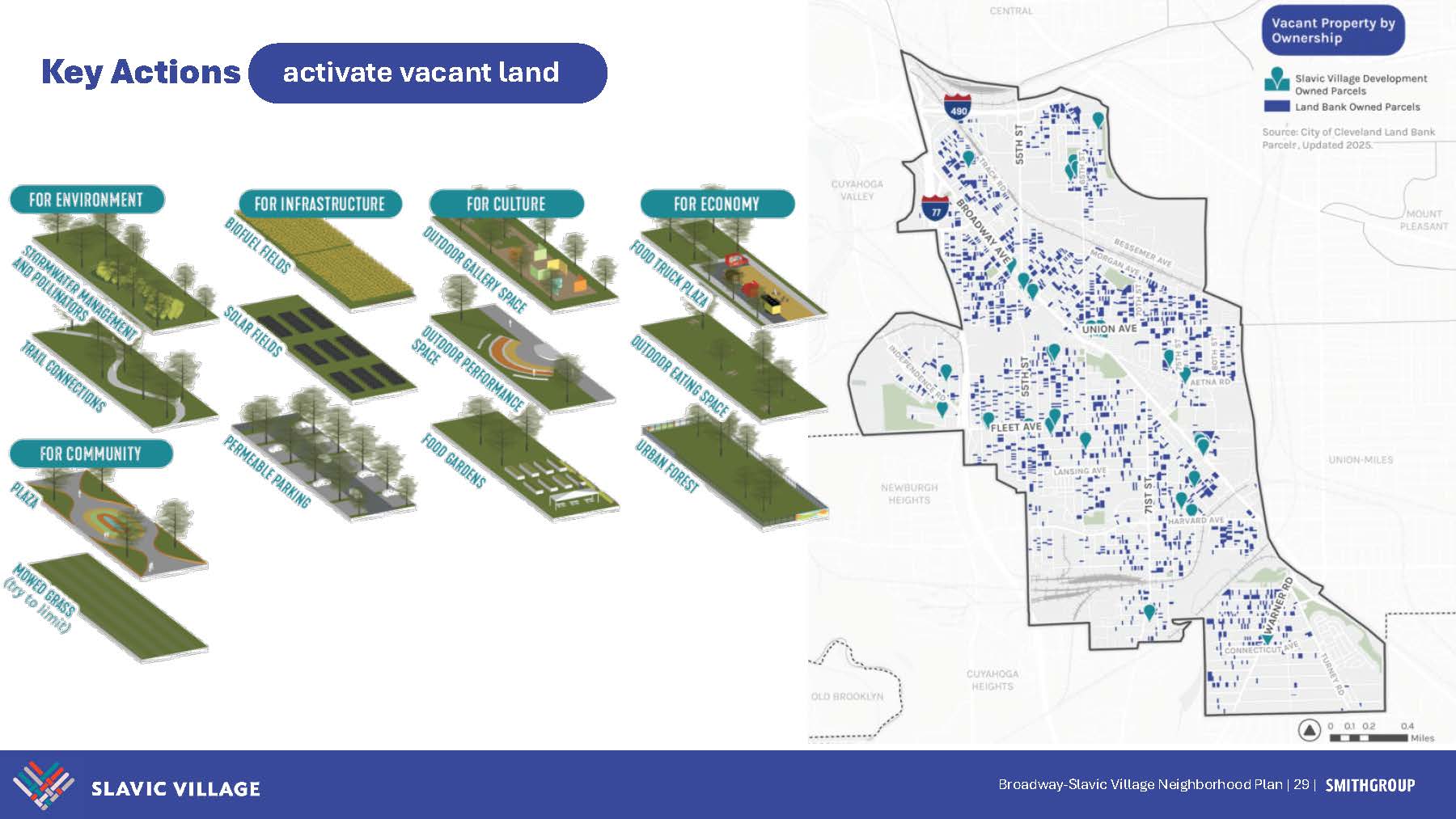
Vacant lots owned by the City of Cleveland Land Bank and Slavic Village Development are shown, along with potential near-term ideas for activation (SVD).
While the Neighborhood Plan looks 10-20 years into the future, it suggests a variety of ways that the community can activate vacant parcels of land in the near-term.
Many of the neighborhood’s vacant lots are owned either by the city land bank or SVD itself. Those lots could be repurposed in ways that directly benefit the community, such as for parks, trails, green infrastructure, or cultural spaces.
Slavic Village will soon have another prominent, vacant lot after the former Red Chimney restaurant is razed. While news of the demolition broke earlier this year, the demolition request formally moved forward on May 29 when it was approved by City Planning Commission.
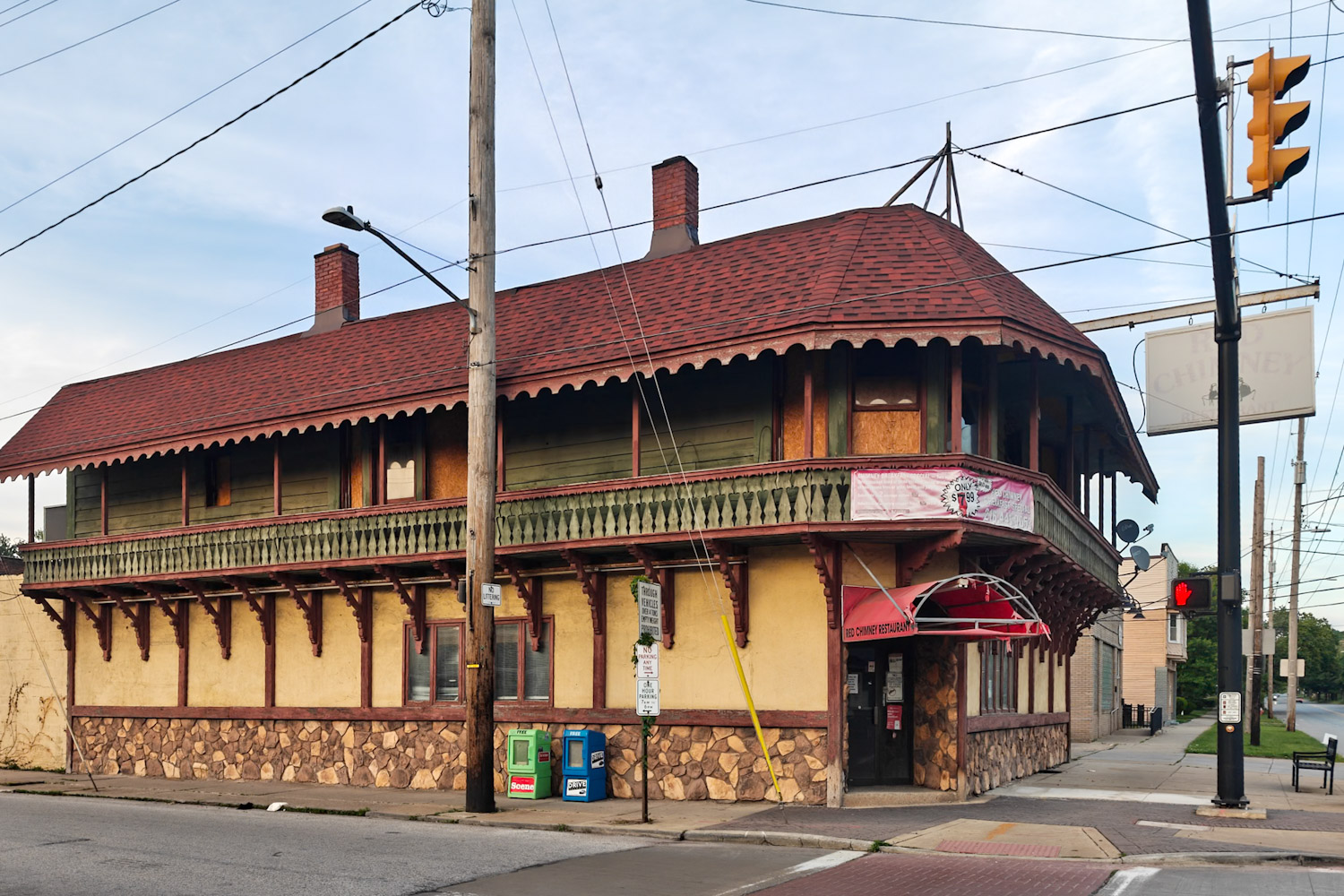
The former Red Chimney restaurant in May, before it was approved for demolition (Harrison Whittaker).
The commission believed that the building’s restoration would not be financially viable — and that the abandoned structure could pose a hazard to the community in the meantime.
The Slavic Village Neighborhood Plan was created by SVD and the City of Cleveland, in consultation with SmithGroup of Cleveland. The plan was shaped by community ambassadors, as well as a Steering Committee made up of community leaders.
The plan will be officially presented on June 29 at Slavic Village’s annual meeting, with Cleveland Mayor Justin Bibb and City Planning Commission Director Calley Mersmann as keynote speakers.
END