
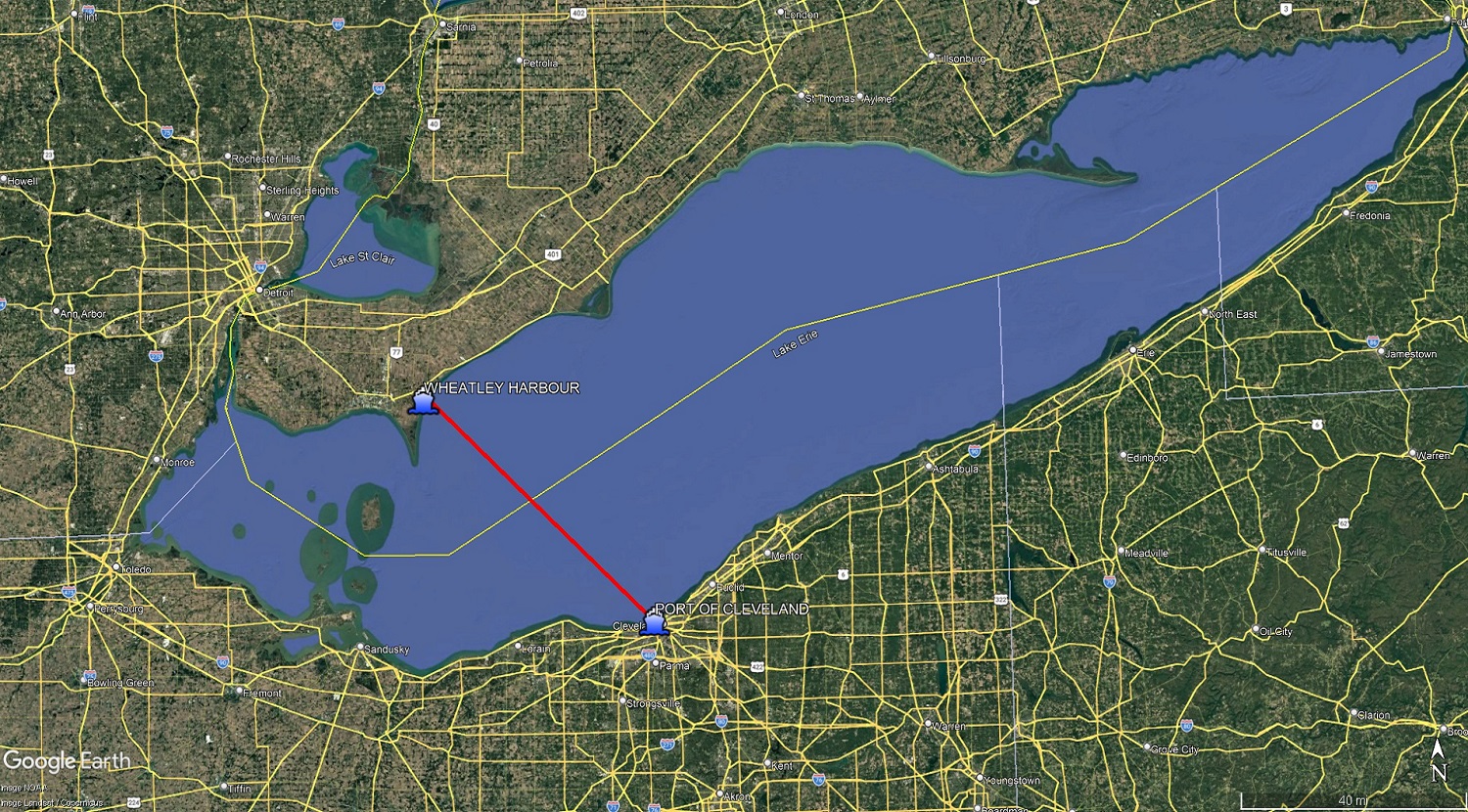
Lake-shipping distance from the Port of Cleveland to Wheatley Harbour in Ontario is 55 miles or two to three hours. By land, it’s more than 200 miles or at least 3.5 hours, depending on border crossing delays (Google). CLICK IMAGES TO ENLARGE THEM.
Passengers not on the manifest yet

The Port of Cleveland and Milo Harbour Inc. have signed a Memorandum of Understanding (MOU) to initiate a new cross-lake truck ferry service between Northeast Ohio and Southern Ontario. But if you’re looking to catch a ride as a passenger, your ship has yet to come in.
Expected to launch in early 2028, the cargo service will create a direct maritime connection across Lake Erie, providing manufacturers, shippers, trucking companies, and logistics partners with a reliable alternative to one of North America’s busiest and most congested border crossings while strengthening regional supply chain resilience and cross-border trade.
The proposed Cross-Lake Truck Ferry Project would establish a cargo terminal at Milo Harbour in Wheatley, Ontario, connecting directly with the Port of Cleveland and the USA.
The service is expected to accommodate up to 300 round-trip truckloads per day, while offering a new maritime transportation corridor for cargo moving between Canada and the United States.
With an estimated one-way transit time of approximately two to three hours for the 55-mile cross-lake trip, the project provides a competitive alternative to current over-the-road truck transit times.
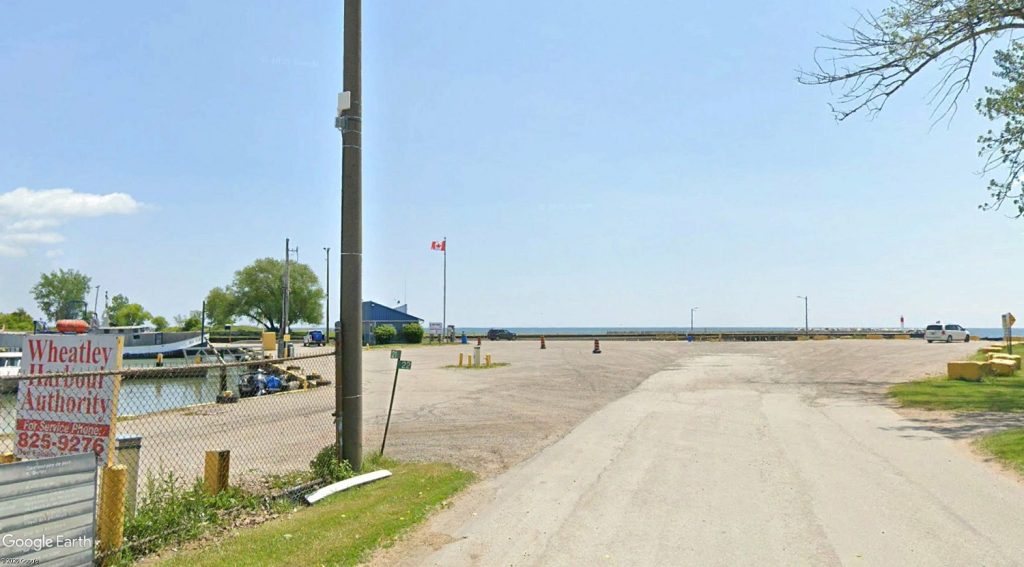
Looking south toward Lake Erie from Wheatley Harbour on the Canadian side of the lake. Another 55 miles beyond is Cleveland (Google).
Current travel time over the 210-mile land route from Cleveland to Wheatley is about three and a half hours, not including border crossing delays. Past proposals more than a decade ago for cross-lake ferry service included truck, car and passenger trip options.
But those faded away because the primary revenue source was to be shipping auto parts between auto plants in Southern Ontario and Northern Ohio — auto plants that no longer exist.
The project is designed to improve supply-chain resilience by reducing dependence on increasingly congested highway and rail networks, particularly the Windsor-Detroit gateway, where approximately one-quarter of all Canada-U.S. merchandise trade crosses the border.
“This new service further solidifies the Port of Cleveland as a leader in providing innovative services within the Great Lakes maritime trade,” said Port of Cleveland Chief Operating Officer David Gutheil in a written statement.
“We are proud to partner with Milo Harbour, who shares our vision to seek solutions that build the maritime trade relationship between Ohio and Canada,” he added.
The proposed service would complement existing truck and rail transportation networks by adding a new marine option for manufacturers, distributors, trucking companies and logistics providers.
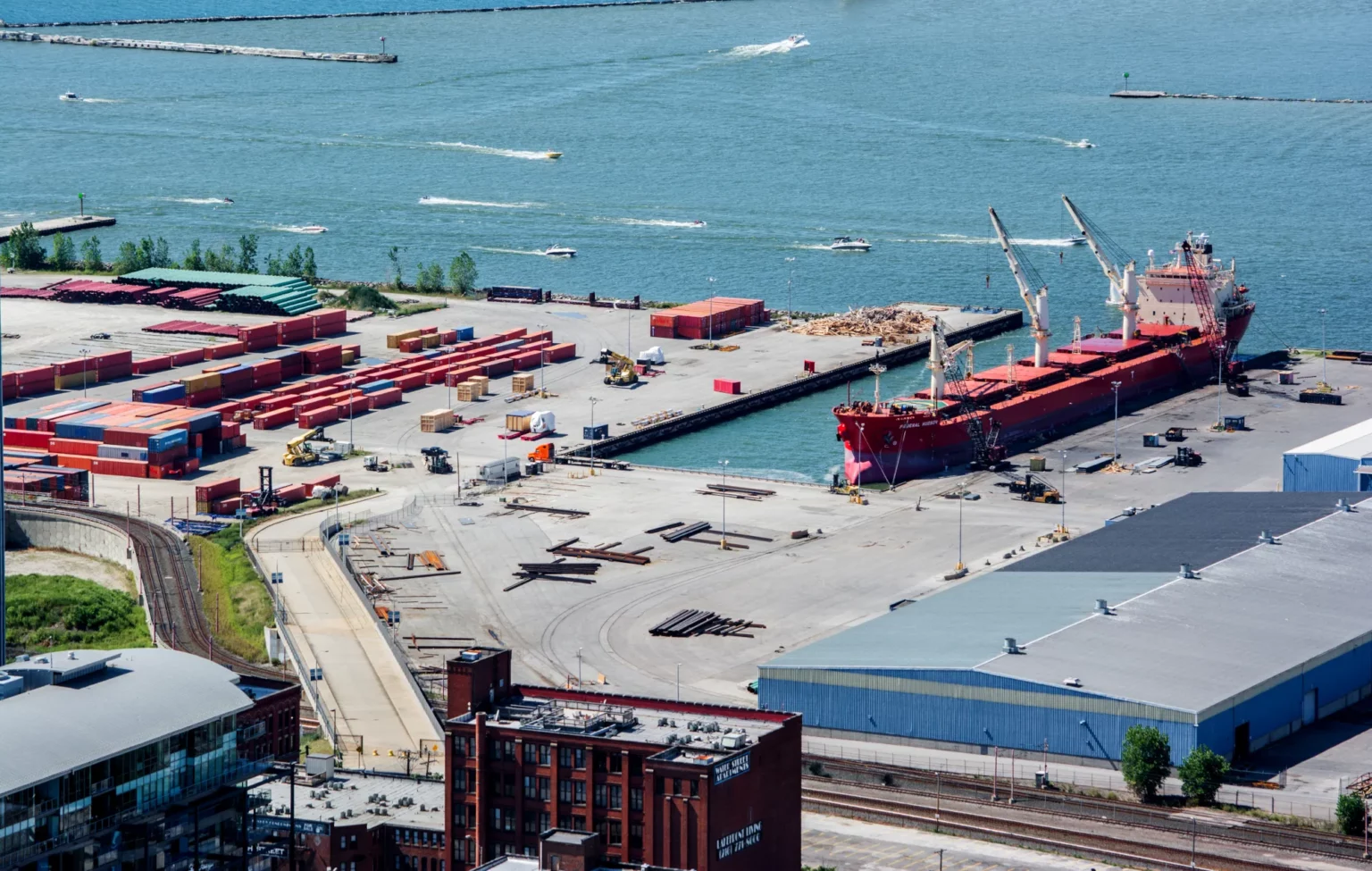
The Port of Cleveland is an international gateway, including to our closest neighbors across the lake (Tim Evanson-Creative Commons).
Once cargo arrives in Cleveland, it would have immediate access to the Port’s established highway and rail connections, reaching approximately half of the U.S. population within a 500-mile radius.
The project would also provide Canadian shippers access to the Port of Cleveland’s container service connecting to European markets. Conversely, Ohio based exporters would have quicker and more efficient access to the Canadian marketplace.
For manufacturers on both sides of the border, the project comes as companies continue to invest in reshoring operations and diversifying supply chains across North America.
At the same time, cargo networks face growing challenges, including driver shortages, increasing border congestion, and aging transportation infrastructure.
“This project represents a strategic opportunity for Wheatley, as well as the province of Ontario and all of Canada,” said Milo Harbour Project Director Kieran Stewart.

Wheatley Harbour, where Milo Harbour Inc. has freight shipping facilities, also hosts a small amount of recreational watercraft (Google).
“The team at Milo Harbour Inc. are committed to supporting Ontario and Canada’s plan to diversify trade and ensure our supply chains are stronger than ever,” Stewart continued. “Along with our partners at the Port of Cleveland, we are becoming part of the solution to build Fortress North America.”
In addition to improving cargo mobility, the project is expected to reduce highway congestion and lessen wear on regional transportation infrastructure by shifting a portion of long-haul truck traffic onto the Great Lakes.
Marine transportation also has the potential to lower diesel emissions and improve air quality by reducing truck-miles traveled. This initiative further underscores the Port of Cleveland’s commitment to sustainability and the ambitious goals outlined in its Climate Action Plan.
Complementing this effort, the Port is also leveraging funding from the U.S. Environmental Protection Agency’s Clean Ports Program to procure electric cargo-handling equipment including cranes, forklifts, and reach stackers to reduce diesel emissions and advance cleaner, more sustainable port operations.
The proposed corridor would leverage existing infrastructure at both ports, limiting the need for major new development. Both the Port of Cleveland and Milo Harbour already offer industrial zoning, warehousing, cargo handling equipment and space for cargo operations, helping reduce project costs and accelerate implementation.
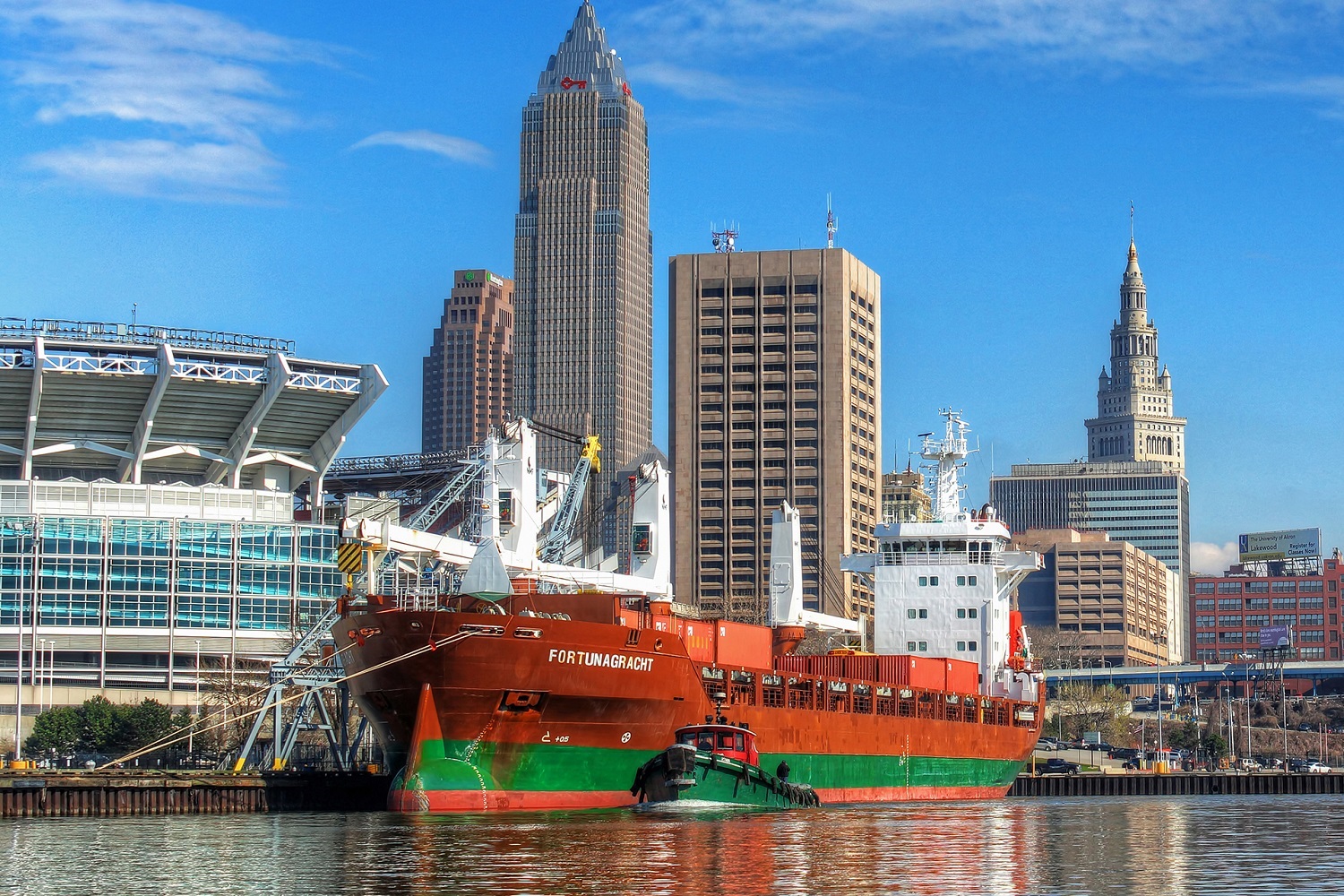
The Port of Cleveland offers direct cargo access to roads and rails on the American side of Lake Erie (Port of Cleveland).
Additional future investments would focus on customs and border-processing facilities, cargo terminal improvements, a roll-on/roll-off (Ro-Ro) ramp for trucks and trailers, and marine handling infrastructure to support barge operations.
The Port of Cleveland serves as one of only two current container ports on the Great Lakes with international container service and provides multimodal connections to rail, interstate highways and global markets.
The proposed truck ferry would further strengthen the Port’s role as a strategic logistics hub connecting North American manufacturers with domestic and international supply chains.
Project planning and stakeholder engagement are ongoing as the partners continue evaluating infrastructure requirements, regulatory approvals, and operational planning for the proposed service.
END