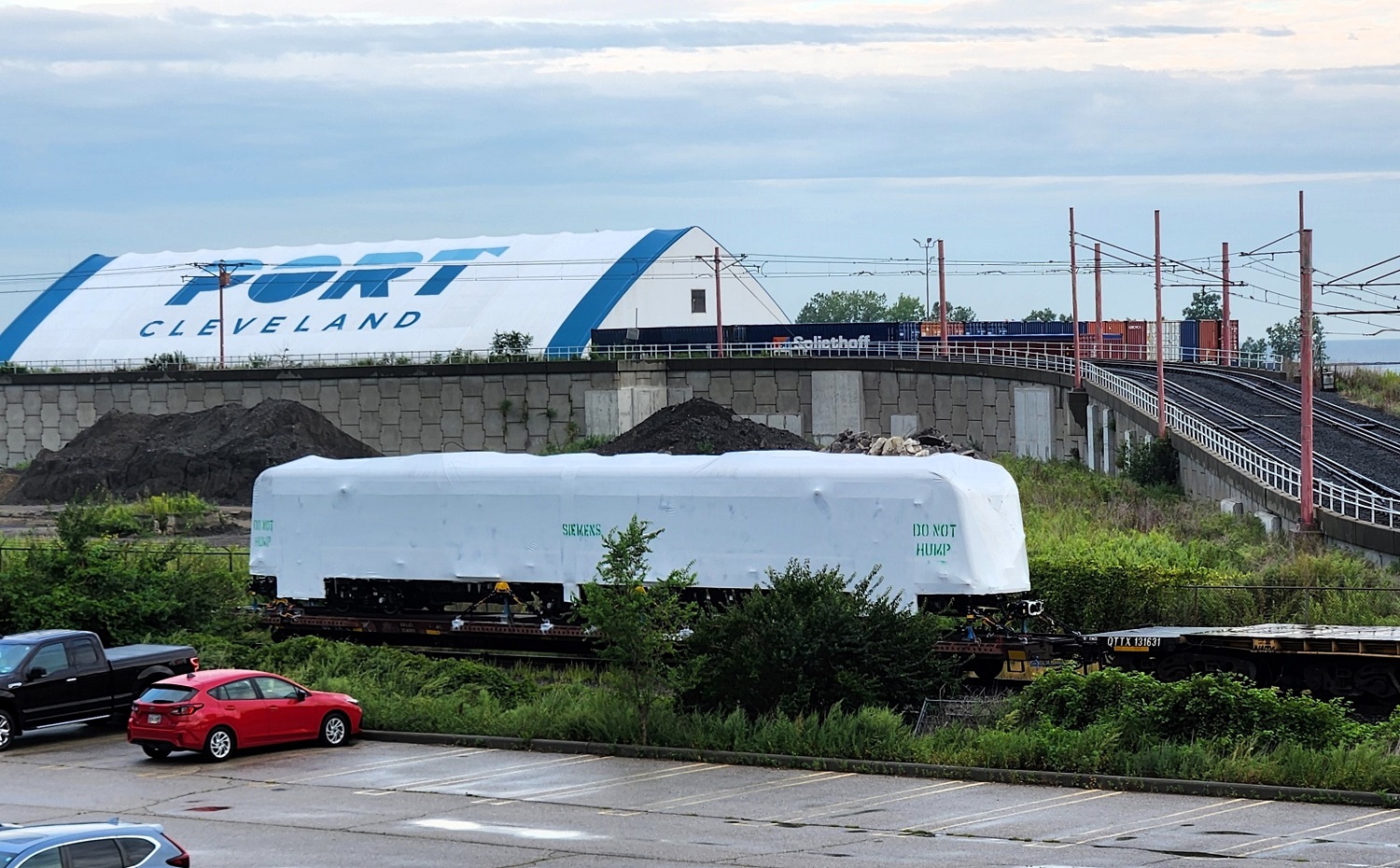
Wrapped like a present, train No. 401, the first of 54 Siemens Mobility S-200 light-rail cars for the Greater Cleveland Regional Transit Authority, arrived this morning at the Port of Cleveland. Here it will start its life over the coming decades, taking Greater Clevelanders to and from work, school, sporting events and many other journeys (GCRTA). CLICK IMAGES TO ENLARGE THEM.
Railcars to undergo testing on West Side

Just after sunset Friday, the first new light-rail train acquired by the Greater Cleveland Regional Transit Authority (GCRTA) in more than 40 years arrived by freight train at CSX Transportation’s Collinwood Yard. Today, CSX moved Siemens Mobility train No. 401 to the Port of Cleveland for delivery to GCRTA via a newly built transfer track.
This big moment is the culmination of years worth of effort — planning, fundraising, design, manufacturing of light-rail vehicles (LRVs) and reconfiguration of GCRTA’s rail system so that a single, standardized railcar can use all three of its rail lines and all areas of its maintenance, servicing and storage facilities.
“This arrival is more than just new equipment; it’s a promise kept to our riders,” said GCRTA CEO and General Manager India Birdsong Terry in a written statement.
“These new LRVs are catalytic for the health and economics of Greater Cleveland,” she added. “They will promote increased ridership and encourage transit-oriented development along the Red Line communities from East Cleveland to Cleveland Hopkins International Airport.”
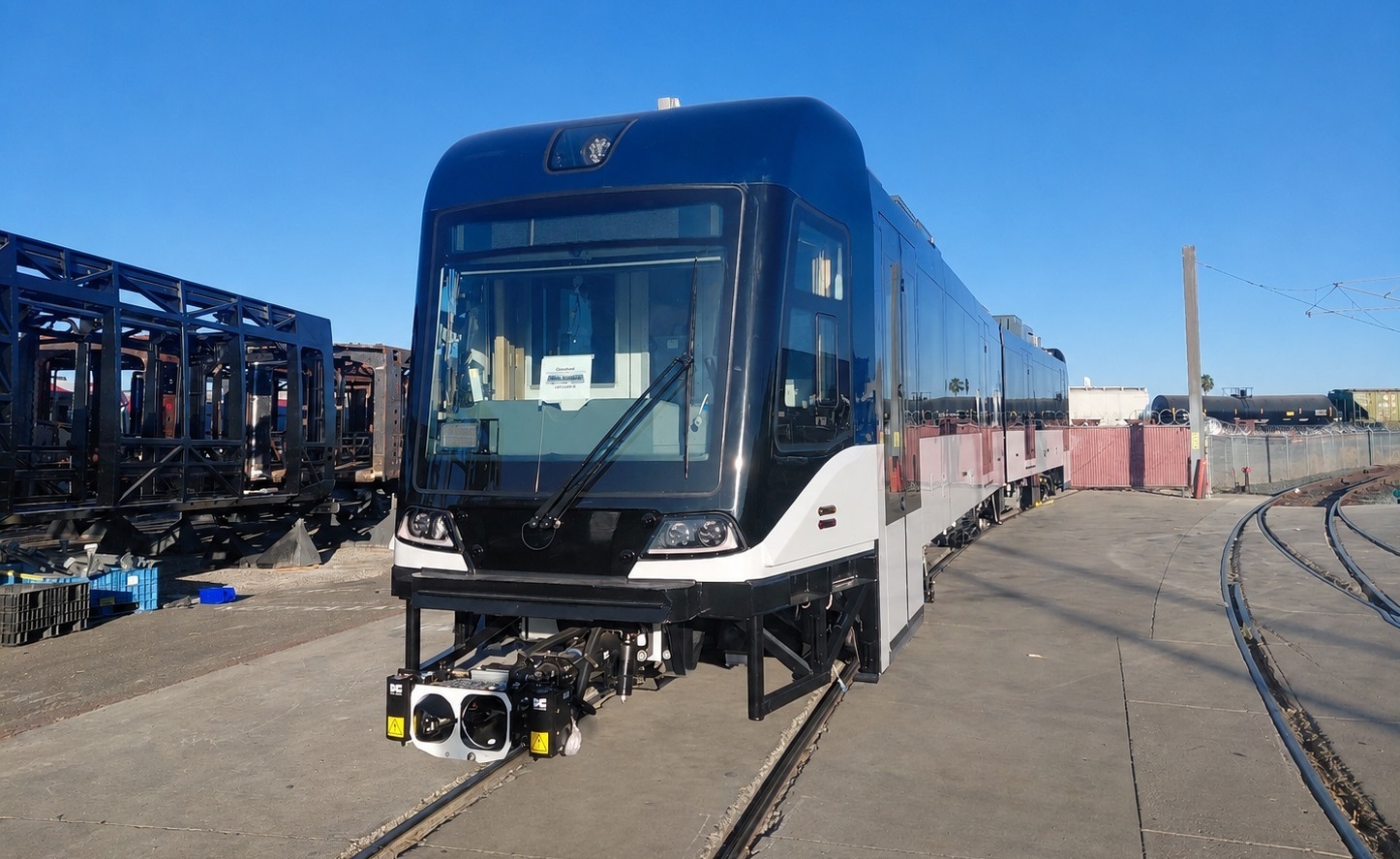
One of the next light-rail trains to come to Cleveland will be this one, No. 403, awaiting its 2,400-mile ride on a freight train to Cleveland at the Siemens Mobility plant in Sacramento, CA (GCRTA).
Shrink-wrapped for protection by Siemens Mobility at the railcar’s manufacturing plant in Sacramento, CA, the first new train, called the S-200, was shipped early last week to make the cross-country ride on a flat car to Cleveland (see Joseph Aliberti video). Another 53 railcars will follow No. 401 east.
It will be unwrapped and rolled off its flatcar at the Port, then pulled by a GCRTA locomotive onto the Waterfront Line’s tracks. Then it, like the remaining 53 trains, will go west on the Red Line to GCRTA’s Brookpark maintenance shops near Hopkins International Airport.
Those shops were retrofitted to accommodate inspection, testing and training on the new trains. Siemens Mobility staff and equipment joined GCRTA employees at the Brookpark shops Aug. 17, said Casey Blaze, GCRTA’s rail equipment manager.
The new trains are scheduled to first enter regular service on the Airport-Downtown-Windermere Red Line in August 2027, he said. The Red Line trains, dating from 1984-85, are decaying faster than the Blue/Green Line trains that are several years older.
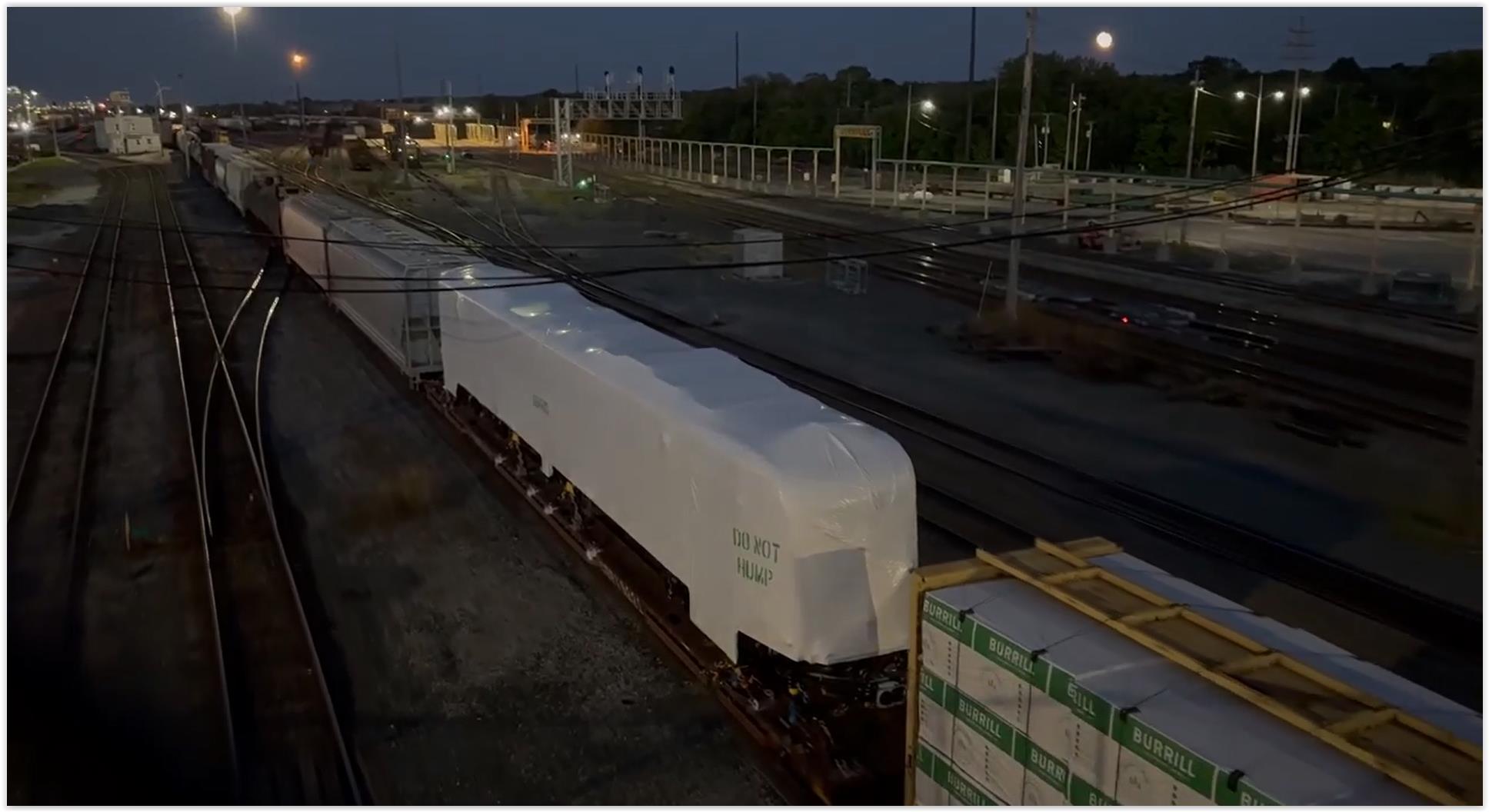
GCRTA train No. 401 arrived by freight train at CSX Transportation’s Collinwood Yard at about 8:30 p.m. Friday. The “Do Not Hump” on the protective shrinkwrap warns not to switch the delicate car over a railyard’s gravity hump (Joseph Aliberti).
At 1:40 a.m. July 22, a Red Line train suffered an electrical fire at the West Boulevard-Cudell station, sending three passengers to the hospital for smoke inhalation. It was the latest of multiple fires and breakdowns of GCRTA’s aging trains — the oldest of any urban rail transit system in the USA.
In July 2028, a year after the Red Line gets the new trains, they are due to enter regular service on the two routes to Shaker Heights. One is the Blue Line between Downtown and Van Aken-Warrensville and the other is the Green Line between Downtown and Shaker-Green Road Park-n-Ride.
Why will it take so long for the new trains to enter service? First, it will take another two and a half years for all 54 train cars to be manufactured and delivered to GCRTA. Due to tariffs and their increased costs, GCRTA will not exercise the final option to add the last six cars of a total of 60 railcars to its rail fleet.
Meanwhile maintenance and servicing facilities plus station platforms on the Red, Blue and Green lines are getting retrofitted and standardized for the narrower train cars which will also continue until 2028.
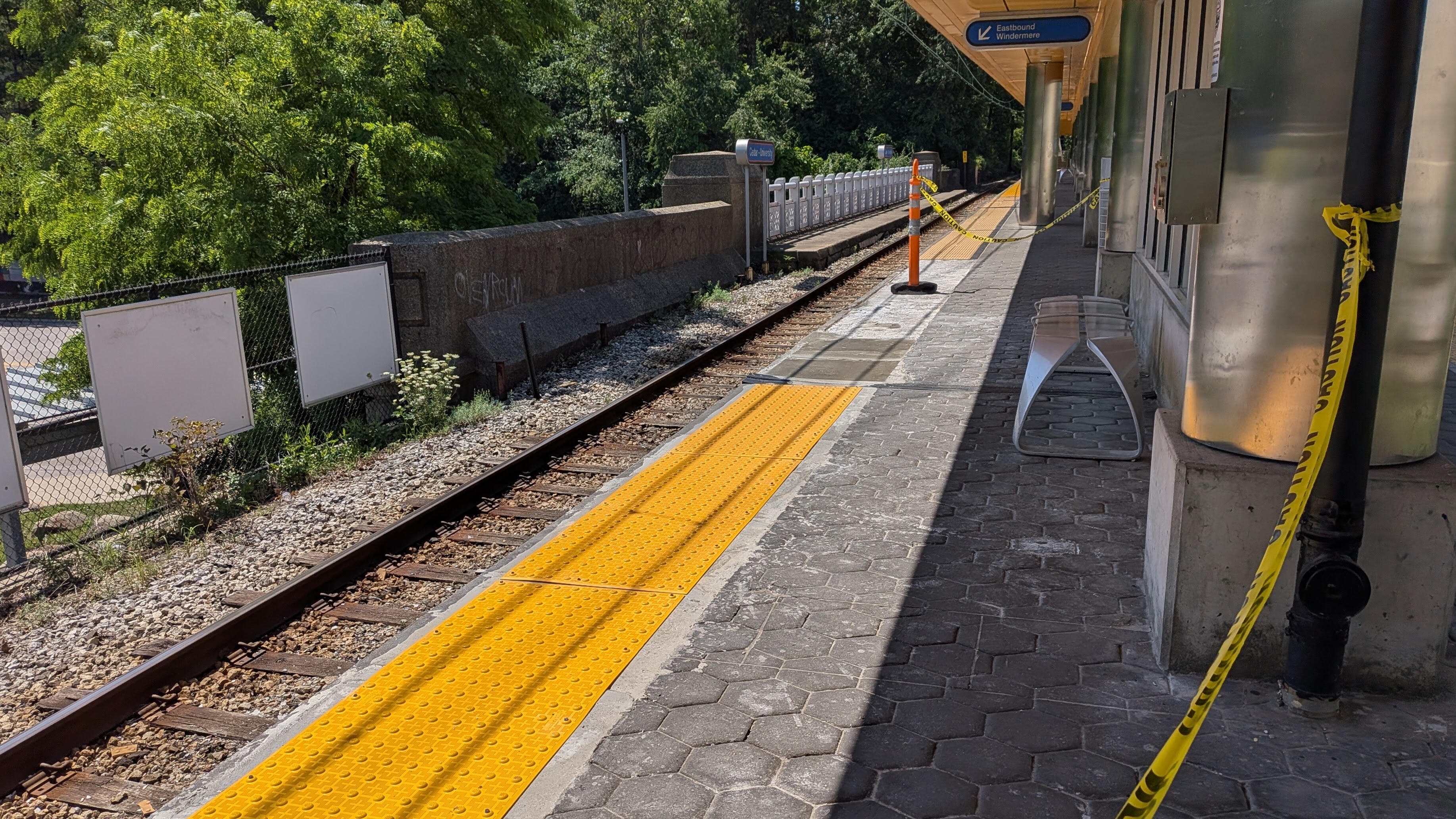
GCRTA is making repairs and preparations to platforms at all 18 of its Red Line stations so crews can quickly install platform extenders that widen the platforms to reach the new, narrower trains. There will be a pair of week-long shutdowns, one on the east side and another on the west side, next summer to install the platform extenders (Noah Belli).
By standardizing GCRTA’s current heavy- and light-rail rail system, GCRTA can operate with fewer trains, simplify maintenance and offer Shaker Heights-Airport service for the first time. The latter is dependent on voters approving a new transit levy in May 2027.
GCRTA’s railcar replacement program is a $435 million endeavor, with $91 million or one-fourth from GCRTA and the rest funded by state and federal grants, said Rajan Gautam, GCRTA’s deputy general manager of finance and administration at last month’s GCRTA board meeting.
“If someone were to come up to me and say, you put in 25 percent and you get an asset worth $435 million, I’ll make that deal any day of the week,” Gautam said.
Each train will undergo a 22-week commissioning process. A post-delivery inspection will take two days. Static testing will take four weeks. Then will come eight weeks of software load quality and dynamic testing to evaluate each train car’s propulsion, braking, wheel protection, couplers and automatic train control systems.
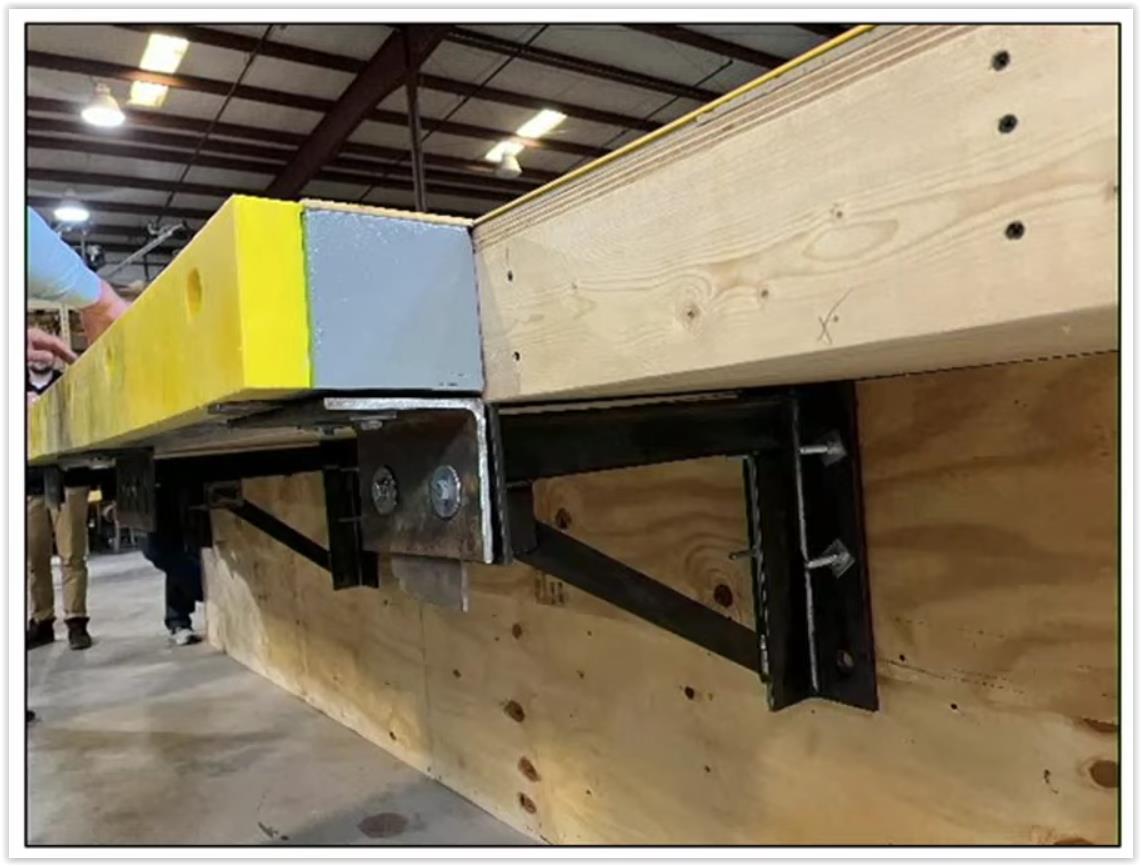
GCRTA has developed a quick, easy-to-install platform extension kit that will be attached to all Red Line station platforms next summer. The east and west sides of the Red Line will be shut down on back-to-back weeks to install the platform extenders after which GCRTA will retire its current Red Line rail fleet (GCRTA).
“Each train will have to travel 1,000 miles on the rail system without a major fault before we accept them,” Blaze said. “We’ll start testing them in Brookpark yard and then have them go from Brookpark station to Puritas to run full-speed tests starting in October.”
A manufacturer’s warranty on each railcar starts upon GCRTA’s conditional acceptance of each car. But there’s a lot of moving parts and complicated components to break on each car.
“There are 30 miles of electrical wires in each railcar,” Blaze said. He added that the trains’ design is focused on passenger experience. Each car has 52 easy-to-clean seats for the highest level of sanitation, additional standing room, four wheelchair areas for enhanced accessibility, two bicycle racks, and an advanced infotainment system.
In addition, the vehicles will be built to withstand the coldest Cleveland days. The overhead pantographs that collect the trains’ electricity from the overhead wires also have ice-cutters to ensure contact with the wire. The train operator’s cab area has a dedicated heating, ventilation, and air-conditioning unit, heated windshields, and enhanced visibility.
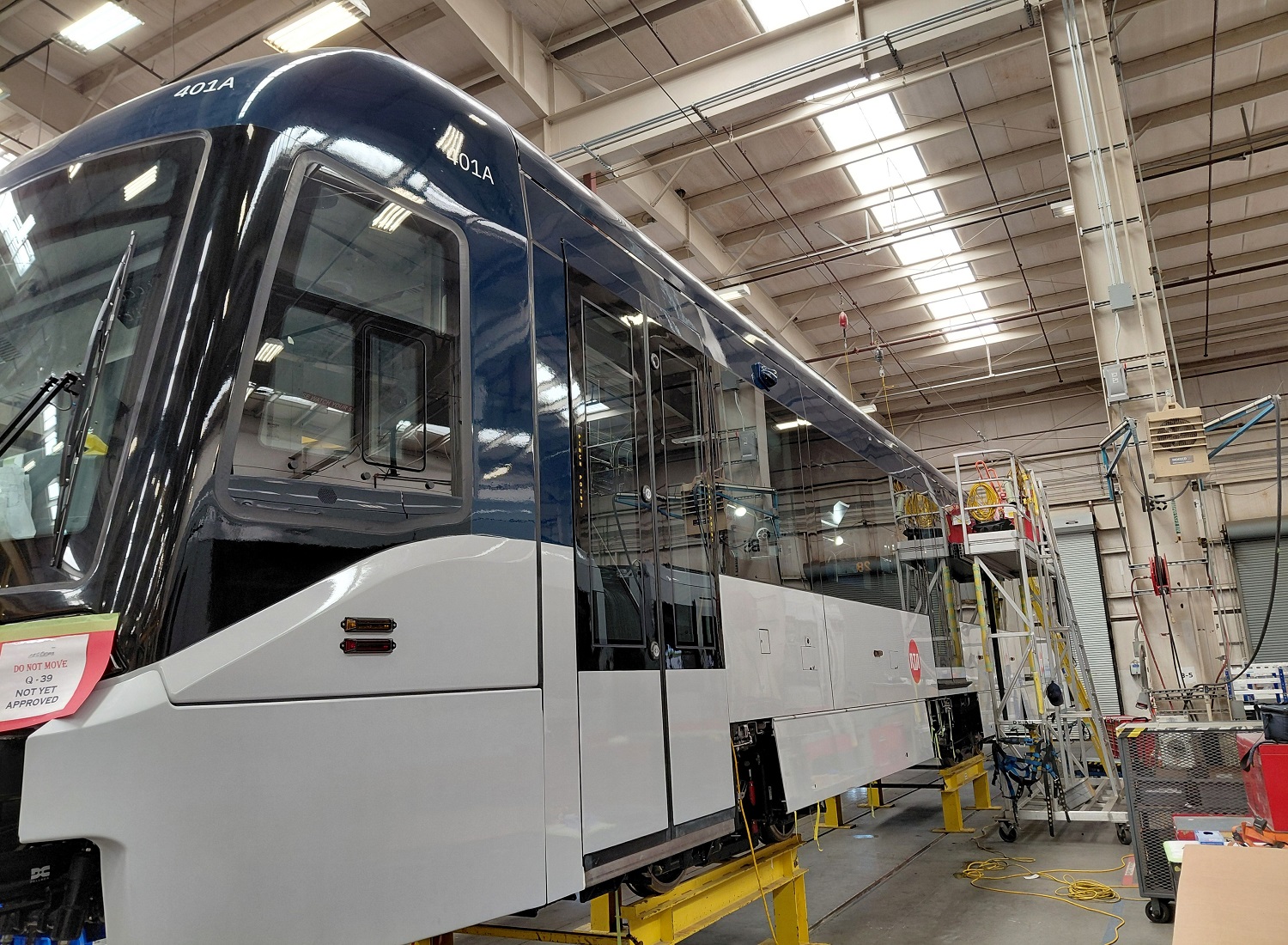
When it was still getting assembled earlier this year in Sacramento, light-rail train No. 401 was on track to be the first light-rail train delivered to Cleveland (GCRTA).
Eleven S-200 trains are due to arrive in Cleveland this year, or three each month. Except two will arrive in December because of the holidays, Blaze said. Then Siemens Mobility is due to ship two trains each month after that. The last train isn’t due to arrive Cleveland until 2029.
The railcar replacement program was one of the last major capital improvement programs initiated and carried out by GCRTA’s retiring Deputy General Manager of Engineering and Project Management Mike Schipper, who has served in that role since 2001.
“I can leave because we’ve got a great team running that (railcar) program,” Schipper said. “What they’ve accomplished is pretty substantial with a trying time with inflation and just the whole manufacturing process. It makes it easier to leave because they’re doing a great job. It is hard to walk away but it is time.”
END