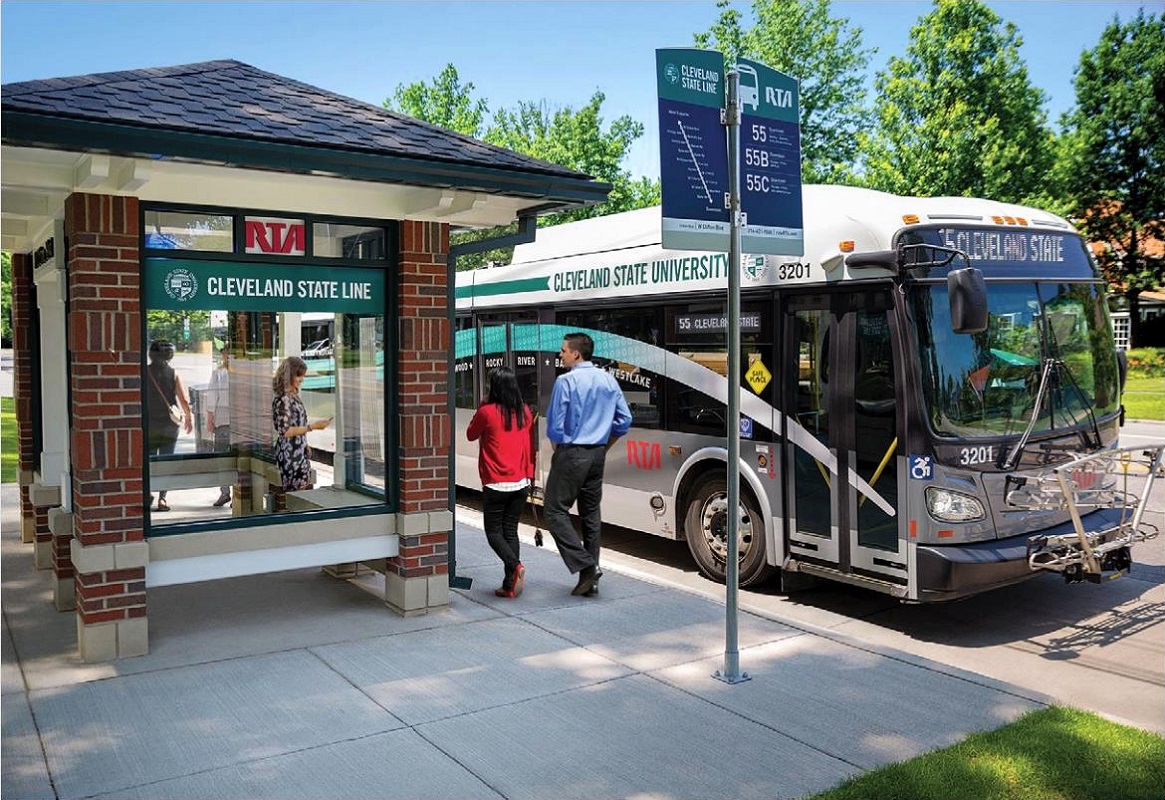
Cleveland State University has long been a close partner to the Greater Cleveland Regional Transit Authority in many ways, including its sponsorship of the bus rapid transit-light route along Clifton-Lake through Cleveland and its West Shore suburbs. But the financially troubled university has left transit riders at the curb by exiting the U-Pass program (GCRTA). CLICK IMAGES TO ENLARGE THEM.
Thousands of students may be left at curb
ARTICLE UPDATED JULY 30, 2025

Cleveland State University (CSU) notified its students this morning by e-mail that it will immediately discontinue its participation in the Greater Cleveland Regional Transit Authority’s (GCRTA or RTA) U-Pass program. This program provided to CSU students vastly discounted monthly GCRTA passes which they could use for other transportation — to work, medical appointments, grocery shopping and more.
In a follow-on communication this afternoon from CSU President Laura Bloomberg to the “campus community,” she cited new state regulations limiting CSU’s ability to offer this transportation benefit to all students.
“In previous years, all CSU students registered for classes were charged an RTA U-Pass fee granting them an RTA transit pass each semester,” Bloomberg wrote. “However, state regulations no longer allow us to charge this fee for all students as part of our billing process. As a result, our RTA U-Pass program is ending as of the summer 2025 semester. Students will no longer be charged a fee for this program, and fall semester bills have been adjusted to reflect this change.”
But she noted that a new transit benefit is under consideration and could be announced soon.
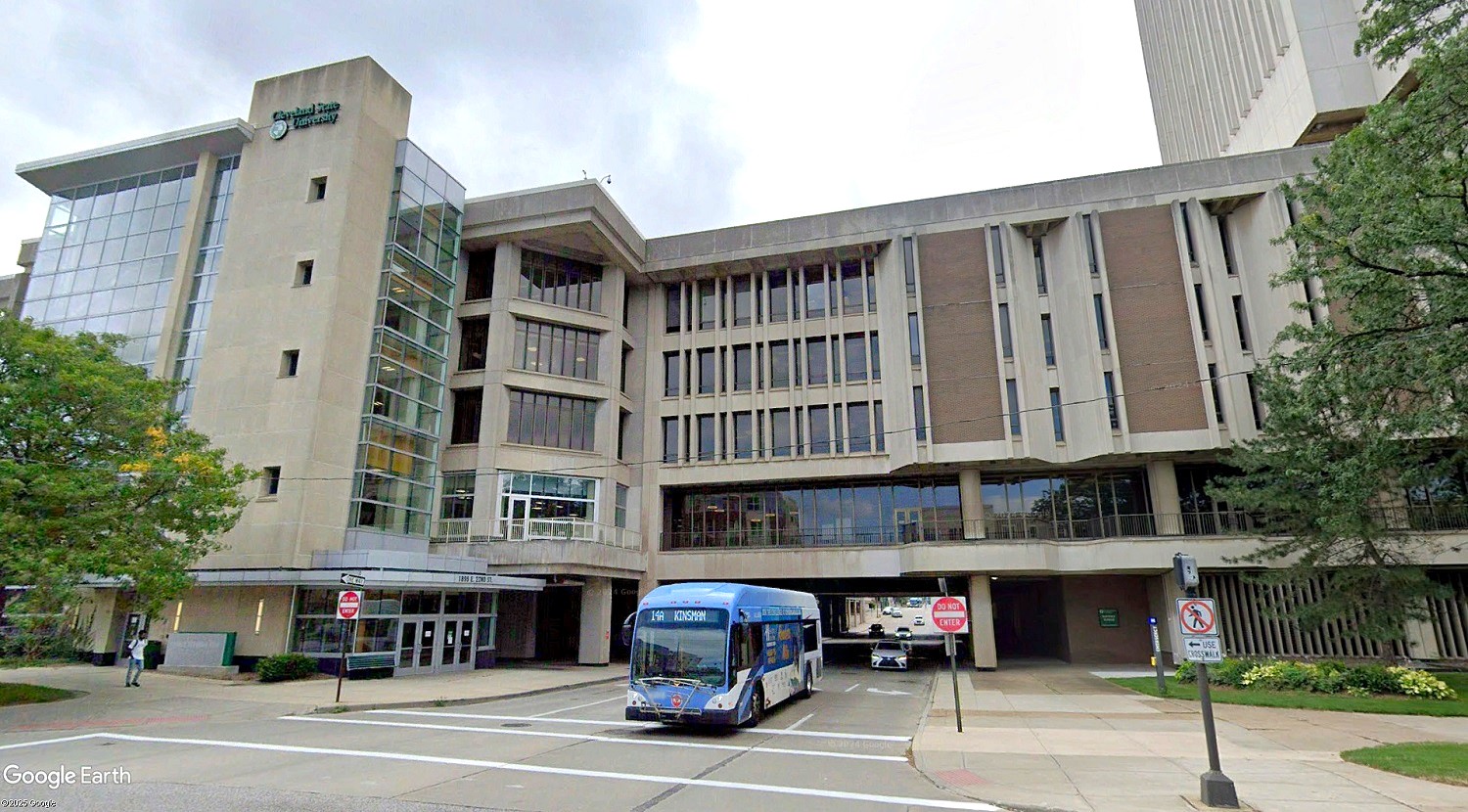
Numerous bus routes converge at Cleveland State University’s main campus in Downtown Cleveland, making it easily accessible from throughout Cuyahoga County (Google).
“I realized that this morning’s message caused concern, especially for those of you who frequently use RTA transit,” she continued. “I am truly sorry for the stress this is causing including the unexpected financial hardship caused by the abrupt nature of this change. While we cannot control the state regulations that impact the student fee structure, we are working internally on options to lessen the immediate financial impact of this for our students. You will receive further communications regarding these options as soon as we have details available.”
In the meantime, CSU advised their students that if they wanted monthly GCRTA passes, priced at $95 each, they could buy them at their expense. But is a cost that may force some students to leave school or, if they have cars, drive and park downtown. The CSU U-Pass cost $57.50 per semester for students enrolled in one or more credit hours on CSU’s main campus. The CSU U-Pass Website page was deleted.
Termination of the U-Pass program is limited to CSU. Cuyahoga Community College (Tri-C) is continuing its participation in GCRTA’s program for Main Campus students. A U-Pass is free to all eligible Tri-C students. Case Western Reserve University includes a $50 U-Pass fee each semester as part of its tuition.
“After discussions over the last few weeks, Cleveland State University informed the Greater Cleveland Regional Transit Authority today of their decision to opt out of our U-Pass program starting with the Fall 2025 Semester,” said GCRTA Public Information Officer Robert Fleig in an email to NEOtrans.
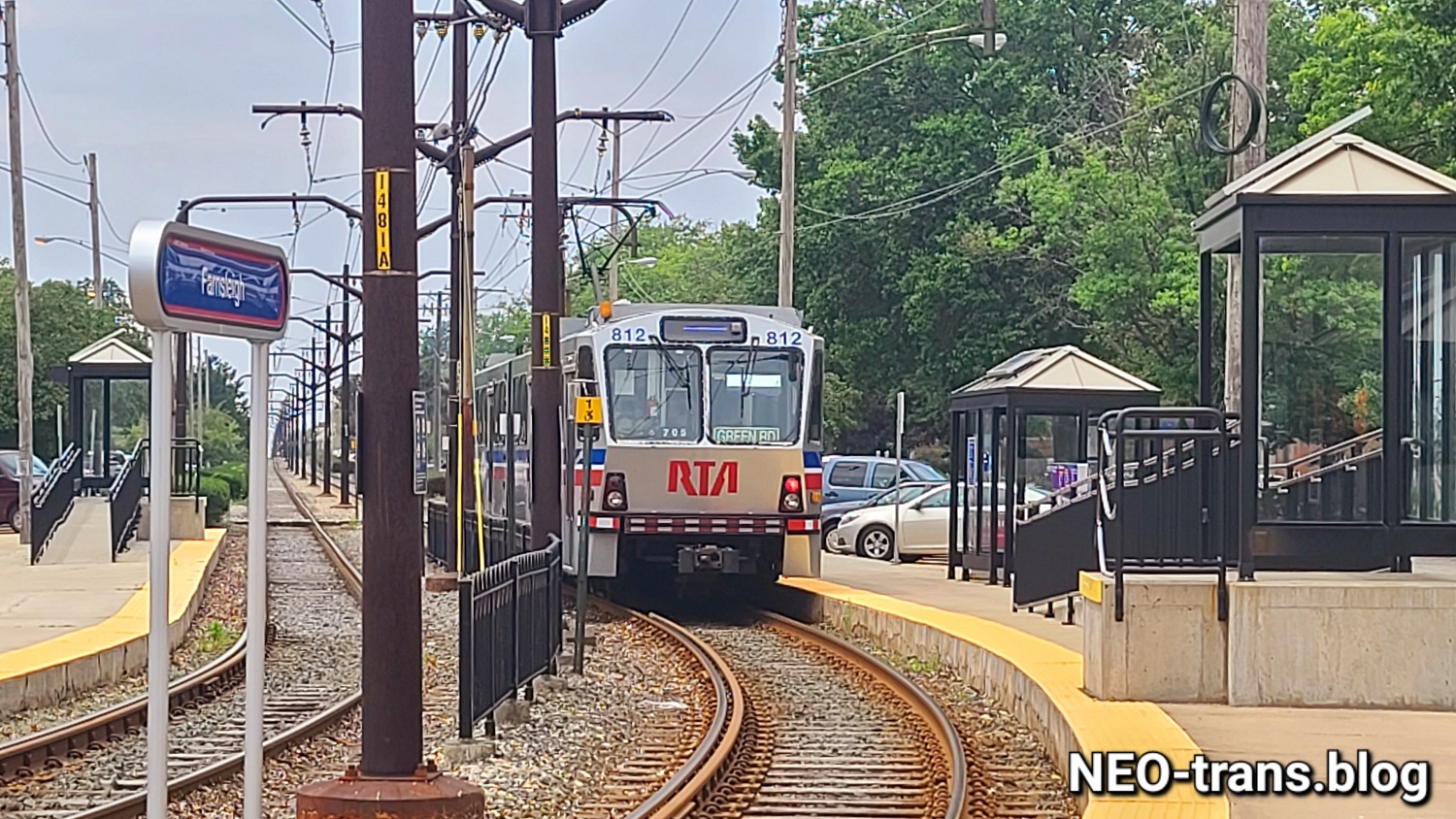
U-Pass programs exist at other colleges and universities in Ohio for travel on buses and trains. There is no indication yet that any of them, other than Cleveland State University, are being ended (NEOtrans).
Total revenue GCRTA generated from CSU under this program is approximately $1.4 million a year. Fleig said GCRTA is in discussions with CSU to enroll them into another program which will enable them to sell fare media to students who may want the option of purchasing a monthly, weekly, or daily pass. But it remains to be seen if they will be available at a discount for CSU students.
“GCRTA values our relationship with CSU and is continuing to collaborate with them in providing public transportation for their students,” Fleig said.
Public reaction to CSU’s termination of the U-Pass program was expressed with anger and confusion. Some on Reddit said they would have to leave CSU or be forced to drive to classes at greater expense. Alumni said the program made a difference in their lives.
CSU has been facing a significant financial crunch in recent years. In that time, it has made significant budget cuts including staff layoffs and cuts to existing programs. Its enrollment has fallen, too, declining from 16,088 in 2019 to about 13,544 last spring semester.

On Reddit, some Cleveland State University students said they would have to leave CSU or be forced to spend more money to drive to the main campus to attend classes (CSU).
While declining U.S. birthrates in recent decades are to blame, in part, CSU has made up for that with international students. But with the Trump Administration tightening immigration policies affecting the issuance of visas, international student enrollment has fallen.
It is not known how many CSU students received the U-Pass last semester. But when CSU sponsored the GCRTA’s No. 55 Clifton-Lake bus route following its upgrade with bus rapid transit infrastructure in 2014 in Cleveland and its West Shore suburbs, 14,000 CSU students received the U-Pass. CSU students made more than 500,000 transit trips per year on GCRTA.
GCRTA staff and transit advocates said they would like to see Cleveland copy the C-Pass program in Downtown Columbus. It is funded by the local metropolitan planning organization (its version of our Northeast Ohio Areawide Coordinating Agency) and Columbus’s Downtown Special Improvement District.
By offering free transit passes to downtown employers, the C-Pass program has significantly reduced demand for Downtown Columbus parking. While it doesn’t include students, the Ohio State University provides free passes to its students through its own program. Meanwhile, parking rates in Downtown Cleveland have risen 30 percent since before the pandemic.
END