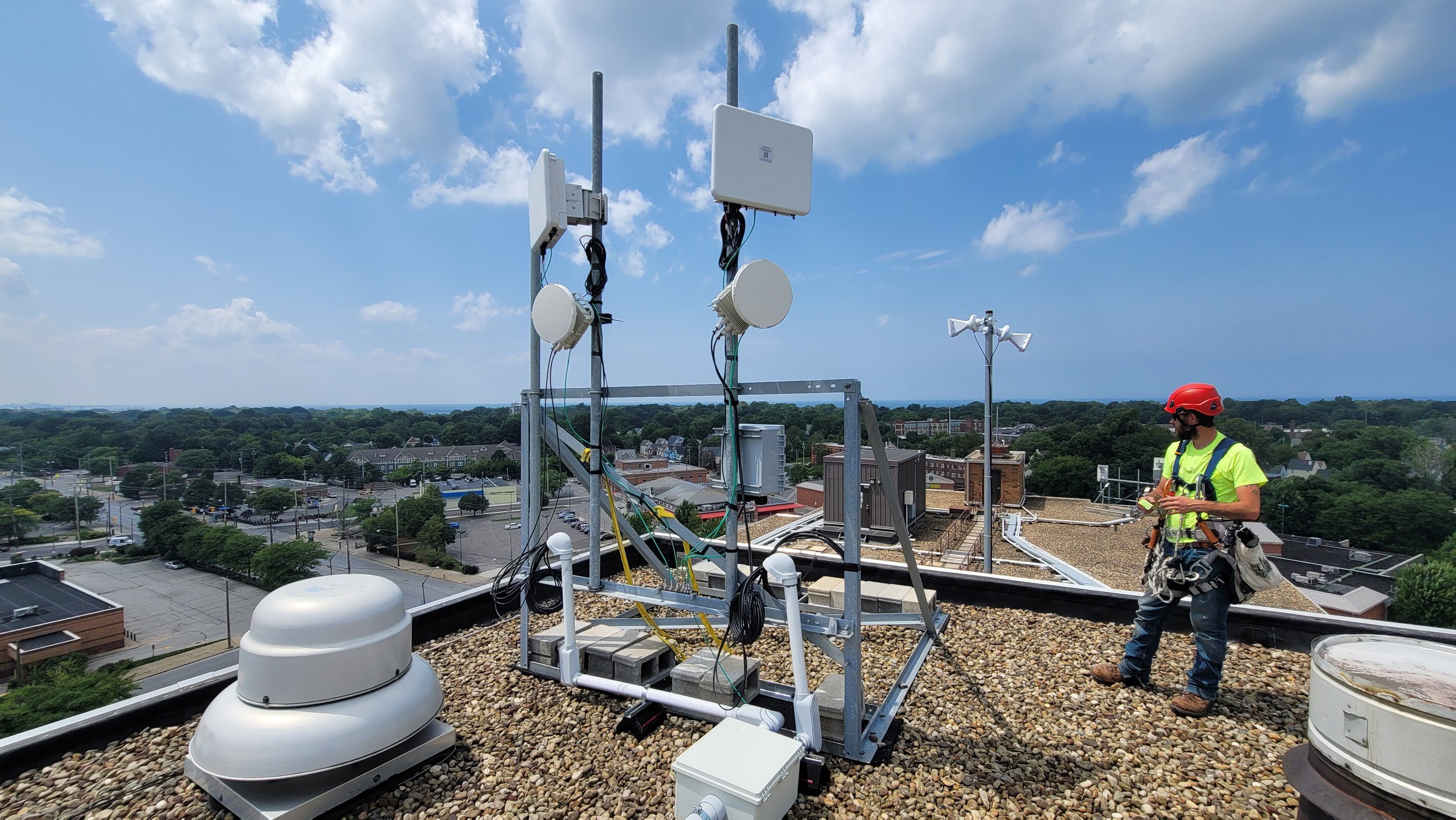
Atop the Morning Star Apartments on St. Clair Avenue near East 105th Street in Cleveland’s Glenville neighborhood, high-speed internet equipment was installed to connect more Clevelanders to the Internet (DigitalC). CLICK IMAGES TO ENLARGE THEM.
$10M broadband grant boosts DigitalC
Ohio Gov. Mike DeWine and the Ohio Department of Development’s BroadbandOhio office today announced a milestone in the state’s effort to provide affordable high-speed internet across the entire city of Cleveland and help address its digital divide.
More than 6,300 Cleveland households, representing 15,800 residents, are now connected to high-speed internet through a $10 million BroadbandOhio grant. The partnership, which began in January 2024, involves the city of Cleveland and the nonprofit DigitalC.
“Whether it’s connecting with loved ones, having access to healthcare, helping kids with homework assignments, or looking for a job, high-speed internet access has never been more important,” said Gov. DeWine in a written statement.
“For a large urban community like Cleveland, closing the digital divide will have a transformational impact not just today but for many generations to come,” he added.
In addition to state funding, the city of Cleveland provided $20 million of the estimated total cost of $53 million to enable DigitalC to rapidly deploy “next-generation fixed wireless access” (ngFWA) technology across the city.
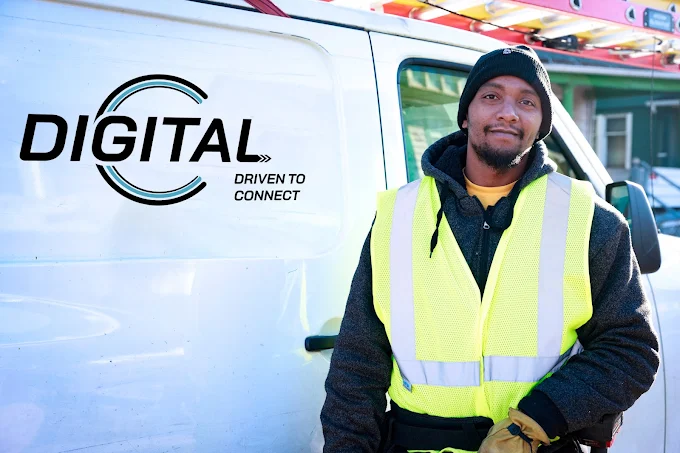
DigitalC is a growing Cleveland-based nonprofit company with about 40 employees so far and is expanding to Detroit as well (DigitalC).
The ngFWA was created to overcome challenges such as obstructions and interference and offer easier and faster deployment compared to traditional cable or fiber optic networks.
DigitalC is a nonprofit technology social enterprise headquartered at the MidTown Tech Hive, 6815 Euclid Ave., in Cleveland’s Hough neighborhood. The organization was founded in 2015. DigitalC connected its 5,000th household to high-speed home internet in June.
Households connected through the project have access to high-speed internet for $18 per month, with a five-year commitment, and it is free for families with children in the Cleveland Metropolitan School District.
DigitalC has also provided online skills training to more than 14,000 residents and facilitated more than 17,500 training sessions, advancing digital literacy alongside access.
“We are making life better for families in Cleveland,” said Lydia Mihalik, director of the Ohio Department of Development. “When people can get online at home, they can apply for jobs, help their kids with schoolwork, or talk to a doctor. Together, we are closing the digital divide and building a stronger Ohio that’s ready for the future.”
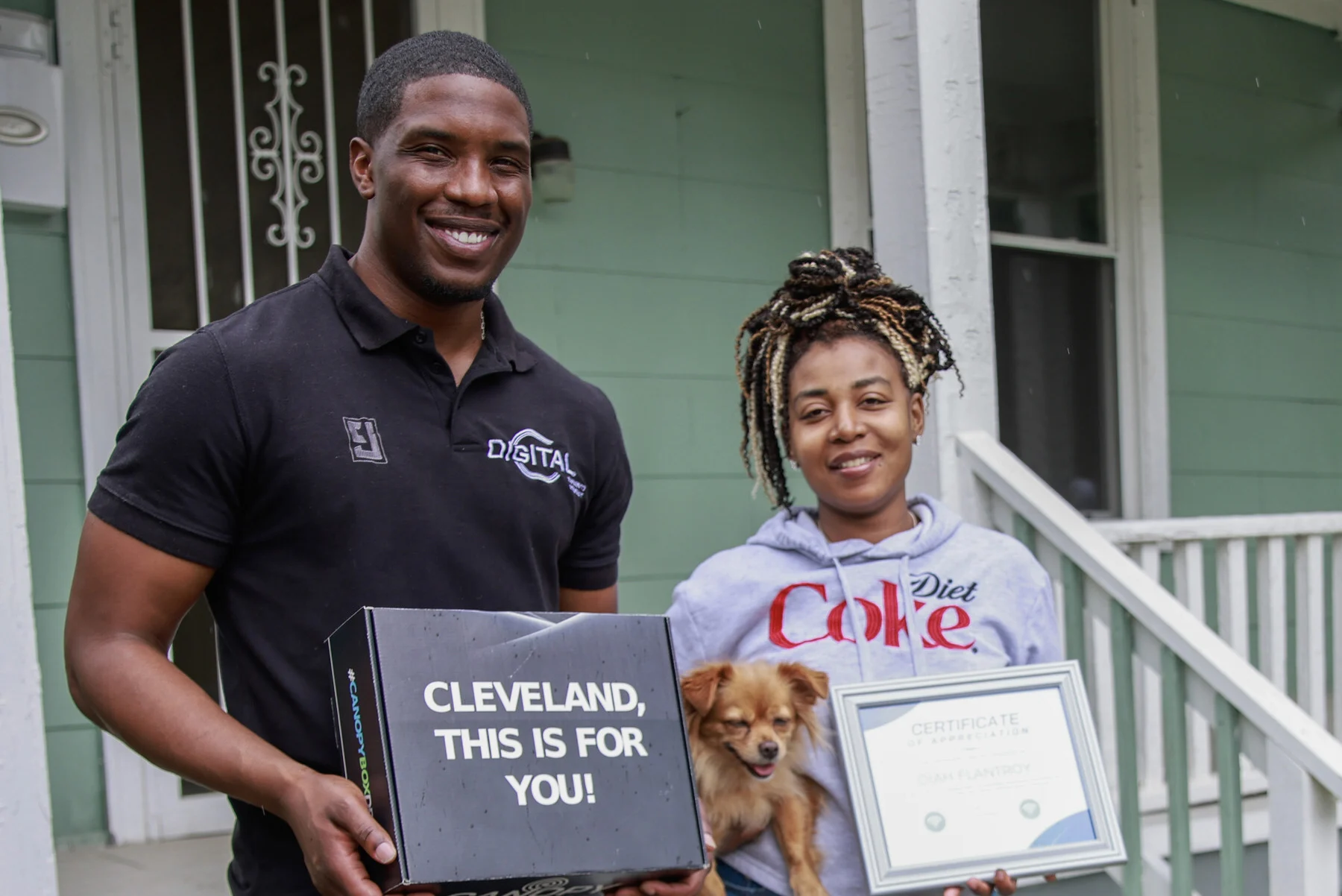
DigitalC celebrated its 5,000th connection in June with a surprise visit by DigitalC’s CEO Joshua Edmonds to a resident of Cleveland’s Fairfax neighborhood, complete with a certificate and tokens of appreciation (DigitalC).
Considered one of the worst-connected cities in the United States in 2019 by the National Digital Inclusion Alliance, Cleveland has made significant progress in providing access to high-speed internet for its residents since the project began.
“This is a historic achievement, more than a decade in the making,” said DigitalC CEO Joshua Edmonds. “Ten years ago, DigitalC made a visionary promise to bridge the digital divide and connect the unconnected.”
“With this support from the state of Ohio, alongside a coalition of partners, we have delivered on that commitment, our promise to prosperity, and ushered in the Cleveland era as a fully connected city,” Edmonds continued. “Today, Cleveland stands as a national model for what is possible through community-based broadband.”
The project builds on the DeWine Administration’s efforts to expand and enhance broadband connectivity for families across northeast Ohio. When the DeWine Administration launched BroadbandOhio in March 2020, more than 300,000 Ohio households lacked access to high-speed internet, but that number has since dropped to about 60,000.
In 2023, Cleveland City Council approved $20 million in funding from the federal American Rescue Plan Act to support the deployment of a citywide internet network and the facilitation of digital skills training, marking a historic investment in digital equity.
END