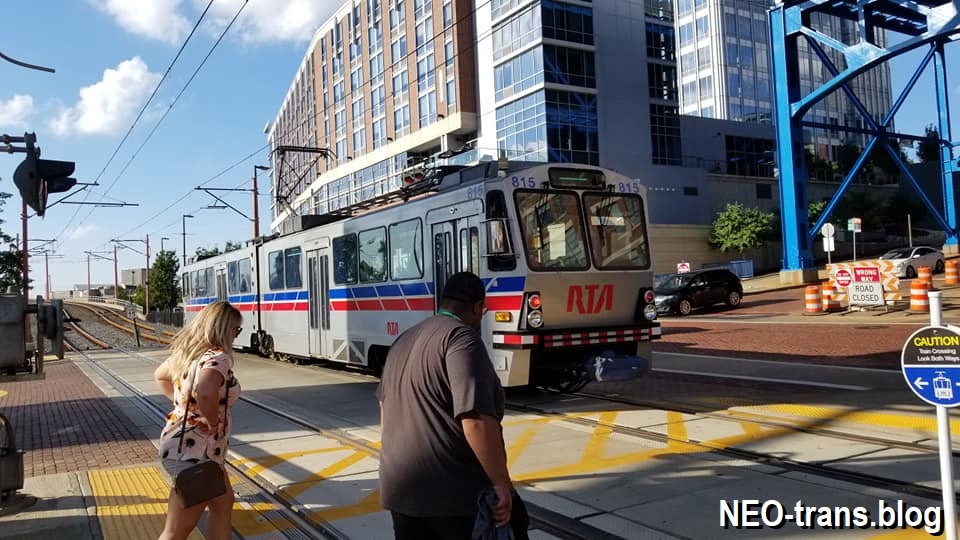
A budget crunch at the Greater Cleveland Regional Transit Authority could mean service cuts starting next year, just as the transit agency is about to take possession of its first new trains since the Reagan Administration (contributed photo). CLICK IMAGES TO ENLARGE THEM.
Spiking healthcare costs hit transit agency

Due to higher operating costs, especially in healthcare for its employees, the Greater Cleveland Regional Transit Authority (GCRTA) plans to make significant cuts to bus and rail services in 2026, cutting a lifeline to jobs, education and medical services.
The bad news was announced and discussed at yesterday’s GCRTA board meeting. While some immediate cost-cutting solutions were recommended by the board and agency staff, it was too early for any potential service cuts to be specified.
In a meeting of the Operational Planning & Infrastructure Committee, Kay Sutula, director of GCRTA’s office management and budget, informed the board that healthcare and prescription costs had increased by 34 percent from October 2024 to October 2025. The average annual increase over the prior six years was 3.8 percent.
Should this trend continue through November and December, Sutula said she projects GCRTA’s total healthcare costs to be $45.6 million by the end of the year. That’s $9 million more than was budgeted for 2025 and, in total, represents almost 14 percent of GCRTA’s operating budget.
In formulating the GCRTA budget for next year, the countywide transit agency showed it could not keep service at current levels. Sutula said a 26 percent increase in healthcare and prescription costs will likely be incorporated into next year’s budget.
To reduce the hit from those costs, a transfer in 2026 of $44 million to the general fund will be needed from GCRTA’s reserves, called the Revenue Stabilization Fund. That follows a $35 million transfer to the general fund from the Revenue Stabilization Fund so far this year, amounting to more than 10 percent of the agency’s total revenues.
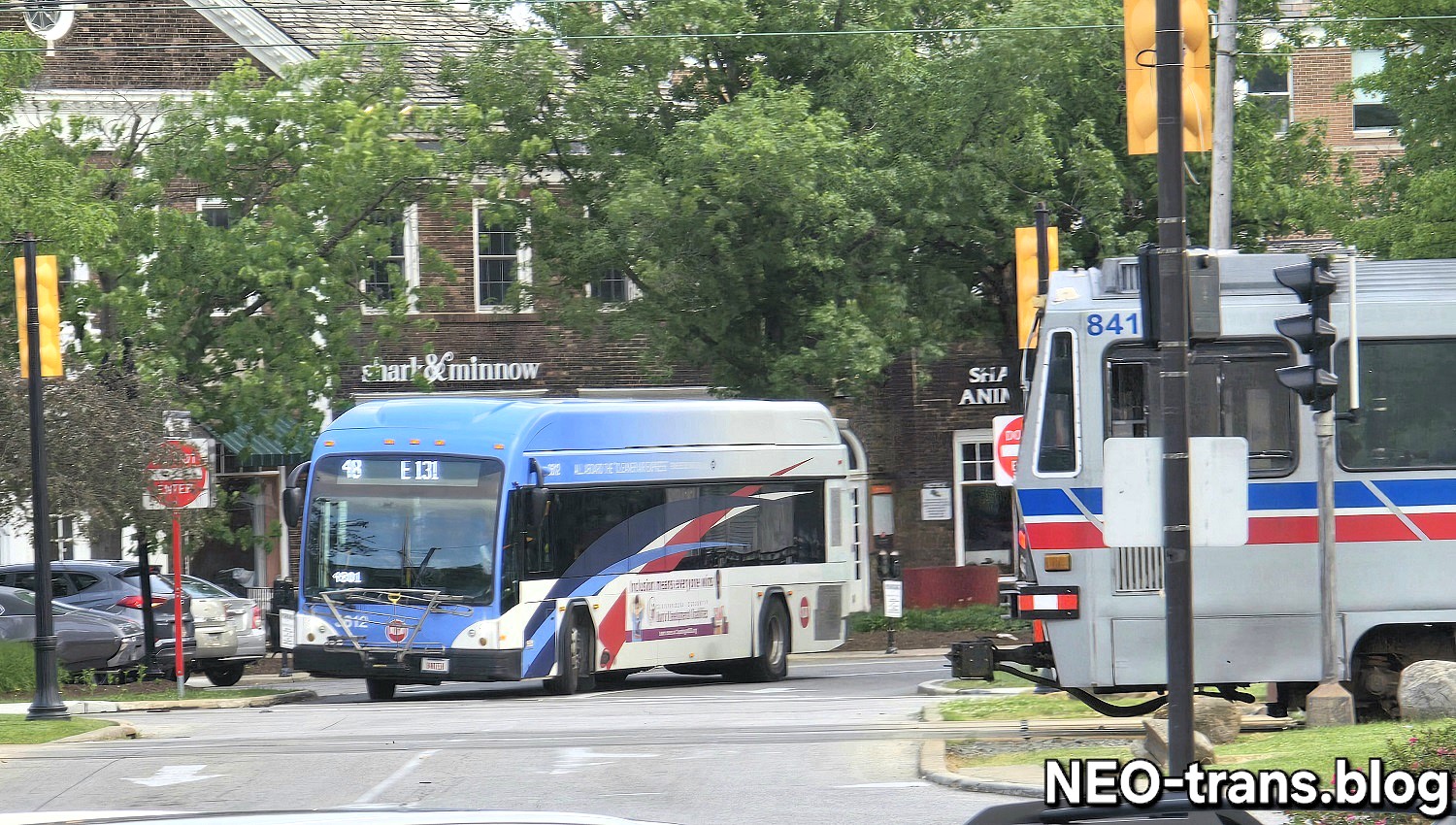
The Greater Cleveland Regional Transit Authority operates 40 bus routes and three rail lines which carried 25 million riders last year — 21 million on buses and 4 million on trains. Here, at Cleveland’s Shaker Square, both modes mingle (NEOtrans).
After those transfers, GCRTA has no more reserves to tap, aside from a one-month reserve in case of unexpected emergencies. The Revenue Stabilization Fund, established following the 2020 pandemic, will be depleted by the end of 2026. The projected 2026 transfer won’t be enough to cover all of GCRTA’s rising costs.
“We are aware that the Revenue Stabilization Fund will not be able to support the budget through 2027,” Sutula said. “All personnel costs, non-personnel items and service levels will continue to be monitored throughout 2026 to identify additional cost-cutting measures and mitigate the budget shortfalls to ensure future financial sustainability.”
GCRTA’s Fiscal Year 2026 Service Management Plan was presented to the board yesterday by the agency’s Service Management Department, Operations Division. In it, the document laid out what the authority foresees.
“At the current time, it is expected that a service reduction will be needed,” the plan noted.
While no specific service cuts were identified, GCRTA is required by board policy to show which routes are used the least, as measured by boardings per revenue vehicle hour.
Among radial (downtown-based) routes, the least used are the Nos. 53/53A MetroHealth-Broadview, 71 Pearl-Tiedeman, 90 Broadway-Libby, 8 Cedar-Buckeye, and 77 Brecksville.
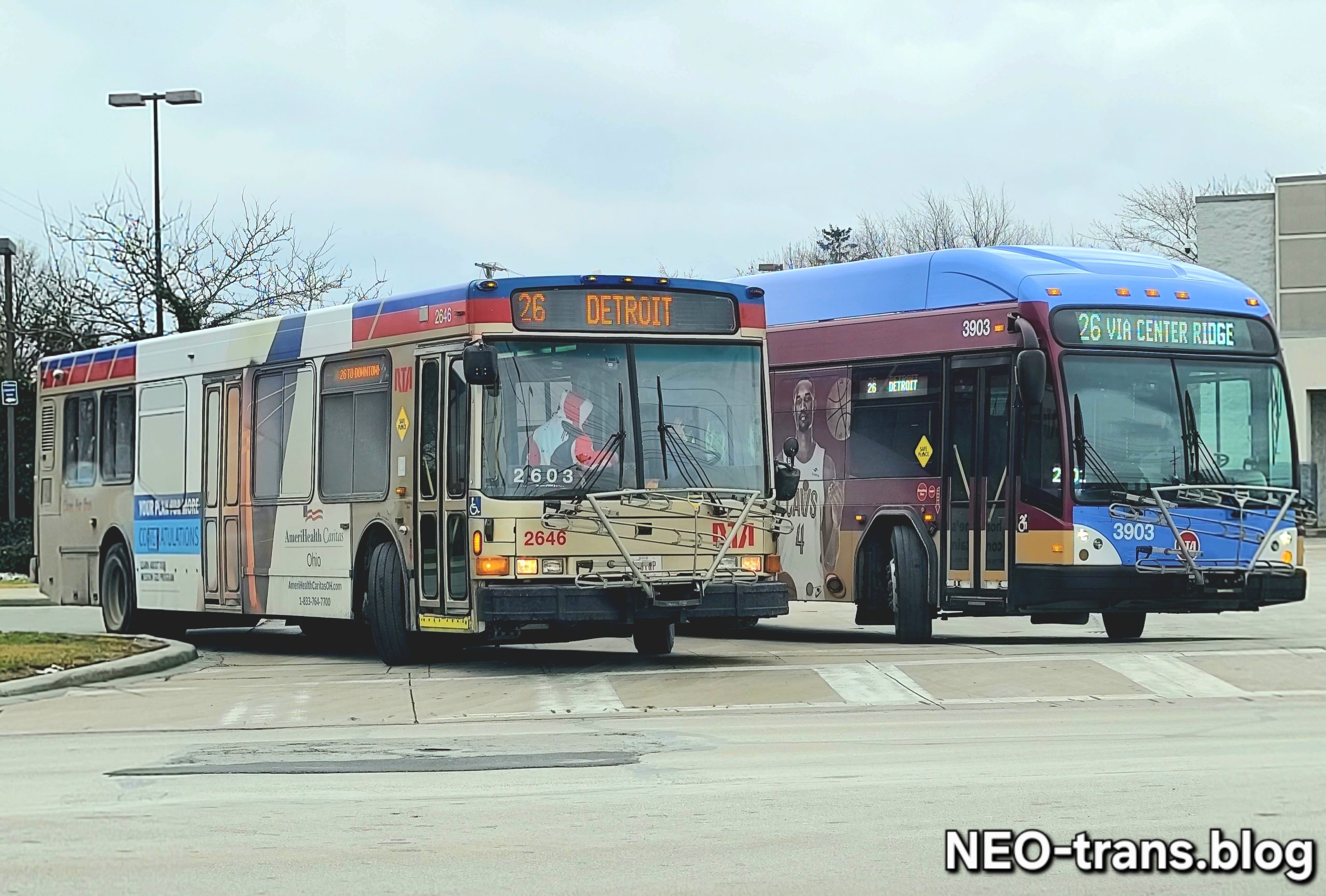
At its Westgate Transit Center, Greater Cleveland Regional Transit Authority buses on the No. 26-Detroit route get ready to depart in opposite directions on the agency’s sixth-busiest bus line (NEOtrans).
Among crosstown/feeder routes, the least utilized are the Nos. 54 Brookpark-Rockside, 7/7A Monticello, 86 Rocky River Drive-Bagley, 35 Lee-East 123rd, and 34 East 200th-Green.
“As GCRTA assesses its financial position, we are evaluating items in both our operating and capital budgets,” said GCRTA’s Public Information Officer Robert Fleig. “At present, there is no change to the railcar replacement program financial schedule.”
The $450 million Railcar Replacement Program is the authority’s largest-ever capital improvement. It’s also $57 million over budget. Next year, GCRTA is due to take possession of its first new railcars in more than four decades for its three-route rail system.
GCRTA has ordered 54 new railcars so far. It has one last open option to order six more railcars but hasn’t been able to afford it due to rising costs resulting from tariffs and manufacturing schedules by railcar builder Siemens Mobility.
GCRTA General Manager and CEO India Birdsong Terry said in September that the transit agency intends to exercise that option and complete that order, bringing the total number of new railcars to 60.
One of GCRTA’s major capital projects that’s about to begin is the MetroHealth bus rapid transit on West 25th Street. It already has local funding available to it. But some capital improvements that need general funds transferred into them may be scaled back or postponed.
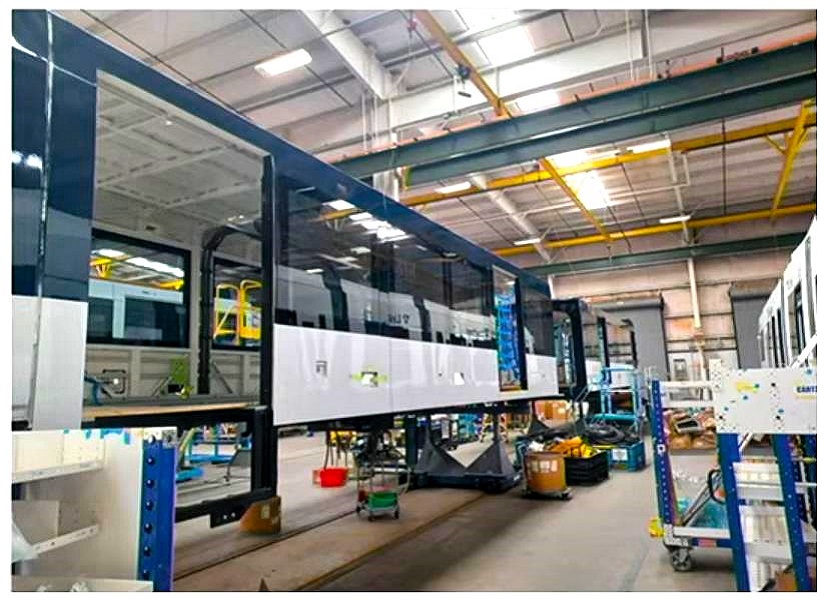
The first new railcars for Greater Cleveland in more than 40 years are being assembled at the Siemens Mobility factory in Sacramento, CA. The first trains are due to be delivered to Cleveland in 2026 and enter service in 2027 (GCRTA).
In addressing the budget crunch, there was no mention of any revenue enhancements such as fare increases, offering unneeded real estate for reuse or redevelopment, or soliciting more partnerships with employers whose workers might benefit from transit discounts.
In public hearings held a decade ago when service cuts were planned, many riders testified they would rather see fares increased than services cut because there would at least be a way to continue to reach and keep their jobs.
“At this time, no fare increases are planned,” Fleig said.
Cuyahoga County Executive Chris Ronayne expressed concern about the prospects of transit service cuts which can ripple through the local economy if workers can no longer get to jobs.
Ronayne told NEOtrans that the county would do its part by “Encouraging ridership through the Commuter Advantage Program. We provide a transit subsidy to all county employees.”
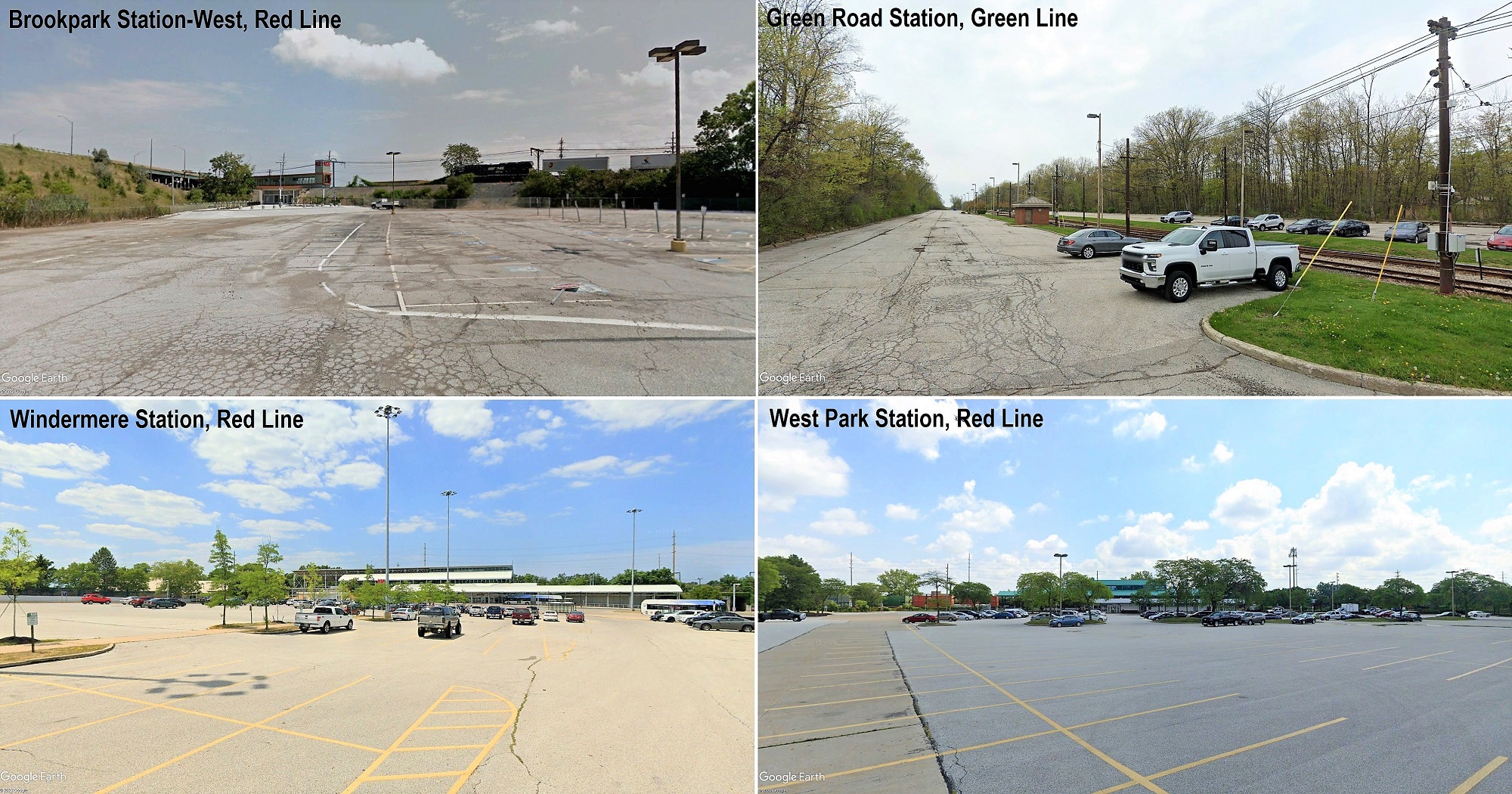
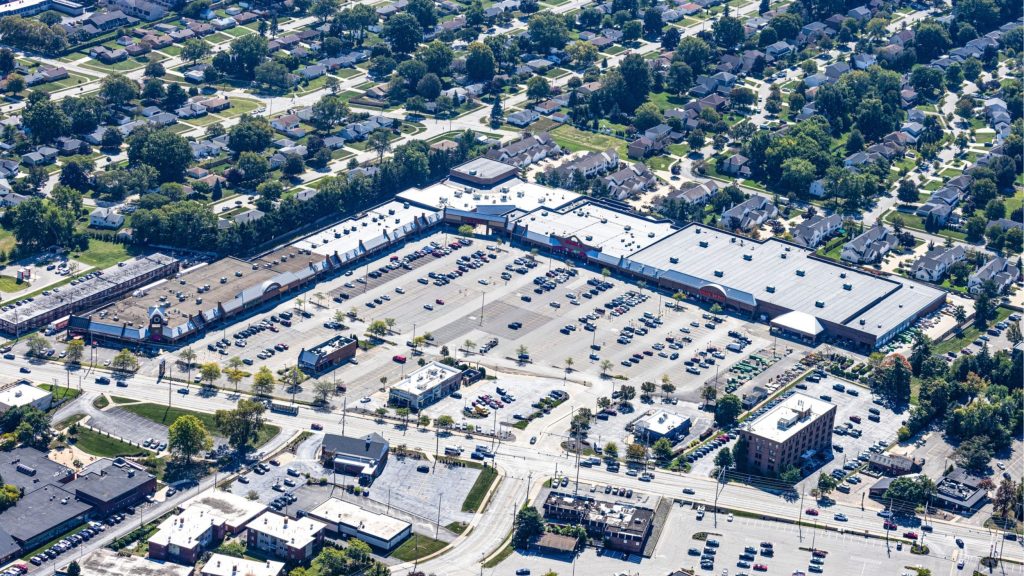
These and other underutilized parking lots at Greater Cleveland Transit Authority-owned rail stations, totaling more than 30 acres of land, could be offered for development that generate new lease and fare revenues according to a rail advocacy group (Google).
While Cleveland Clinic and other major employers near University Circle are partners in the Commuter Advantage Program, few in Downtown Cleveland are.
In Columbus, employers downtown and in the Short North area partner with the Central Ohio Transit Authority (COTA) and the Mid-Ohio Regional Planning Commission to fund their employees’ unlimited access to COTA buses.
“Service cuts are a life-threatening blow to a transit agency already struggling for relevance,” said Chris Martin, chair of Clevelanders for Public Transit. “People have fled public transit because it is usually less convenient than driving, and service cuts will only accelerate the death spiral. RTA can’t cut its way out of this.”
Martin said new revenues are the only way — but not from the state or federal governments that have been reluctant to fund transit. Instead, he urged local solutions, including cutting the $19 million GCRTA police department, increasing the county sales tax by a half of a percent to expand service, redirecting $15 million in Browns stadium maintenance, tapping Cleveland’s smart parking meter revenue as Mayor Justin Bibb once proposed, and more.
“Clevelanders for Public Transit has spent years as Cassandra shouting warnings of impending financial doom coming to RTA,” Martin added. “Yet, the RTA Board of Trustees, under the leadership of Bay Village Mayor Paul Koomar — whose city has just one meager bus line running through it — has done nothing to prepare for where we find ourselves now.”
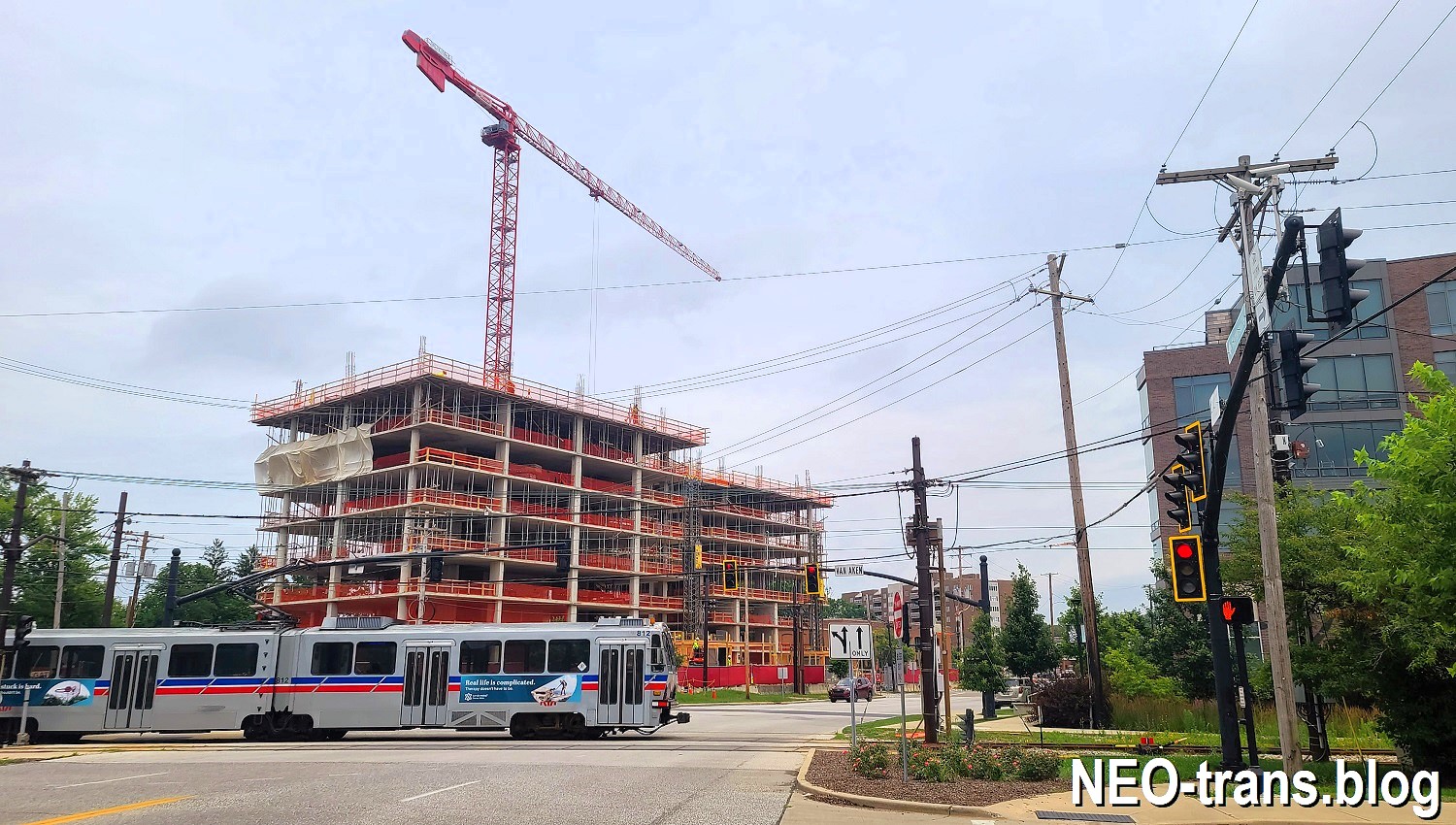
Transit advocates urged the Greater Cleveland Regional Transit Authority to be more proactive in reaching out to communities and developers to generate more development around its stations. They cited the Van Aken District at the end of the light-rail Blue Line in Shaker Heights as an example of what could be pursued at more stations (NEOtrans).
Koomar said GCRTA must develop a strategy to avoid future healthcare increases that may impact operations. Specifically, a sharp increase in stop-loss claims was to blame at GCRTA. Such claims are reimbursements made to self-insured employers when employee health claims exceed predetermined financial limits, protecting the employer from catastrophic costs.
“All Aboard Ohio is concerned that RTA expects service reductions will be necessary due to future budget shortfalls,” said Brian Schriver, northeast chapter director of the statewide rail and transit advocacy group. “Historically, service cuts have resulted in ridership reductions. This reduces fare collections, making the budget problem worse.”
He also said GCRTA needs to look for new revenue opportunities, including Transit Oriented Development (TOD). In 2023, NEOtrans identified that GCRTA has 30 acres of underutilized parking lots at its rail stations. Plus there is a total of more than 232 acres of adjacent public and underutilized private properties.
“This type of development can provide leasing income to RTA and increase transit system ridership,” Schriver continued. “Every RTA parking lot is an opportunity for new homes and businesses, new revenue for RTA, and additional ridership for the transportation system.”
GCRTA’s difficult financial picture showed 2026 revenues estimated at $363.8 million. The two largest sources of revenue are the countywide sales & use tax, budgeted at $278.7 million, and passenger fares at $31.5 million. Total operating expenditures are budgeted at $342.5 million.
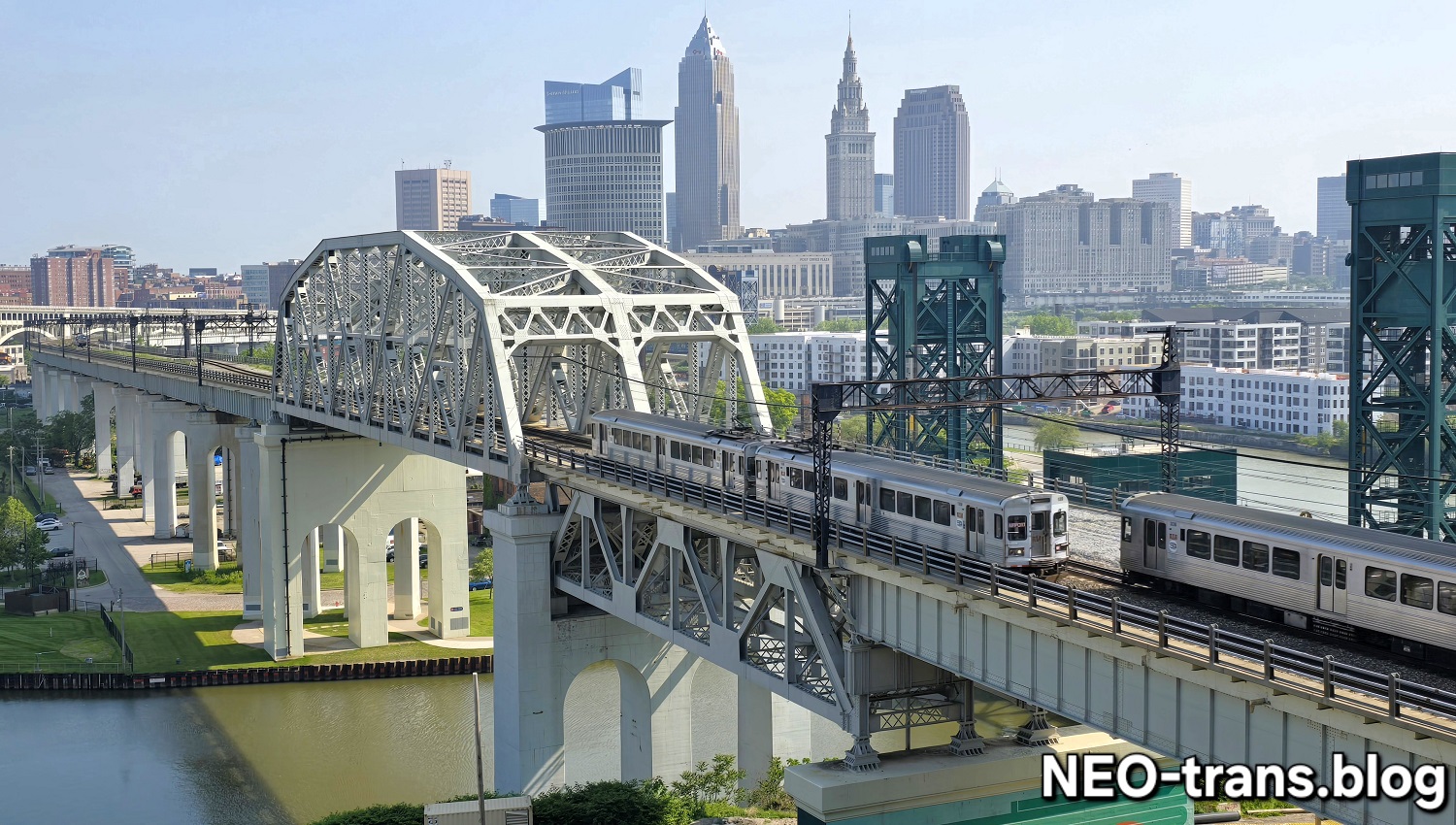
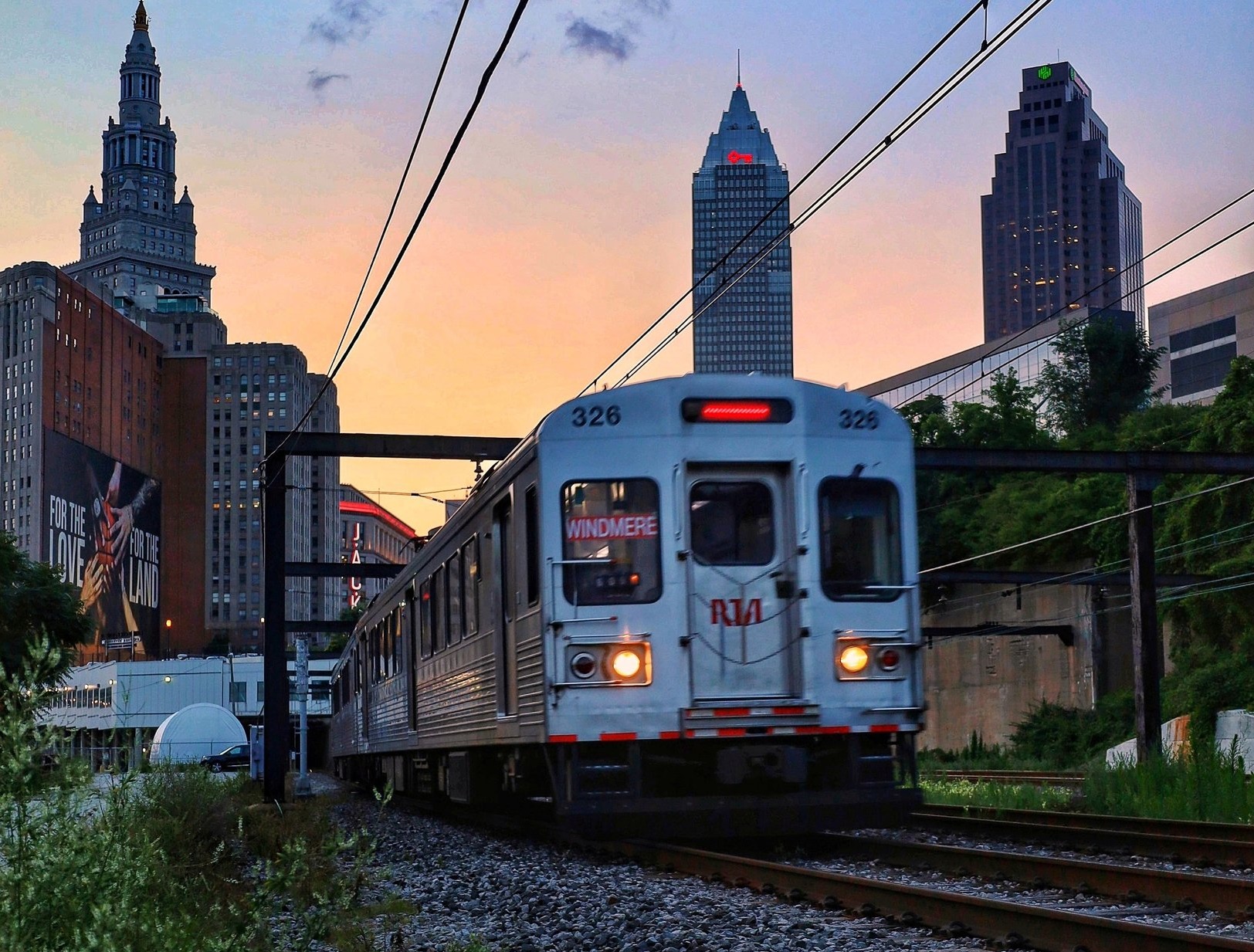
“The Rapid” is as uniquely Cleveland as the twisting Cuyahoga River, the bridges over it, or the easily identifiable skyscrapers of downtown. But the newest “Rapid” trains are due to be delivered as the transit authority faces another round of service cuts (NEOtrans).
That doesn’t include transfers to other funds which are budgeted at $30.7 million. They maintain recommended fund balances for the Bond Retirement, Insurance, Supplemental Pension, Capital Improvement, and Reserve funds.
GCRTA’s health insurance broker is the Oswald Companies, headquartered in Cleveland. It offers GCRTA employees two plans through Anthem: a preferred provider organization (PPO) plan, which has a larger network and an health maintenance organization (HMO) plan that is smaller and Cleveland Clinic-based.
There is a waiver provision for GCRTA employees to opt out and go on a spouse’s healthcare plan. Sutula said the transit agency is looking at ways to incentivize employees to opt out.
GCRTA said other efforts will be made to reduce operating expenses this year and next. That includes removing 56 vacant positions from the 2026 budget, for a total of 2,397 positions agency-wide. Budgeted overtime and non-personnel items have been reduced and a hiring freeze is in place.
“Efforts to improve service reliability will continue,” the plan noted. “Staff will closely monitor revenues and expenses and adjust service levels as needed.”
END