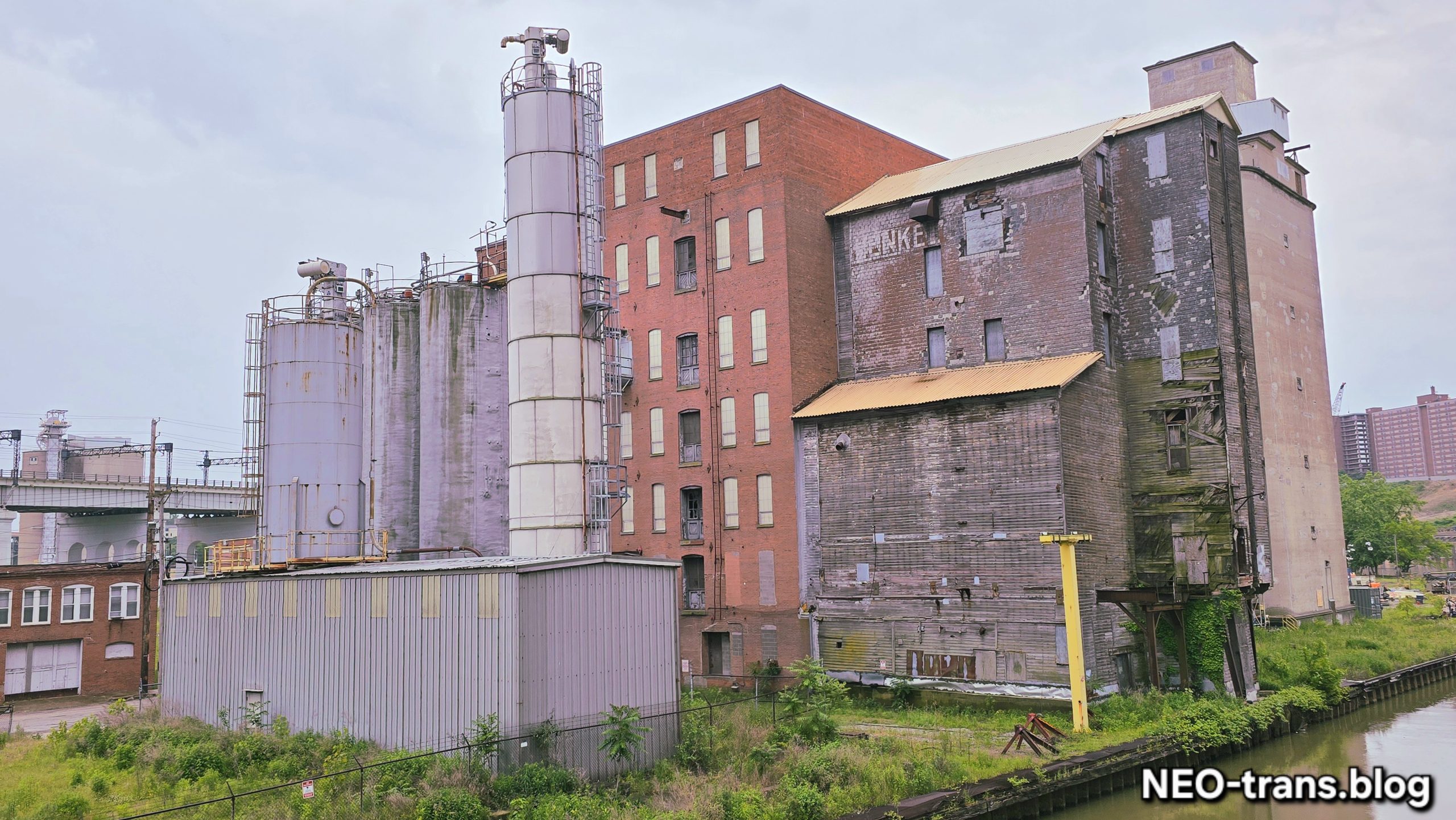
As seen from a passing ship, the former Cereal Food Processors/Grain Craft mill sets between the Cuyahoga River and Merwin Avenue. The brick building is called the Main Mill while the wooden portion at right is called Elevator A. Behind are the larger concrete silos, called Elevator C. All will be retrofitted with hotel rooms and ground-floor hotel uses including a restaurant. The metal garage at left will be demolished (NEOtrans). CLICK IMAGES TO ENLARGE THEM.
More historic tax credits sought for rehab

Roughly $10.3 million in federal historic tax credits were awarded to a proposed $61.6 million redevelopment of an abandoned 19th-century riverfront flour mill in Cleveland’s Flats into a hotel and supportive uses. And up to $5 million in state historic tax credits may be added by the end of the year.
That’s according to a spokesman for the Ohio Department of Development whose State Historic Preservation Office will decide that award and others in Round 35 on or before Dec. 31. The Cleveland Milling Company site is located at 1646-56 Merwin Ave. on the Flats’ Columbus Road peninsula.
The department supplied a copy of the tax credit application to NEOtrans which showed that Ceres Enterprises LLC of Westlake and LaPine Development LLC of Shaker Heights are the proposed developers and Sandvick Architects of Cleveland is the historic preservation architect.
Ceres Enterprises, along with LaPine Development, have built and operated seven hotels in Ohio and Indiana. An e-mail sent to Ceres President & CEO David Crisafi was not responded to prior to publication of this article. Sandvick has designed many historic renovation projects and aided in securing historic tax credits for them.
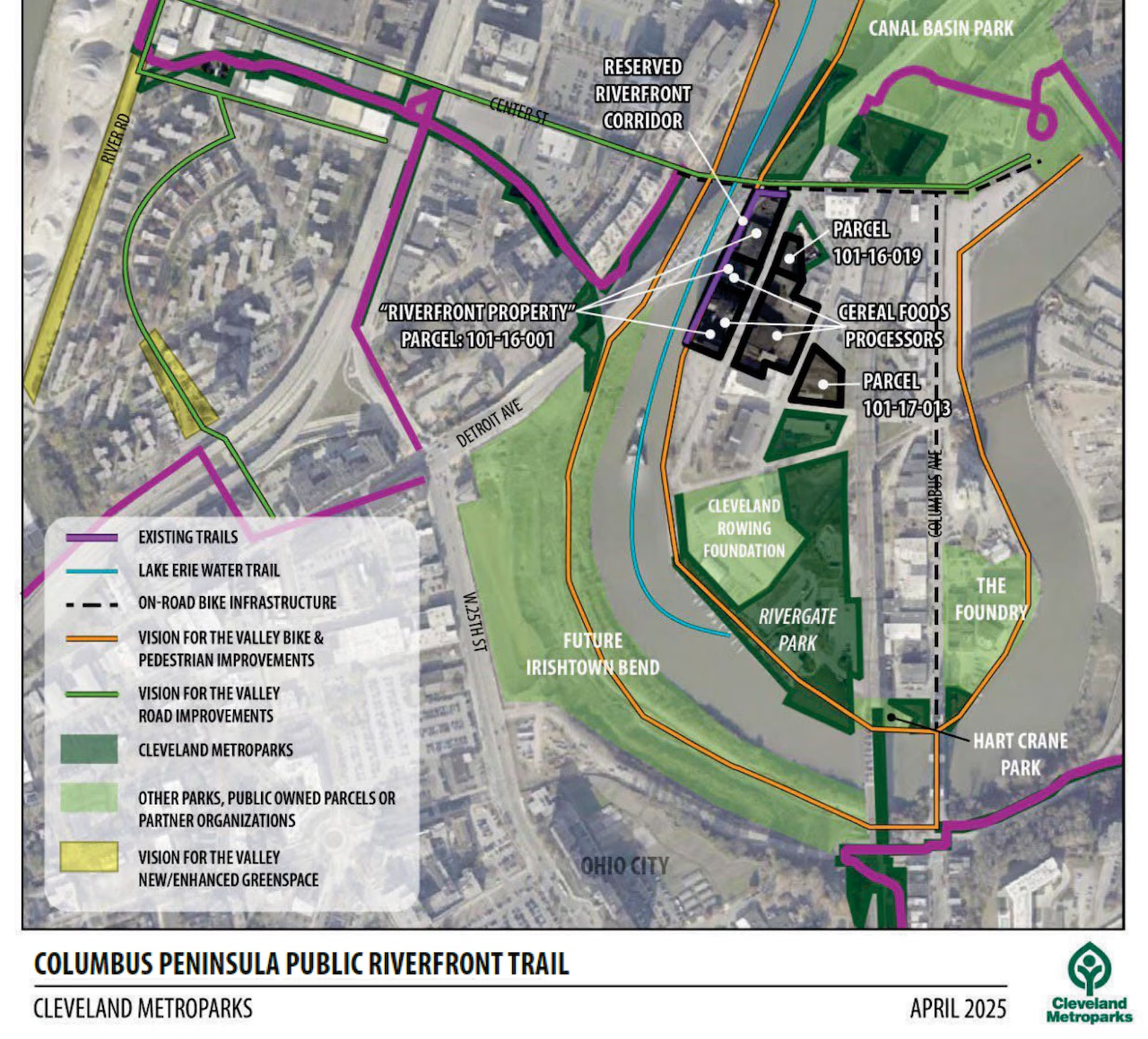
The properties that were included in the Cleveland Metroparks’ request for proposals that Ceres-LaPine won are shown here, along with other nearby Metroparks’ projects, properties and related facilities (Metroparks).
A very recent development of Ceres-LaPine-Sandvick converted two former 60-year-old NASA office buildings in suburban Fairview Park into The Orbit Hotel, Trademark Collection by Wyndham, and Centaur market-rate apartments. Summit Construction was the general contractor.
The hotel brand name was redacted from the application. But four of Ceres’ hoteliers are Wyndham brands; the other three flags are Hilton, Residence Inn and Fairfield Inn & Suites.
“The Cleveland Milling Company project represents the first phase of a broader redevelopment effort intended to reimagine and revitalize the historically industrial Columbus Peninsula in Downtown Cleveland,” the state historic tax credit application noted.
The project will be “creating a mixed-use district to complement Cleveland Metroparks’ planned improvements to an adjacent park and associated construction of a multi-purpose trail along the Cuyahoga River,” it continued. Mixed uses include restaurants, retail and even a data center.
With the state tax credit, 100 percent of the project’s financing is in place, Ceres’ application noted. Redevelopment of the mill’s multiple structures totaling 120,000 square feet is due to start in January 2027 and be completed about 2.5 years thereafter.
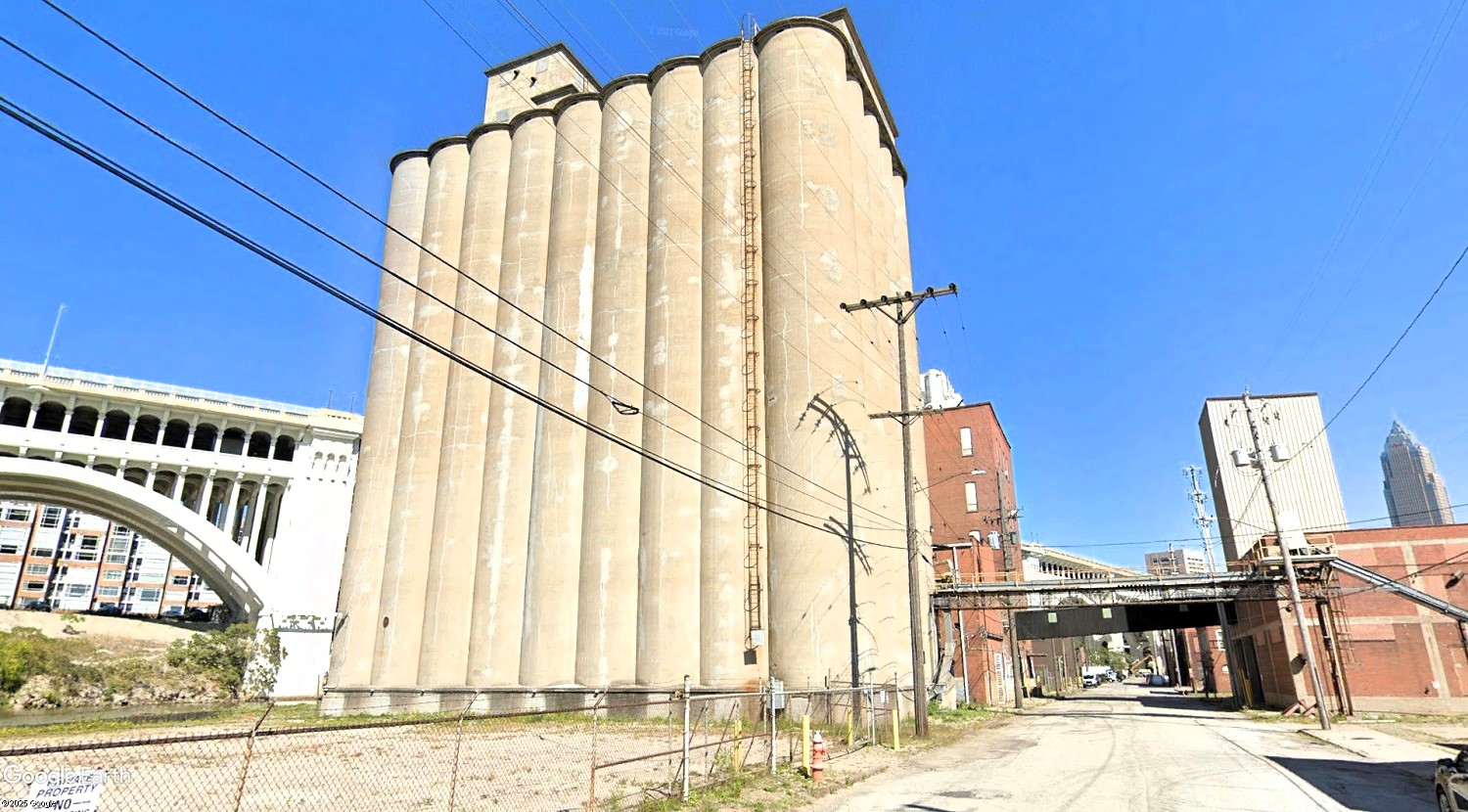
These 5×9 concrete grain elevators were built in 1937 and stand about 155 feet tall. Called Elevator C, they will have eight floors of hotel rooms installed in them, plus additional hotel rooms added to the penthouse along with a rooftop deck. There is also an underground tunnel linking the mill’s different grain elevators (Google).
Ohio has already awarded $2.2 million in Brownfield remediation funds, matched by $1.8 million from the Metroparks, to clean up the site and do limited demolition. At one point, the Metroparks considered demolishing the mill but was convinced by preservationists to retain and redevelop it.
Cleveland Metroparks acquired the riverfront lands including the former 3.2-acre flour mill, also called Cereal Food Processors or the Grain Craft mill, over the past two years and issued a request for proposals last April to solicit interest from developers for those properties. NEOtrans broke the story five years ago that the mill was going to close.
The application indicates that the partners in the project or affiliates thereof will lease the property from the Metroparks as a “qualified lessee.” Additional tenants onsite have committed to locate here but, like the hotel, are not identified either.
“The vast majority of the Cleveland Milling Company complex will be occupied by the proposed hotel, to be operated by a partner in the ownership and development,” the application noted. “Commitments have also been secured for the remaining third-party tenant spaces, so 100 percent of the project area has committed end users.”
“Preservation and reuse of the Cleveland Milling Company complex will celebrate the area’s rich industrial heritage and leverage the property’s unique historic character to bring new life to the district, transforming it into a vibrant destination for residents and visitors alike, yielding substantial economic and community benefits,” the application continued.
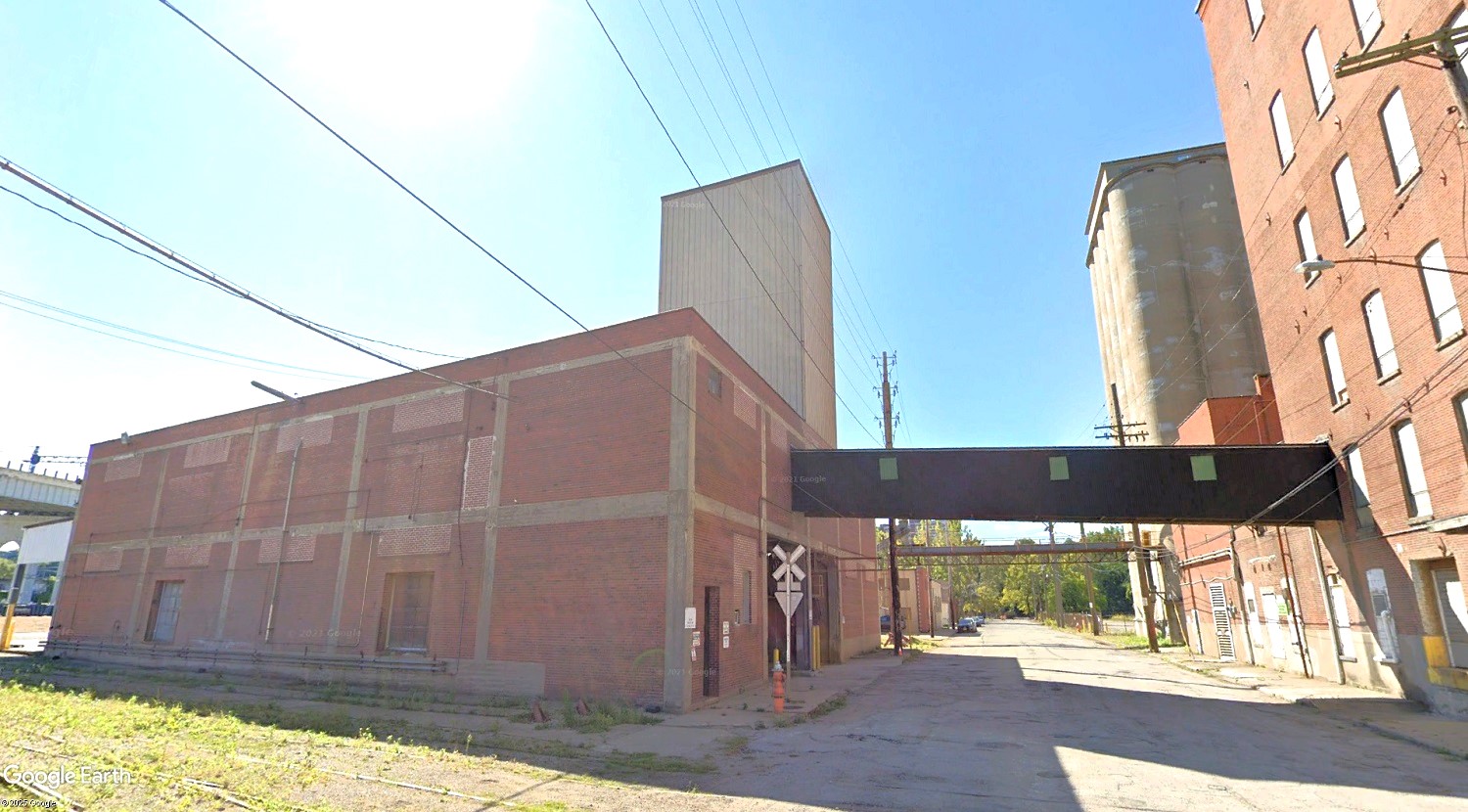
The two-story brick and concrete structure at left is called the warehouse. Its bridge across Merwin Avenue to the rest of the grain mill will be repurposed and enlarged into a pedestrian walkway. The warehouse will be renovated with a restaurant and event space, data center and additional hotel rooms. The warehouse’s historic windows will be opened up and glassy storefronts will be provided below the overhead walkway (Google).
The redevelopment project is estimated to create 377 temporary construction jobs and 83 permanent jobs. The appraised value of the property is expected by Ceres to increase from its current $2.3 million to nearly $63 million. But the Metroparks is exempt from paying property taxes.
Proposed improvements are described extensively in the application but no renderings were provided. It noted that the exterior of the mill building will undergo a comprehensive rehabilitation. Historic brick, wood and concrete exterior walls will be repaired.
The 5×9 concrete grain silos, called Elevator C, that were built in 1937 will be repurposed with hotel rooms, much like the silos at the former Quaker Oats factory in Akron. That facility was converted to a hotel in the 1970s, then became dorms for the University of Akron, and is proposed to be converted to a hotel again.
“A new one-story addition is proposed on the west side of the utility sections to create needed service and delivery spaces for the proposed hotel, with another exterior deck to be created on its roof,” the application said. It continued:
“A small new overhead bridge will also be added at the second-floor level, connecting the utility sections to Elevator C. The non-historic garage building at the north end of the site will be demolished, but existing flour bin structures will be retained along the north side of the rail spur.
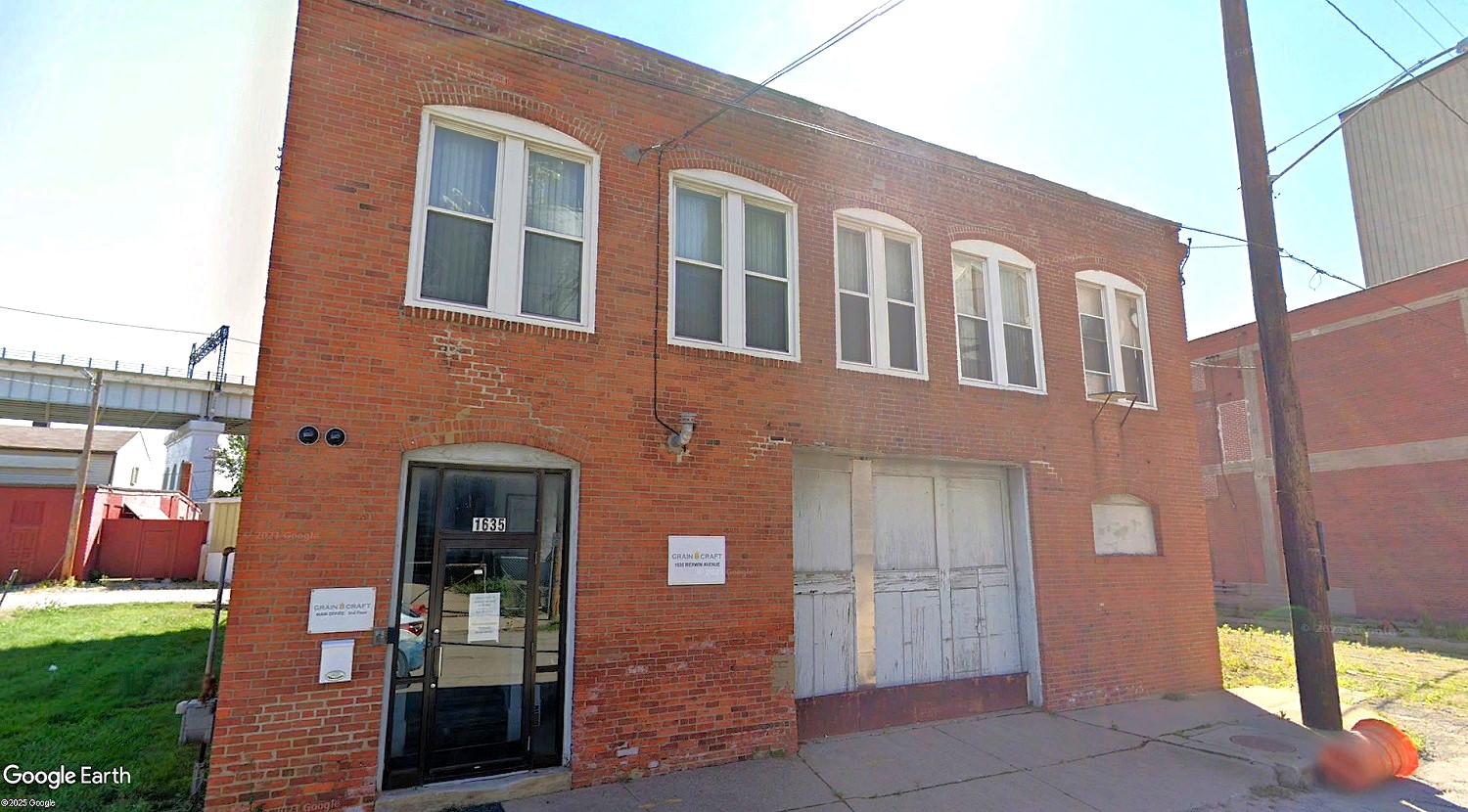
The former flour mill site includes this 1882-built office building at 1635 Merwin Ave. for the mill. It is part of the federal historic tax credit award but not the state application, so its proposed use is not identified. There have been grain mill operations on this site going back to the 1850s (Google).
“Within the interior of the mill, all existing equipment will be removed, with the open volumes subdivided to create hotel rooms and associated public and support spaces. The first floor of the main mill and utility sections will house the main entrance and hotel lobby, as well as delivery and support spaces.
“The hotel restaurant will occupy the remainder of the first floor in the (seven-story brick) main mill, extending into the first floor of (the wooden) Elevator A. …New floors will be constructed within the interior of Elevator C, creating eight new levels of hotel rooms, as well as two new exit stairs and a new elevator core in the center.
“The existing penthouse of Elevator C will also be converted to house additional hotel rooms, with exterior roof decks along its north and south sides. Historic features and finishes will be retained throughout all spaces and new elements will be compatible with the building’s historic character,” the application documented.
A two-story brick-and-concrete warehouse building on the east side of Merwin Avenue across from the mill, will be renovated. So will an existing overhead bridge that connects to the mill at the second floor, but will be increased in height and sealed. It will be an enclosed pedestrian bridge.
“The interior of the warehouse will be converted to house commercial tenant spaces on the first floor, including a restaurant, event space, and a data center,” the application added. “The data center will occupy the same footprint on the second floor, with the remaining spaces subdivided to house additional hotel rooms.”
END