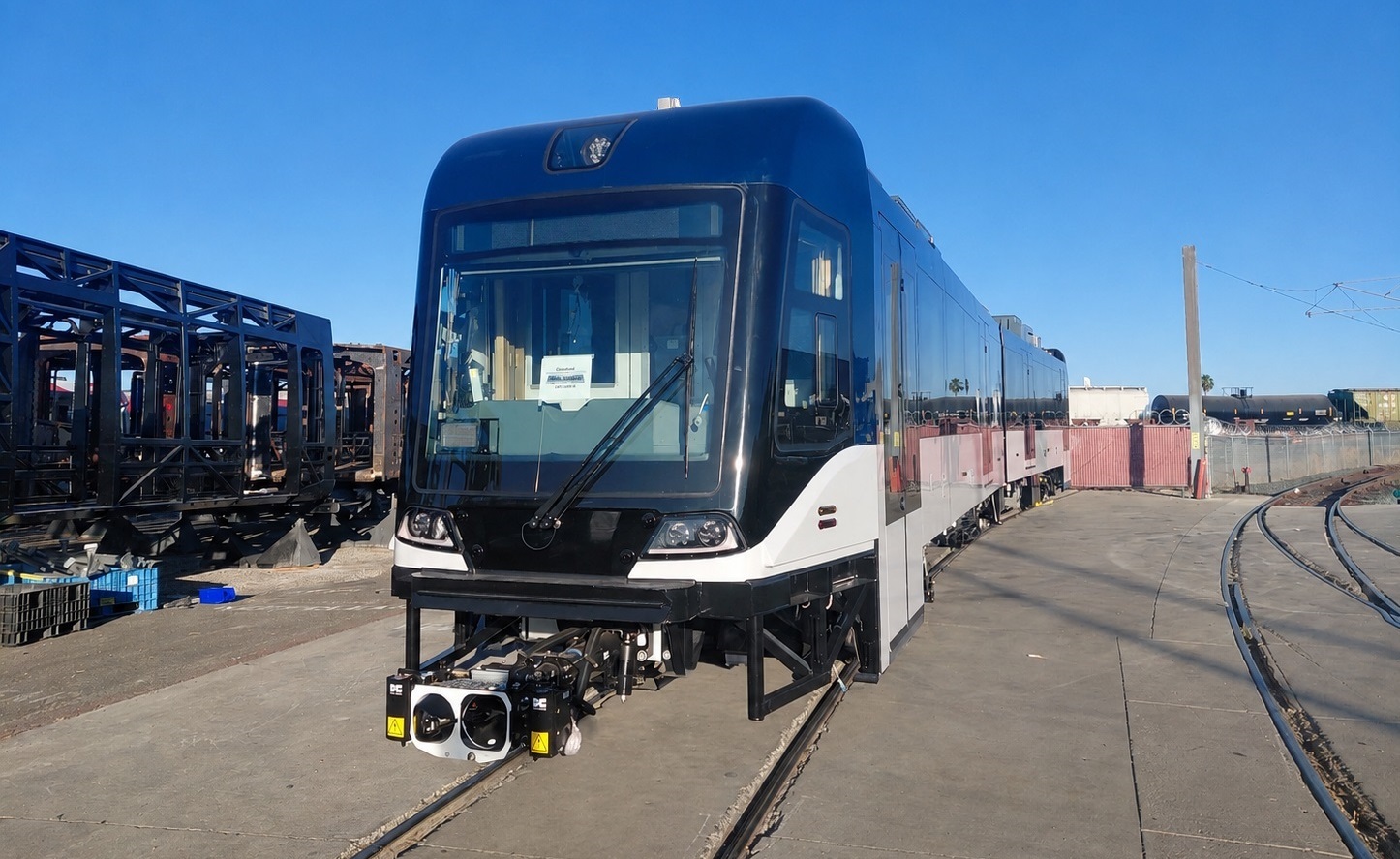
Next month, the first new railcars in more than 40 years for the Greater Cleveland Regional Transit Authority will arrive for extensive testing and training. On July 14, railcar No. 403 awaits its ride to Cleveland with other railcars at the Siemens Mobility factory in Sacramento, CA (GCRTA). CLICK IMAGES TO ENLARGE THEM.
Rail expansion rejected as antidote
COMMENTARY
In a recent one-hour interview with Greater Cleveland Regional Transit Authority (GCRTA) General Manager India Birdsong Terry, she revealed to NEOtrans one of her biggest fears with the transit agency’s upcoming sales tax levy vote — its first in more than five decades.
While we don’t yet know the size of the levy, be it 0.25 percent or a 0.5 percent of sales tax, it will appear on the May 2027 ballot. But what if GCRTA put a levy on the ballot and no one showed up to vote for it — or even against it? What if Greater Clevelanders just don’t care about transit anymore?
That is, in fact, one of Birdsong Terry’s biggest concerns. GCRTA’s voter apathy and revenue issues stem from the same sources — people moving out of Cuyahoga County since 1970 when its population peaked at 1.7 million. That was five years before GCRTA was voted into existence — when it promised rail extensions to Mentor, Cleveland Heights, Strongsville, Pepper Pike and the Dual Hub along Euclid Avenue.
Since, fewer people are paying sales taxes in the county. Inflation has grown, making transit service more expensive. The region can afford less of it with the existing 1-percent sales tax levy. Less revenue can’t cover higher costs. But it’s worse than that.
As people have moved out of Cuyahoga County into its collar counties — Geauga, Lake, Lorain, Medina, Portage and Summit — fewer people live and work in the walkable, transit-heavy urban core of Cleveland and its inner-ring suburbs. Far fewer people work downtown, too.
When GCRTA ridership was at its peak in 1980, 170,000 people worked downtown, according to the Downtown Business Council, an affiliate of the former Greater Cleveland Growth Association, now the Greater Cleveland Partnership.
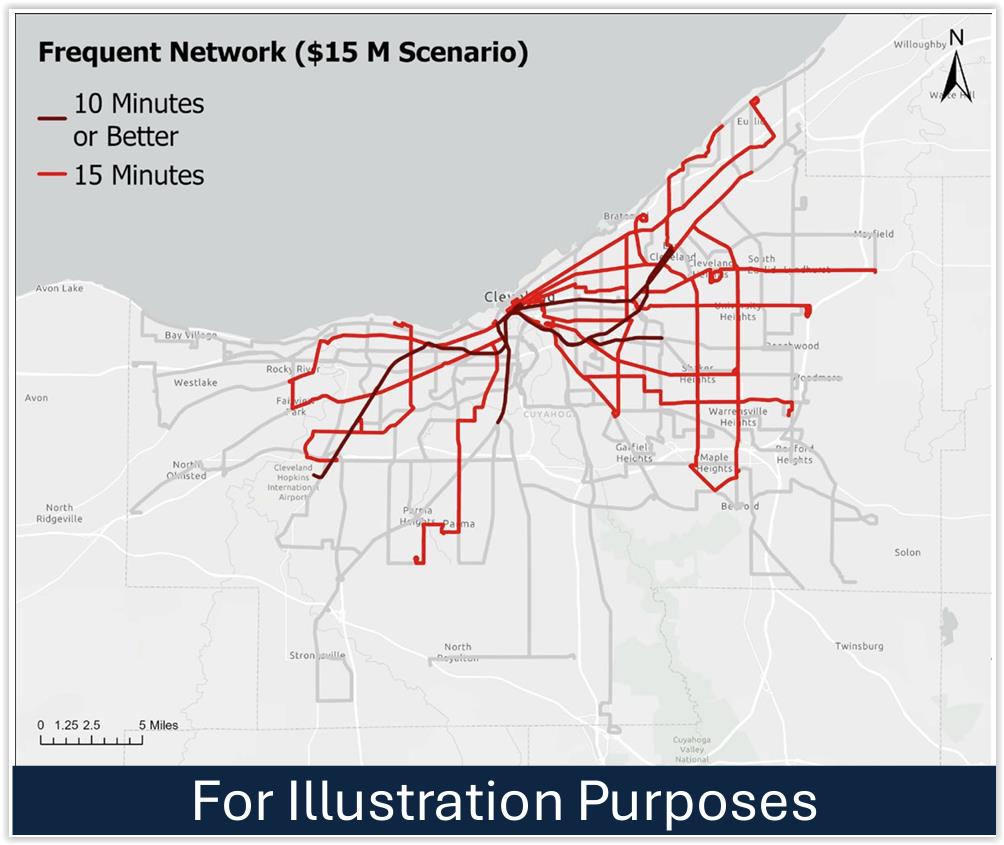
A 0.25-percent increase in Cuyahoga County’s sales tax would provide more frequent bus and rail services on mostly existing routes. But only $15 million of the $70 million in new tax revenues per year would go to more service. Another $21 million would increase GCRTA’s budget reserve to 90 days with the rest going to the system’s state of good repair (GCRTA).
Today, fewer than 60,000 people are working downtown each day. Every park-n-ride lot at rail and bus stations are more than half empty. GCRTA is seeking to redevelop outer edges of them with an apartment building or a new business. The rest? GCRTA is hoping downtown employment will revive to fill them with commuters’ cars again.
As housing and employment relocated away from places where transit was near their front doors, fewer people in Greater Cleveland are riding transit. In 1980, 130 million people rode GCRTA, its peak. It fell to 60 million by the turn of the century and was down to 24.5 million in 2025.
Fewer people today have any experience in riding public transportation. Some people in the suburbs may have ridden the Rapid to a ballgame downtown. But many people have never set foot on a GCRTA bus in their entire lives.
They may believe what they see or hear from others about GCRTA’s issues, including from the media. They may not even care. They’ve probably not even read this far into this article.
Inner-city residents have the biggest motivation to vote for the GCRTA levy. While one out of four households in the city of Cleveland lack cars, that number jumps to as many as half of all households in Cleveland’s poorest neighborhoods, plus East Cleveland, Census data shows.
At the same time, there is a correlation between household income and voter turnout. Fewer poor people vote. In some cases, voter turnout in Cleveland’s poorest neighborhoods in higher-turnout November elections has been below 10 percent. In May elections, the turnout is even less.
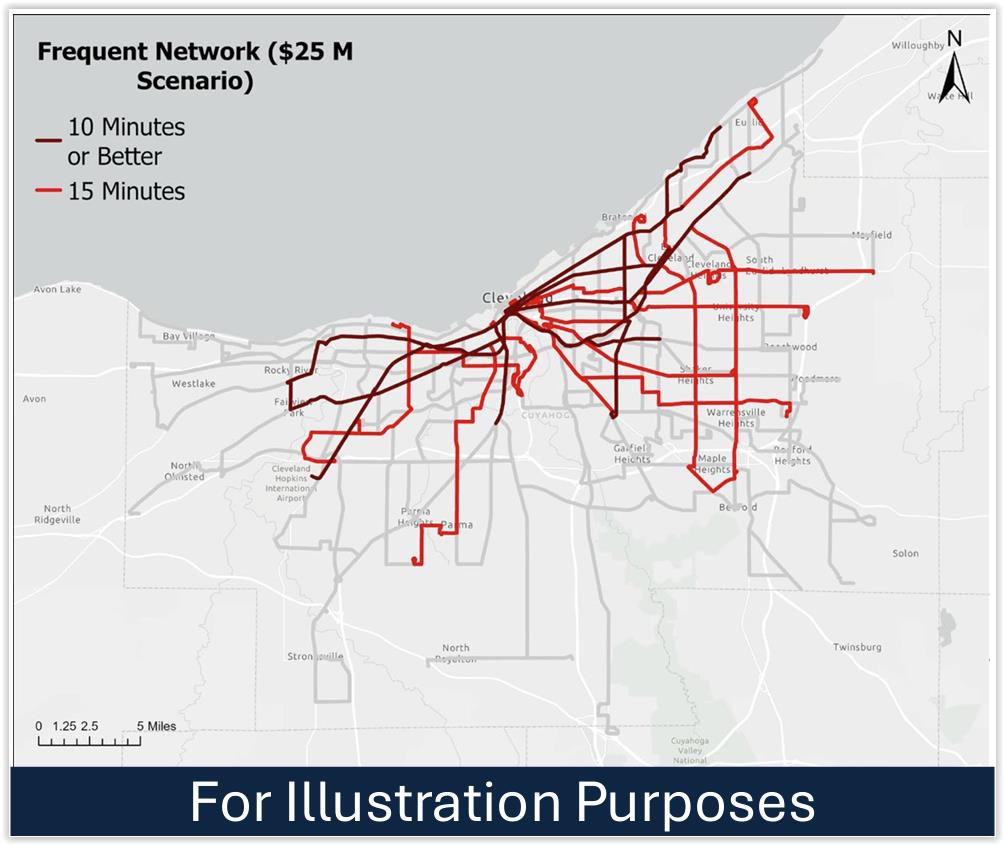
A 0.5-percent increase in Cuyahoga County’s sales tax would provide even more frequent bus and rail services on mostly existing routes. But only $25 million of the $140 million in new tax revenues per year would go to more service. Another $81 million would increase GCRTA’s budget reserve to 180 days with the rest going to the system’s state of good repair (GCRTA).
More active registered voters have moved out of transit-oriented neighborhoods, the same areas GCRTA intends to bless with more transit if it wins a sales tax increase. They’ve moved to less-densely populated suburbs where transit is scarce and aren’t due to benefit as much from a sales-tax funded transit expansion.
It’s a difficult dichotomy for GCRTA. The people most likely to support GCRTA’s levy probably won’t vote, and the people least likely to support more taxes for transit probably will vote. Without new revenues coming in, GCRTA staff say it will be forced to cut 10 bus routes by 2029 and reduce service frequency on all remaining routes.
Those would be painful cuts, making it more difficult for people to reach jobs, medical appointments, shopping and services. But facing a cut in transit service without new revenues doesn’t matter to many active, unaffected voters.
One way to get more suburbanites to support a transit levy is to provide more rail service. Light-rail transit is generally more favored by higher-income people than buses due to a wide range of issues, ranging from stigma to speed and comfort.
To GCRTA’s way of thinking, that means using its new light-rail trains — its first new trains in more than 40 years — as a voter outreach tool after they arrive in Cleveland in September from the manufacturer, Siemens Mobility in Sacramento, CA.
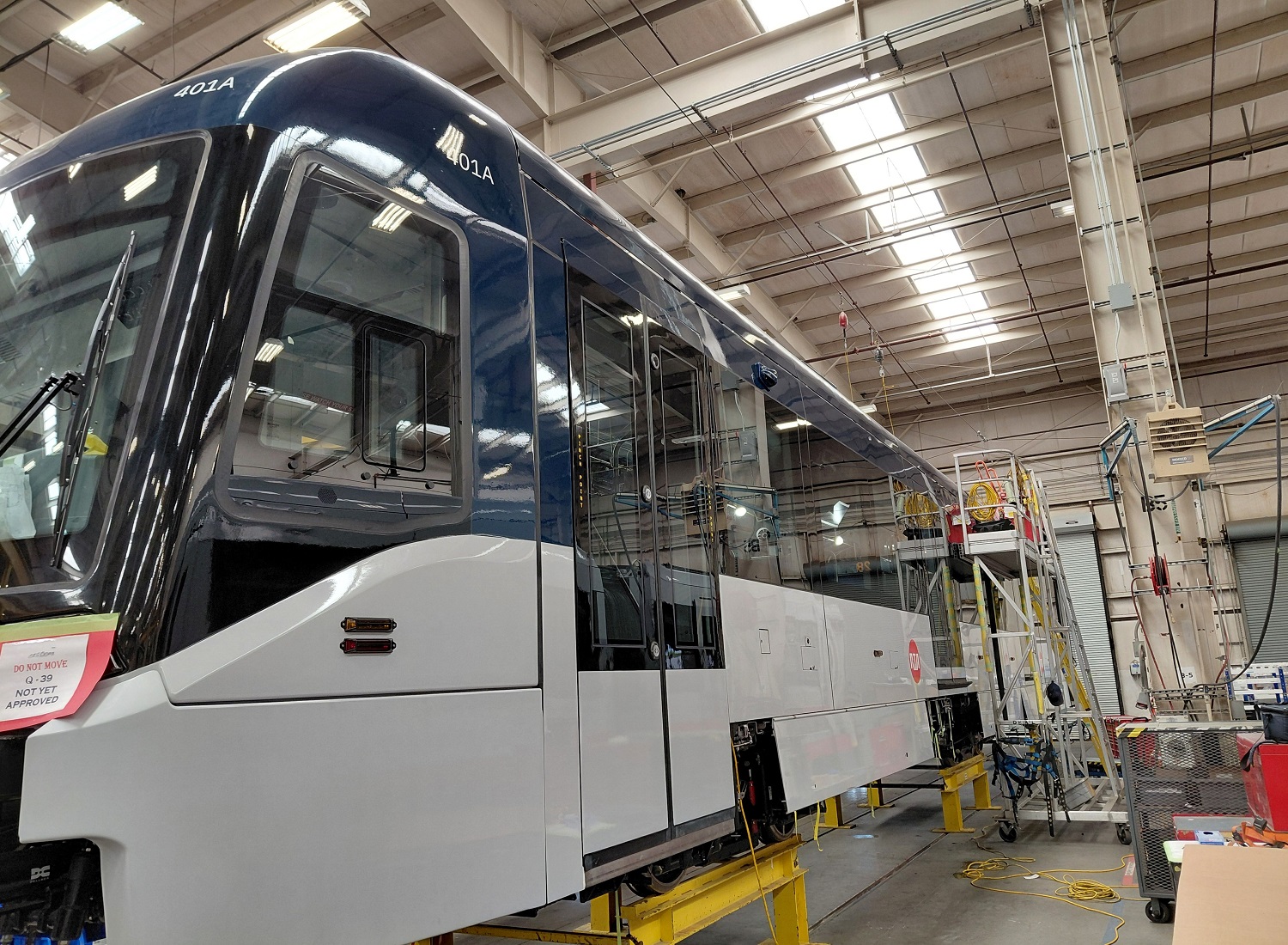
Manufacturing of 54 new railcars for Greater Cleveland will continue well into next year. Here, railcar 401 gets fitted out at the Siemens Mobility plant in Sacramento (GCRTA).
They won’t enter regular service, starting on the Airport-Downtown-Windermere Red Line, until the end of 2027 — well after the May election. However their presence before then in Greater Cleveland could tempt the most active voters.
Not only could the new trains be on display prior to May for public walk-throughs at Tower City Center station and possibly other locations, but promotions of their proposed use could be helpful. The new trains will see expanded use when compared to their predecessors — if a levy passes.
Blue Line (Van Aken) and Green Line (Shaker) trains will be operated west of Tower City Center on the Red Line to Hopkins International Airport. Both the Blue and Green lines will run every 15 minutes versus every 30 minutes now. It would be the first time Shaker Heights has ever had a direct, one-seat ride by train to the airport.
That’s in addition to the Red Line trains continuing to operate every 15 minutes throughout the day. So, from East 55th station west through downtown to the airport, there will be a train departing every five minutes on Ohio’s busiest public transportation route.
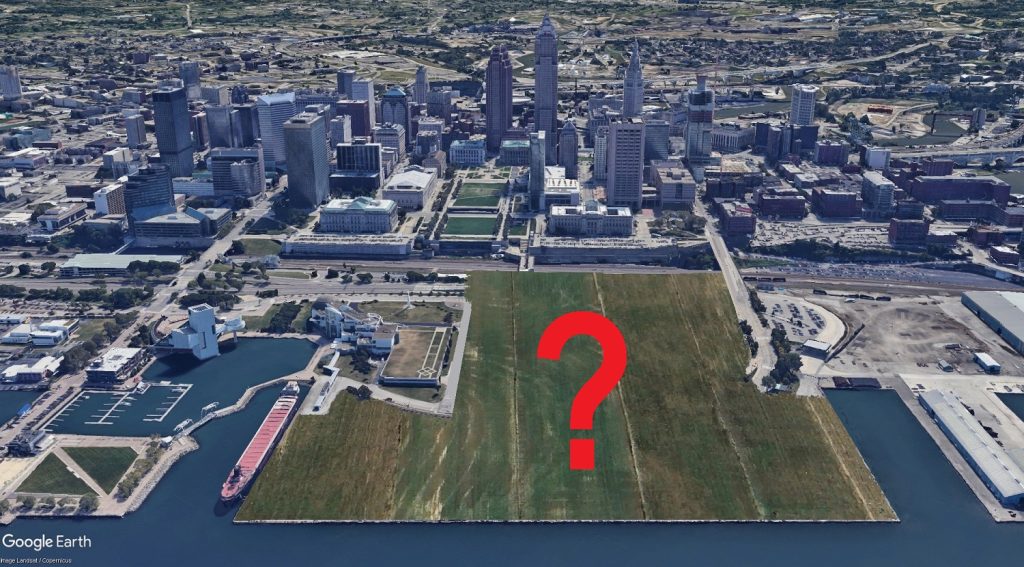
And, after the City of Cleveland redevelops the lakefront, GCRTA hopes to restore regular service on the Waterfront Line with trains running between South Harbor and Windermere every 15 minutes. On the Red Line, that means a train from Downtown Cleveland to East Cleveland every 7.5 minutes.
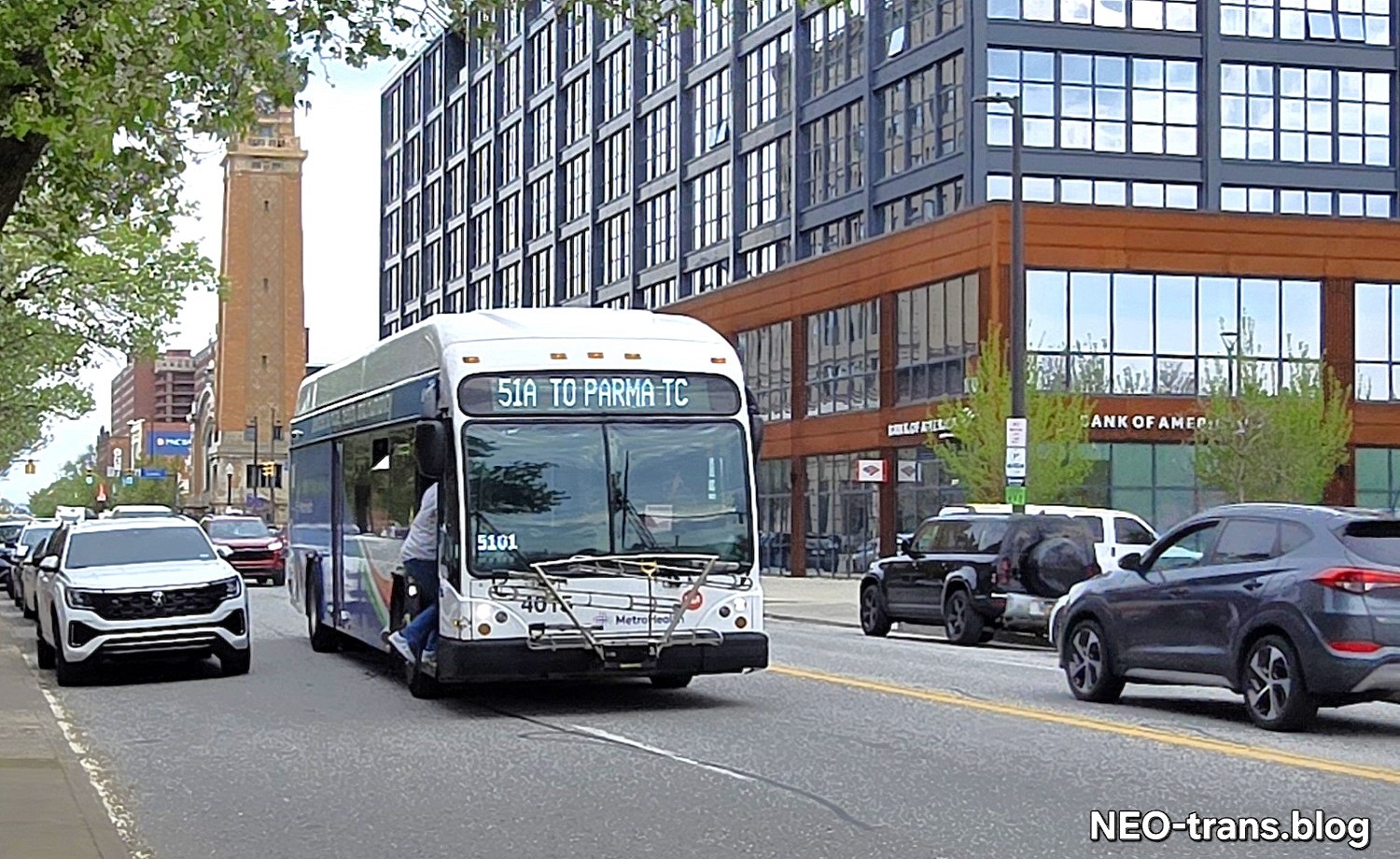
While not on the menu of outcomes from GCRTA’s levy, the MetroHealth Line bus rapid transit on West 25th Street, from Detroit Avenue to Old Brooklyn, more BRTs along Cleveland’s busiest bus routes would result from a transit levy (GCRTA).
GCRTA also hopes to attract suburban support by providing more bus rapid transit (BRT) routes on city streets, including as-yet unidentified BRTs in the eastern suburbs, such as along Cedar or Mayfield or Warrensville Center roads.
In the western suburbs, GCRTA proposes to restore express bus service to downtown from its park-n-ride lots in North Olmsted and in Westlake. It would be useful if these fast buses also served University Circle.
The Westlake park-n-ride, next to Norfolk Southern (NS) railroad tracks, is the subject of an emerging transit-oriented development that’s not advanced far enough yet for publication. It’s something GCRTA needs to do more of to expand, diversify and stabilize its ridership and revenues over the long-term.
But are those service expansions enough to win suburban support? If not, what about a new-construction light-rail line or three? There is the possibility that GCRTA could afford to build several 2- to 5-mile extensions of its light-rail lines by changing its goal for an operating budget reserve.
Under the 0.25-percent sales tax hike scenario, $21.5 million per year would be set aside for increasing the operating reserve from 30 days to 90 days. Under the 0.50-percent hike, the set aside would grow to $81.5 million per year to lengthen the reserve to 180 days.
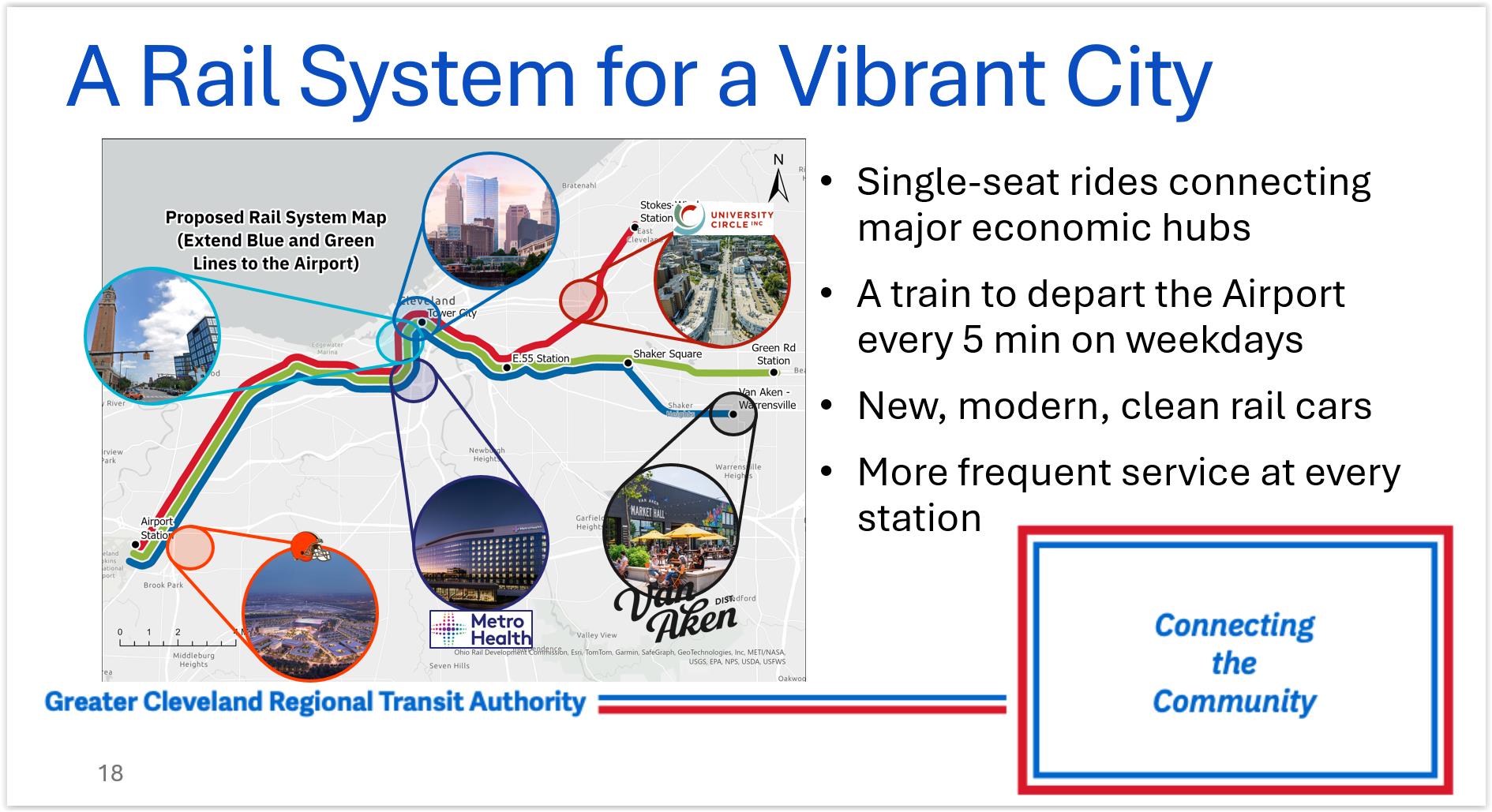
More frequent rail service along existing rail lines would result from a voter-approved increase is sales tax revenues. And the Blue and Green lines from Shaker Heights would be extended west of downtown on the Red Line to Hopkins International Airport (GCRTA).
If GCRTA sought the 0.50-percent sales tax increase but kept the enlarged operating reserve to 90 days, it could presumably dedicate another $60 million per year to capital expansion projects and to operate those expansions. That could support at least one rail expansion project.
GCRTA doesn’t want to do that because it fears any rail expansion project will cost more than $400 million to build and would not win any federal funds. It doesn’t want to be on the hook for the entire cost.
Why is $400 million a magic figure? That cost is the difference between winning a New Starts grant for a project costing more than $400 million versus winning a Small Starts grant from the Federal Transit Administration (FTA) for a less expensive project.
Because the population, transit ridership and transit services in Greater Cleveland have fallen to such a low level, GCRTA probably couldn’t meet federal guidelines that would allow it to compete for a New Starts grant for a rail construction project with a total cost of more than $400 million.
But it might compete for a Small Starts grant for a cost-effective project in a growing district. To be eligible for that grant program, a transit construction project would have to cost less than $400 million with the FTA willing to fund up to half of it. In fact, GCRTA is right now seeking a Small Starts grant to help pay for its $52 million West 25th BRT project.
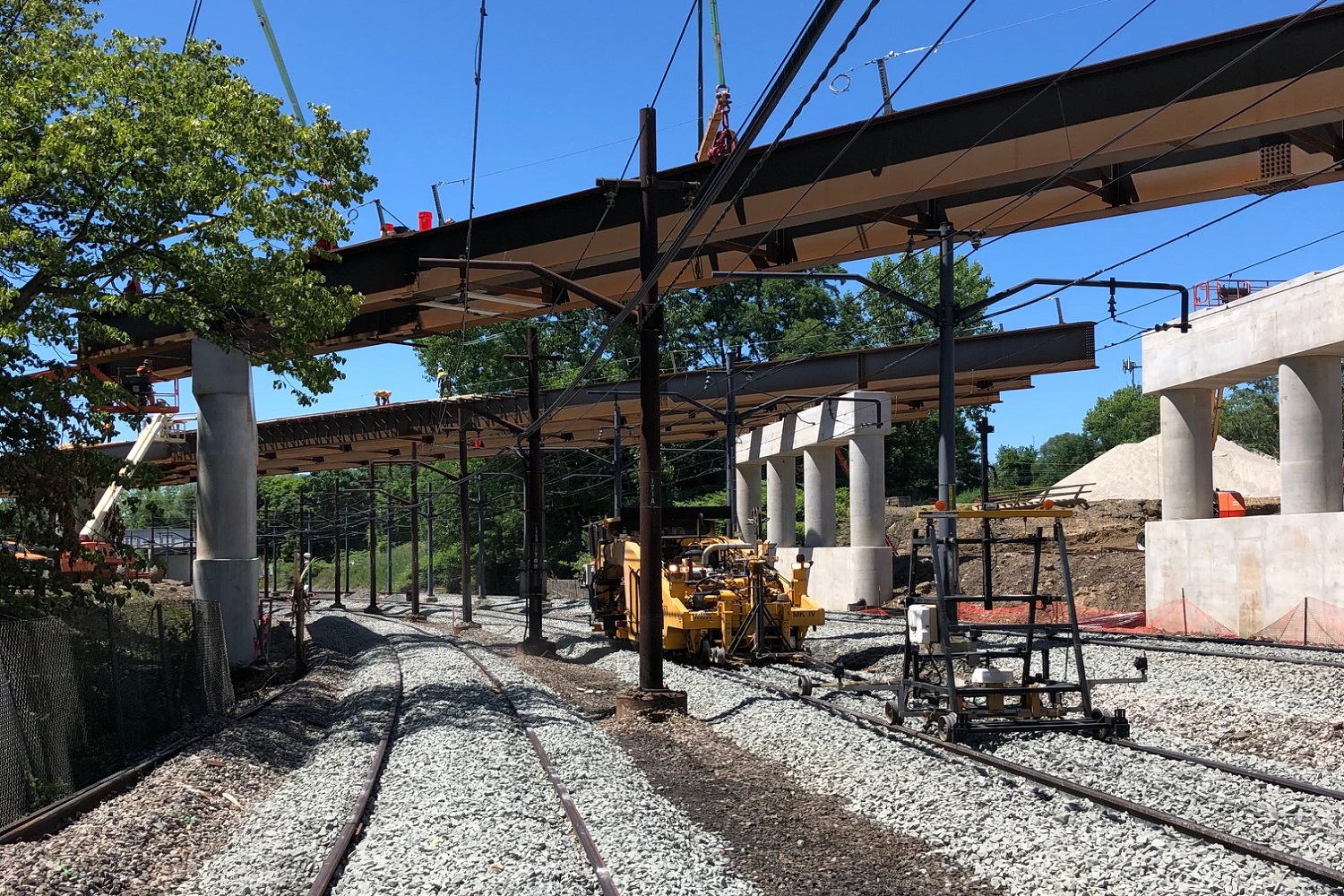
In 2020, while the Opportunity Corridor was being built overhead, GCRTA was rebuilding the Blue and Green line tracks from the ground up. But the Opportunity Corridor provided what GCRTA’s rail system has not — direct access to the doorstep of Ohio’s largest employer, the Cleveland Clinic (GCRTA).
What’s surprising is that GCRTA staff doesn’t believe it could build a rail extension anywhere in Greater Cleveland for less than $400 million or get a federal match for it.
They didn’t think they could get matching federal funds for its railcar replacement either which is why they let its aging railcars decay to such a point that they had to be called out for it. GCRTA needs to be called out again.
In the mid-1990s, GCRTA estimated the cost of rerouting one or both of the Blue and Green lines from East 116th Street station via MLK/Fairhill Boulevard to University Circle at $73.6 million. Even with inflation, there’s no way that’s costing more than $400 million today.
And if it cost more than $400 million to further extend the rails into the Main Campus of Cleveland Clinic, Ohio’s largest employer, the Clinic could redirect hundreds of millions of dollars from future parking garage developments to that work. It would save the Clinic costs of sustaining more garages and spare its surrounding neighborhoods from their traffic.
In the early 2000s, GCRTA estimated the cost of extending the Waterfront Line to create a rail loop of downtown at $120 million. That’s probably not going to cost more than $400 million today.
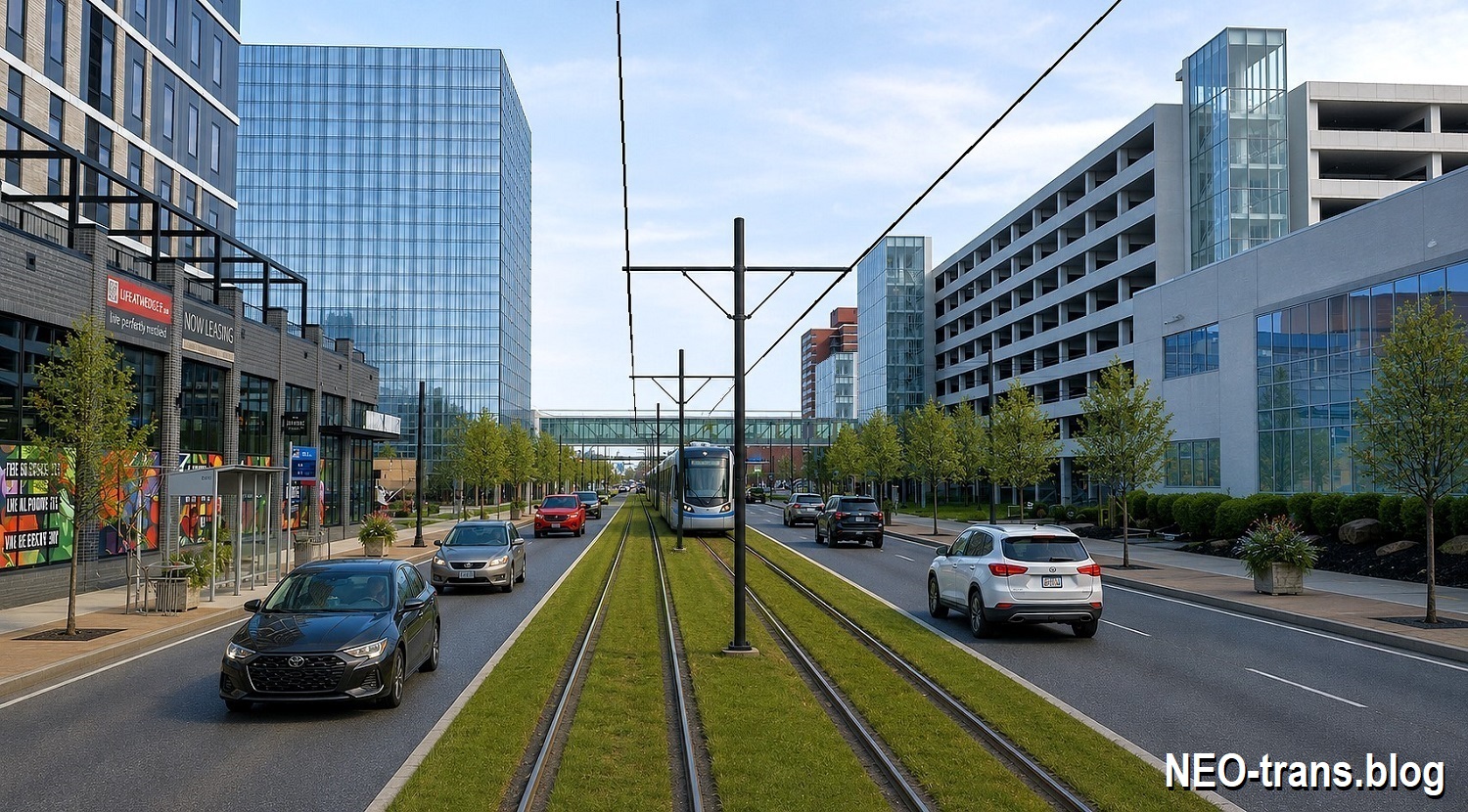
In a poll NEOtrans posted on UrbanOhio, the most popular recently studied rail extension was to make University Circle, rather than Downtown Cleveland, the western terminus of the Blue or Green line from Shaker Heights (NEOtrans).
And if it did, it could be broken up into phases, with a boost in property values along the rails feeding a tax-increment financing (TIF) district to support the Downtown Loop.
In the mid-2010s, GCRTA estimated the cost of extending the Blue Line to either I-271/Harvard or Northfield/I-480 at $175 million. Again, that’s probably not going to exceed $400 million today. Even if it did, again there’s a potential for a phased approach, supported by a TIF.
And, also in the mid-2010s, GCRTA and others estimated the cost of using the existing NS railroad tracks into Cuyahoga County’s West Shore suburbs of Lakewood, Rocky River, Westlake and Bay Village for regional transit service, costing $100 million to start up.
That wouldn’t cost more than $400 million today, either, even if it were operated as a branch of the Red Line from the West Boulevard-Cudell station — as planners a decade suggested could generate more riders but wasn’t studied. Such a branch could be had with or without overhead electric wires strung over the existing tracks. Stadler makes a rail car that can operate with or without overhead wires.
NS doesn’t need this track, called the Cleveland District. The freight railroad voluntarily stopped running mainline freight trains over it for an entire month, from December 2022 to January 2023.
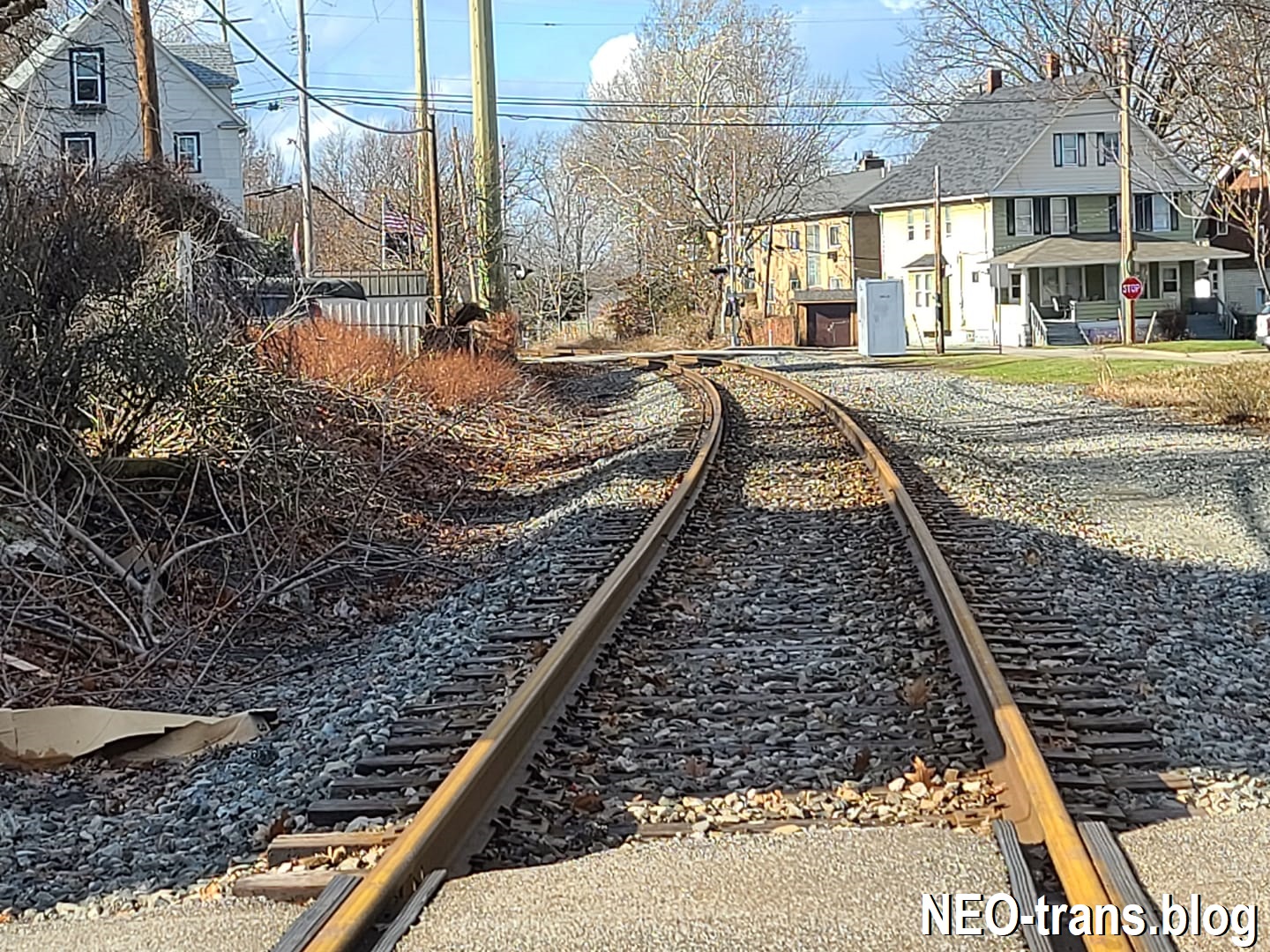
For a month ending in January 2022, Norfolk Southern’s rails through the West Shore suburbs including Lakewood rusted from disuse as its few daily freight trains detoured through Berea and Elyria to meet a traffic quota. It showed NS doesn’t need this track, which could be acquired and repurposed for transit use to connect with the Red Line near its West Boulevard-Cudell station (GCRTA).
NS reportedly did so to keep annual shipping tonnage below levels that, under federal regulations, would have required it to install a more restrictive and costly Positive Train Control signal system along its tracks.
East of the Avon Lake Ford Plant into Cleveland, the only rail-served customer is Dependable Chemical in Rocky River which gets a monthly shipment. The Ford plant can be served by rail from the west or south.
Not only could adding light-rail transit along this existing track be the least expensive rail expansion around, it might also be one of the most popular. On UrbanOhio, I posted a poll asking what recently studied rail expansions would be most favored.
The most popular expansion was a Blue or Green Line reroute to University Circle/Cleveland Clinic. This district is on a fast track to boast more jobs and residents than Downtown Cleveland — if it doesn’t already.
But while downtown has light-rail lines and highways fanning out in multiple directions, University Circle is skirted at its fringes by one rail line and lacks any highways, unless you count the already congested, 2022-built Opportunity Corridor as one.
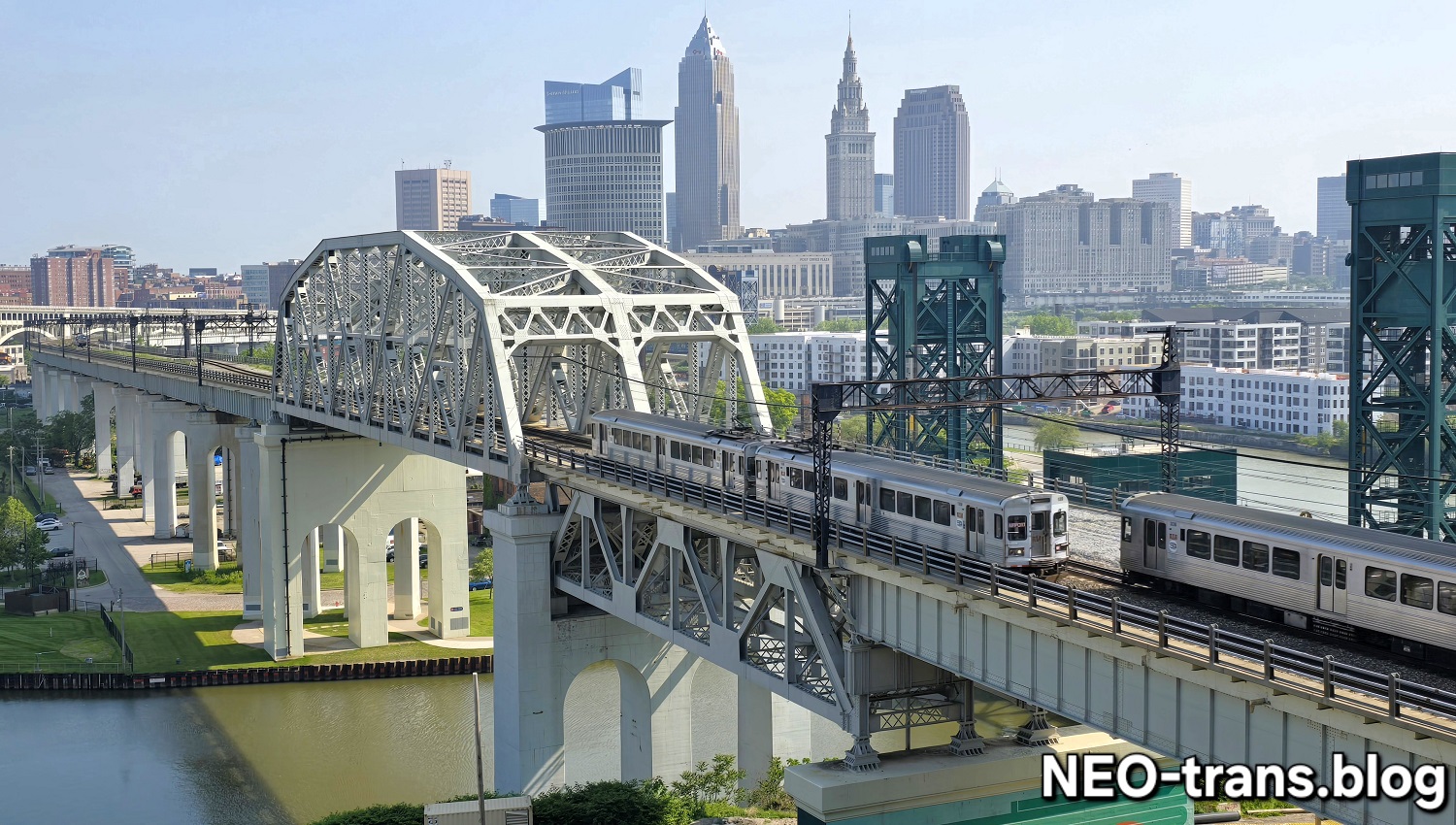
Greater Cleveland is a very different place than it was 51 years ago when GCRTA was voted into existence. The question is, does Greater Cleveland still care enough about public transportation and believe that GCRTA is offering the right transit services for their money? (NEOtrans).
At the latest tally, the second-most popular expansion is a tie between a Red Line branch to Westlake and the Downtown Loop. After “other route,” the least-popular answer among 122 responses was to not expand the rail system — tied with a Green Line extension to the Beachwood Place area.
Putting all three of these rail extensions out there as options to be pursued with a sales tax levy would offer a nice geographic balance among eastern suburbs, western suburbs, and downtown interests. The southern suburbs are proposed to get faster, more reliable bus service into the city via BRT routes on West 25th and Broadway.
A potentially cost-effective way to get rail service to the southern suburbs might be to extend the Cuyahoga Valley Scenic Railroad from Independence to downtown for up to $68 million. Modern diesel rail cars could be used as shuttles from Brecksville or Independence to Tower City.
Sadly, GCRTA doesn’t even want to discuss a rail expansion unless it can be done within its existing 33-mile rail system — a system that doesn’t go where enough people live or work for them to care about it.
If the levy gets derailed in May, that might be the cause — assuming enough people notice.
END