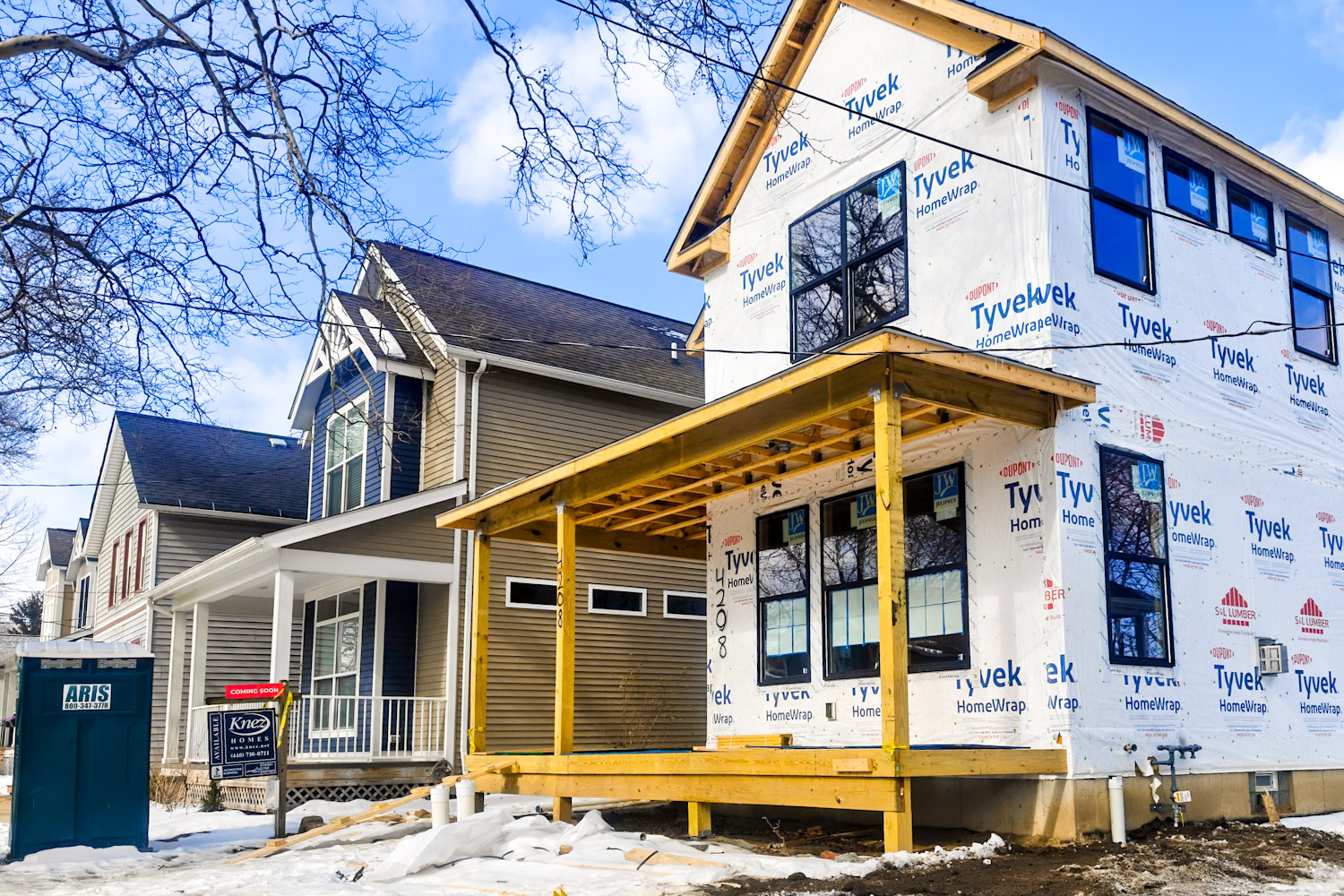
A single-family infill home by Knez Homes on Bailey Avenue in Cleveland’s Ohio City neighborhood (Harrison Whittaker). CLICK IMAGES TO ENLARGE THEM.
Progress Pics: Ohio City infill, Ambler Apartments, BVQ District, Franklin Yards, The Carriage Co.
While revitalization efforts since the 1990s have transformed Cleveland’s Ohio City into a vibrant urban destination, the demolition of vacant, abandoned, and fire damaged homes has scarred some blocks with empty lots.
Construction of new “infill” development in the SoLo (South of Lorain) neighborhood is restoring the south side of Ohio City to its former glory — and in theory, creating an immediate source of property tax revenue.
In 2024, major changes to the City of Cleveland’s 15-year tax abatement policy went into effect, reducing property tax abatements for new construction in stable, “market-rate” neighborhoods like Ohio City from 100 percent to 85 percent.
An infill home replaces a vacant lot on Bailey Avenue, where a large number of 19th century homes have been razed over the past two decades (Harrison Whittaker).
The change prompted concerns that many developments would be made financially infeasible, limiting the construction of new homes in the places they are most demanded. While the policy has reduced incentives for new construction, development activity has not halted completely.
In particular, Knez Homes has continued to add infill homes where vacant lots once stood. Two single-family residences constructed on Bailey Avenue will feature three bedrooms, a two-car garage, and a first-floor home office. One of the homes has already sold.
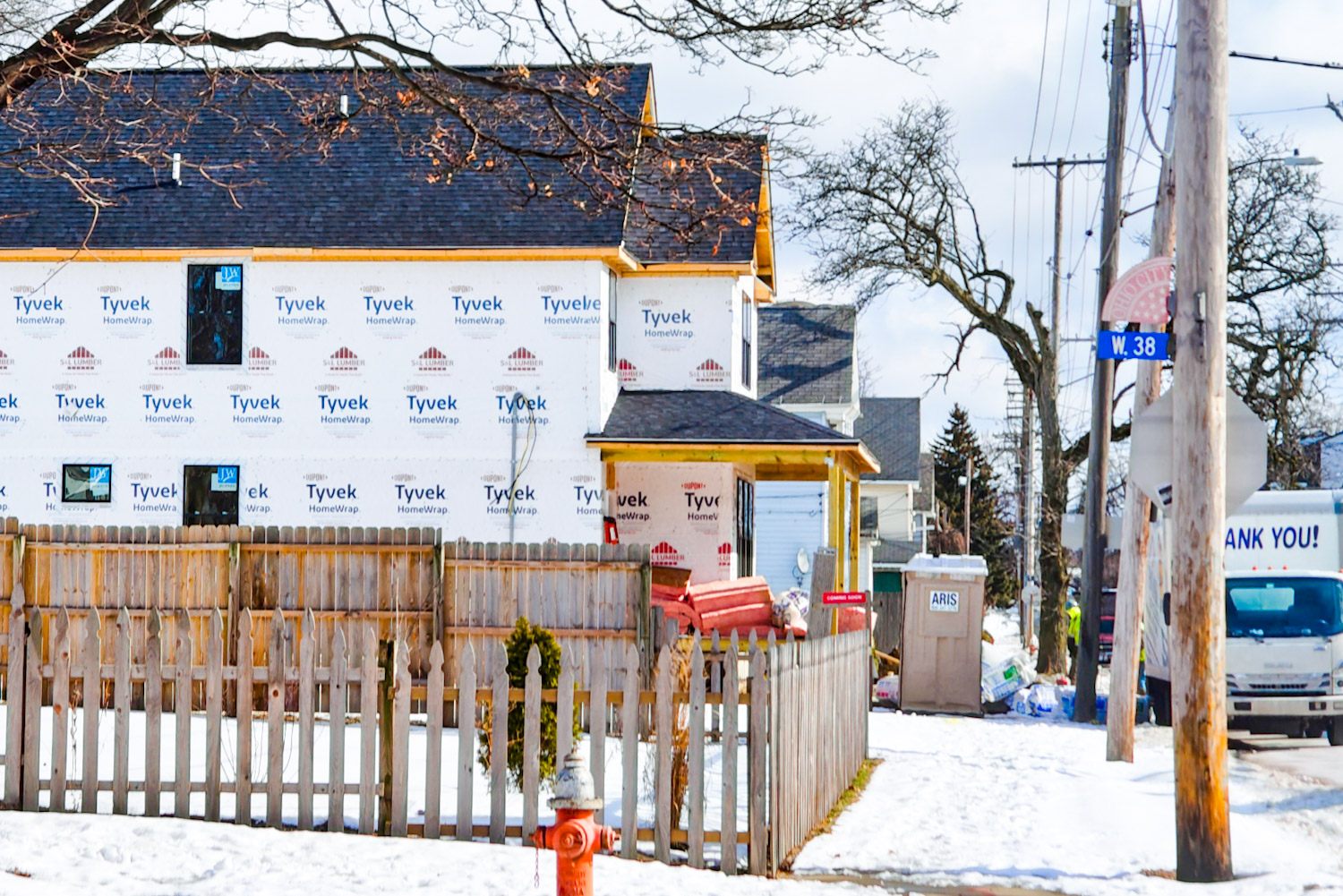
On West 28th Street, a modern two-bedroom home was built by Knez on a vacant lot. The home, which includes an attached one-car garage, required a zoning variance due to its small lot size.
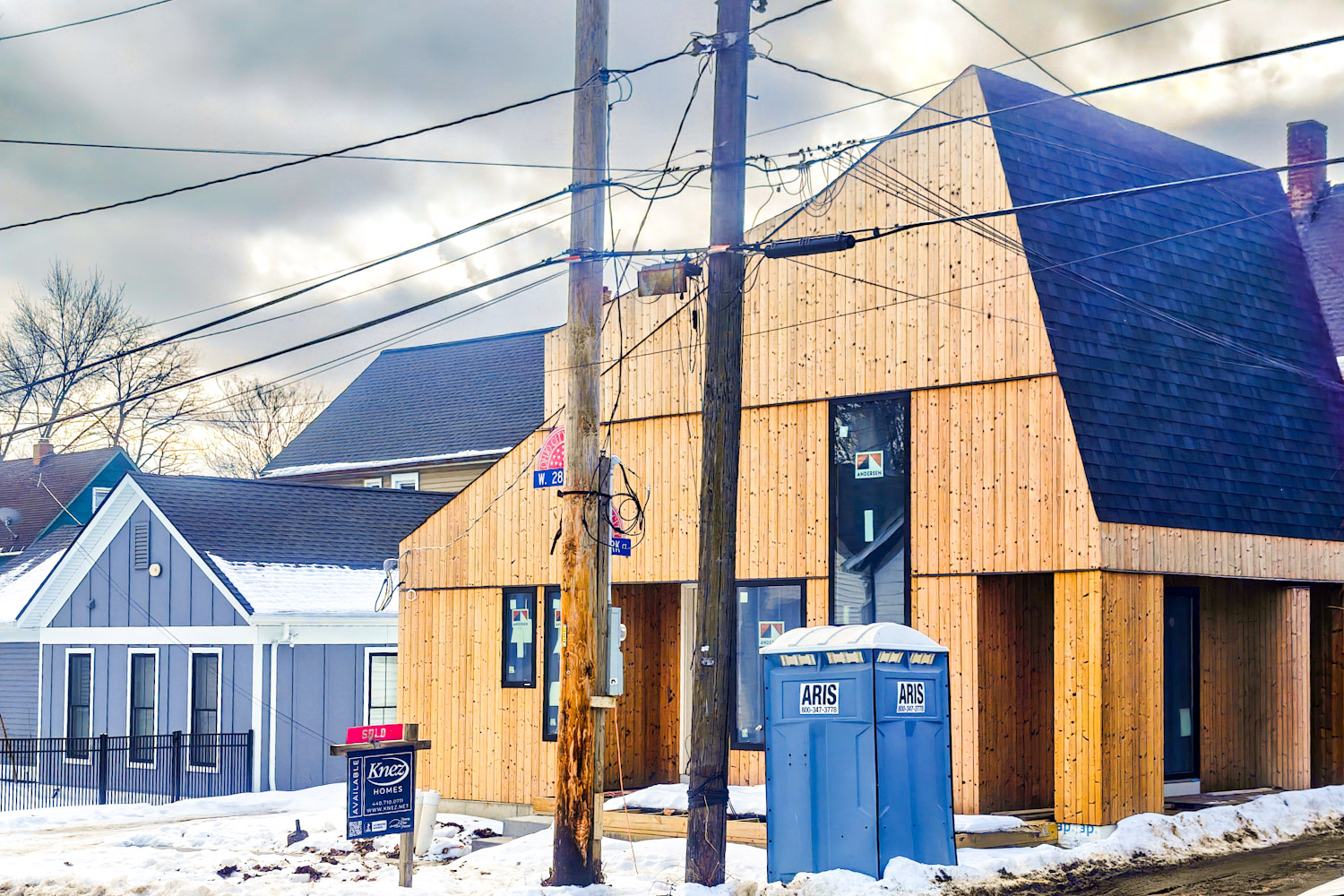
A modern single-family home filled a vacant lot on West 28th Street (Harrison Whittaker).
Nearby at 2166 W. 26th St., work continues on the 109-unit Ambler Apartments. The market-rate development, co-developed by local developers Dan Whalen and Luke Palmisano (through his newly formed Revival Residential), was approved in 2025. The two have partnered with Geis Companies for its construction.
The Port of Cleveland issued up to $20 million in bonds for the $29 million project in September, allowing construction to begin the following month.
However, some projects have decided to change course in response to the tax abatement reduction, such as in the BVQ (Barber-Vega-Queen avenues) District, a neighborhood tucked between I-90 and GCRTA’s Red Line tracks south of Ohio City.
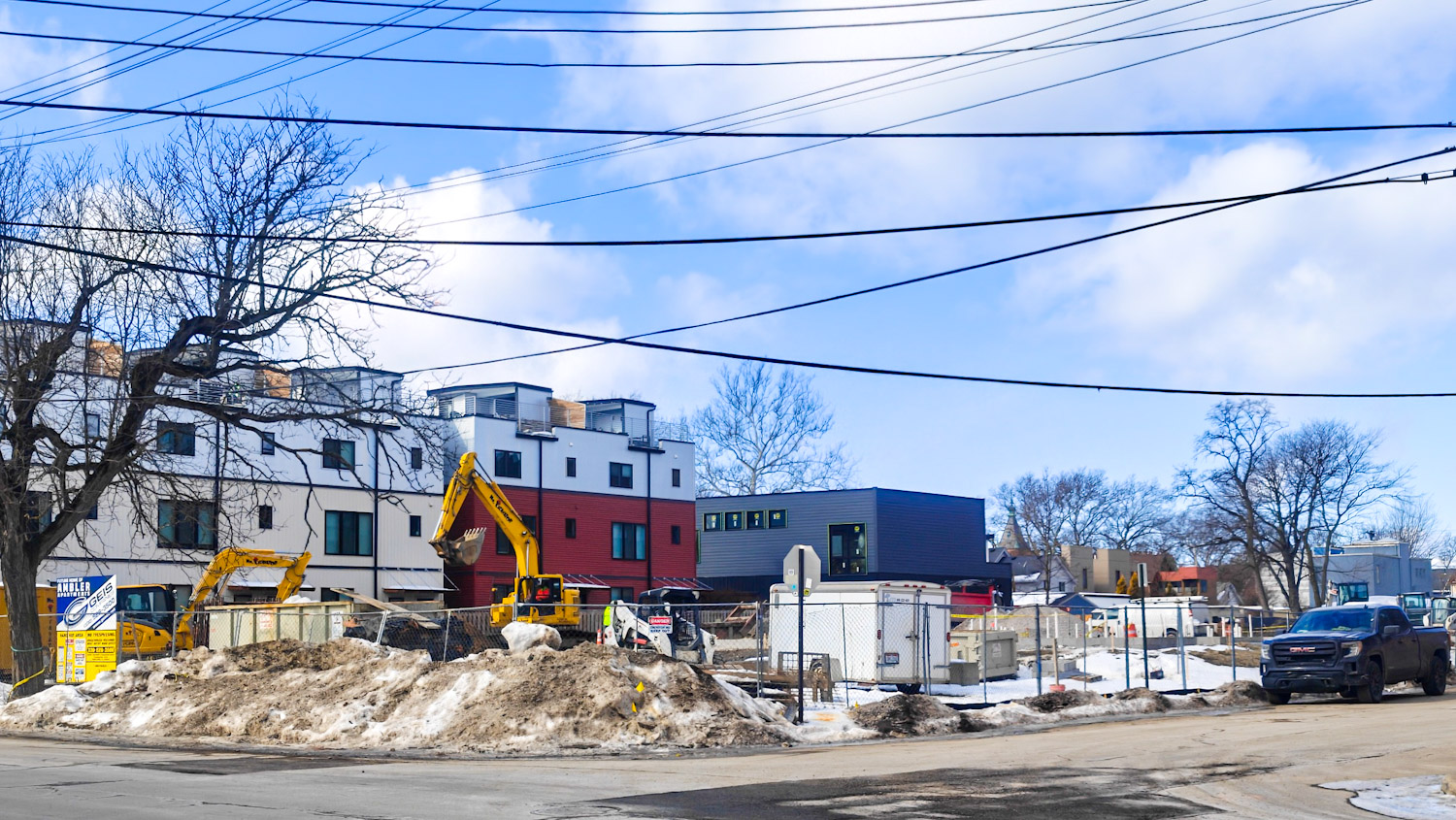
From the corner of West 26th Street and Monroe Avenue, foundations for Ambler Apartments are already visible (Harrison Whittaker).
There, plans to build 96 market-rate apartments over a grocery store as part of the multi-phase Hub 27 development were scrapped in favor of a 67-unit complex without retail, utilizing Low Income Housing Tax Credits (LIHTC). The second and third phases of the project would see an increased unit count.
Interestingly, a 2024 map of the new tax abatement program seems to indicate that the BVQ District is an Opportunity Market — qualified for a 100 percent abatement.
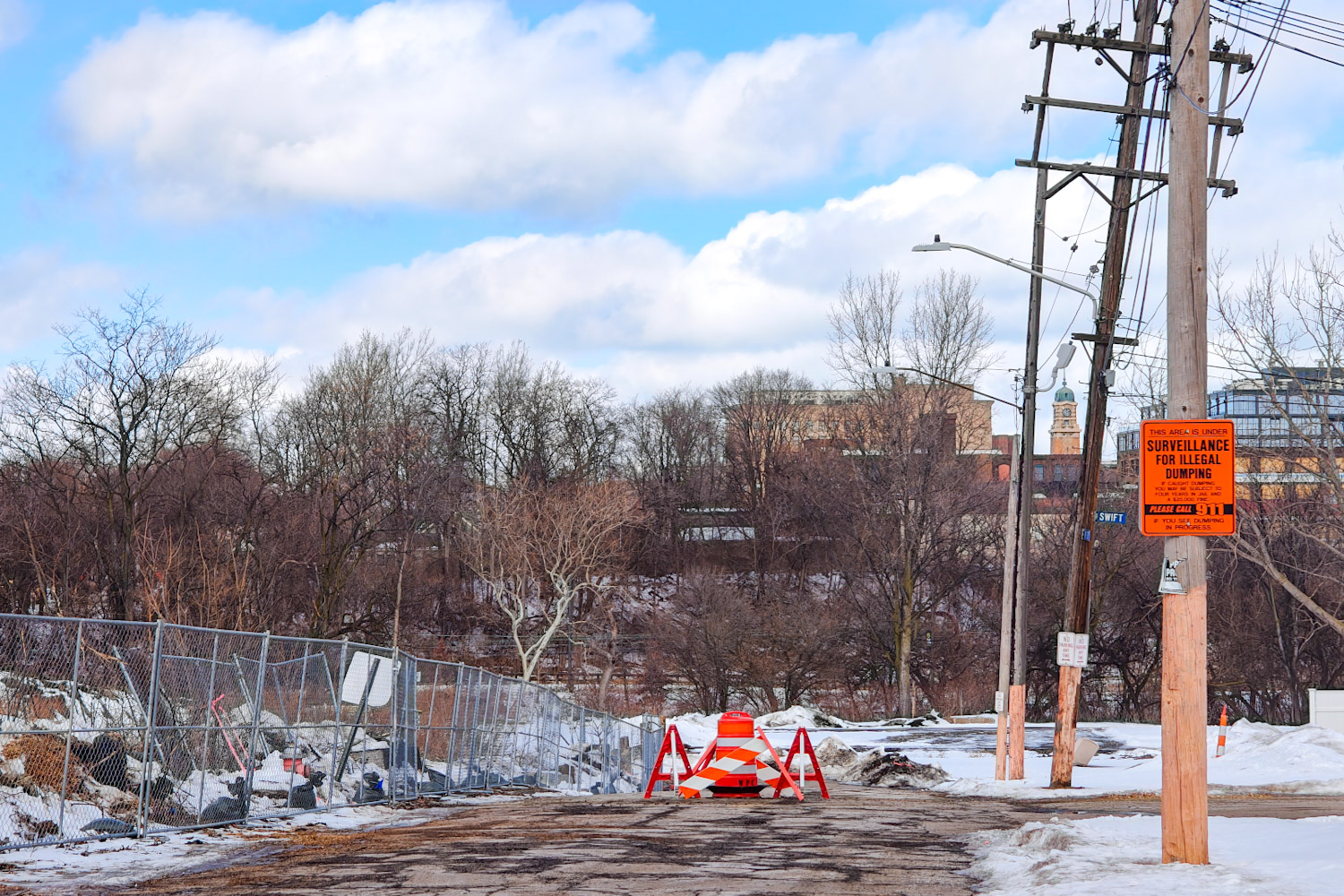
Fencing on West 27th Street at the site of the planned Hub 27 development (Harrison Whittaker).
While the project, led by Pivotal Development LLC and Metro West Community Development Organization, appears to have had a permit issued last month, its construction has not made any substantial progress. A construction trailer and fencing are the only signs of the coming development.
Nearby on Barber Avenue between West 32nd Place and West 30th Street, BVQ Lofts developer Ben Beckman plans to build the 16-unit Joy Court Townhomes and 98-unit Old Mill Street Apartments. While the site was cleared in 2024, with vacant residential structures razed, work has not yet begun.
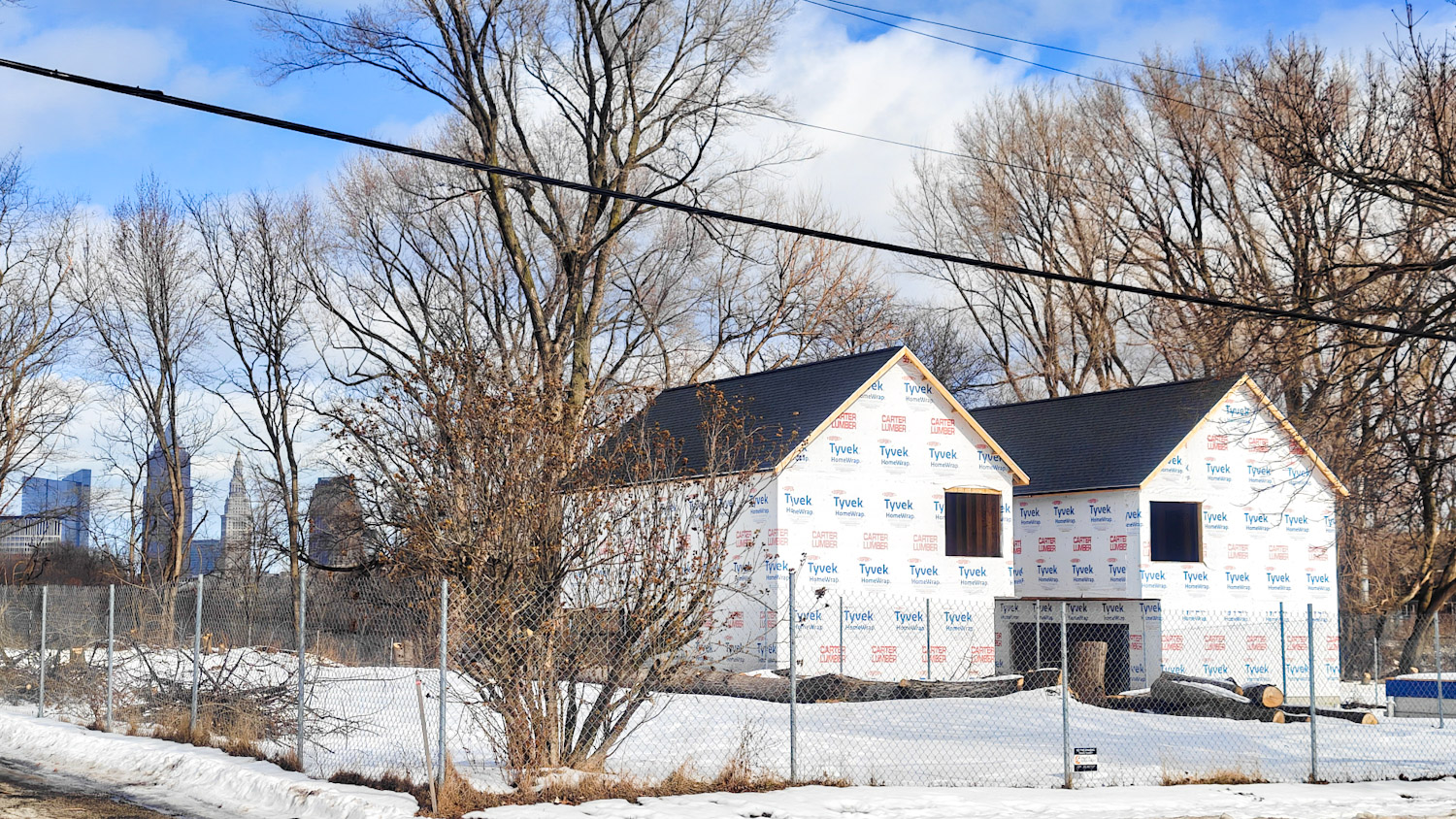
Two ADUs constructed by T & R Builders will be fronted by single-family homes. Separately, the Joy Court Townhomes and Old Mill Street Apartments are planned to be built around them (Harrison Whittaker).
In fact, the only BVQ development which has seen significant construction activity this year may come as a surprise. When Beckman began acquiring property on the north side of Barber Avenue, he was unable to obtain two parcels owned by T & R Builders Inc.
Now, the owner of the holdout lots is developing them with two single-family homes, each with an above-garage Accessory Dwelling Unit (ADU).
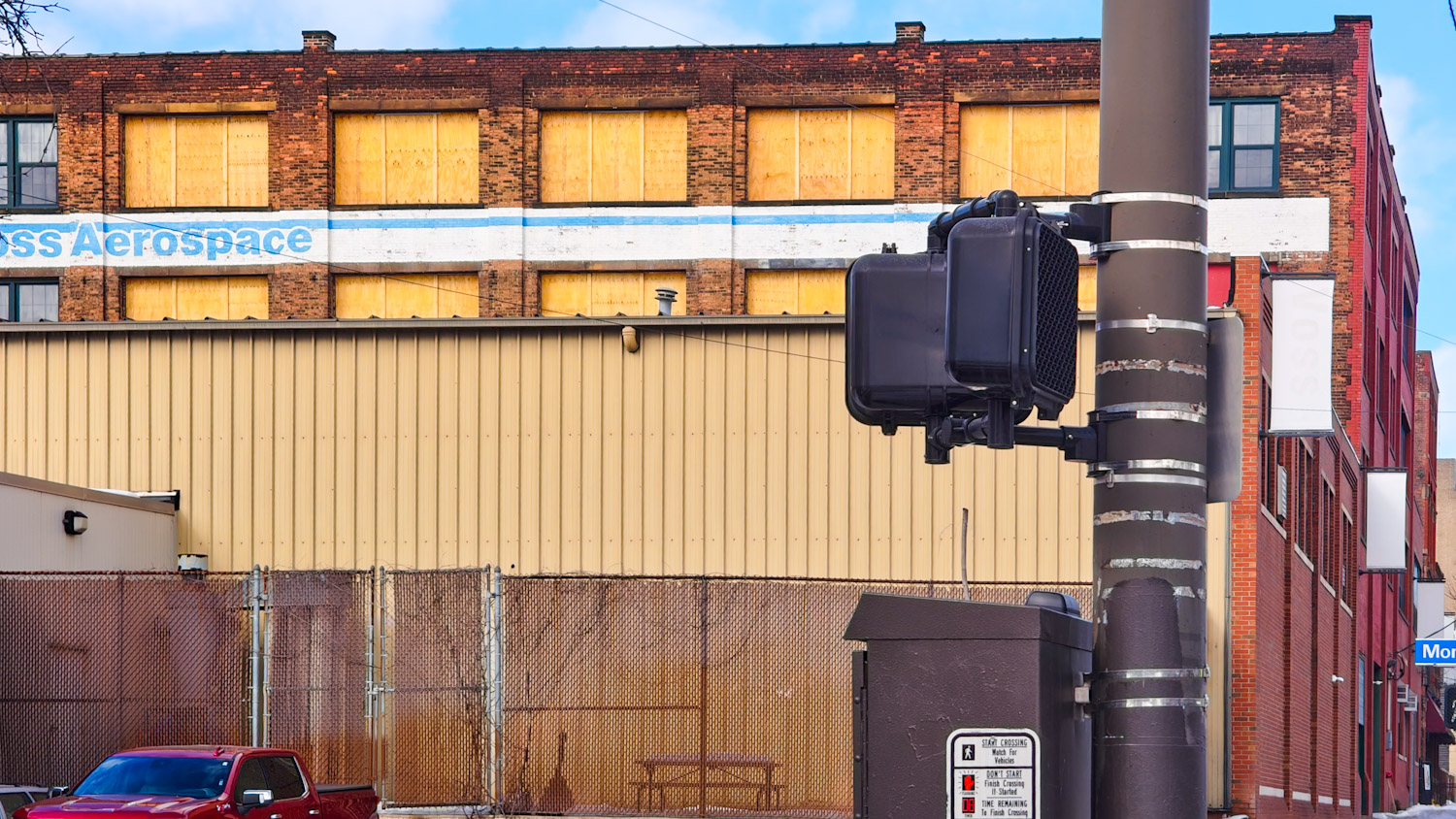
The Carriage Co., from across Monroe Avenue (Harrison Whittaker).
To the north in Ohio City, two ongoing historic rehabilitation projects continue to see slow, but steady progress.
At 2168 W. 25th St., the redevelopment of the former Voss Industries plant into The Carriage Co. is being led by MRN, Ltd. with SA Group as its architect.
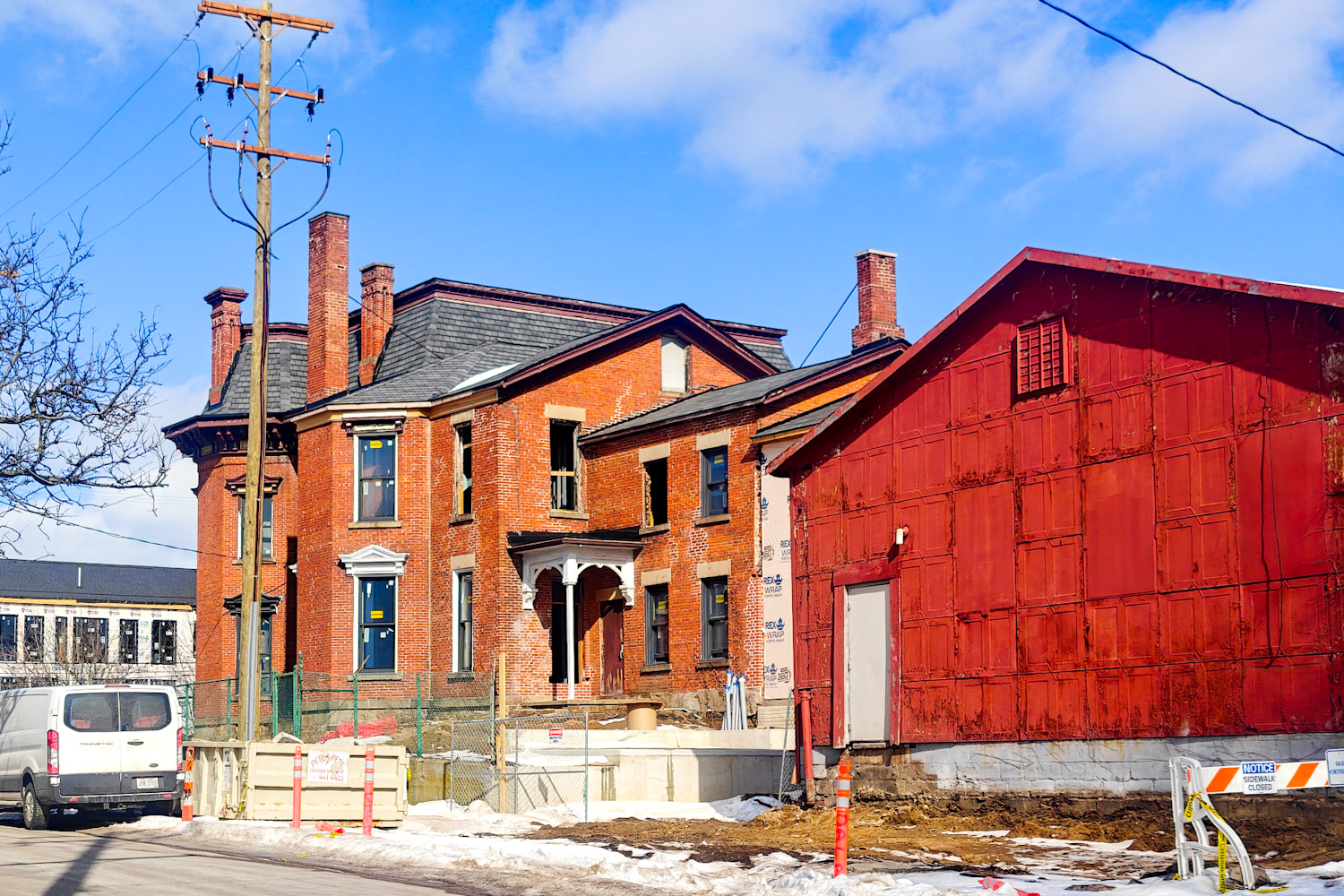
Franklin Yards restores traditional architectural details on a historic mansion, across West 32nd Street (Harrison Whittaker).
The mixed-use project will feature retail spaces, pedestrianized alleyways, and 139 apartments.
At Franklin Boulevard and West 32nd Street, the conversion of a historic mansion and a former YWCA facility into 38 apartments is led by Dalad Group and Property Advisors Group, with Horton Harper Architects as its designer.
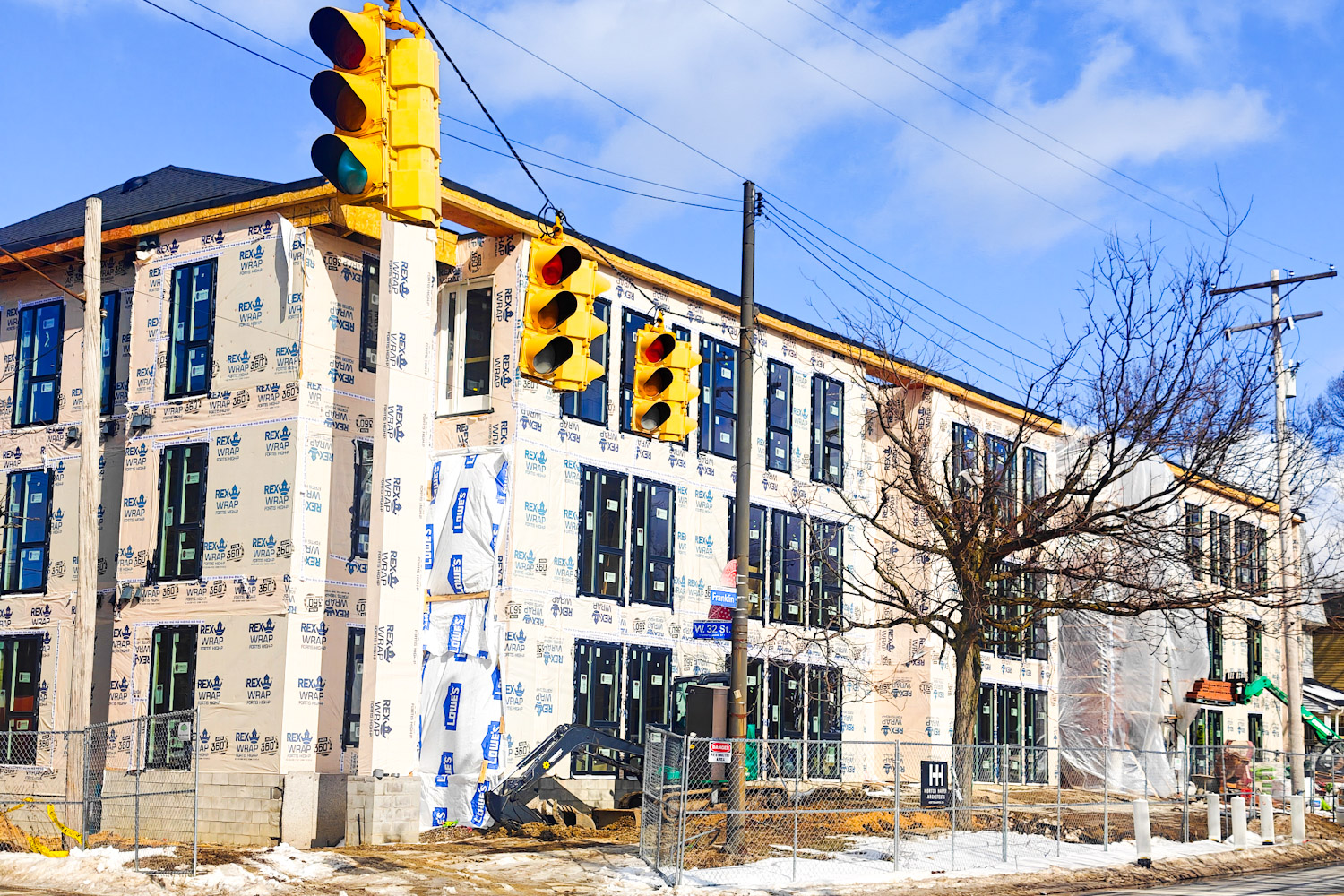
A 19-unit apartment building sees steady progress at Franklin Yards, across Franklin Avenue (Harrison Whittaker).
The development, known as Franklin Yards, was first proposed in 2018. It also includes a 19-unit new construction apartment building across the street.
For more construction updates around Greater Cleveland, check out NEOtrans’ other Progress Pics articles.
END