
Construction cranes could return over Downtown Cleveland or major renovation projects continue with the renewal of the state’s Transformational Mixed Use Development tax credit (NEOtrans). CLICK IMAGES TO ENLARGE THEM.
Ohio offers transformational tax credit again
A financial incentive originally designed to spur new construction in Downtown Cleveland has instead helped other Ohio downtowns. But with the Transformational Mixed Use Development (TMUD) tax credit program renewed by the Ohio General Assembly, there is a renewed chance for the program to benefit its birthplace.
The Ohio Department of Development today announced that the TMUD program and its $125 million in tax credits are available for developers looking to reshape big-city downtowns, nearby neighborhoods and smaller city centers through mixed-use real estate projects.
Through this fifth TMUD round, qualified applicants can receive up to a $20 million tax credit against expenditures for major mixed-use developments, encouraging construction and building improvements in underdeveloped neighborhoods across Ohio.
Applications are available on the TMUD program Web site beginning March 23 and must be received by 4 p.m. April 22 to be considered.
“Mixed-use development is one of the most effective tools we have to bring new life to our communities,” said Lydia Mihalik, director of the Ohio Department of Development in a written statement.

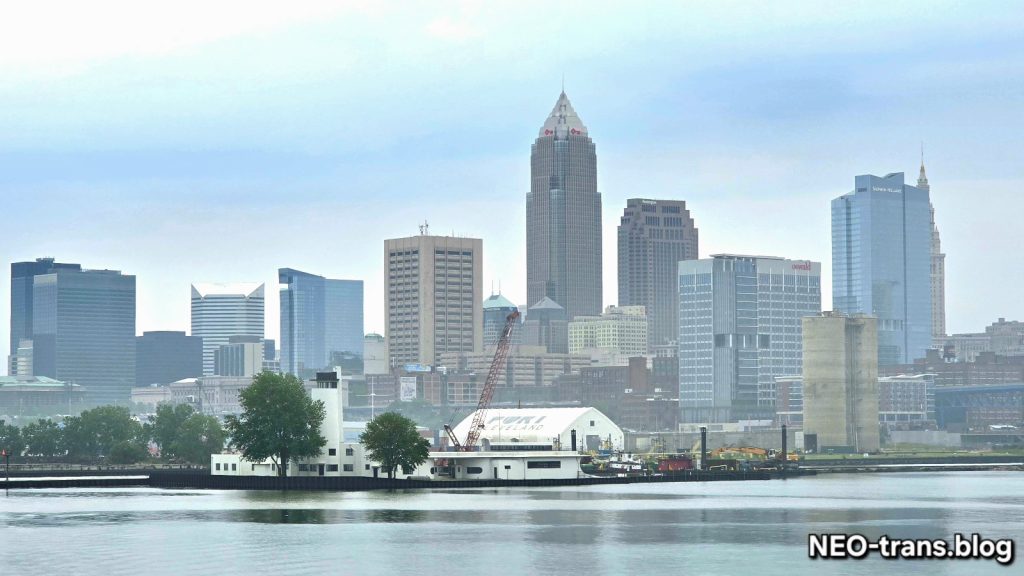
Centennial, a nearly half-billion-dollar redevelopment of a Downtown Cleveland behemoth, won a max, $40 million TMUD tax credit in the program’s first round. Despite the boost, the property went into receivership and is now up for sale (Millennia).
“By transforming vacant and underutilized sites, these projects bring new activity, support local businesses, and create spaces where people can live, gather, and work,” she continued.
The tax credit can be used to help finance new construction and/or improvement of vacant buildings. Development properties eligible for the tax credit must include a combination of retail, office, residential, recreation, or hotel and hospitality uses in one mixed-use development.
Through the first four rounds of TMUD, the Department of Development has awarded $400 million to 49 projects in 31 communities, resulting in nearly $4.9 billion in new payroll and $8.3 billion in investments across the state.
Applications will be separated into two funding categories: major city and general. Major city projects must be located within 10 miles of a corporation limit of Columbus, Cleveland, Cincinnati, Toledo, Akron, and Dayton. Projects that do not meet this location criteria will be considered general projects.
The TMUD was due to expire last year but General Assembly renewed it in House Bill 96. And it made several changes to the TMUD program including halving the maximum amount of tax credits per award.
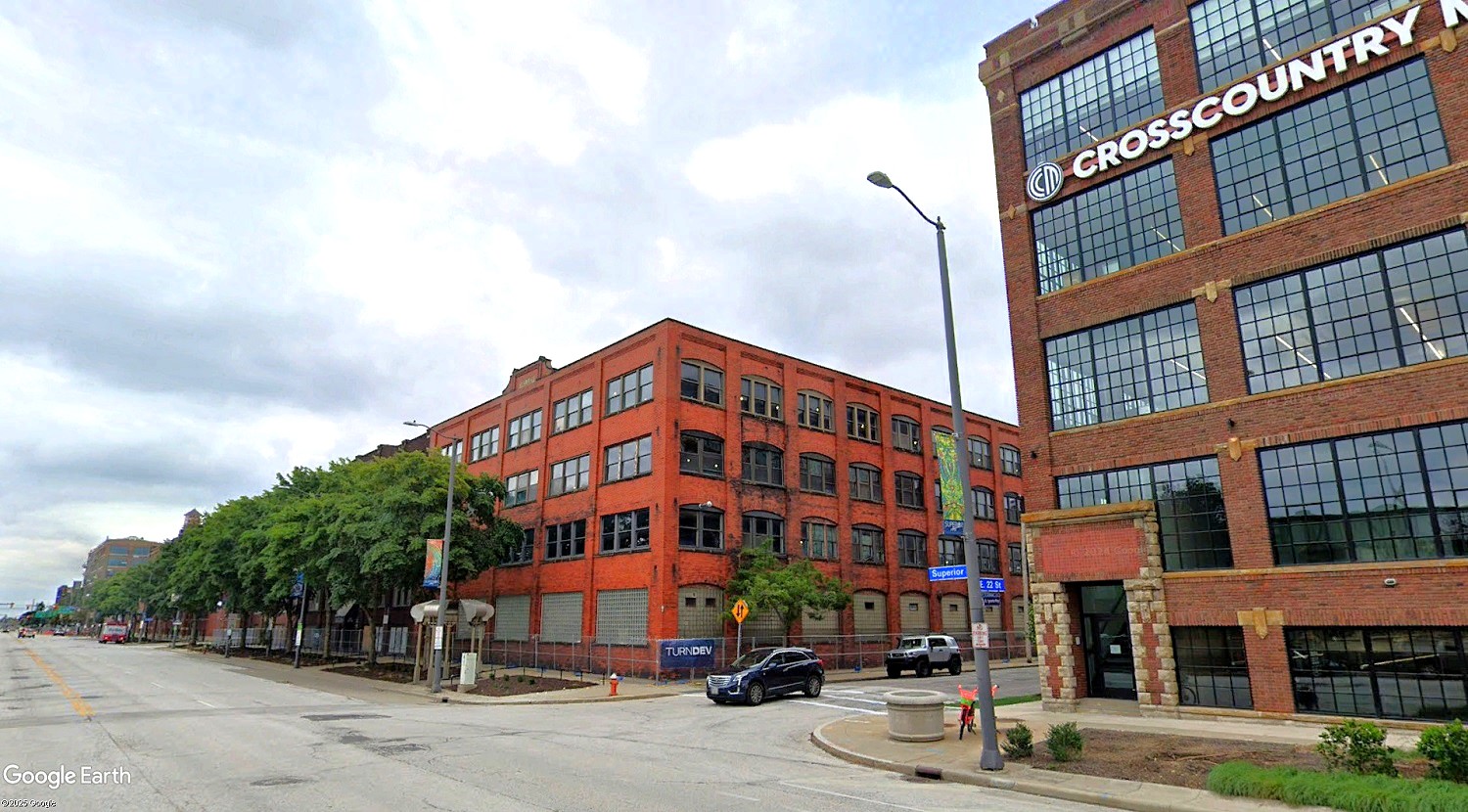
Redevelopment of historic buildings for and near Cross Country Mortgage’s new headquarters along Superior Avenue on the east side of Downtown Cleveland were financed in part by a TMUD tax credit award (Google).
Applicants are encouraged to review specifics on the program Web site. Questions regarding the program can be sent to transformational@development.ohio.gov.
During the most recent round announced in January 2025, nine mixed-use development projects were supported through the program. Only one award was made in Greater Cleveland — for a project that’s not going forward as originally planned.
The state provided $9.1 million in TMUD credits for Bedrock’s $488 million planned Rock and Roll Land 17-story hotel, theater and parking deck at Ontario Street and Huron Road as part of its Riverfront development.
Bedrock had requested a $40 million TMUD. Instead, an outdoor, riverfront amphitheater is planned nearby on Stones Levee Road although the hotel may proceed separately.
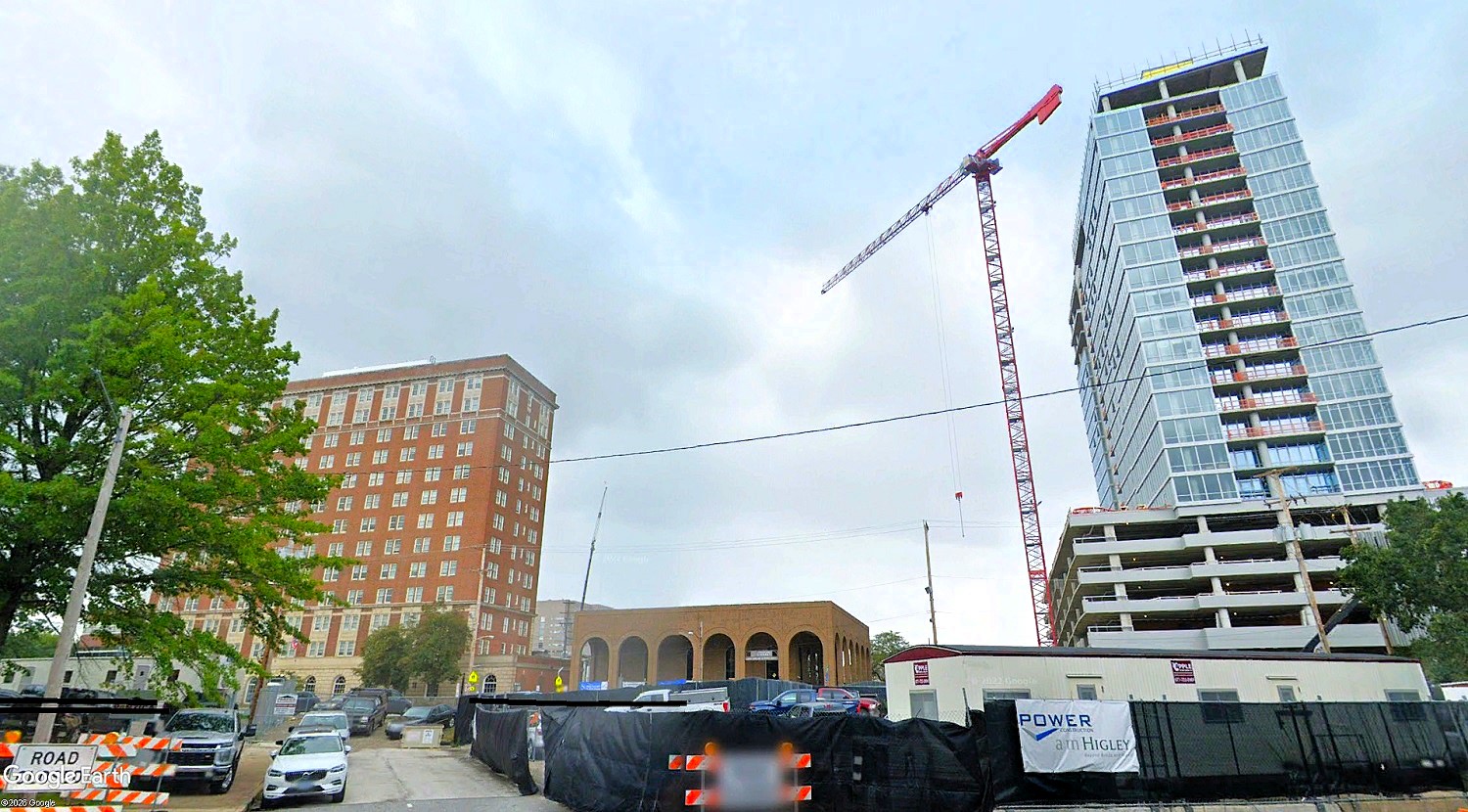
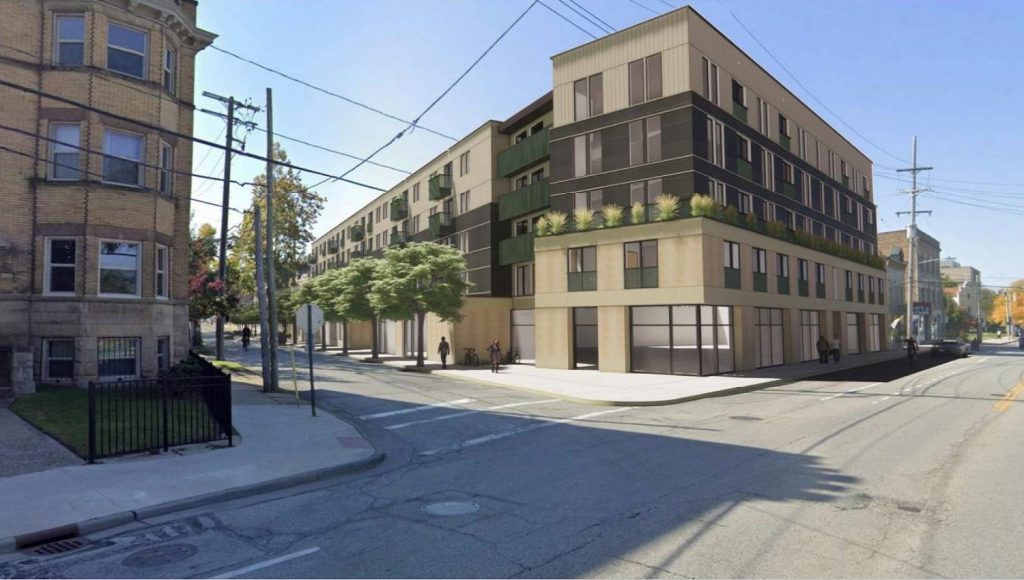
Between Fenway Manor at left and the new Artisan Apartments tower is the former MLK Branch Library. It is to be demolished and replaced with a TMUD-aided retail/parking podium on which a hotel is planned. That has yet to happen although other Circle Square construction clearly has (Google).
In the third round, Greater Cleveland TMUD winners were the Playhouse Square Foundation which received a $1.95 million award for redeveloping Downtown Cleveland’s theater district while DiGeronimo Companies got a $10 million tax credit for developing Valor Acres in suburban Brecksville.
Greater Cleveland’s best TMUD round was the second one. It won three awards — $8 million for Circle Square in University Circle, $13.09 million for the Erieview Tower partial renovation to apartments and hotel, and $5.45 million for Downtown Painesville’s Grand River Corridor.
Construction is underway for all three. While two new high-rises were built in Circle Square, the specific Square project to benefit from the TMUD — a retail-parking podium to rise on the site of the old MLK Branch Library — has yet to materialize.
In the first TMUD round in March 2022, several projects in Greater Cleveland won awards with mixed results. The Centennial, 925 Euclid Ave., won the only max $40 million award in Greater Cleveland and yet its developer, Millennia Companies, couldn’t deliver the project. The property has gone into receivership and is up for sale.
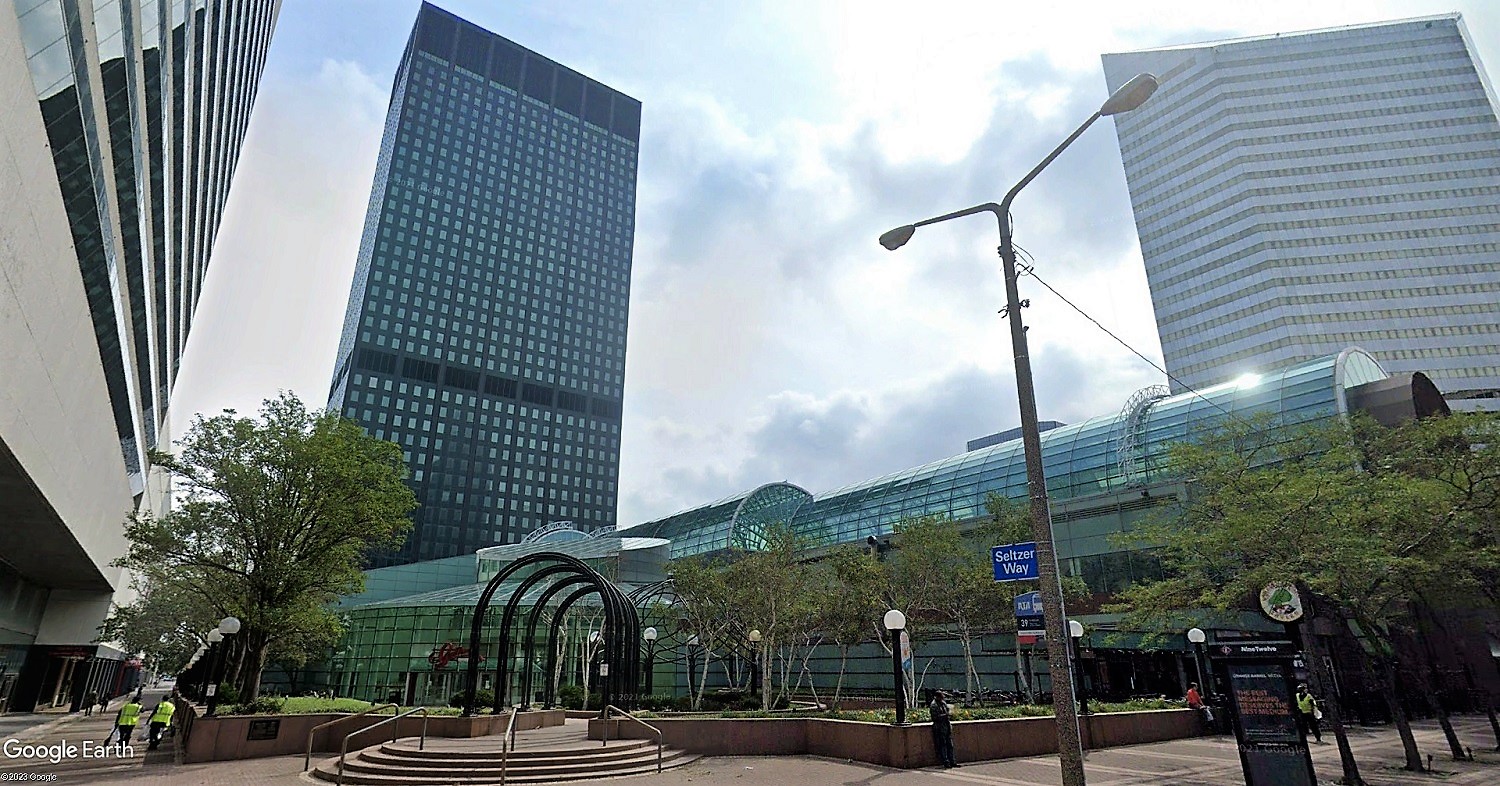
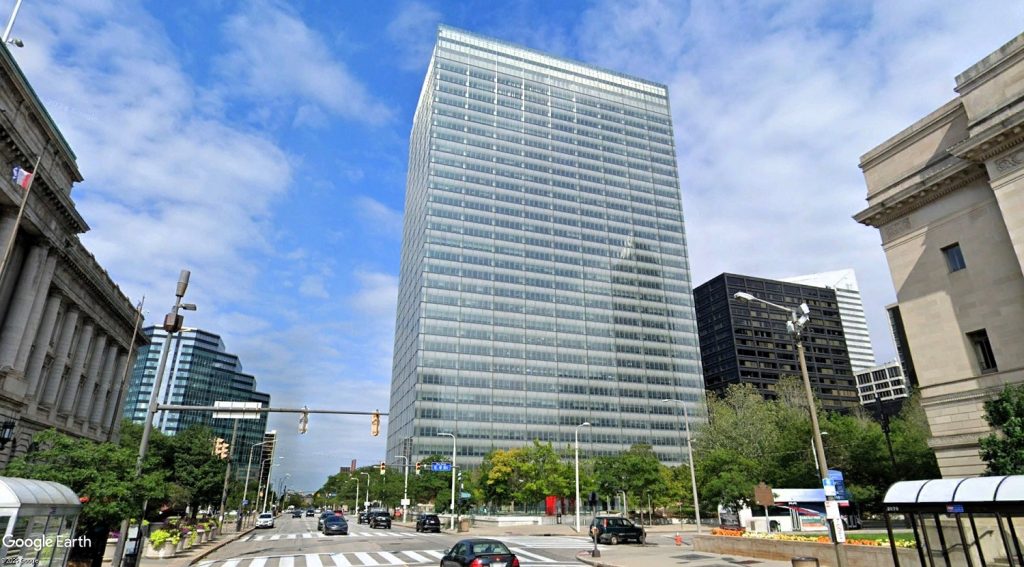
Redevelopment of the 38-story Erieview Tower on East 9th Street is underway thanks in part to a TMUD tax credit although not much activity is visible from the street (Google).
Cross Country Mortgage’s new HQ and surrounding Superior Arts District redevelopment won $8.56 million in TMUD credits in that first round, the several historic building renovations completed or nearly so.
Also winning were Uptown Mentor which is only now moving forward thanks in part to that $1.16 million TMUD credit from 2022, and a redevelopment of the historic Dixon and Robinson buildings in Downtown Elyria which has seen mixed success from its $3.4 million credit award.
The TMUD was the brainchild of developer Robert Stark, founder of Stark Enterprises. He sought several public financing schemes to fill a gap in the capital stack for his nuCLEus megaproject, ultimately leading to the first draft of the TMUD legislation by Cleveland law firm Thompson Hine in 2017.
But it would take three more years for the legislation to pass the Ohio General Assembly — in December 2020. By that time, the market potential for nuCLEus had dried up. In 2023, Stark Enterprises sold to Bedrock the properties on which it planned to build nuCLEus.
END