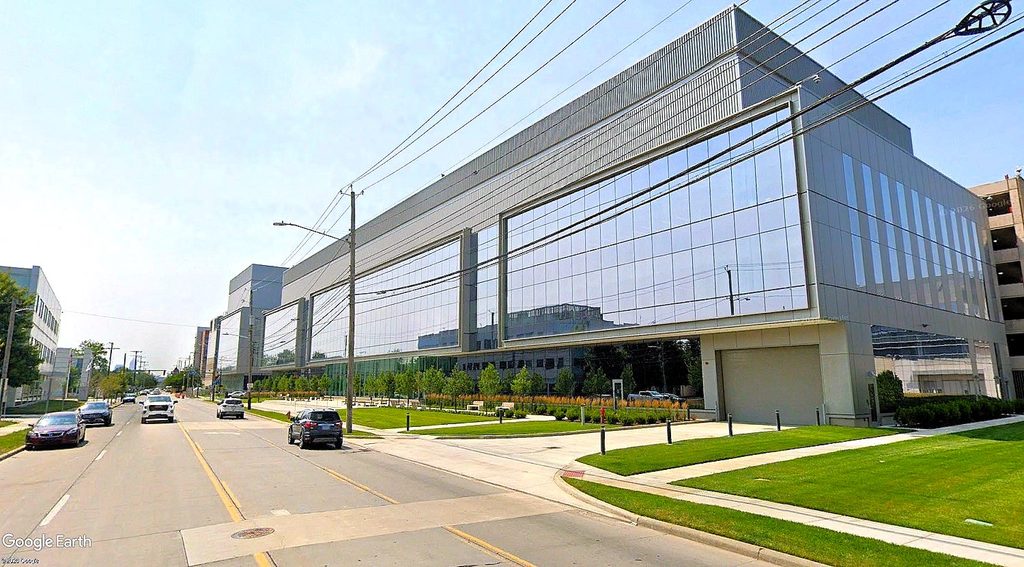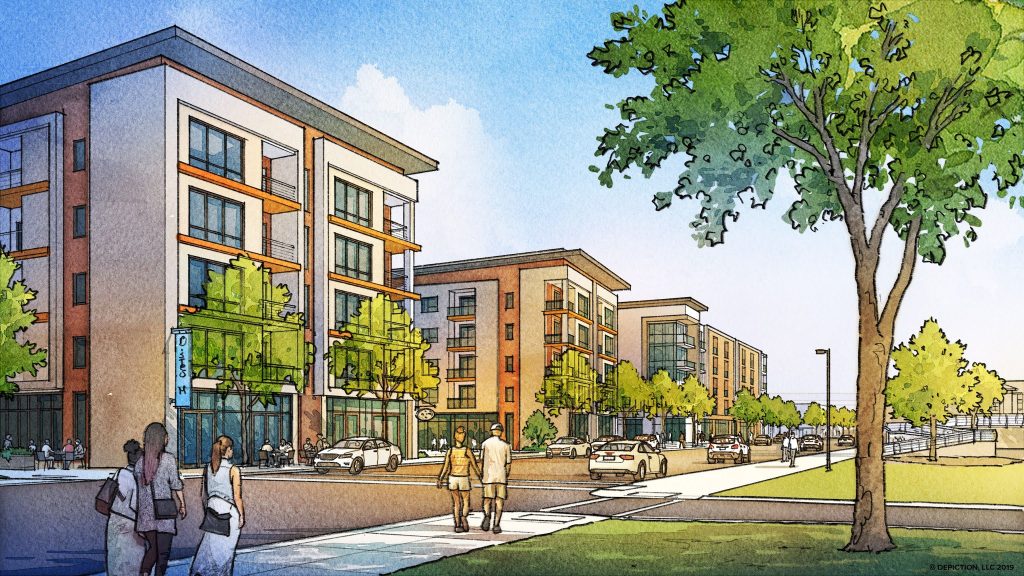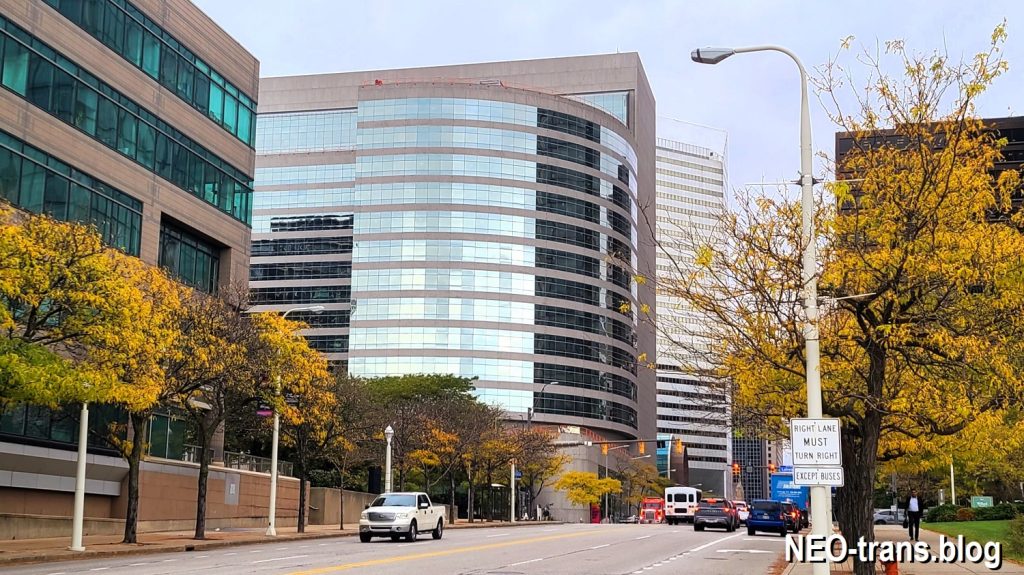

Data centers are growing in number while many office buildings are fading. In Downtown Cleveland, the Sterling Building on Euclid Avenue has become a 250,000-square-foot hub for technology, cloud computing and cybersecurity services (LoopNet). CLICK IMAGES TO ENLARGE THEM.
Group lauds construction jobs but concerns remain
As Cleveland considers a moratorium on the addition of new data centers until it can update its zoning code to better address them, and as a statewide ban on larger data centers is pending, the Cleveland Building and Construction Trades Council said it wants the emotion taken out of the debate.
The Cleveland Building Trades is the umbrella organization for more than 29 local unions whose 12,000 members work in the construction industry in the Greater Cleveland region. The council has been around since 1913.
While data centers don’t employ many people over the longer term, they do employ lots of construction workers over the short term. So it isn’t a big surprise that the council supports the addition of data centers.
But it also supports the regulation of data centers and the addition of such facilities here, reasoning that they are going to be built anyway somewhere, so Greater Cleveland might as well get the construction benefits, the group advocated.
“The members of the Cleveland Building and Construction Trades Council want northeast Ohio to be a hub for our state’s cyber-physical infrastructure,” the group said in a written statement. “We advocate for sensible regulations rather than broad data center bans. Thoughtful approval allows local leaders to negotiate community benefits and safeguards that align data center projects with public priorities.”
The council said tens of thousands of Ohio electricians, pipefitters, ironworkers, sheet metal workers, insulators, laborers and other tradespeople have been supporting their families on data center construction jobs for years. The group said the policies that have facilitated these long-term construction careers should stay in place at the state and local levels.
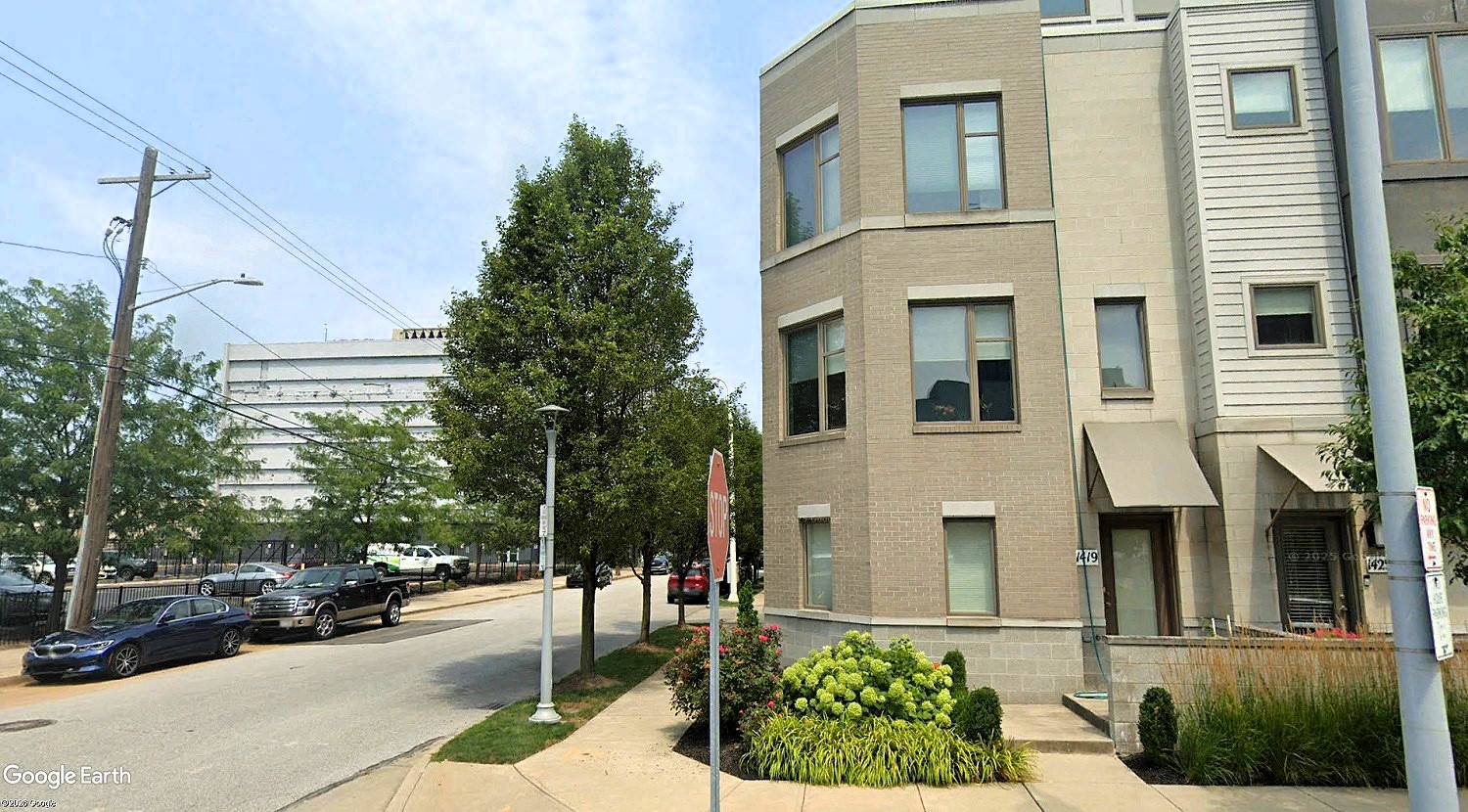
At the east edge of Downtown Cleveland is the urban core’s largest data center, a 330,000-square-foot facility at left that’s located next to luxury townhomes seen here at Rockwell Avenue and East 14th Street (Google).
Most larger data centers will require about 7,000 construction workers throughout a typical four- to six-year construction period. The typical data center will retrofit mechanical, electrical and technological systems over several-year cycles. Continuous maintenance and upgrade cycles create consistent long-term demand for skilled tradespeople.
“When projects of this scale hire local trades workforce, local businesses, restaurants, and entertainment venues prosper,” the Cleveland Building Trades added. “Proximity to data centers attracts adjacent industries, creating an ecosystem effect that extends beyond a single data facility.”
In an era of declining office employment and under-valued office properties, some communities are welcoming data centers to support their tax bases to fund schools and local services.
“Because data centers use few public services, municipalities and townships will see resources increase without an increase in service demand,” the council said.
If Northeast Ohio is going to be a data hub for the state, it has a lot of catching up to do. Of the 200-plus data centers in Ohio, more than half, or about 114 of them are concentrated in Greater Columbus. That makes it one of the nation’s top-10 data center hubs.
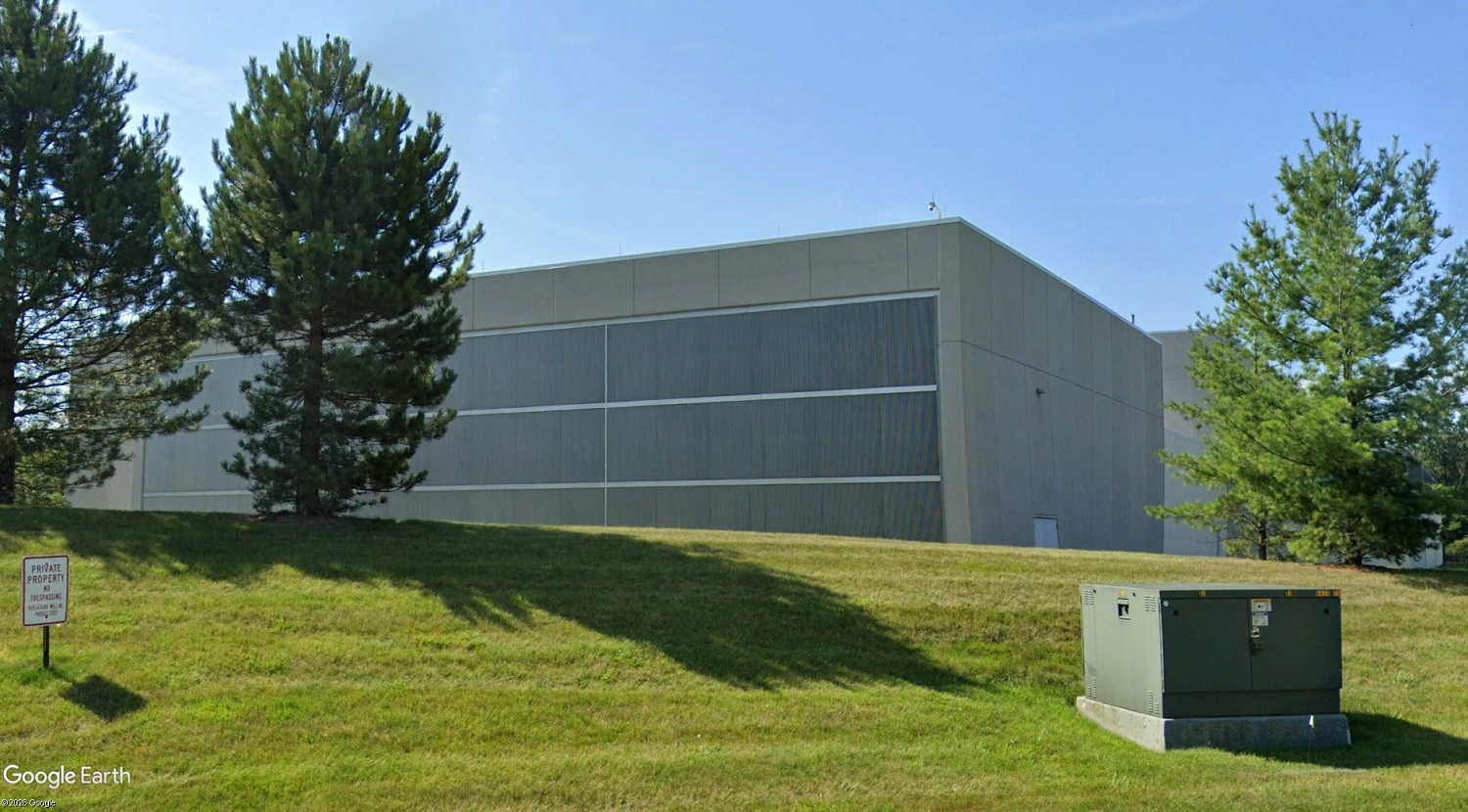
The primary data center for Ohio’s largest employer, the Cleveland Clinic, is located in this 273,000-square-foot complex in suburban Brecksville. Its backup data center is located on the Clinic’s Main Campus near Cleveland’s University Circle (Google).
By comparison, Greater Cleveland and Greater Cincinnati are much farther behind with about two dozen data centers in Greater Cleveland and a like amount in Greater Cincinnati. Other cities and regions have far fewer.
That’s fine, say opponents of data centers. Some communities have blocked data center development outright, with one opposition group gathering signatures for a statewide ballot initiative to ban all data center construction in Ohio.
Electricity use and demands on the grid remain a concern even if water use is now less so. Data centers increasingly rely on closed-loop or air-cooled systems that dramatically reduce water consumption compared to older designs.
“Public debate over data centers has turned from NIMBY-ism into a politicized misinformation campaign led by special interest groups,” Cleveland Building Trades said, itself a special interest group.
A Public Utility Commission of Ohio’s (PUCO) decision in 2025 requires data center owners to pay for 85 percent of their electricity usage at least over the next 12 years. Data center owners in Ohio will need to invest in research and development of self-sustaining data centers that alleviate burdens on utility customers.

The future of data centers, artificial intelligence and the employment landscape in Greater Cleveland and the world is filled with as many uncertainties as it is filled with emotion and debate (NEOtrans).
The Columbus Dispatch, in citing utility projections from American Electric Power, show that electricity demand in the Central Ohio region will eventually equal that of all Manhattan.
The Cincinnati Enquirer reported this week that Ohio has seen a 22 percent increase in electricity bills, coinciding with the state’s growth as a major hub for data centers. The Cleveland Building Trades said our electrical grid needs to be modernized to meet industrial demand.
“Data centers are critical cyber-physical infrastructure components essential to our region’s economic competitiveness,” the council said. “Data centers are essential to Northeast Ohio’s healthcare, education, transportation, finance, public safety, and industrial sectors. Communities that block data center development will forfeit revenue, jobs, and influence while still relying on data centers for essential digital services.”
Data centers that lack insulation and other noise-mitigating enclosures can create a constant humming noise from generators, cooling systems and other equipment that can be at best annoying and at worst cause mental and physical harm.
Data centers typically emit noise averaging 55-60 decibels at its property edges, the council said. However, over long periods, continuous exposure to this level can trigger significant mental and physical harm to persons 45 years and older, primarily through elevated stress, anxiety, and sleep disturbances.
END