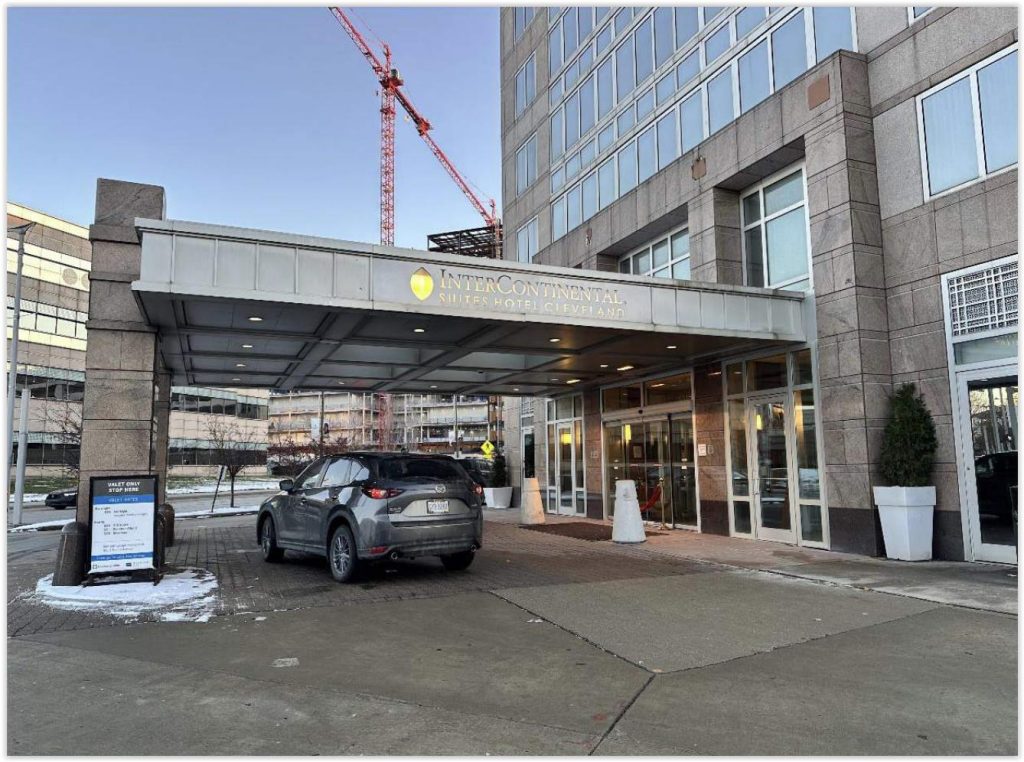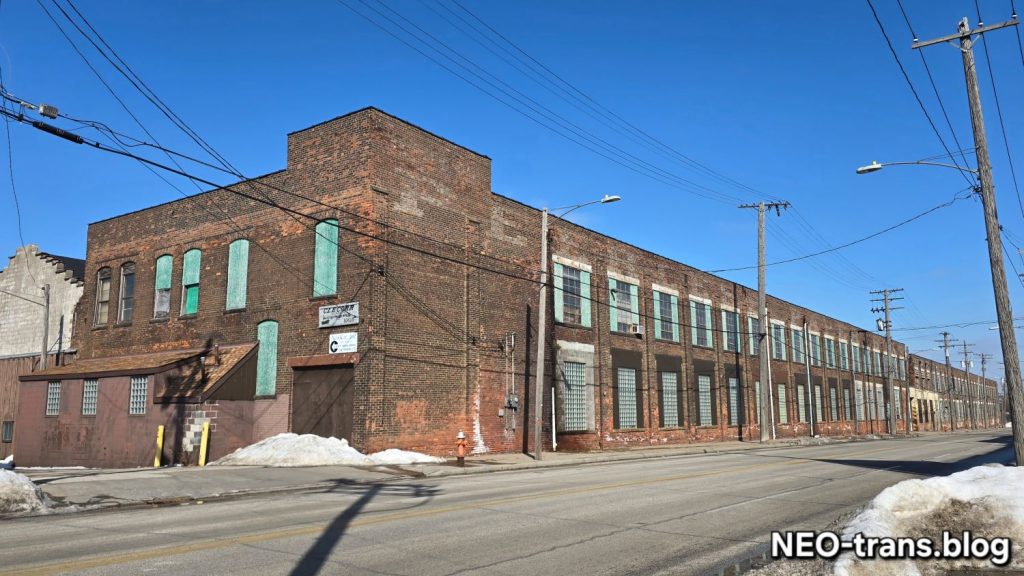

While this modular home factory is an extra-clean example of such a facility, a long-abandoned factory on Cleveland’s East Side will be significantly renovated for this manufacturing purpose (SRF). CLICK IMAGES TO ENLARGE THEM.
Wellman-Seaver-Morgan plant ID’d
The first manufacturer to locate in Cleveland’s new Midline Priority Investment Area on the city’s near-East Side was named today. It followed last week’s award of historic tax credits for the revival of the historic Wellman-Seaver-Morgan Engineering plant, 7000 Central Ave. where Cleveland’s Fairfax and Central neighborhoods meet.
Mayor Justin Bibb and the Site Readiness for Good Jobs Fund (SRF) today announced the selection of MMY US of Louisville, KY as the manufacturer to occupy that site, along with 150 new jobs. A public-private partnership will invest $25.7 million into the 183,000-square-foot factory, built in 1901.
It will be renovated and expanded over three and a half years into a modern, 207,218-square-foot plant, involving 150 temporary construction jobs, according to its plans and winning application for $2.56 million in Ohio Historic Preservation Tax Credits which NEOtrans revealed in April.
A federal historic tax credit of $4.67 million was already committed along with $5.68 million in city, county, Cleveland Port Authority and state funds. The city is also supporting the project with a 10-year, 75-percent Enterprise Zone real property tax abatement with a value of a $1.9 million, the application said.
MMA will also be the city’s preferred modular housing manufacturer. Together, these announcements are part of a coordinated effort to expand housing production capacity in Cleveland, create quality manufacturing jobs, and activate one of the Midline’s most significant historic industrial assets, city officials said.
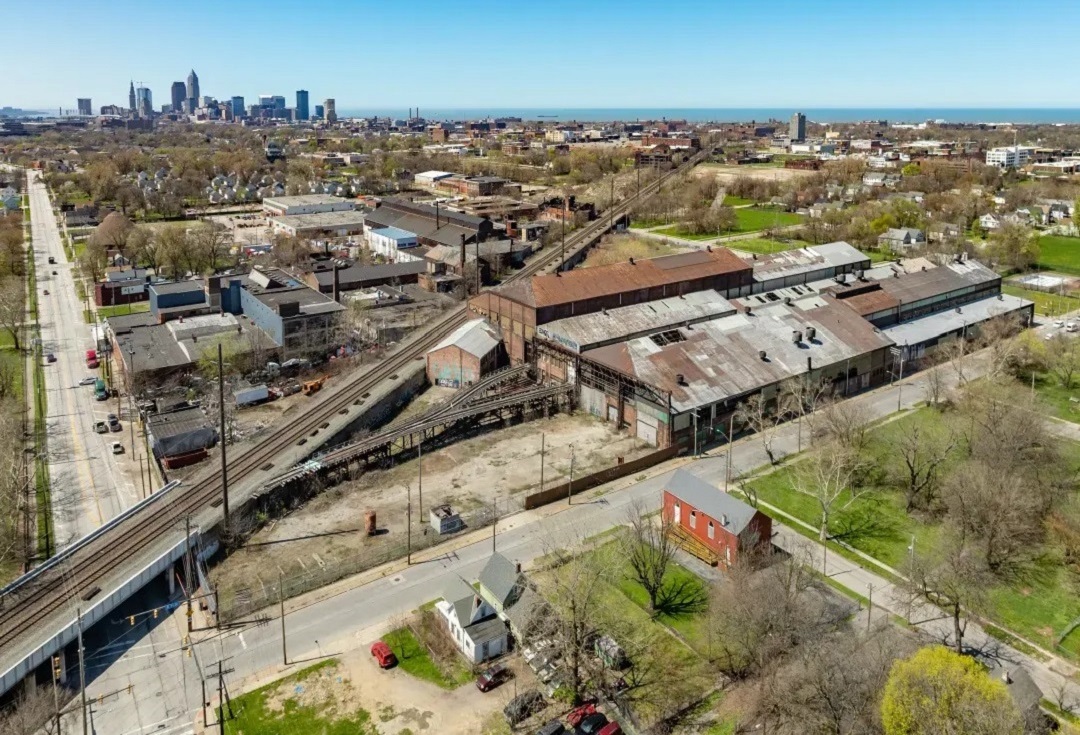
The historic Wellman-Seaver-Morgan Engineering plant between Central and Quincy avenues, at East 71st Street, will gain new manufacturing life following a $25.7 million renovation (SRF).
“Clevelanders deserve access to high-quality, affordable homes, and addressing our housing shortage requires bold action,” Bibb said in a written statement. “With the selection of MMY as our modular housing manufacturing partner, we are taking a major step toward building more housing, more quickly, and at a scale that meets the needs of our residents.”
The City and SRF selected MMY through the “Off-Site Construction Manufacturing in Cleveland” Request for Proposals, marking a major step forward in Cleveland’s effort to reduce the time and cost of building new homes through innovative construction methods.
“We are grateful to Mayor Bibb, the City of Cleveland, and the Site Readiness for Good Jobs Fund for the confidence they have placed in MMY US,” said Robin Bartram Brown, CEO of MMY US.
“At MMY, we believe quality housing creates stronger communities, and that the best outcomes are achieved through innovation, skilled manufacturing, and strong partnerships,” she said. “We look forward to contributing to Cleveland’s future.”
MMY’s investment will support the City’s Housing Innovation District, a focused strategy spanning Central, Hough, and St. Clair-Superior designed to accelerate housing production through modern zoning, incentivized permitting, innovative construction techniques, and infrastructure investments.
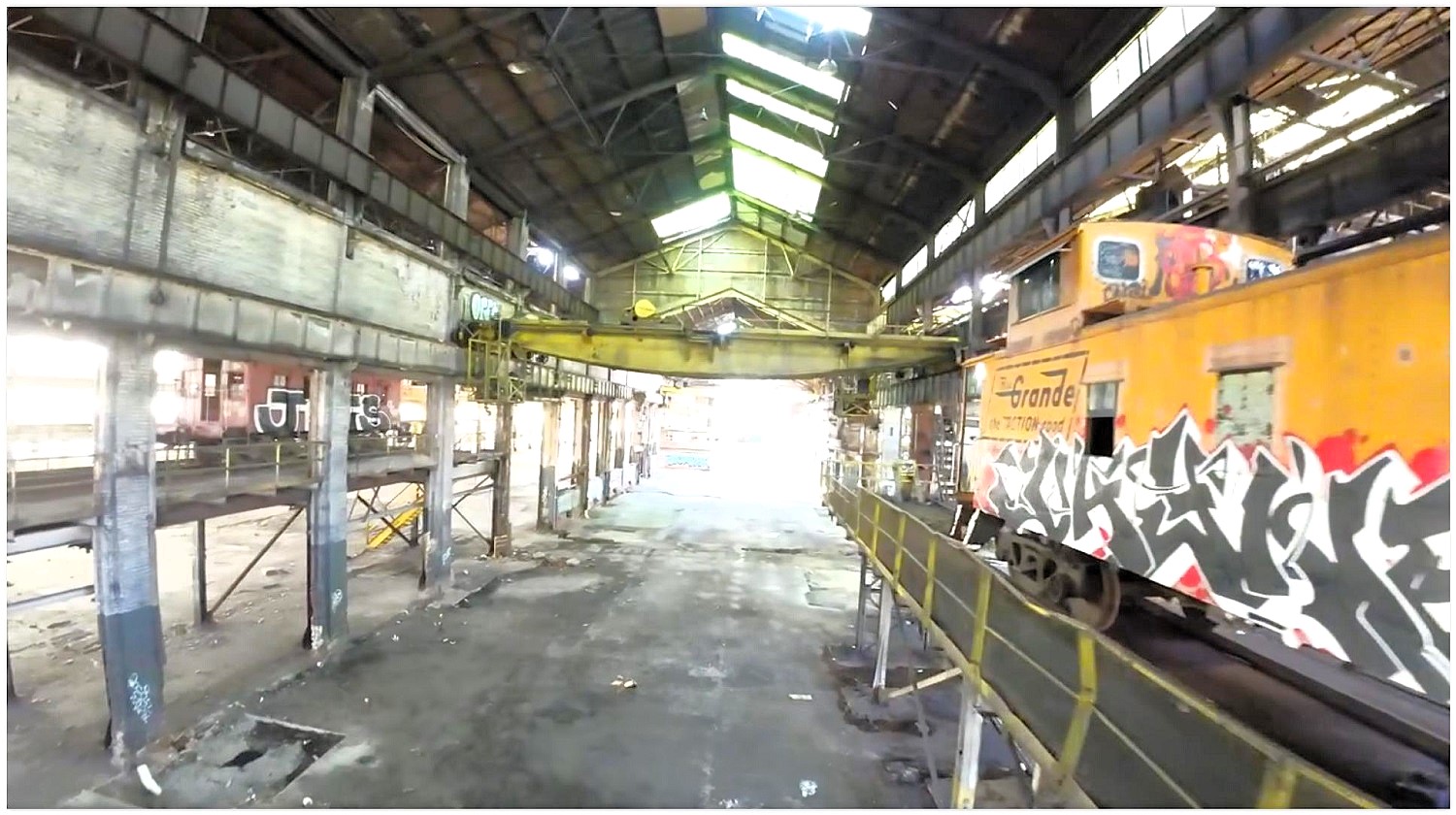
The interior of the Wellman-Seaver-Morgan plant features two railroad cabooses set on tracks coming off the elevated Norfolk Southern Corp. mainline next to the building. The cabooses will be removed as part of the factory’s renovation (Taco Slayer Aerial).
“This decision brings advanced manufacturing and good-paying jobs to Cleveland while creating the capacity to produce the homes our city needs,” Bibb added. “It is a powerful example of how we are tackling our housing challenges head-on and building a stronger, more affordable future for Cleveland families.”
The Midline redevelopment district is a 350-acre area on the city’s near-East Side, along the Norfolk Southern tracks and the Opportunity Corridor Boulevard, where the city is focusing resources on reactivating long-fallow industrial sites. The district was announced last month.
Many of the sites in the Midline were polluted and sitting empty, too expensive for new users to reactivate — especially when large swaths of clean-and-green land exist ready for development at the urban fringe.
NEOtrans broke the story earlier this month of another large, vacated industrial site that was added to the Midline — the former American Sugar Refining plant, 6515 Carnegie Ave. It will be demolished, cleared, cleaned and marketed to a new end-user, said SRF Managing Director Brad Whitehead.
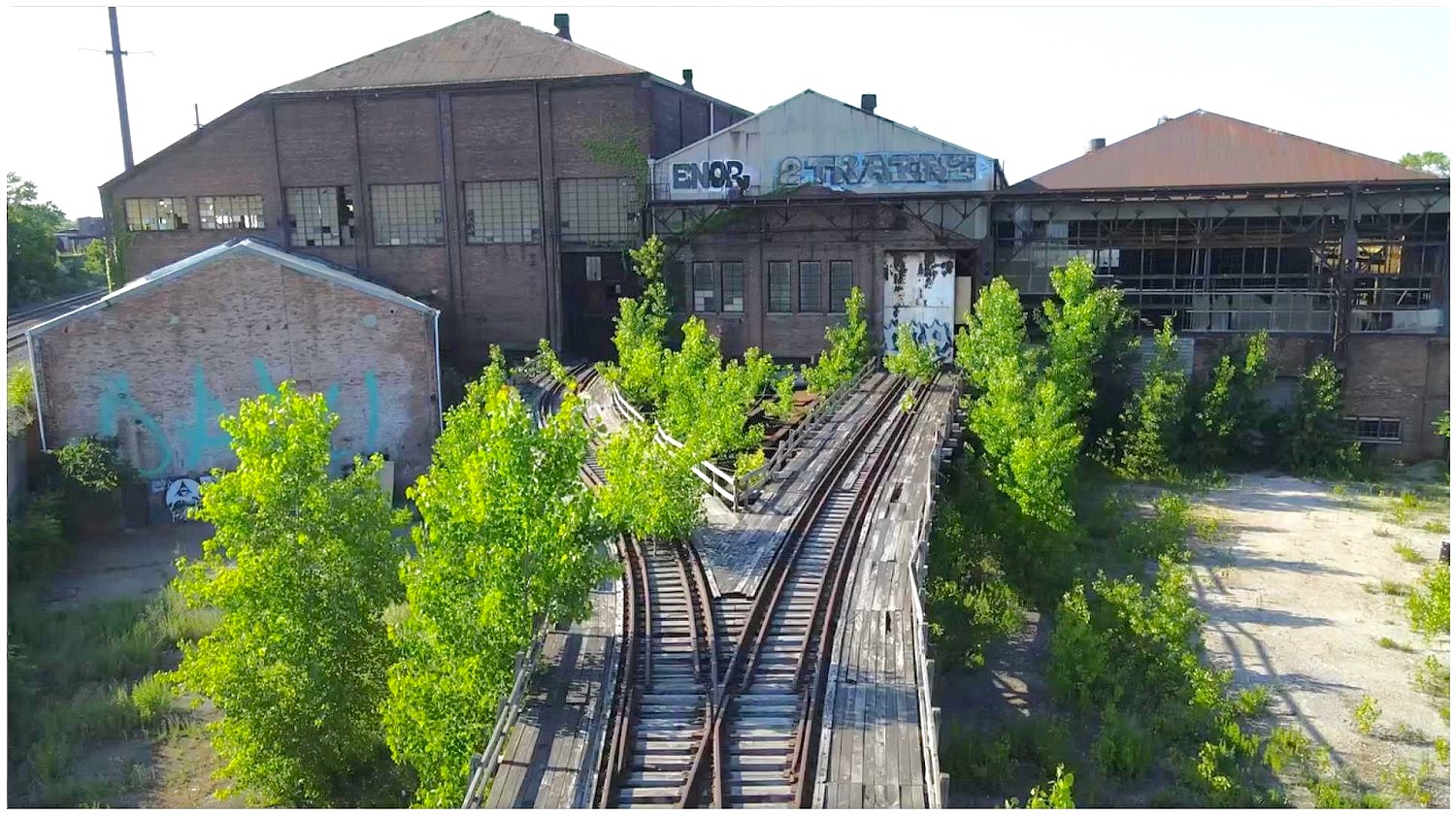
The most recent user of the former Wellman-Seaver-Morgan plant was specialty railroad track maker Cleveland Track Material Inc. which relocated to Bessemer Avenue in 2017 after it was bought by an affiliate of Caterpillar Inc. (Taco Slayer Aerial).
Founded by Samuel T. Wellman, inventor of the first open-hearth steel-making furnace in the United States, alongside Charles H. Wellman and John W. Seaver, the Central Avenue facility served as home to the Wellman-Seaver-Morgan Company until 1978.
The company earned an international reputation for engineering some of the largest material-handling systems ever built, including Cleveland’s renowned Hulett unloaders that were used to swiftly and safely unload iron ore from Great Lakes ships.
“This is far more than the rehabilitation of a historic building,” Whitehead said. “As the crown jewel of the Midline, Wellman-Seaver represents the opportunity to reconnect Cleveland’s industrial legacy with its economic future by creating a site that will attract investment, support housing production, and generate jobs for decades to come.”
Recognizing its historic and engineering significance, the Ohio State Historic Preservation Office determined the Wellman-Seaver-Morgan building is eligible for listing on the National Register of Historic Places. The site has also received a Cleveland Landmark designation, with a final National Register review anticipated this fall.
END