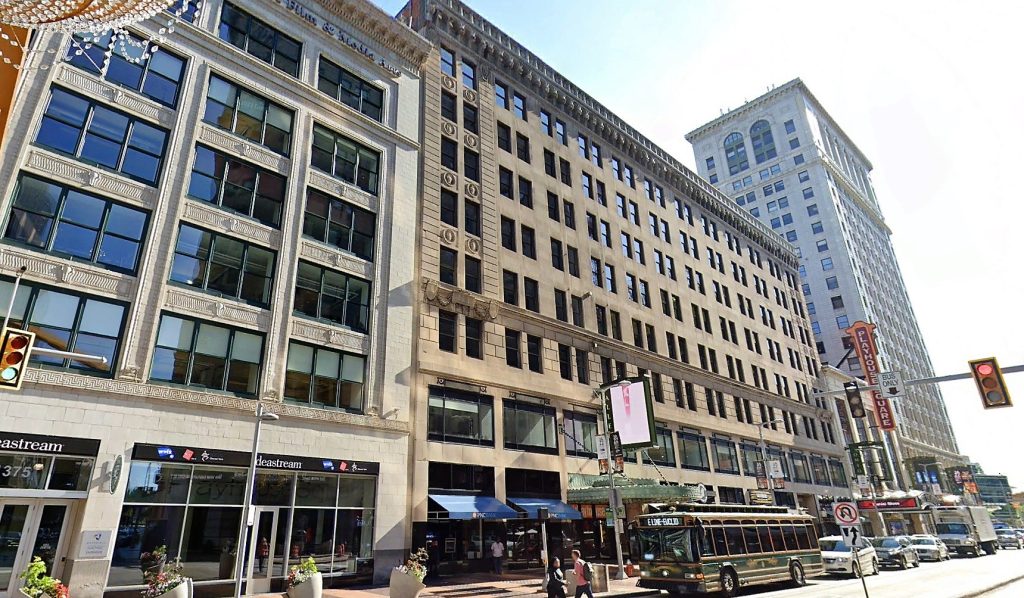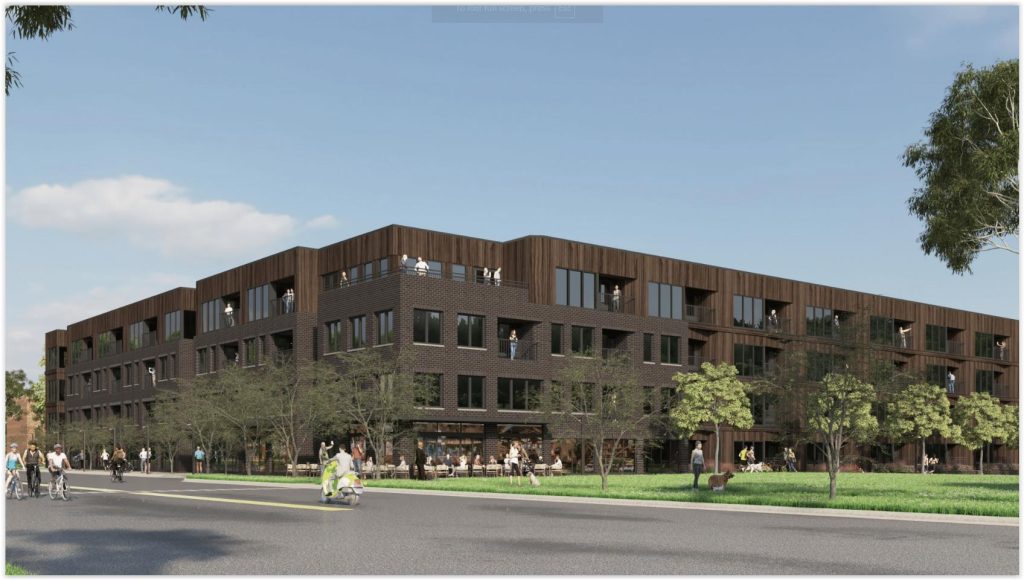
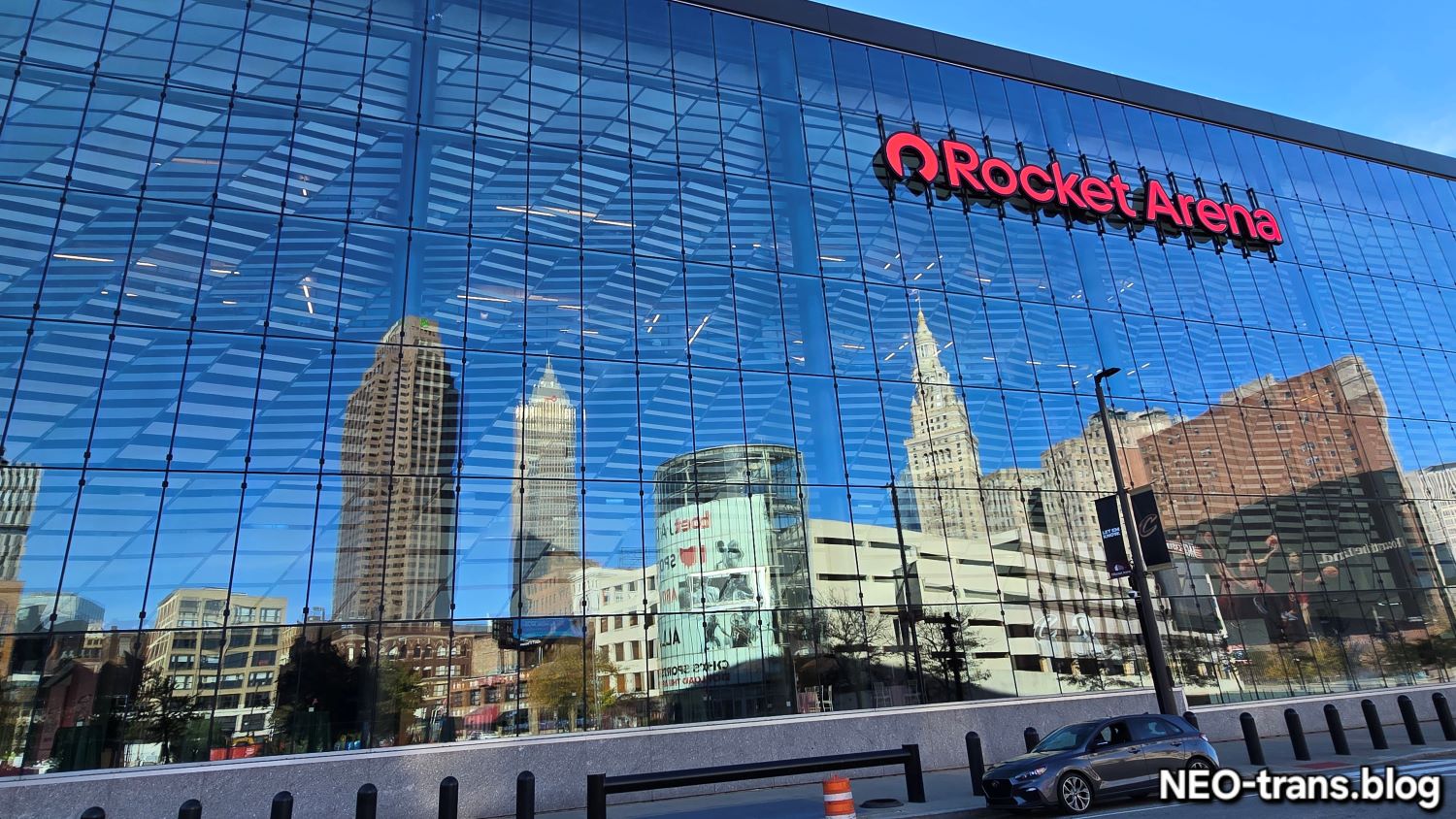
Year-in-review reports like Downtown Cleveland Inc.’s State of Downtown offers an opportunity to reflect on the past year’s achievements and challenges and what to look for and pursue in the coming year CLICK IMAGES TO ENLARGE THEM.
Office stabilizes, residential dips
Multiple forces are likely to affect Cleveland’s central business district in 2026, according to the nonprofit development corporation Downtown Cleveland Inc. (DCI). It’s a setting that has housed Cleveland’s fastest-growing residential neighborhood this century while also suffering the loss of office jobs to remote working, intensified by the 2020 pandemic.
In its latest State of Downtown report, DCI’s evaluation of those challenges was to call them opportunities. In it’s seven-page report, DCI used the term “reset” seven times to describe the state of the real estate market downtown, and not just when it comes to the office market.
“While downtown’s office market is in a reset, demand for Class A office space in attractive, vibrant areas remains strong,” the reported noted. “Employers such as PNC and Sherwin-Williams are bringing workers back full-time, and Class A rents are beginning to firm. At the same time, legacy buildings are under pressure and actively repositioning to meet changing workplace expectations.”
DCI also described the market reset as a reinvestment opportunity. Although several downtown properties are experiencing financial stress as higher interest rates and post-pandemic shifts in office demand reset asset values, DCI said this “repricing is cyclical and is creating a window for acquisition, recapitalization and repositioning.”
“Market repricing is creating entry points for investors with the capital and expertise to execute repositioning strategies,” DCI continued. “Cleveland’s adaptive reuse track record reduces execution risk relative to peer markets. Investors who act during reset periods are best positioned to benefit as demand strengthens and the next growth cycle takes shape.”
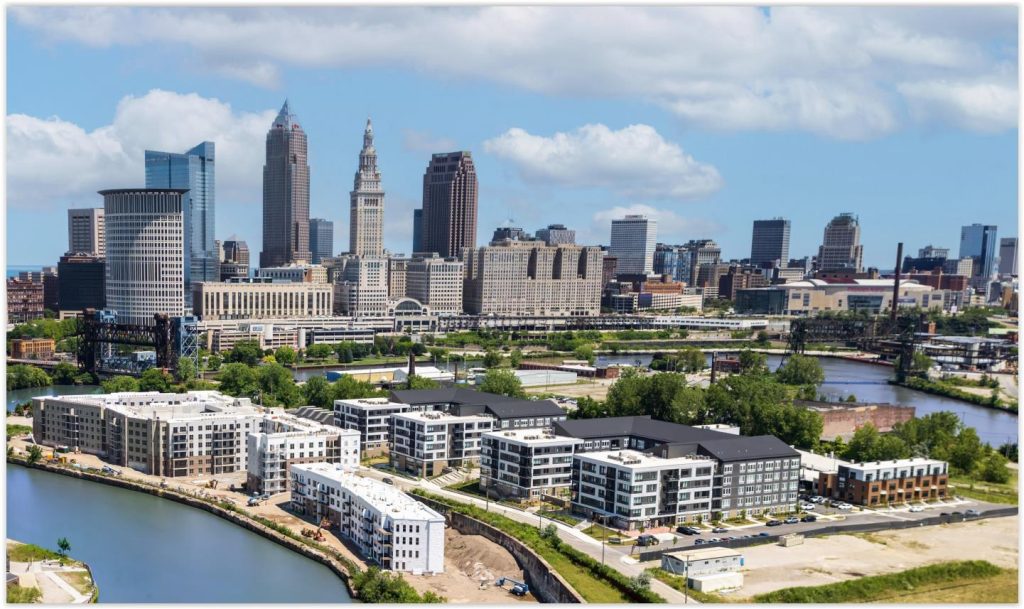
Older office and residential buildings in Downtown Cleveland are experiencing stress while newer ones are seeing strong occupancies and rents, reflecting the changes in Cleveland’s post-pandemic downtown market (DCI).
An as-yet unanswered question is, how would these stressed office properties be utilized after they are updated and repositioned? The answer to that question in the past was to convert obsolete office buildings to residential, or at least a mixed-use building whose dominant use was residential.
The DCI reported softening in the downtown residential market, caused in part by a surge of new inventory. Another 888 housing units were added to the downtown market in 2025, sending residential occupancies to drop to 86 percent from the low-90s seen a few years ago. Thus, the word “reset” was applied to downtown housing as well.
“Downtown’s housing market is in a supply-driven reset,” the report said. “A large wave of new units has pushed apartment occupancy lower, reflecting near-term oversupply and higher interest rates.”
One potential strong influence to the downtown reset in the near future may be found in the $5 billion worth of public-private investments emerging, especially along the city’s two waterfronts. Those are expected to create world-class public realms and attract new residential and commercial investments next to them.
“More than $5 billion in public and private development is transforming downtown, not as isolated projects, but as part of a revitalized, growing, and connected neighborhood,” DCI reported. “That level of investment is rare. The Greater Downtown Vision serves as the connective tissue for these investments, driving safety, connectivity, and activation to attract tenants, visitors, and capital.”
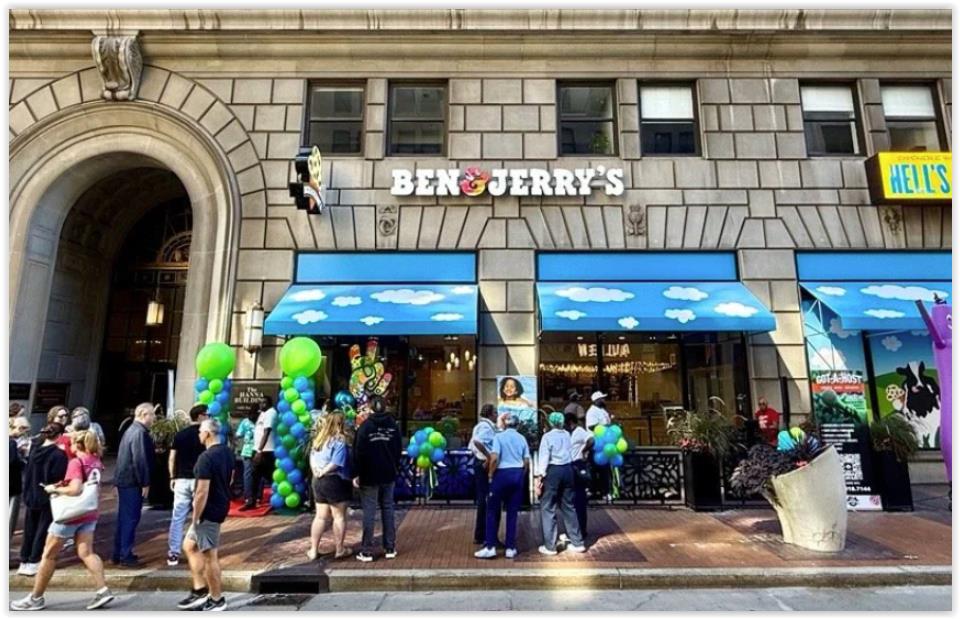
Downtown Cleveland saw 22 new retail openings against 10 retail closings for a net gain in 2025. Downtown Cleveland Inc. reported an 82 percent average storefront occupancy (DCI).
Another fact is a flight to quality among office tenants. Buildings that can be acquired at below-market prices and offer high-end office properties with amenities, technology and convenience are going to keep and win tenants.
“Cleveland is a national leader in adaptive reuse, with a proven ability to convert challenged buildings into competitive, mixed-use assets,” DCI pointed out. “At the same time, return-to-office momentum and tenant demand are increasingly concentrating in high-quality, Class A environments downtown.”
“Together, these dynamics create an opportunity for investment-minded buyers to acquire assets at a reset basis and reposition them to capture long-term value as the market stabilizes,” the report summarized.
Safety is always an issue when it comes to investing in the urban core. And DCI had good news to share in that regard, pointing to investments in its Clean & Safe program as well as to new hires at the Cleveland Police Department (CPD). Downtown is in CPD’s Third District. DCI said serious crimes in the Third District declined 26 percent while grand theft auto dropped 39 percent in 2025.
“These improvements reflect targeted enforcement, strong cross-sector collaboration — local, state, and federal — and sustained public and private investment,” DCI said. “Safety builds confidence for workers, residents, visitors, and investors. Visible progress helps shift perception and supports market recovery.”
END