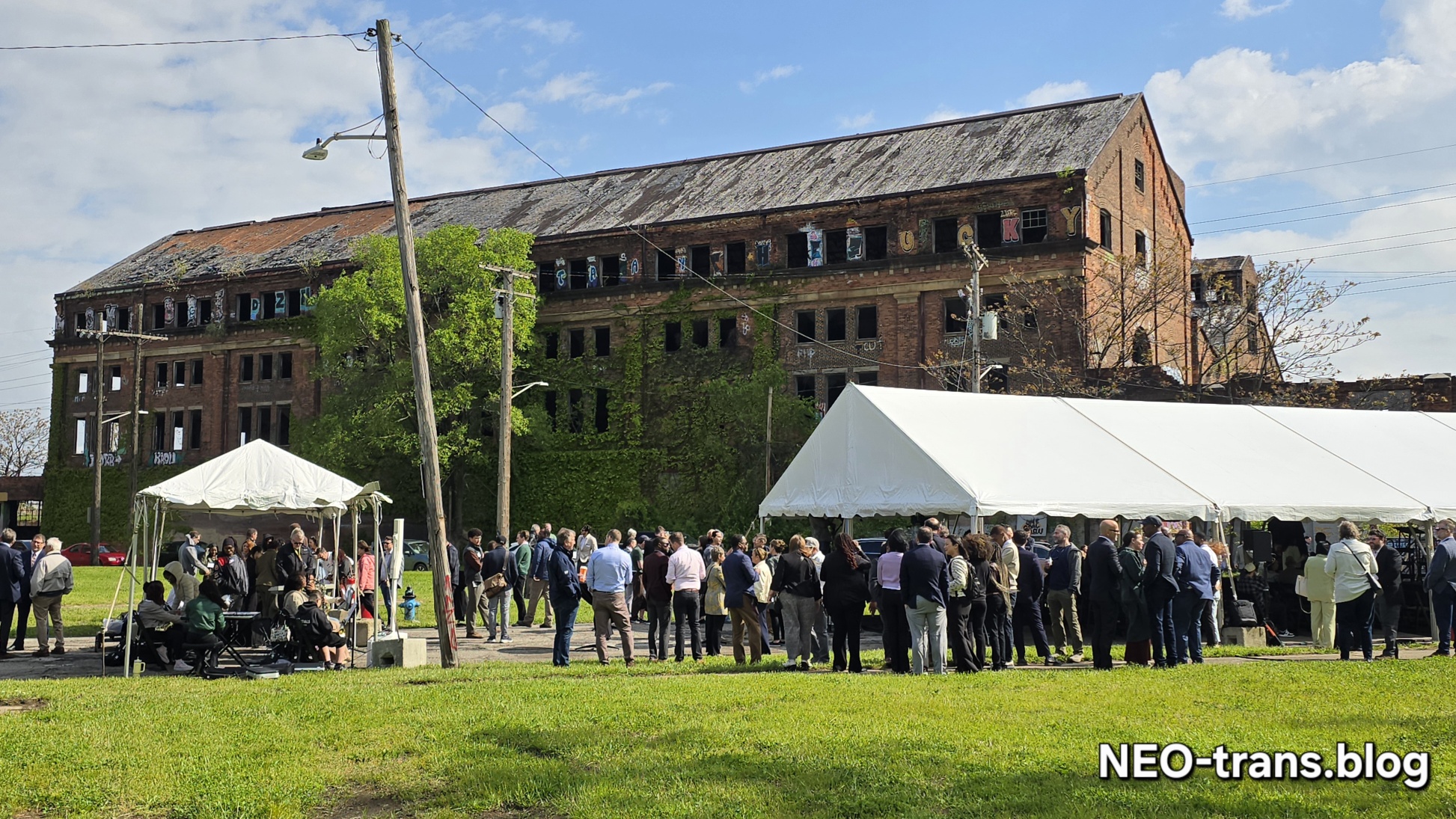
Officials gathered today to announce the Midline Priority Investment Area, a major redevelopment initiative of Cleveland’s near-East Side, amid the backdrop of old, decayed industrial sites that will be razed to make way for new jobs and opportunity (NEOtrans). CLICK IMAGES TO ENLARGE THEM.
Touted as ‘city’s largest industrial redevelopment’

Cleveland’s largest industrial redevelopment in its history, dubbed the Midline Priority Investment Area, was announced today as an effort to transform the city’s near-East Side into a job hub and community greenway.
The 350-acre district in the Central, Fairfax and Kinsman neighborhoods will convert vacant industrial land on either side of the elevated Norfolk Southern (NS) railroad tracks into a connected employment center with new trails, parks and transit access for Cleveland’s workforce.
The announcement was made by Mayor Justin Bibb, plus a host of city, county and state officials at a press conference held in the shadows of vacant shells of former industries that were active for more than a century until the 1970s.
The City of Cleveland, in partnership with the Site Readiness for Good Jobs Fund (SRF), Cuyahoga Land Bank, and Ohio Department of Development announced the redevelopment initiative that will reactivate that long-vacant industrial land.
The development project, years in the making, brings together fragmented, underutilized parcels along the NS rail corridor to form a unified district designed for advanced manufacturing, research and development and related industries.
The district extends southeast along the NS tracks from near the Euclid Avenue-East 55th Street area of Midtown to the Opportunity Corridor. It sits within reach of bus rapid transit routes, two Greater Cleveland Regional Transit Authority (GCRTA) rail stations and interstate highways, placing it within a 30-minute commute of nearly 900,000 workers.
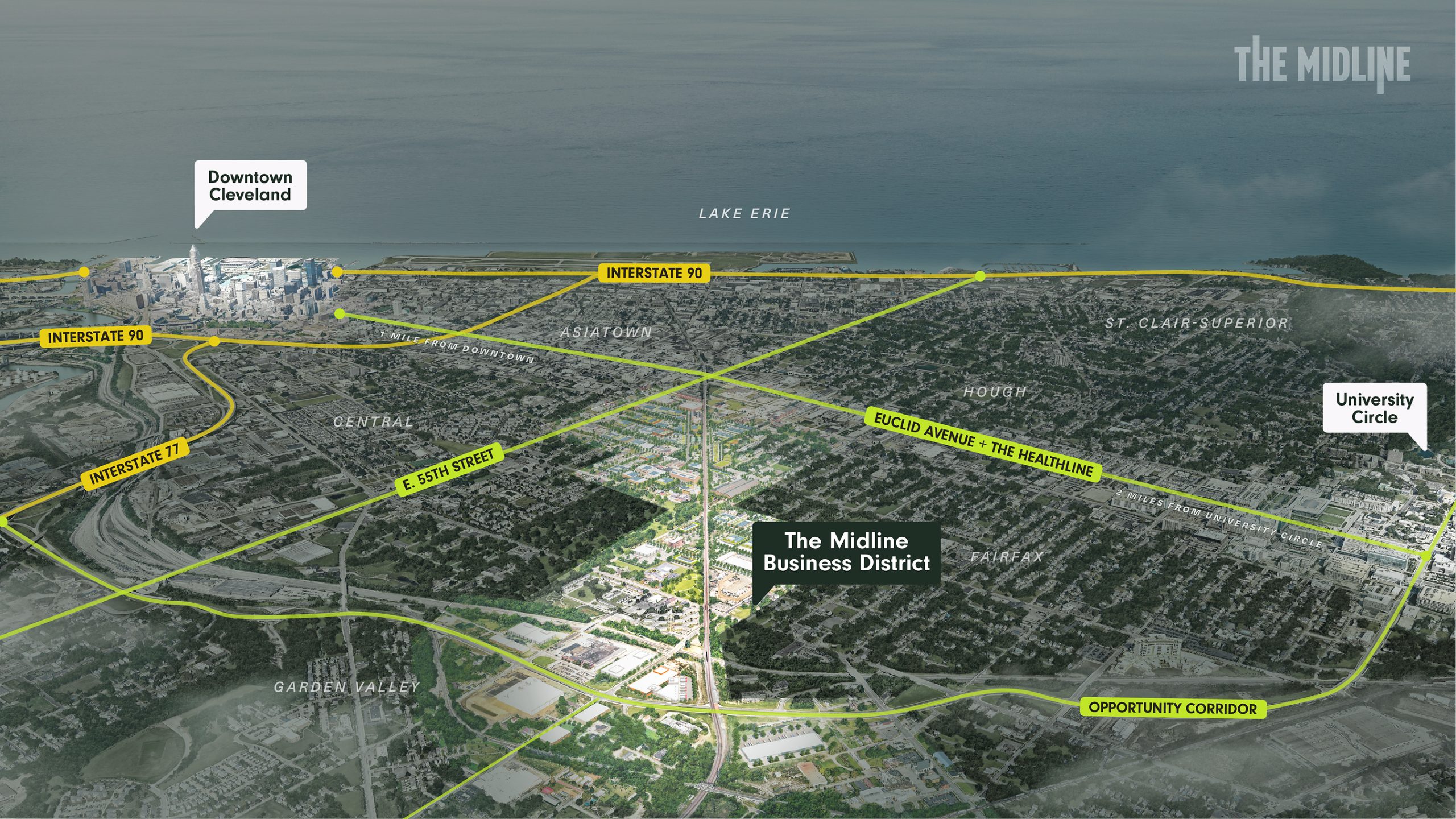
The Midline Business District is a 350-acre area extending southeast along the Norfolk Southern railroad tracks from near the Midtown area of Euclid Avenue-East 55th Street to the Opportunity Corridor (City of Cleveland).
“For generations, neighborhoods like Central and Fairfax were places where Clevelanders could live, work, and build a future within a few blocks of home. When industry left, and jobs disappeared , contaminated land was left behind — creating barriers to opportunity that held these neighborhoods back for decades,” said Mayor Justin Bibb in a written statement.
“Today, we are changing that,” he added. “This is one of the most ambitious neighborhood revitalization efforts Cleveland has undertaken. The Midline is exactly what the Cleveland era is about: reconnecting neighborhoods, creating opportunity, and ensuring every resident can share in Cleveland’s growth.”
The Midline is being developed as a district-wide strategy rather than a single-user project, with the goal of attracting larger-scale employers across manufacturing, research and development, office and supporting service sectors.
Plans call for at least 1.5 million square feet of new industrial and commercial space, supporting more than 2,500 direct jobs within reach of public transit. At full build-out, the project is projected to generate up to $100 million in annual tax revenue for the city.
SRF, the entity driving the development forward for the city, was launched in 2023 with the transformative mission of returning 1,000-plus acres of vacant industrial land across Cleveland to productive use.
This development has been central to their efforts since that time, focused on providing Cleveland residents with economic opportunities through the transformation of long-neglected urban parcels into job centers and multiuse community assets,
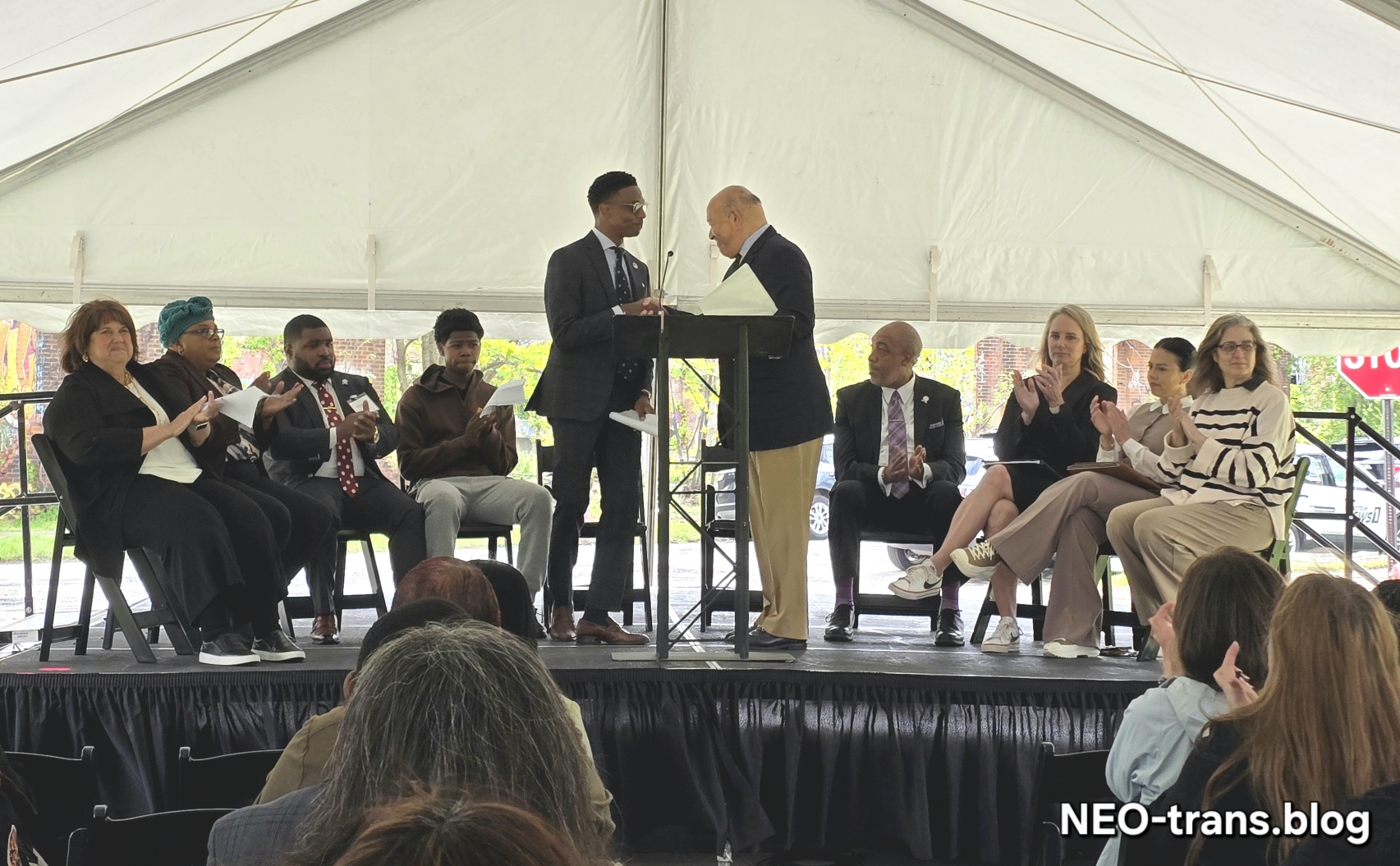
Cleveland Mayor Justin Bibb, standing at left, is greeted by Site Readiness for Good Jobs Fund Chairman Fred Nance at today’s announcement of the Midline redevelopment initiative (NEOtrans).
“This project is about taking land that has sat idle for decades and making it usable again in a way that works for the city and its resi dents,” said Brad Whitehead, managing director of the Site Readiness for Good Jobs Fund. “When we prepare sites like this, we are attracting investment, creating real pathways to jobs and economic mobility for Clevelanders.”
The redevelopment plans also include a continuous greenway, parks and open space network designed to improve walkability, expand tree canopy and restore ecological function along the corridor, community benefits are expected to include expanded access to public space, improved air quality and activation of long-vacant industrial corridors.
To fund that infrastructure and new housing, the city is pursuing a tax-increment financing (TIF) district for the Midline area. Legislation to establish the TIF district is working its way through City Council.
A complete master planning project is now underway for the site, led by the design teams of Merritt Chase and Utile. The detailed Master Plan is expected to be published in full by the end of summer 2026.
“For years, this land has contributed to environmental stress in surrounding neighborhoods,” said Keisha González, LAND studio executive director & CEO.
“Our goal is to reduce those health impacts through cleanup and bring in green space that gives residents cleaner air, more nature, and a better everyday environment — while also restoring a sense of belonging and dignity of place, so people see themselves, their health, and their future reflected in the spaces around them,” González said.
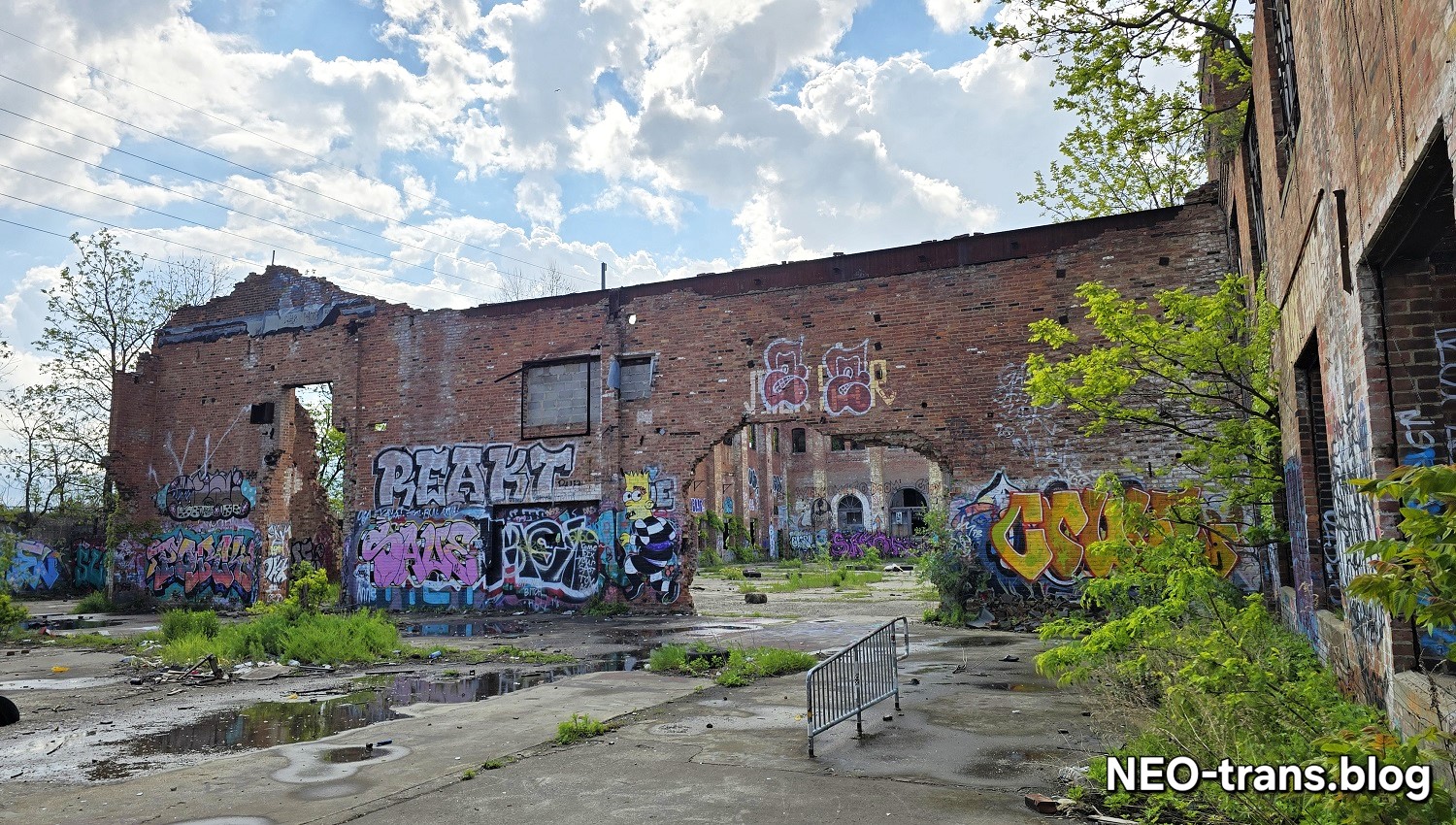
When the jobs from East Side factories went away, the neighborhoods surrounding them faded away. Thus the reverse is being sought. The city and its partners are clearing out the decayed factories to create shovel-ready sites for new employers and support the restoration of the nearby neighborhoods (NEOtrans).
Much of the Midline area currently consists of complex, long-vacant industrial land, environmental contamination, fragmented ownership aging infrastructure, and high remediation costs have kept private investment away.
Early phases of redevelopment will prioritize environmental cleanup and brownfield remediation, including reusing on-site materials where it is feasible to reduce land fill use, truck traffic, and emissions.
The Midline will also blend adaptive reuse of select historic structures with new construction, preserving elements of Cleveland’s industrial legacy while repositioning the district for modern uses.
Neighbothoods surrounding The Midline, like Central, Fairfax and Kinsman, rank among the most burdened in Ohio on key health and environmental indicators, including elevated rates of asthma, heart disease, and exposure to industrial pollution.
Remediation efforts tied to the project will directly address legacy impacts from decades of industrial activily and neglect, while new green infrastructure willimprove long-term public health outcomes.
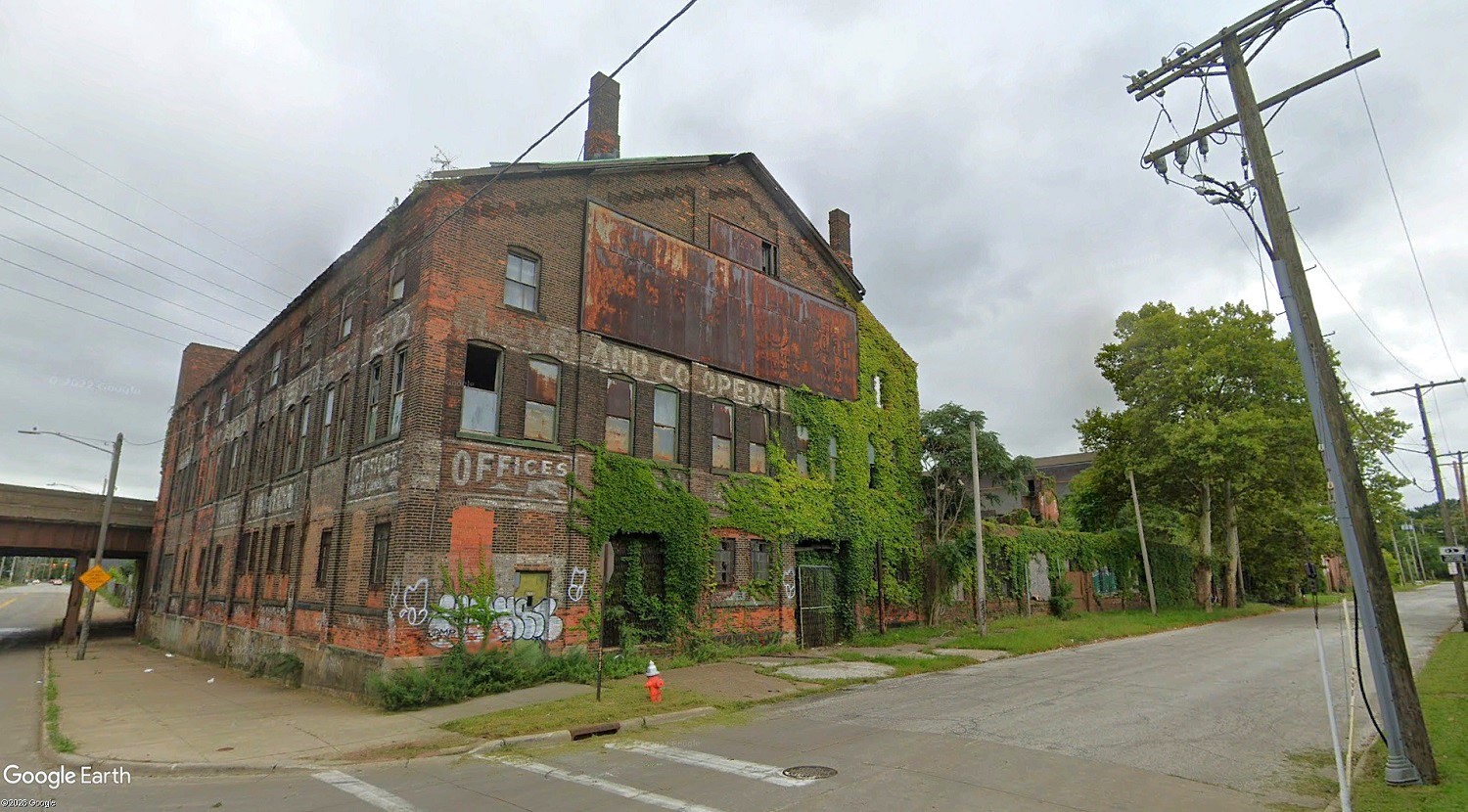
The Cleveland Co-Operative Stove Co., 6700 Central Ave., was the world’s largest foundry for iron stoves in the late-19th century. The property was purchased last year by the Site Readiness for Good Jobs Fund and will soon be demolished by B&B Wrecking & Excavating, hired by the city and the Cuyahoga Land Bank for $437,840 (Google).
Additionally, SRF is advancing opportunities for residents to invest in, co-own, and build long-term wealtih through these developments, with further information to be released.
Ward 5 Councilman Richard Starr, who represents the Central neighborhood, said the project represents a significant shift in economic trajectory.
“This Midline Priority Investment Area is about turning long-neglected, contaminated land into opportunity,” Starr said. “For too long, Ward 5 has carried the burden of contaminated, vacant land while waiting for real investment. I support this designation but let me be clear: this cannot just be another plan on paper. This project area must lead to real cleanup, real jobs, and real opportunities for the residents who live here today.”
By consolidating fragmented parcels into a single investment-ready district, The Midline is intended to accelerate redevelopment timelines while expanding access to jobs, transit, and neighborhood amenities.
With this initiative, Cleveland is positioning itself to convert legacy industrial land into a connected employment district that supports long-term economic growth and neighborhood revitalization.
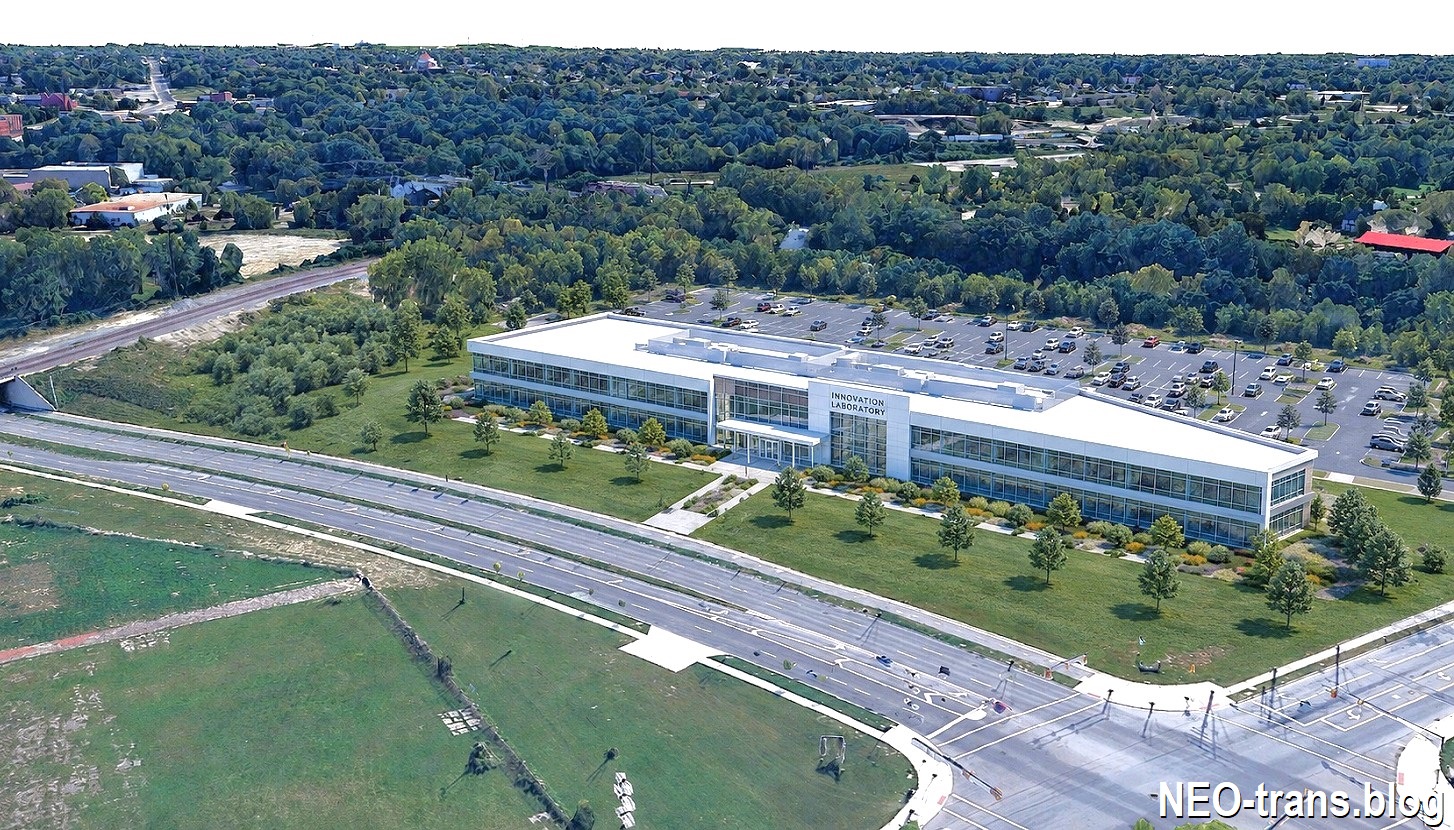
A number of end-users are interested in sites in the Midline district including the Cleveland Clinic which is seeking to develop a 250,000-square-foot biomedical laboratory complex at the southeast corner of the Opportunity Corridor and East 79th Street. This rendering by NEOtrans is an unofficial presentation of what that lab could look like (NEOtrans).
“In today’s economy, companies move fast, and they choose places that are ready now,” said Lydia Mihalik, director of the Ohio Department of Development. “Investments in projects like The Midline help Cleveland compete for transformative projects and the high-quality jobs that come with them.”
The Midline is designed for industries that maximize jobs, wages, innovation, and accessibility to economic mobility — including biomedical, food and beverage production, advanced light manufacturing, and emerging production-oriented sectors. One such site is the Yellow Brick Road site where Cleveland Clinic plans a laboratory complex.
Leaders emphasized the district is not intended for low-job-density uses like data or distribution centers or for industries that pollute the environment. The goal is to create a modern urban employment district that provides good jobs while fostering vibrant public spaces for Clevelanders.
Of The Midline’s 350-plus acres, approximately 150 acres are currently occupied by active businesses that will remain in place. The redevelopment will focus on roughly 200 acres of underutilized and vacant land, building on the presence of established local employers such as Pierre’s Ice Cream, SNAP Gourmet Foods, Orlando Baking, Nor-Am Cold Storage and Miceli Dairy Products.
For more information, or to learn more about upcoming community meetings where residents and stakeholders can help shape The Midline’s plans, please visit www.clevelandmidline.org.
END