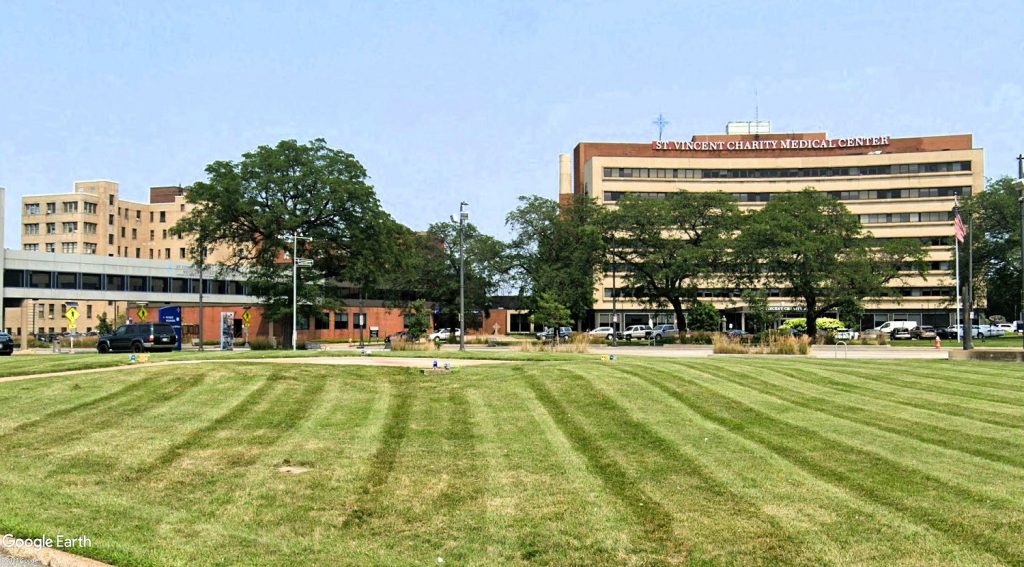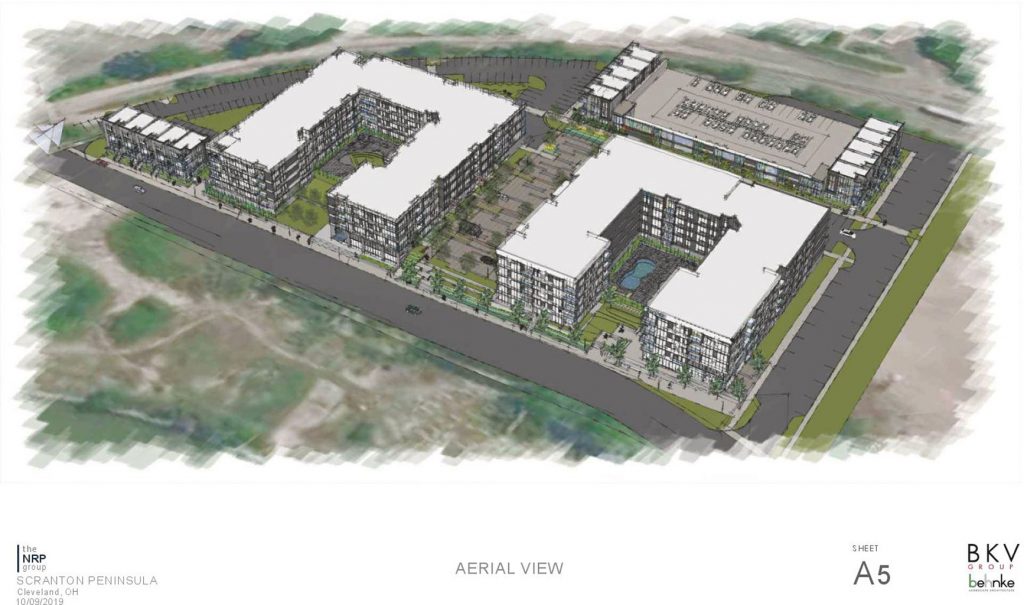
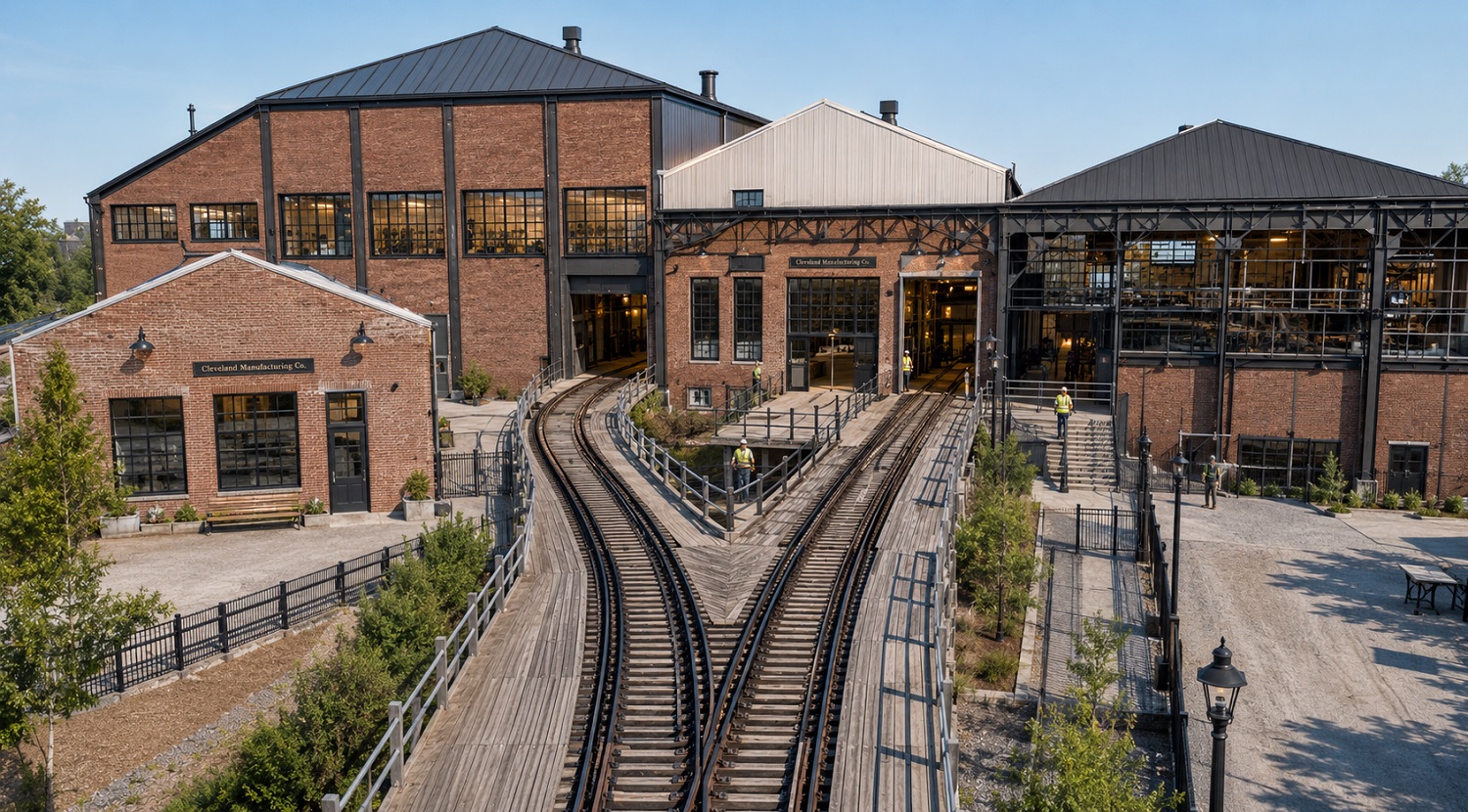
An unofficial rendering of what the Wellman-Seaver-Morgan Engineering Co. factory at 7000 Central Ave. in Cleveland’s Central neighborhood could look like after a planned $25.7 million renovation. The plant’s reactivation with a new manufacturer will be announced at a press conference next week (TacoSlayerAerial, ChatGPT). CLICK IMAGES TO ENLARGE THEM.
From post-apocalyptic to productive uses
Parts of Cleveland’s East Side offer scenes right out of a post-apocalyptic action movie. Actually, a pre-apocalyptic action movie — the opening scenes of the 2012 movie The Avengers — was filmed here. Another story will begin here next week when local and state leaders join Mayor Justin Bibb in making what he calls “an historic announcement.”
On Wednesday, in the shadows of the former Westinghouse Electric/Thompson Aircraft Products Co. (TAPCO), 2203-2209 Ashland Rd., and the Cleveland Railway Co. power house, 2162 Ashland, a press conference will announce a new district and strategy for a mix of demolitions and renovations for new manufacturers.
But more importantly, these crumbling structures, standing like gravestones, are now the markers of a vast, multi-year effort to acquire, assemble, clear and clean some 350 of acres of land along two intersecting corridors — the Opportunity Corridor Boulevard and the elevated Norfolk Southern (NS) railroad tracks.
Today’s Part One article, and next week’s mayoral announcement, is about the NS corridor and the planned business park around it. The City of Cleveland, the Cuyahoga Land Bank and the Site Readiness for Good Jobs Fund have spent the last five years assembling a significant collection of properties for commercial redevelopment.
The goal for both corridors is to enter the competition against greenfields at the exurban fringe for modern-day manufacturers. To do so means having shovel-ready sites of at least 10 acres each. Bibb is touting the assembled acreage on the city’s near-East Side as “the largest industrial redevelopment in Cleveland’s history.”
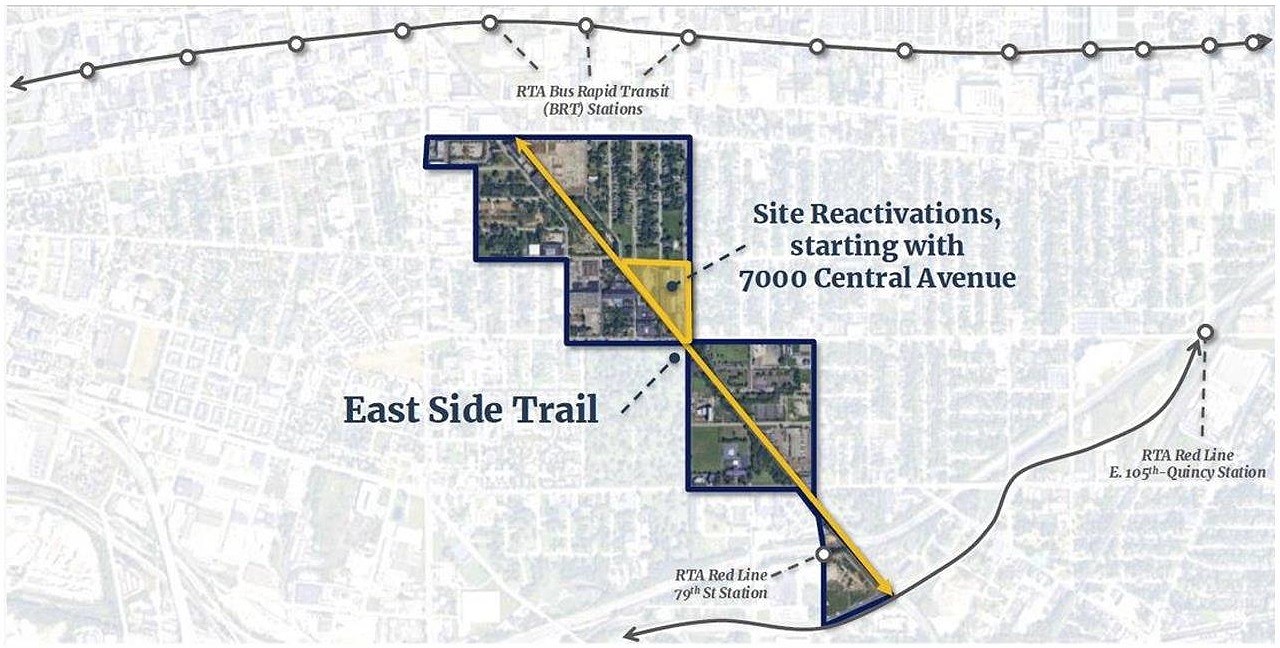
Roughly 220 acres of land is represented in this business park planned along a new East Side Trail next to the Norfolk Southern rail line in Cleveland’s Central and Fairfax neighborhoods. The trail would enhance access to the site from public transit routes and more housing is planned on the near-East Side (City of Cleveland).
“City, state, and regional leaders will make a major announcement about a transformational redevelopment effort on Cleveland’s near east side,” a statement from the city read.
Proposed is a business park south of Cedar Avenue to the Opportunity Corridor Boulevard offering roughly 220 acres along the NS which is planned to gain the East Side Trail alongside it. The trail will connect to the HealthLine Bus Rapid Transit along Euclid Avenue to the north and Airport-Windermere Red Line rail transit to the south.
“This initiative will position Cleveland to compete globally for the next generation of jobs — while reconnecting residents and neighborhoods to economic opportunity, transit, and world-class community assets,” the press statement continued.
“As the largest industrial redevelopment in Cleveland’s history, the project will convert long-vacant land into a connected corridor of jobs, green space, and vibrant public places in the heart of the city,” the statement concluded.
On the Opportunity Corridor, another 130 acres is in various stages of property assembly, clean-up and commercial redevelopment. Of that, 35 acres has already been redeveloped.
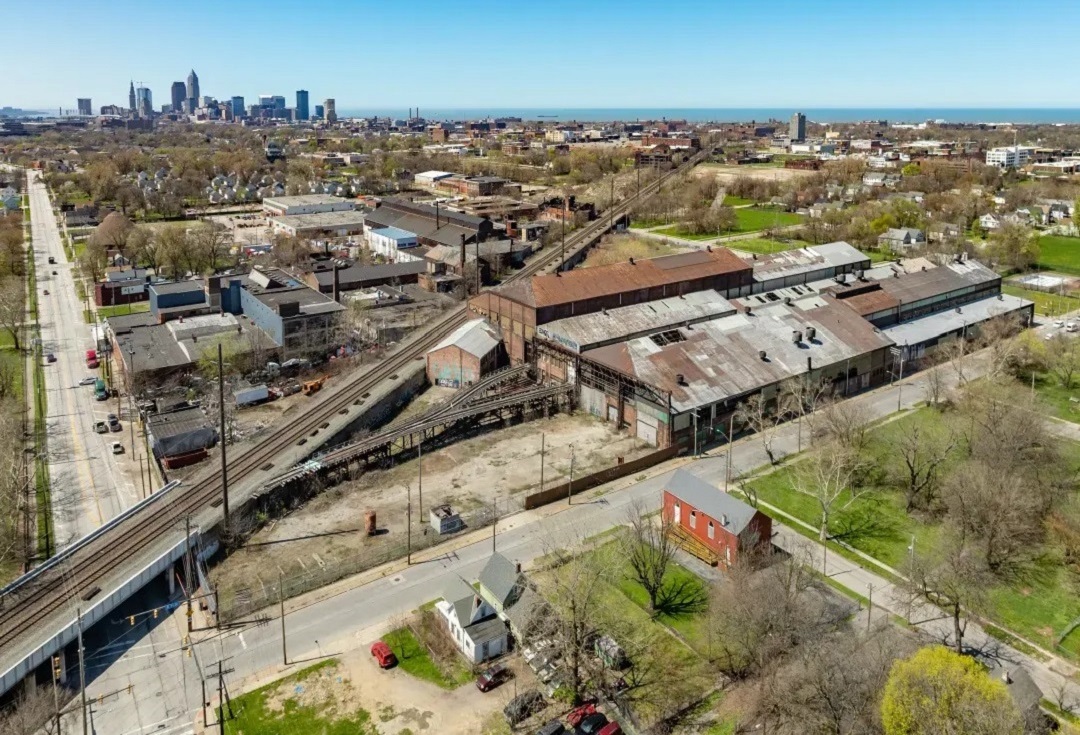
The vacant Wellman-Seaver-Morgan Engineering Co. is about to get reactivated with a new but as-yet unidentified manufacturer. The plant is at the corner of Quincy Avenue, at left, and East 71st Street (Site Readiness Fund).
Tom McNair, the city’s chief of integrated development, referenced the “historic business park” in a presentation to City Planning Commission last week on establishing a tax-increment financing district for rebuilding infrastructure and housing on the near-East Side.
“The ability to bring back these lands here and attract high-quality job manufacturers (is important) and we are spending a lot of time on the business development, business attraction side of all of this,” McNair said.
While the administration has no specific projects yet that would result from the TIF, they are intended to spin-off from developments already emerging like those in Midtown or the new business campus.
The campus’ first tenant is an unidentified manufacturer at 7000 Central Ave., the vacant Wellman-Seaver-Morgan Engineering Co. The manufacturer may be identified at next week’s press conference.
The Site Readiness Fund submitted to the Ohio Department of Development an application for $2.56 million in state historic tax credits to help fund the redevelopment of that plant.
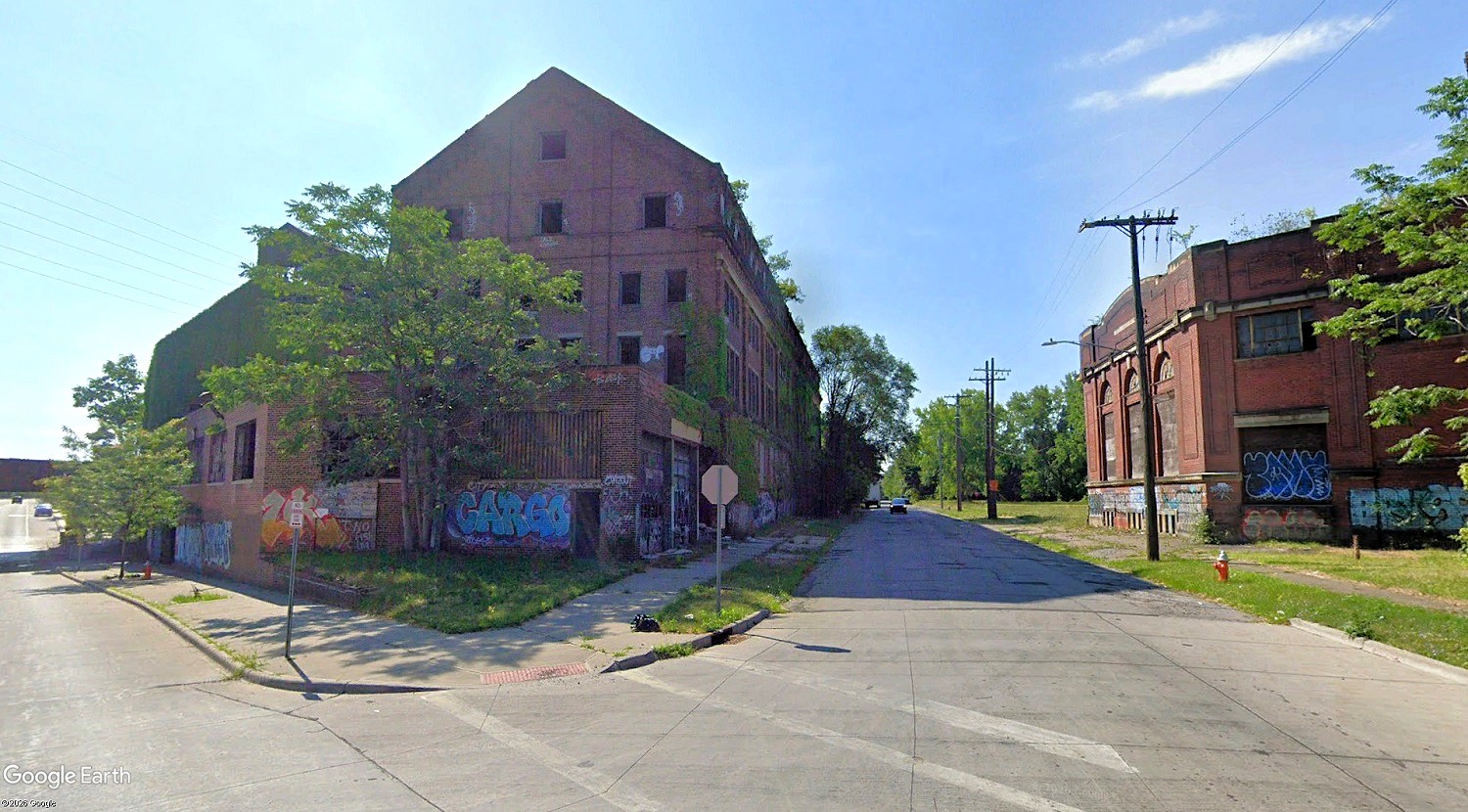
At left, at the corner of Cedar Avenue and Ashland Road, is the former Westinghouse Electric/Thompson Aircraft Products Co. plant. Across Ashland to the right is the old Cleveland Railway Co. power house, Both will be among the backdrops of a major announcement next week by Mayor Justin Bibb and other public officials (Google).
The 183,000-square-foot factory, built in 1901, will be renovated and expanded for $25.7 million over three and a half years into a modern, 207,218-square-foot plant. A manufacturing end user will create up to 142 permanent jobs, according to a public record provided to NEOtrans but with the manufacturer’s identity redacted.
The Ohio Department of Development isn’t due to announce the next round of historic tax credit awards until June. Yet Ohio Department of Development Director Lydia Mihalik is scheduled to attend next week’s press conference.
However, the state is due to imminently announce up to $88 million in Ohio Brownfield Remediation Program awards which can be used for demolishing structures and cleaning up the sites afterwards.
But that $88 million will be divided equally among Ohio’s 88 counties in this round. In other words, bucolic Vinton County with its 12,800 people will have the same amount available to it as Cuyahoga County with its massive burden of vacant, decaying industrial sites.
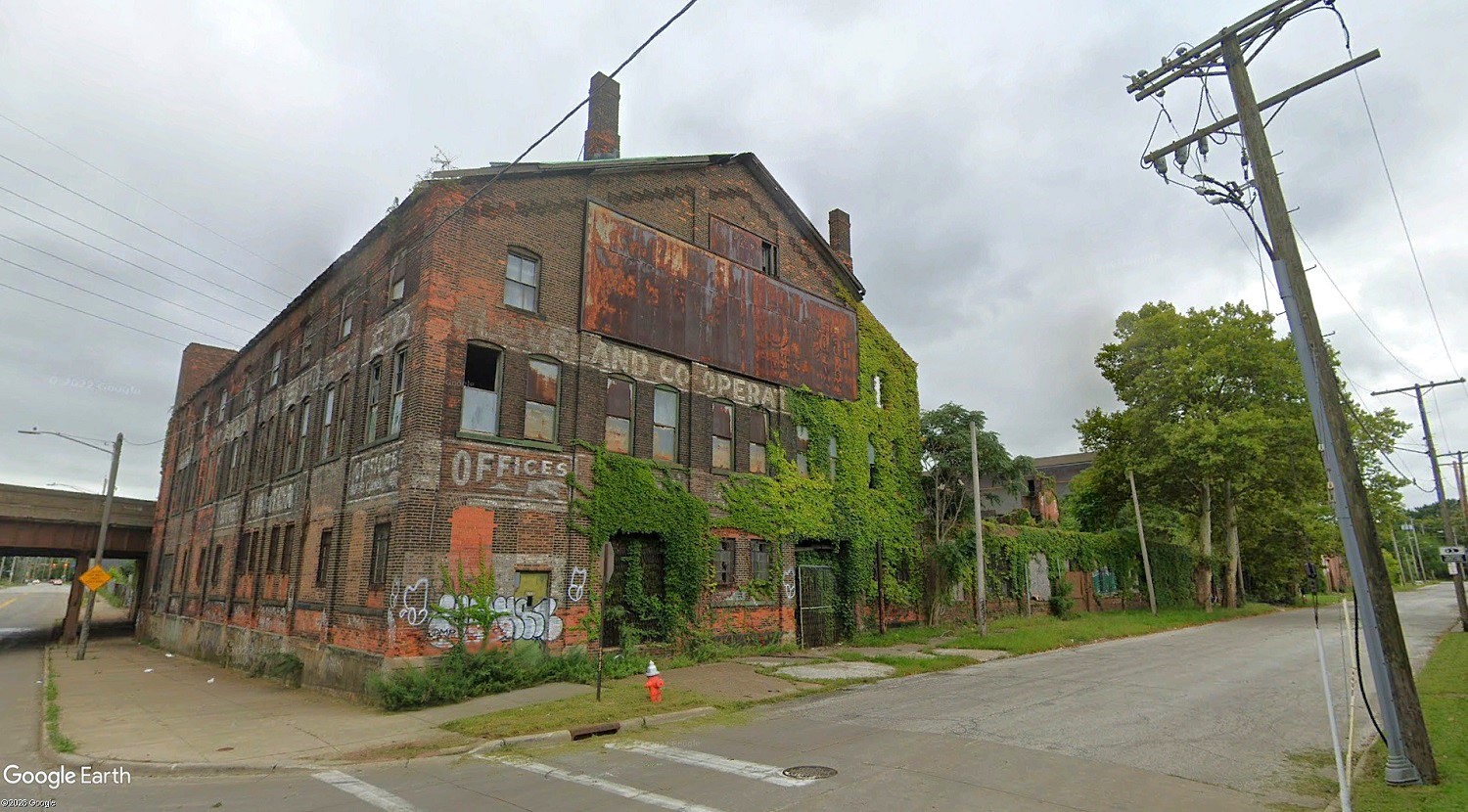
Its historic name still faintly visible on its facade, the Cleveland Co-Operative Stove Co., 6700 Central Ave., was the world’s largest foundry for iron stoves in the late-19th century. The property was purchased last year by the Site Readiness for Good Jobs Fund and will be demolished by B&B Wrecking & Excavating, hired by the city and the Cuyahoga Land Bank for $437,840 (Google).
There is hope yet for Cuyahoga County. Any Brownfield funds not claimed in this round will go back to the Ohio Department of Development to make available again. In the next round, in state fiscal year 2027 which starts on July 1, 2026, applications will be based on need.
The need is great in Cuyahoga County where demolition and remediation projects are very expensive. For example, Glenville’s National Acme plant demolition and clean-up last year cost $11 million.
Any Brownfield funds not awarded this year will add to a $109 million Brownfield Remediation Program budget for 2027. The Department of Development is receiving FY 2027 applications this spring with awards anticipated after July 1, according to Brownfield program guidelines.
Tomorrow in Part Two, NEOtrans will look at the other major East Side redevelopment corridor — the Opportunity Corridor. It intersects with the NS corridor at a spot dubbed the Yellow Brick Road site that already has a major end user lined up.
END