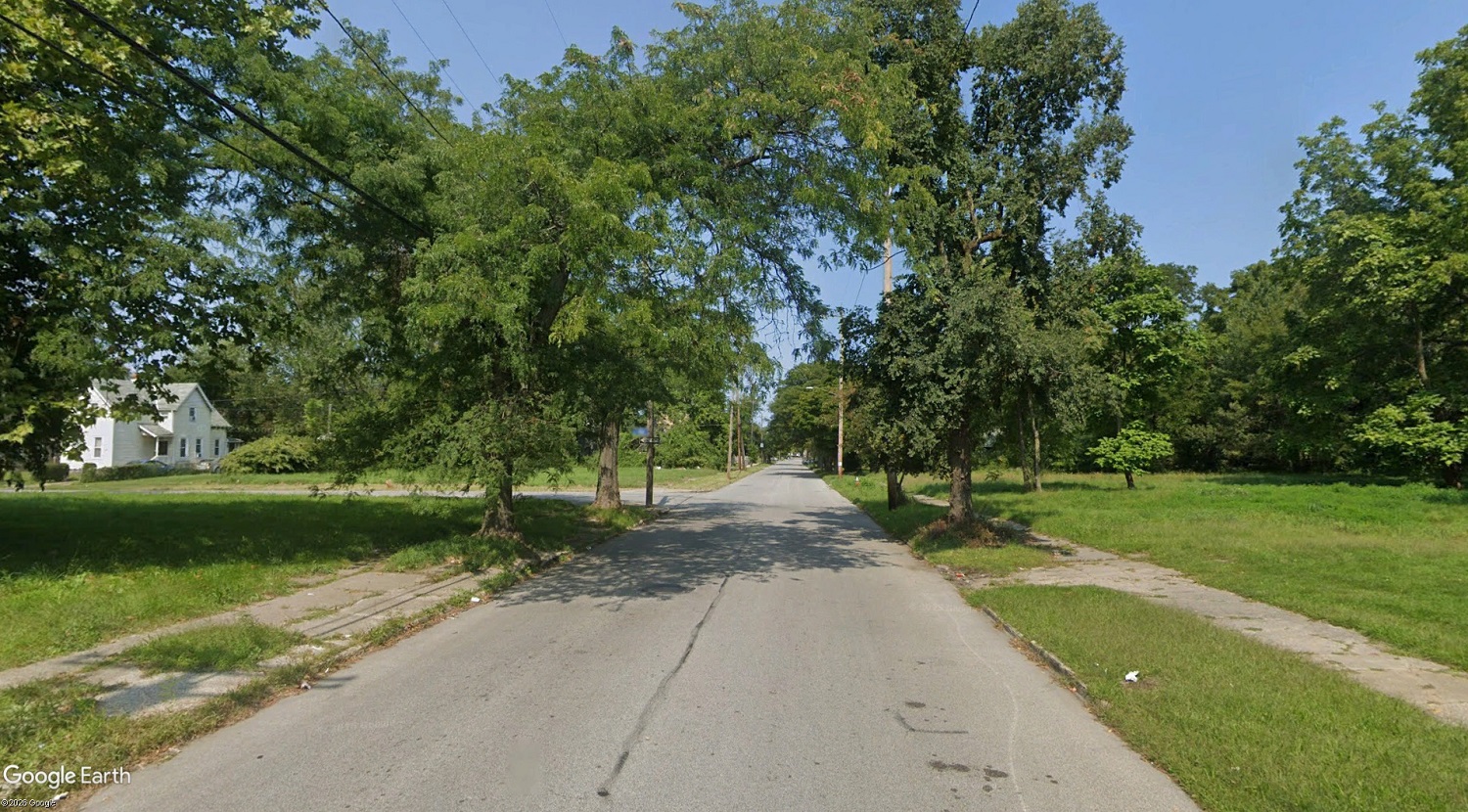
Too much of Cleveland’s East Side looks like this — rural. From nearly 100,000 residents in the 1960s to fewer than 20,000 today turned this crowded area into an urban prairie. This is East 65th Street at Luther Avenue, where the Hough neighborhood meets St Clair-Superior (Google). CLICK IMAGES TO ENLARGE THEM.
TIF, $10M Bezos grant for near-East Side
Taken together, Cleveland’s Hough and St. Clair-Superior neighborhoods aren’t that big of area. But its large amount of vacant land weighs heavily on the City of Cleveland.
In total, these two neighborhoods measure just 3.44 square miles. In the lifetimes of Clevelanders 60 years and older, Hough and St. Clair-Superior combined to house nearly 100,000 residents. Then it was red-lined by investors into oblivion.
Today, fewer than 20,000 people live in these two near-East Side neighborhoods. And half of this 2,200-acre area is vacant. With a typical residential city lot measuring less than 0.2 acres, that translates into about 6,000 vacant lots here.
That’s roughly one-third of the 18,000 City Land Bank lots in the entire 77-square-mile City of Cleveland. In other words, one-third of all the vacant lots in Cleveland are packed into this 3.44-square-mile area.
The concentration of so many vacant, publicly owned lots in this area creates financial, nuisance, pest and health challenges for both the city and residents. There are parallel efforts underway to address that, to green-line these neighborhoods with new investment, jobs and housing.
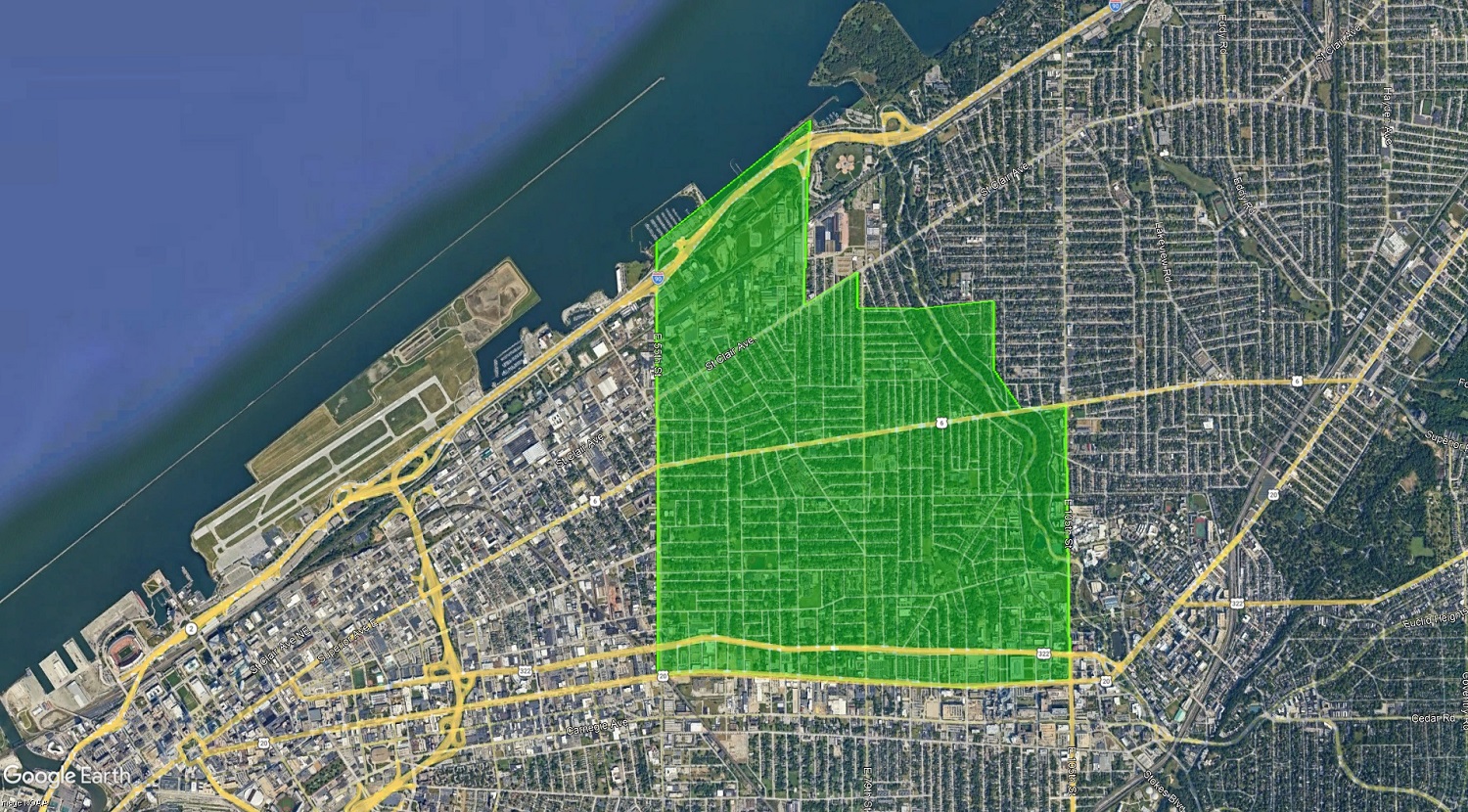
Cleveland’s Hough and St. Clair-Superior neighborhoods are highlighted in green. This is where the $10 million grant from the Bezos Earth Fund for its “Greening America’s Cities” initiative will be focused (Google).
One is the creation of a Housing Innovation District on the East Side, spanning 1,500 acres across the Hough, Central, and St. Clair-Superior neighborhoods. Here, the city is incentivizing new home construction and repairs with waived permit fees and tax increment financing (TIF).
Over 30 years, the TIF district for that area could raise anywhere from $64 million to $182 million depending on how much private development results from the public investment.
The TIF would fund public works projects like new sewers and revived streetscapes. A housing market pilot project will feature the construction of 20 new single-family houses, 10 renovated houses and two renovated storefronts.
Another effort is the work to provide jobs by aggregating vacant and underutilized industrial properties, then clear and clean them up into larger sites that can marketed for development.
That effort is called the Midline District which encompasses more than 350 acres of near-East Side land, generally along several miles of the elevated Norfolk Southern railroad mainline.
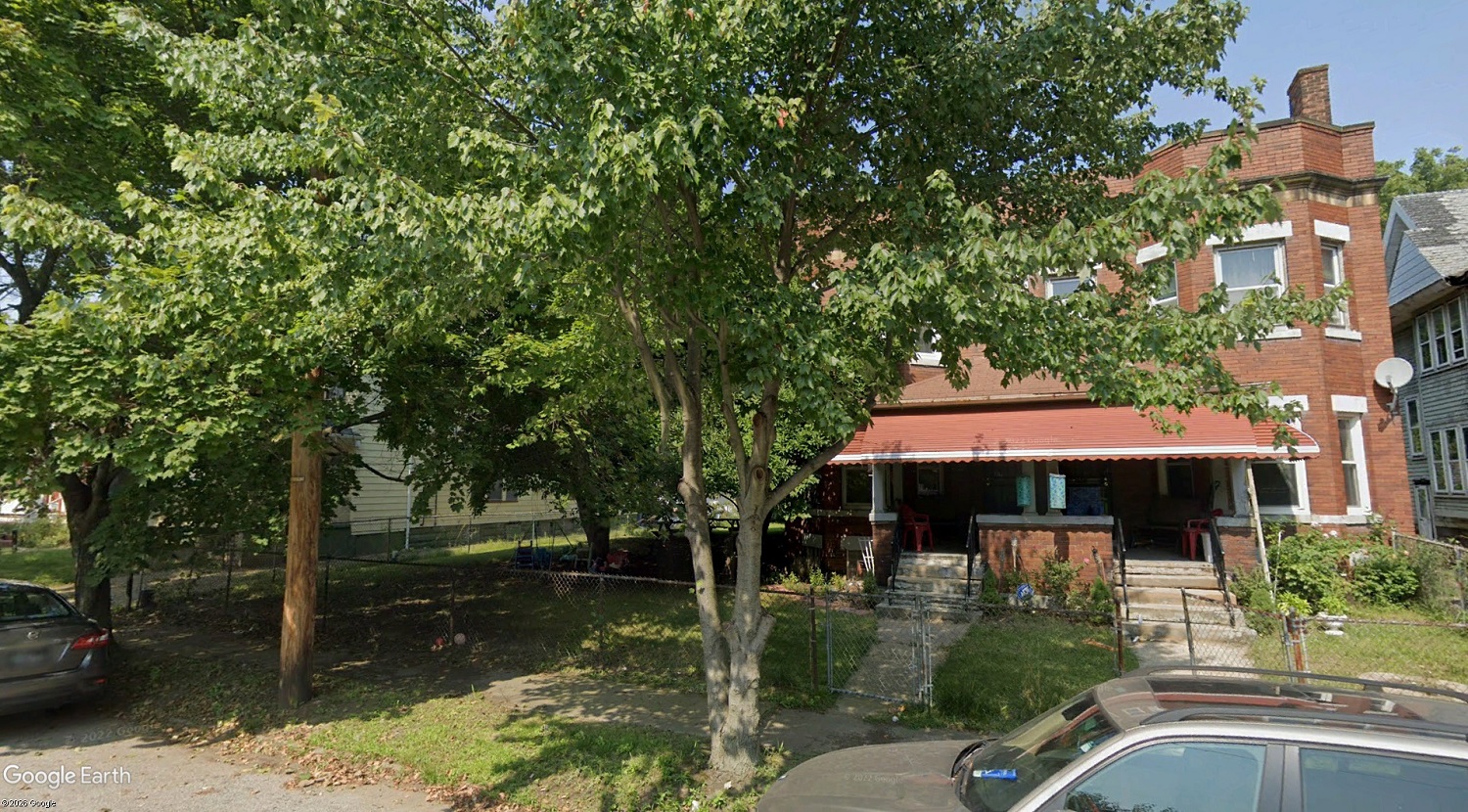
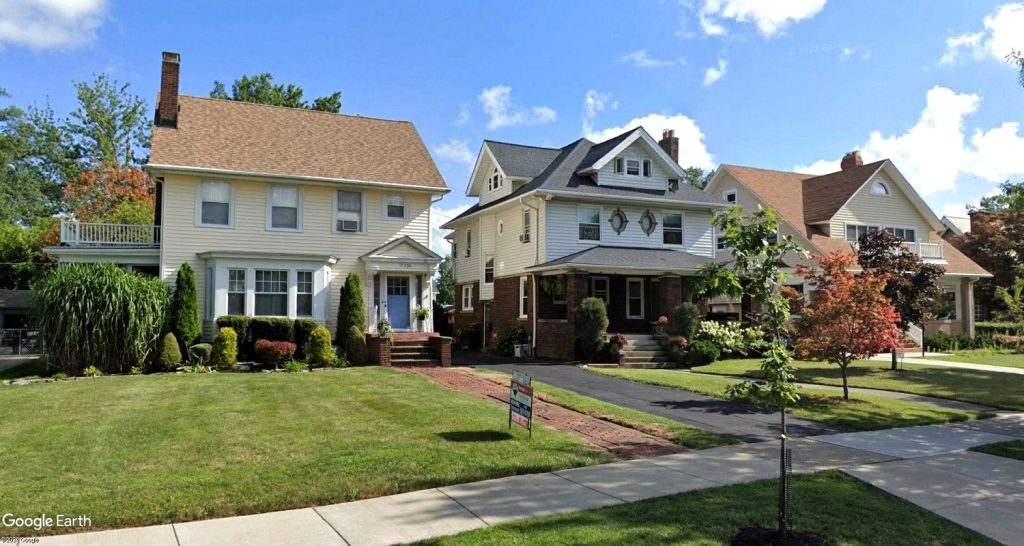
The owner of this double townhouse in Cleveland’s Hough neighborhood also owns the vacant lot next door, using it as a playground, picnic area and fountain for tenants. More of this could happen through the City Land Bank’s Side Yard Expansion program (Google).
The third effort is being funded by a $10 million from the Bezos Earth Fund for its “Greening America’s Cities” initiative. The city will receive the grant to begin revitalizing and repurposing vacant lots in the St. Clair Superior and Hough neighborhoods.
The funds will be used to advance the Cleveland Vacant Land Restoration Initiative, in which the city will partner with the Western Reserve Land Conservancy (WRLC) to revitalize and repurpose city-owned vacant lots.
“Residents of Hough and St. Clair-Superior have lived with the effects of decades of disinvestment for far too long,” said Mayor Justin Bibb in a written statement.
“Through this initiative, we will transform 600 publicly owned vacant parcels into a connected network of community spaces that support public health, neighborhood safety, and economic opportunity,” Bibb added.
“By reimagining public land as assets for residents, we are strengthening the foundation for more resilient neighborhoods and advancing our vision of a cleaner, healthier, and more equitable Cleveland,” he continued.
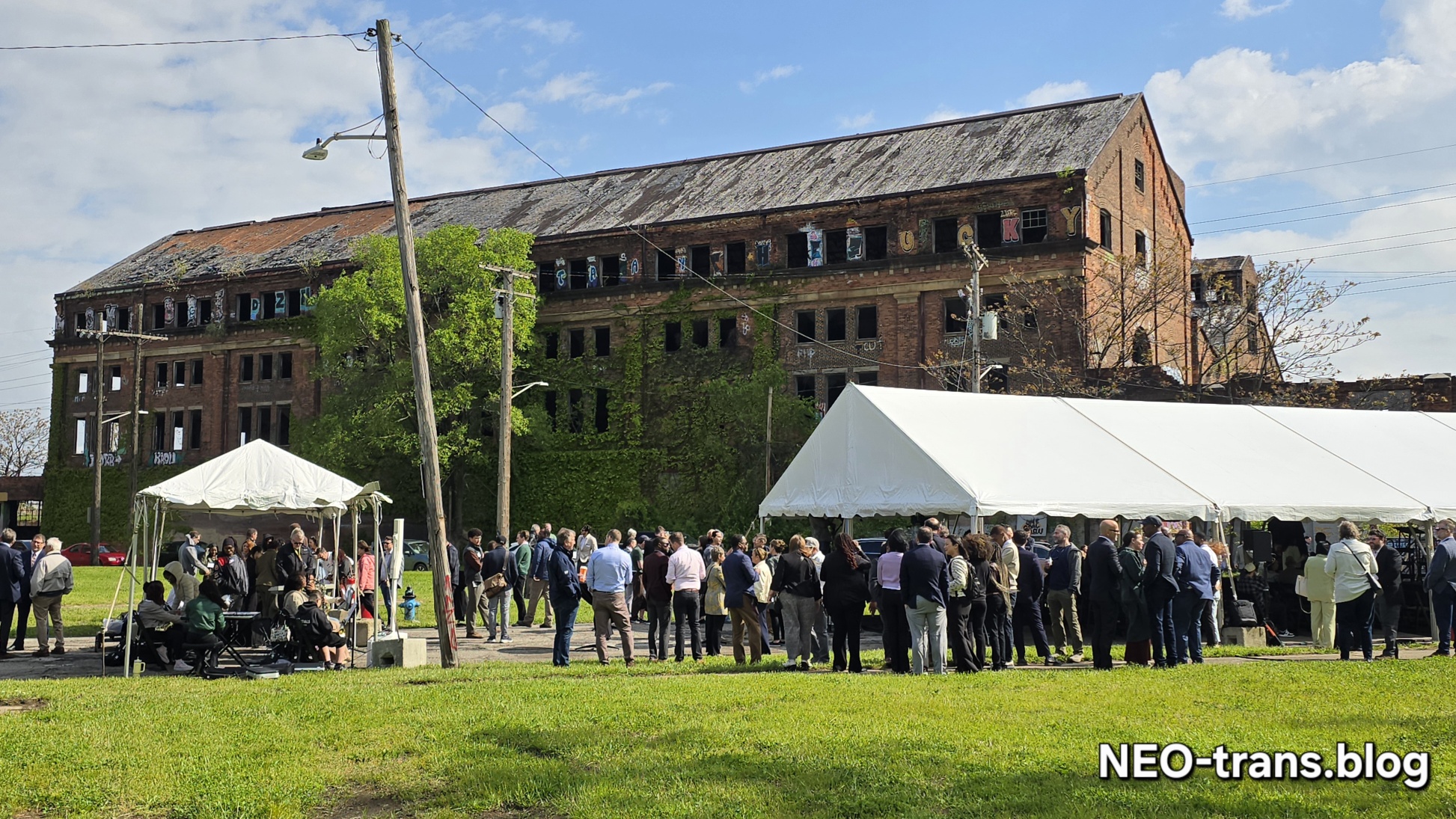
A party to end poverty? Civic leaders gathered in May in the shadows and shell of Cleveland’s industrial past to announce the Midline Priority Investment Area to turn decayed, vacated industrial sites into productive land (NEOtrans).
Most of the vacant lots are set to become naturalized landscapes, with native plants and trees being planted in the lots to deter illegal dumping and other unwanted activity.
Two project goals are to make maintenance simpler and more cost-efficient for the city and to create a limited number of gathering areas, pocket parks, and urban agricultural spaces.
Additionally, the City Land Bank is planning to reopen its Side Yard Expansion program. St. Clair Superior Development Corporation (SCSDC) will work with WRLC, the City, and residents to identify priority lots for the restoration initiative and assist residents with Land Bank applications.
Issac Robb, WRLC’s chief urban program officer and a SCSDC board member, offered a hopeful vision of what the project grants could do for the neighborhood.
“Parks obviously matter, but so does the vacant lot down the street and the tree outside your front door,” Robb said. “We believe nature should not be a destination you have to travel to; it should be part of your everyday journey.”
END