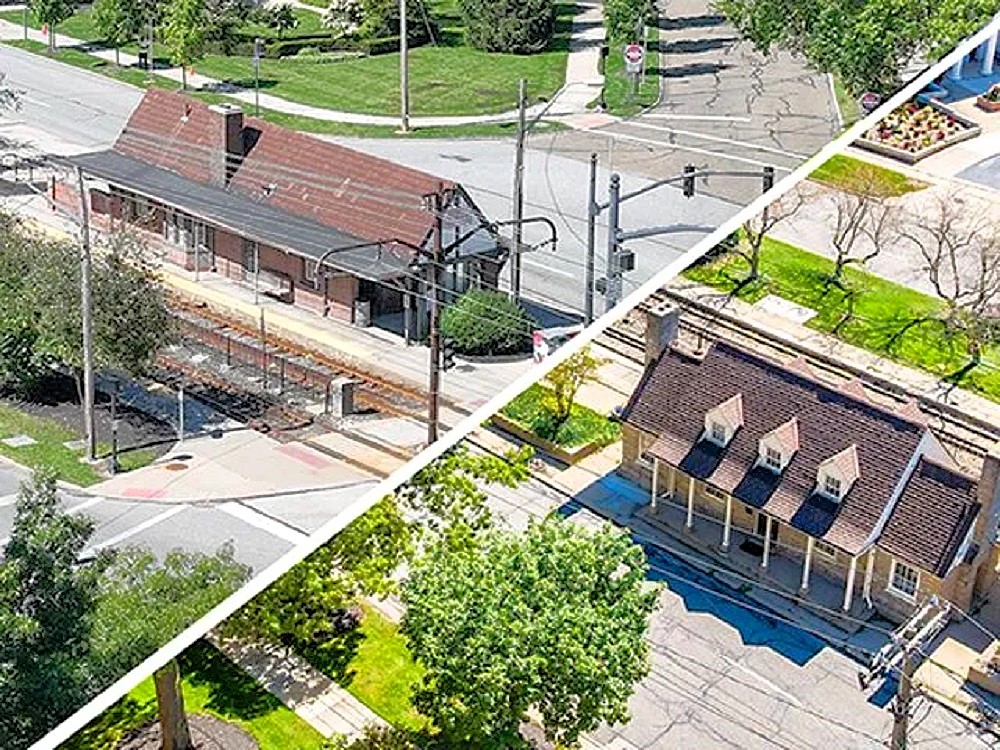
Two train stations owned by the City of Shaker Heights up for sale or long-term lease. At upper left is the Coventry Station on Shaker Boulevard and the light-rail Green Line. The other is Lynnfield Station on Van Aken Boulevard and the light-rail Blue Line (CRESCO). CLICK IMAGES TO ENLARGE THEM.
City makes depots available for new biz
Admit it. You’ve always wanted to buy a train station — if not to live in, then certainly from which to run your small business. If so, now you’ve got that chance thanks to a new offering by the City of Shaker Heights.
Two rapid transit stations are available for long-term lease or sale — The Coventry Station, 14100 Shaker Blvd., and the Lynnfield Station,18900 Van Aken Blvd. They’ve been leased before but it’s the first time in their long histories they’ve been made available for sale.
Brokers Ryan Fisher and Alex Smith from Independence-based Cushman & Wakefield | CRESCO Real Estate have listed the two stations for sale or long-term lease for an undisclosed price. In other words, you’d have to ask them.
NEOtrans reached out to them, and they deferred media questions to city officials. They, in turn, referred NEOtrans to a summary about the stations and what prompted them to make the properties available.
“For several years, the City of Shaker Heights has been seeking a way to preserve its two remaining historic train stations,” the summary notes. “This has included discussions with the Greater Cleveland Regional Transit Authority (GCRTA) and the pursuit of funding for historic preservation.”
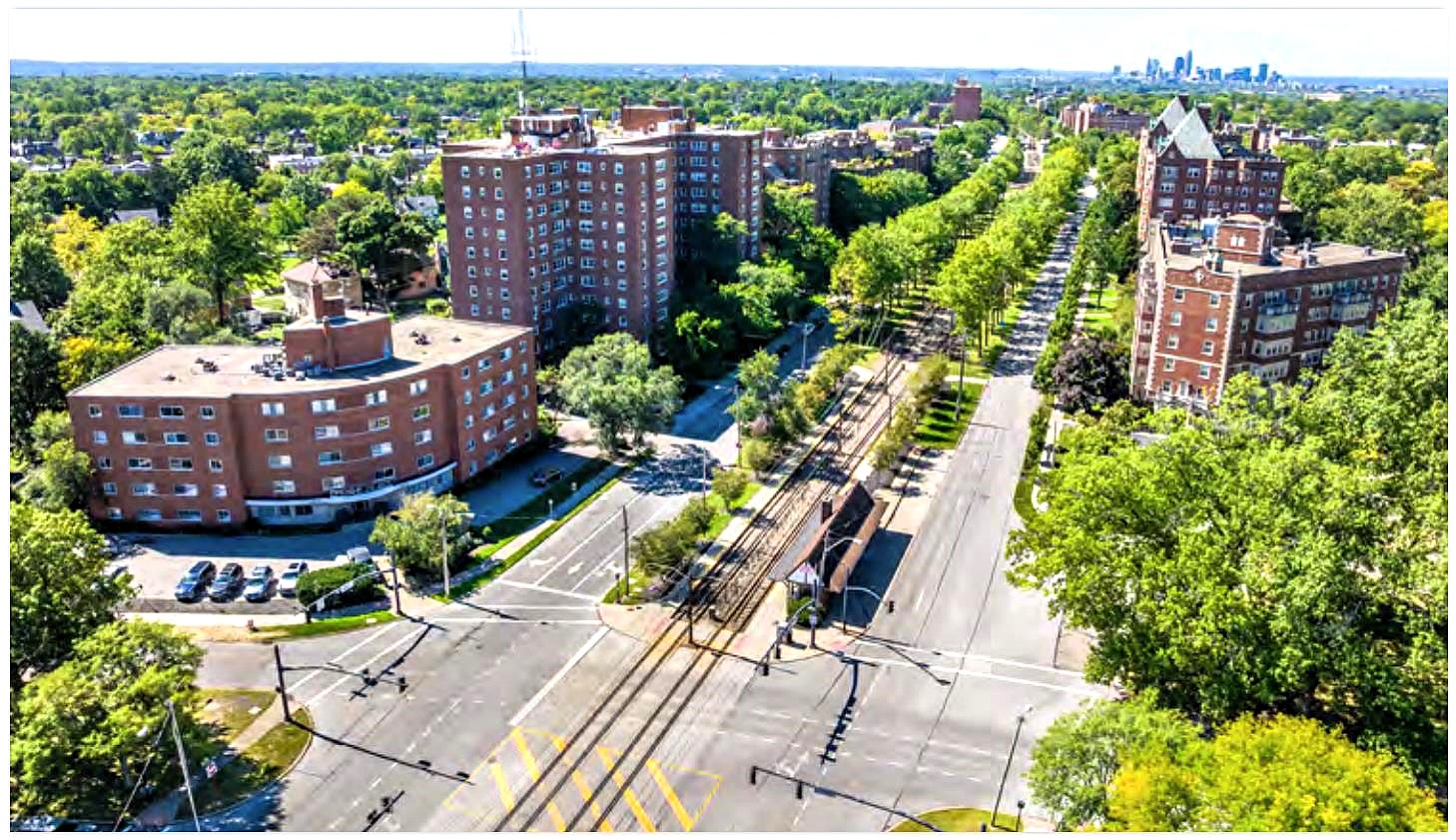
Looking west on Shaker Boulevard and the Green Line at the Coventry Station. Just beyond, the Blue Line joins into Shaker Square and both run combined to Downtown Cleveland in the distance (CRESCO).
They city is making the stations available with the understanding that the buildings would be rehabilitated and put back into active use for commercial purposes. Both have been vacant for more than a decade.
The zoning for both stations doesn’t allow for residential or even live-work use. Sorry, no home by the tracks unless of course you just happen to fall asleep there after working late one night. And the next night, and…
City officials say the station buildings do not have a viable transit use nor do they fit into modern transit system needs. Their repair has not been included in long-term or current priorities for capital budgets or plans.
However, GCRTA is investing tens of millions of dollars in local and federal funds to modernize Shaker Heights rail stations — their platforms, lighting, glassy shelters, landscaping and ADA access. But those investments do not include these historic structures although they will have updated surroundings.
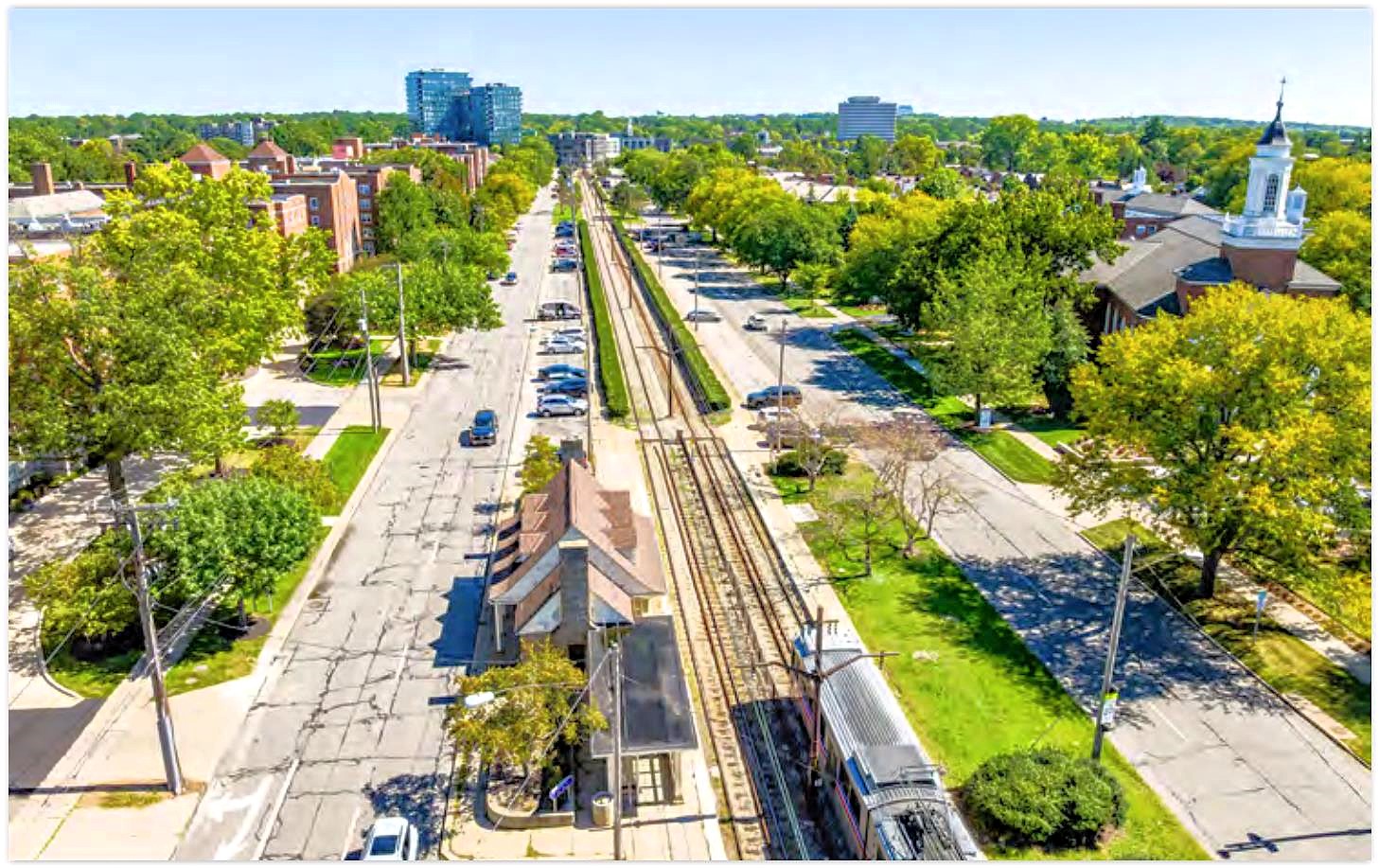
A Blue Line trains pauses at the Lynnfield Station on Van Aken Boulevard, heading toward its eastern terminus at Warrensville and the big buildings of the new Van Aken District (CRESCO).
The Coventry Station is just east of Cleveland’s Shaker Square on the light-rail Green Line. The Lynnfield Station is just west of Shaker Heights’ Van Aken District on the light-rail Blue Line. Both have passenger shelters outside of the station buildings. Both lines are getting new trains by 2028.
CRESCO touts the stations as offering potential adaptive-reuse opportunities for boutique retail, café, office, studio or neighborhood-serving commercial uses. Both stations are in walkable settings, surrounded by many apartment buildings. And they have free parking next to them.
The Coventry Station is located within Shaker’s Shaker Square Local Historic District. The Lynnfield Station is a locally designated landmark and included in the Shaker Village National Register Historic District.
Over the last 100 years, the stations have been leased for private uses: Coventry Station to Standard Oil, a floral shop, and an insurance agency, and Lynnfield to a tobacco shop/newsstand, soda/candy shop, and day spa.
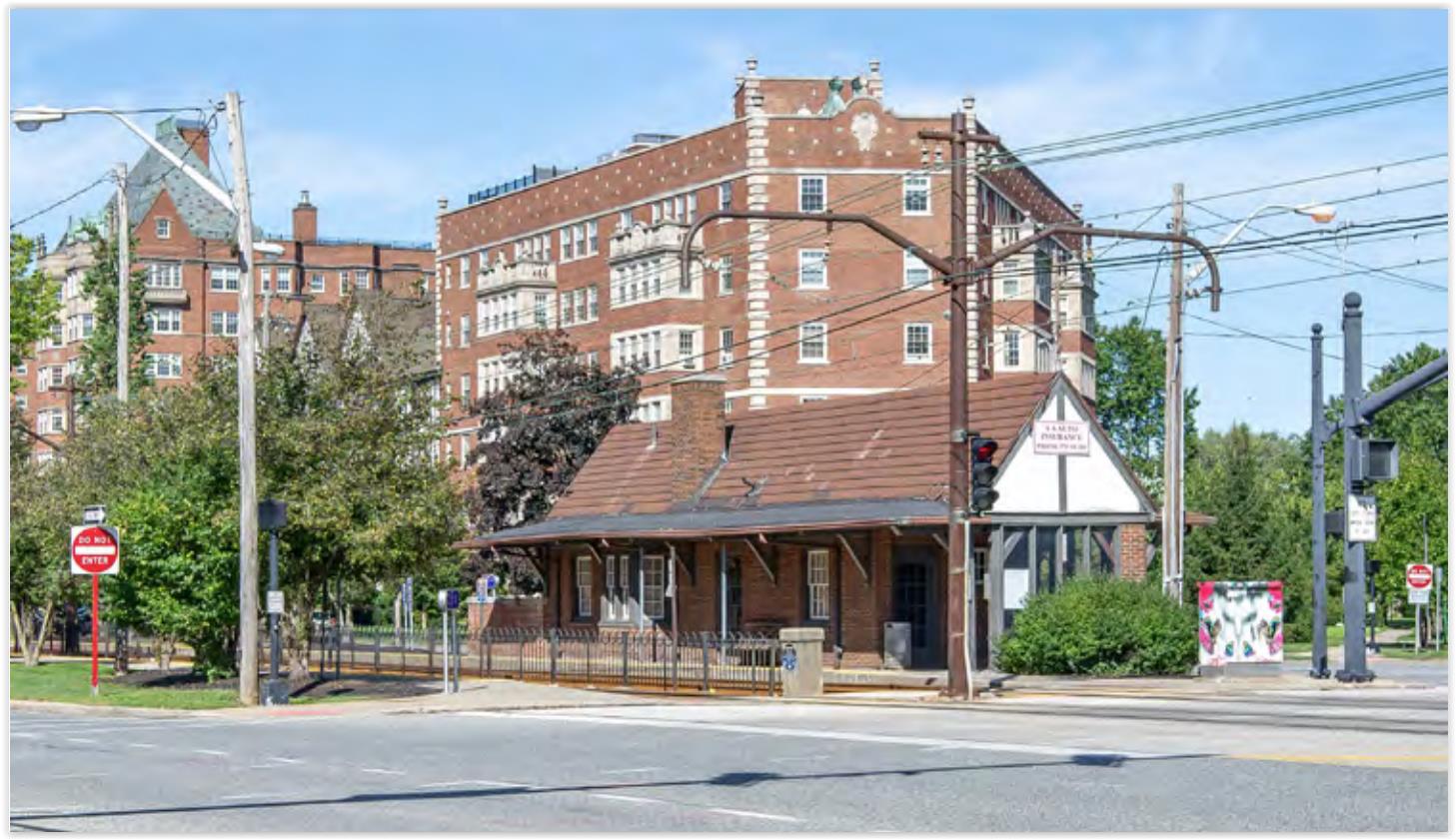
The 1915-built Coventry Station and the rapid transit line were built before its neighborhood was. Today, the station and its walkable neighborhood support each other (CRESCO).
The 700-square-foot Coventry Station was built in 1915, two years after Shaker Heights’ developers, the Van Sweringen brothers, Orris Paxton and Mantis James, laid the first tracks for the Cleveland Interurban Railroad on what would become Shaker Boulevard.
The first transit tracks started from Fontenay Road, went west on Shaker, then turned north on Coventry to Fairmount Boulevard to connect with the outer end of the Cleveland Railway Co., the region’s streetcar system, to reach downtown.
But a faster, more direct line to downtown was built west of Shaker Square in 1920 at the same time a branch was built down a new South Moreland Boulevard, later called Van Aken. Additional rail extensions were built farther east on both lines.
Incorporated as the Cleveland & Youngstown Railroad, this electric rapid transit line was envisioned by the Van Sweringens to reach booming Youngstown someday, but never made it beyond Warrensville Center Road.
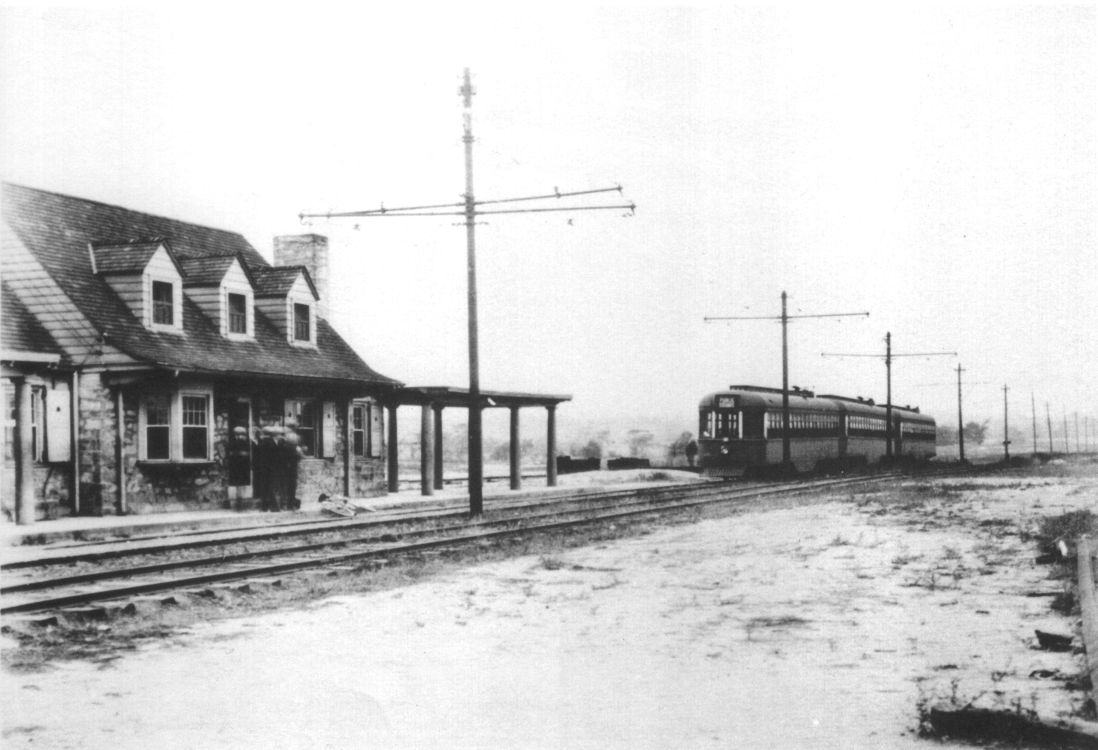
A brand-new Lynnfield Station in 1922 and the two-year-old rapid transit line were built in the countryside by real estate developers, the Van Sweringen brothers, to help promote their new, planned suburb of Shaker Heights (contributed).
The 1,000-square-foot Lynnfield Station was built in 1922, surrounded by fields and forests, soon to be developed. Streetcars, rapid transit lines and their electric utilities were often built as promotional lines by real estate interests who accepted their money-losing rail operations as a cost of access.
Sometimes all of those corporate interests had the same owners, called a syndicate. But by the Great Depression of the 1930s, the public blamed syndicates for the economic collapse. The syndicates’ utility, transportation and real estate businesses were divided up and sold off by court actions.
Most of the electric interurban and streetcar lines in Cleveland and nationwide were abandoned. But, as a bedroom community, the City of Shaker Heights didn’t want to lose its rapid transit link to Downtown Cleveland.
So it acquired the two rapid transit lines in 1944, including their station buildings, and continued to operate them for the next 31 years until they were absorbed by the new GCRTA. But the city continues to own much of the Shaker Heights Rapid Transit property to this day.
END