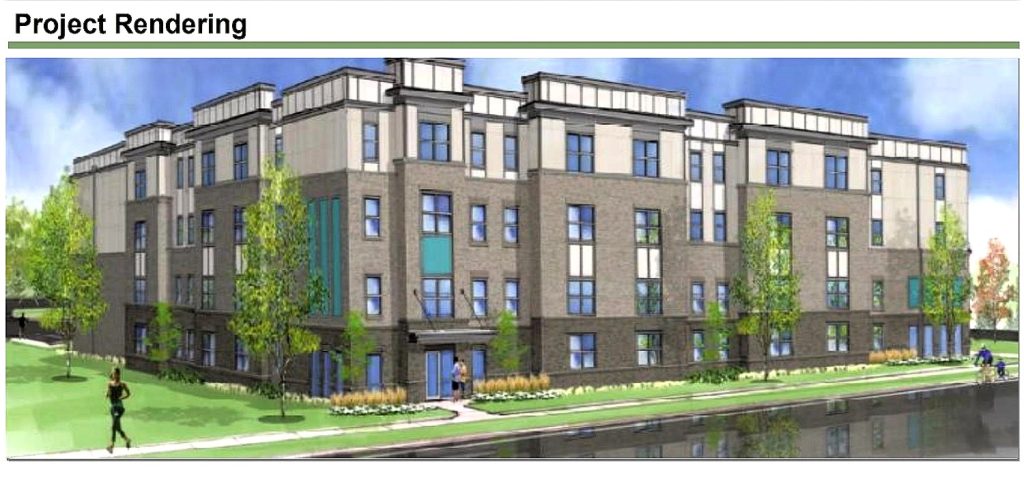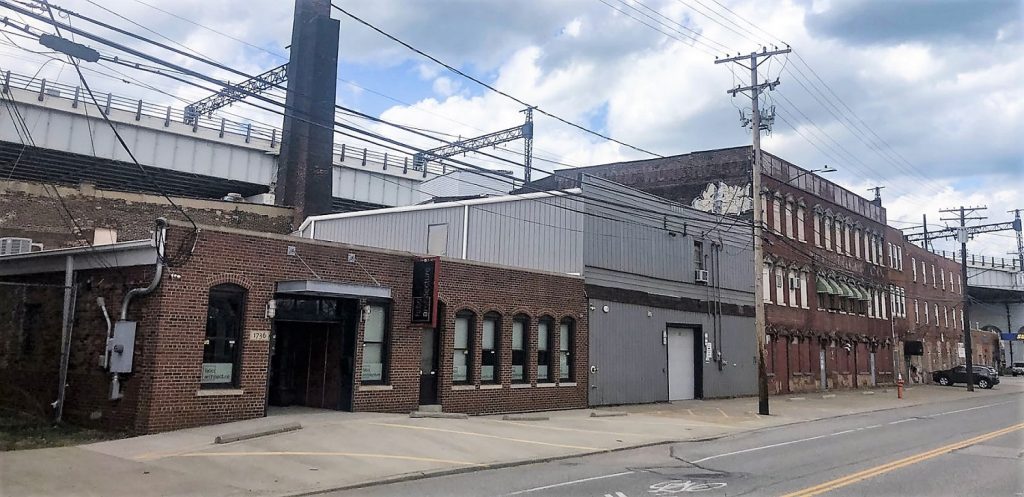
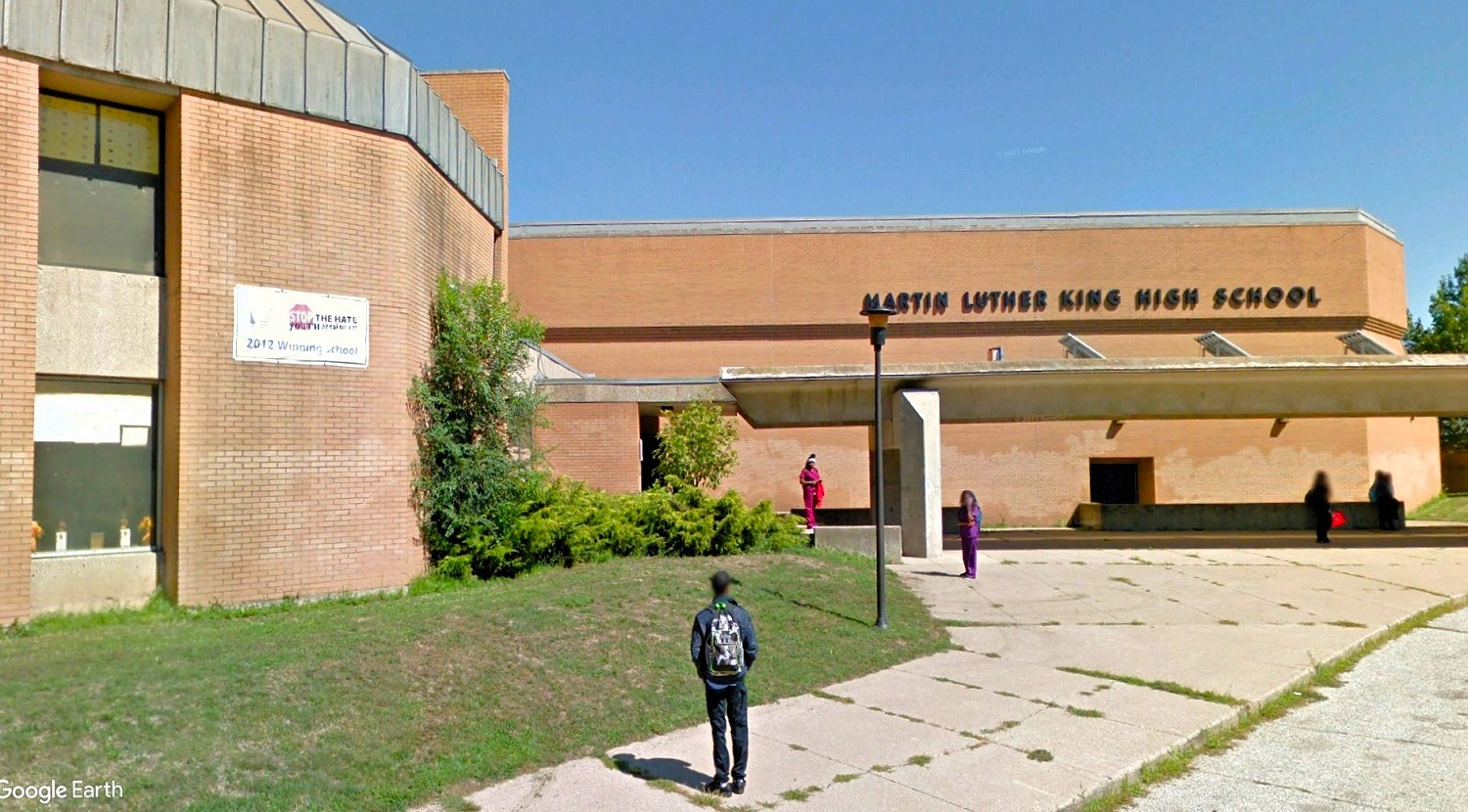
At a sprawling 11 acres in the heart of a Hough neighborhood getting rediscovered, the site of the now-closed Martin Luther King Jr. High School could be one of Cleveland’s largest mixed-use redevelopments. Seen here in 2016, MLK High was still four years away from closure due to declining enrollment (Google). CLICK IMAGES TO ENLARGE THEM.
Cleveland turns closed schools into opportunities
While Cleveland is not unique among major cities in having a declining school population, it is proving to be adept at adapting. It is turning what would otherwise be a potential problem of blighted, vacant school buildings and lands that would drag down neighborhoods into redevelopment opportunities that might lift them up.
This challenge comes in an era of shrinking households and growing housing costs, where there is a greater demand for affordable, quality housing than there is for classroom space. That’s especially true in Cleveland where young professionals and empty nesters are moving in and families are moving out.
According to a new report by apartment search Web site RentCafe.com, Cleveland has the second-largest school-to-apartment pipeline in the nation. A total of 615 apartments are set to open in Cleveland from the redevelopment of five unused school buildings and/or their properties.
RentCafe’s 2025 Adaptive Reuse Report says that these school-to-residential projects make up nearly a quarter (24 percent) of the city’s entire conversion pipeline of 2,701 planned units.
That’s the 13th-largest pipeline nationwide of conversions. A pipeline is a flow of city-approved projects that have not yet been built. In addition to schools, some of those conversion sources include former hotels, obsolete office buildings and others.
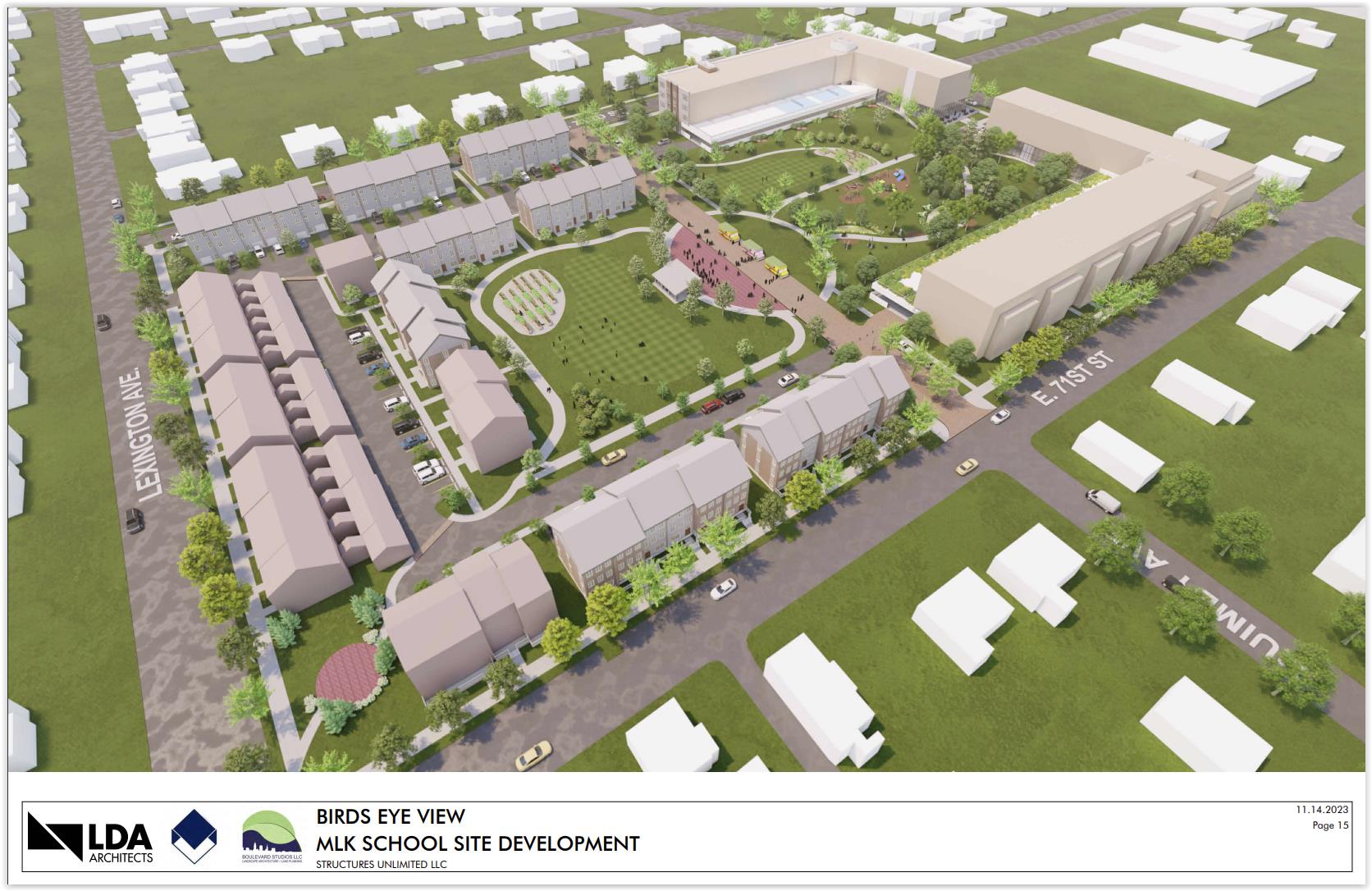
The scale of the MLK High School site in Hough is best appreciated from the air as this rendering shows the plans for redeveloping the 11-acre site that were approved by the city last year (LDA).
Among office conversions, RentCafe ranked Cleveland fifth in the nation in the number of apartments (367 units) borne from former office buildings last year. Cleveland was the most prolific Midwestern city in that regard.
School conversions to residential were the fastest-growing segment of adaptive reuse nationwide in 2024, creating nearly 2,000 apartments across the U.S. — a fourfold increase over the previous year, the report noted.
“Cleveland has found a smart way to turn old school buildings into affordable apartments full of character,” said Veronica Grecu, RentCafe’s senior real estate writer and researcher, in an e-mail to NEOtrans.
“Local officials saw school closures not as a setback but as an opportunity: By selling or donating buildings at low cost to developers, Cleveland has preserved historic landmarks, reduced neighborhood blight and added much-needed housing — all while giving new life to old spaces,” she added.
She said these former schools often have unique features that are not usually found in new-builds. Those include large windows, gyms repurposed as communal areas and auditoriums available for community events.
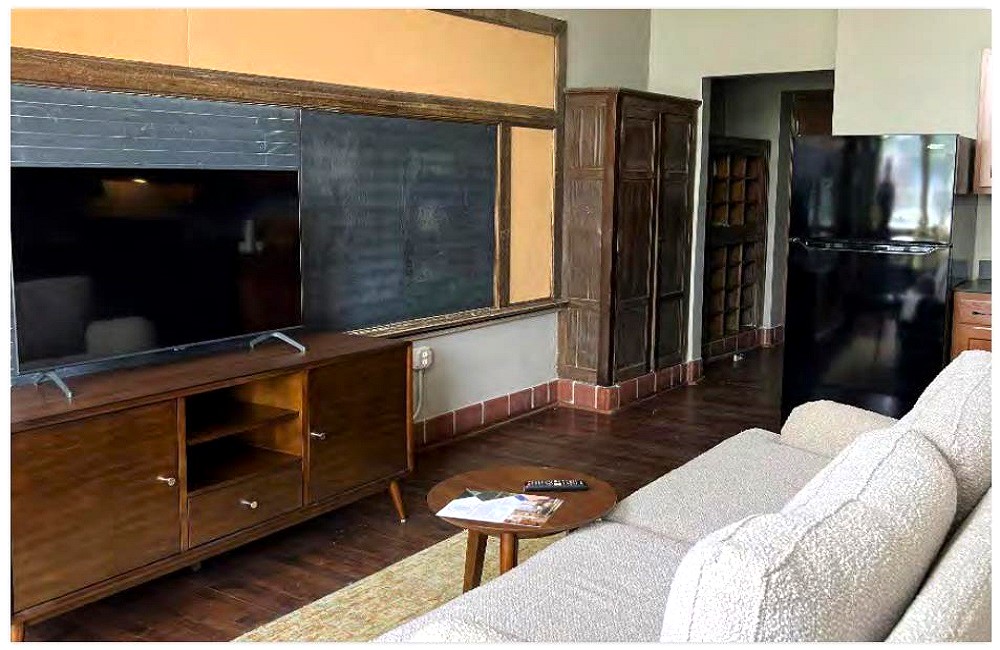
Not school buildings are demolished before their properties are repurposed with housing. The Longfellow School in Collinwood was renovated as senior housing — even preserving the chalkboards and the cubbies in this former classroom-turned-living room (Anthony Love).
“The added perk is that they’re often in prime spots across the city,” Greco explained. “With local incentives and a streamlined approval process, developers are turning them into housing full of character while revitalizing neighborhoods.”
City officials are considering expanding Form-Based Code zoning to more of the city after a successful 17-month pilot in four neighborhoods — Hough, Fairfax, Detroit-Shoreway/Cudell neighborhoods, and around the Opportunity Corridor.
Cleveland’s Chief Zoning Administrator Shannan Leonard told the City Planning Commission Nov. 7 that turn-around times on construction permit applications in Form-Based-Zoning districts have been reduced from about 100 days on average to just 35 days.
Cleveland’s biggest school transformation project in the works is that of the former John F. Kennedy High School and Recreation Center, 17100 Harvard Rd. The Eagle’s Nest Realty Group LLC, was selected in June to redevelop the 14-acre site — the largest in Cleveland’s Lee-Harvard neighborhood.
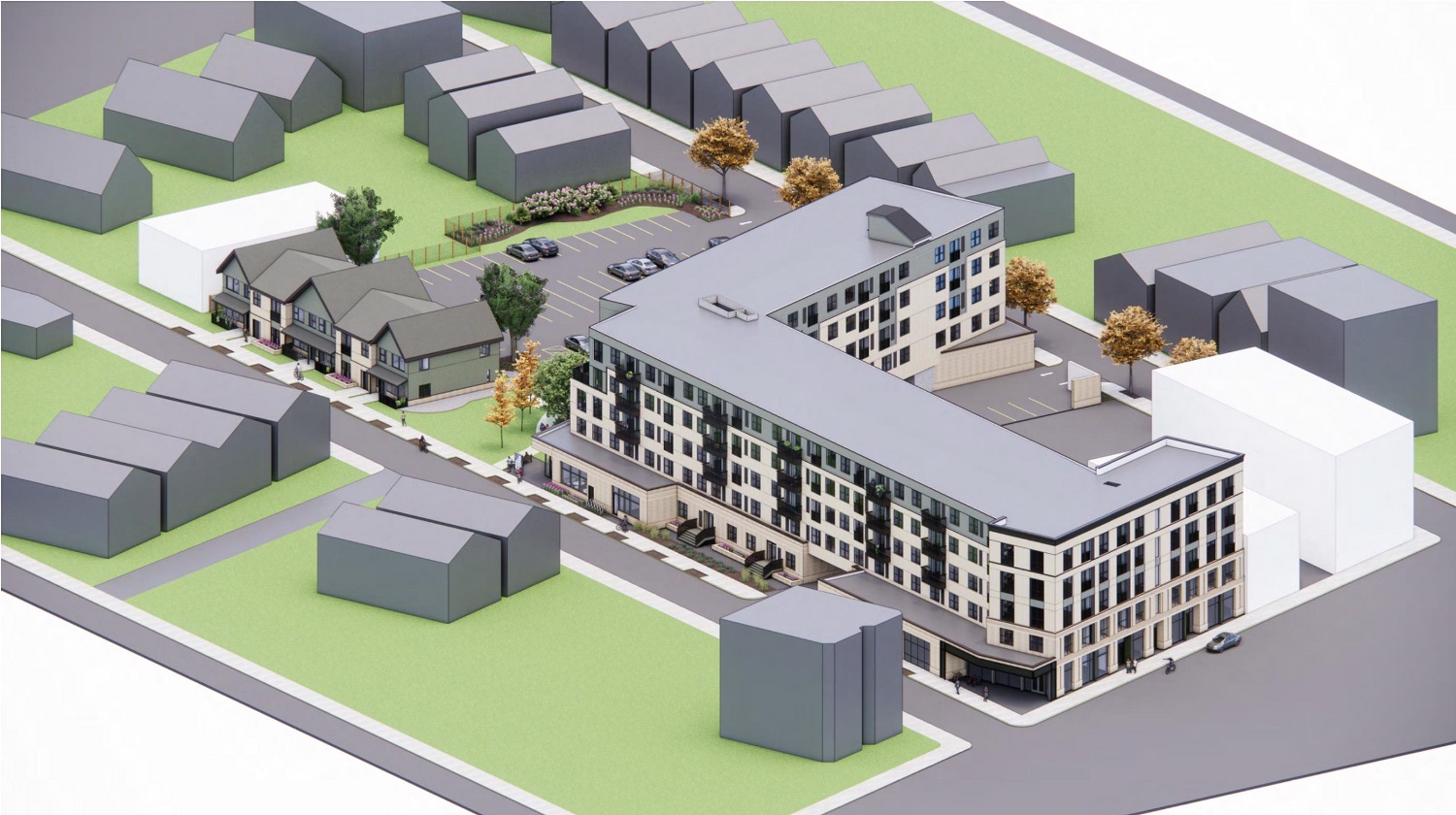
Although the 2-acre site of the former Watterson Lake School is not as large as some of the other former school properties, it is difficult to find such a large piece of land to develop in the Detroit-Shoreway neighborhood (Stantec).
This site wasn’t included in RentCafe’s report because a plan for the reuse of the site hasn’t been submitted yet to the city. That could happen in 2026. But that fact shows that there’s still more significant developments that could keep Cleveland near the top of RentCafe’s rankings for some time to come.
On the other hand, the closed Martin Luther King Jr. High School, 1651 E. 71st St., was included. It could be the largest development site in Hough in a century. Built in 1971, MLK Jr. High closed in 2020, and the school’s 11 acres are slated to become more than 300 apartments.
Developer Structures Unlimited is in the process of acquiring the property from the Cleveland Metropolitan School District. A certificate of disclosure was requested from the city by the buyer’s title company at the end of October, suggesting a deal is near to closing.
Other school redevelopment projects in Cleveland include the vacant land at 7407 Detroit Ave. in Detroit-Shoreway, where the Watterson Lake Elementary School stood. Plans to create 136 housing units plus two ground-floor restaurants recently won zoning variances from the Board of Zoning Appeals.
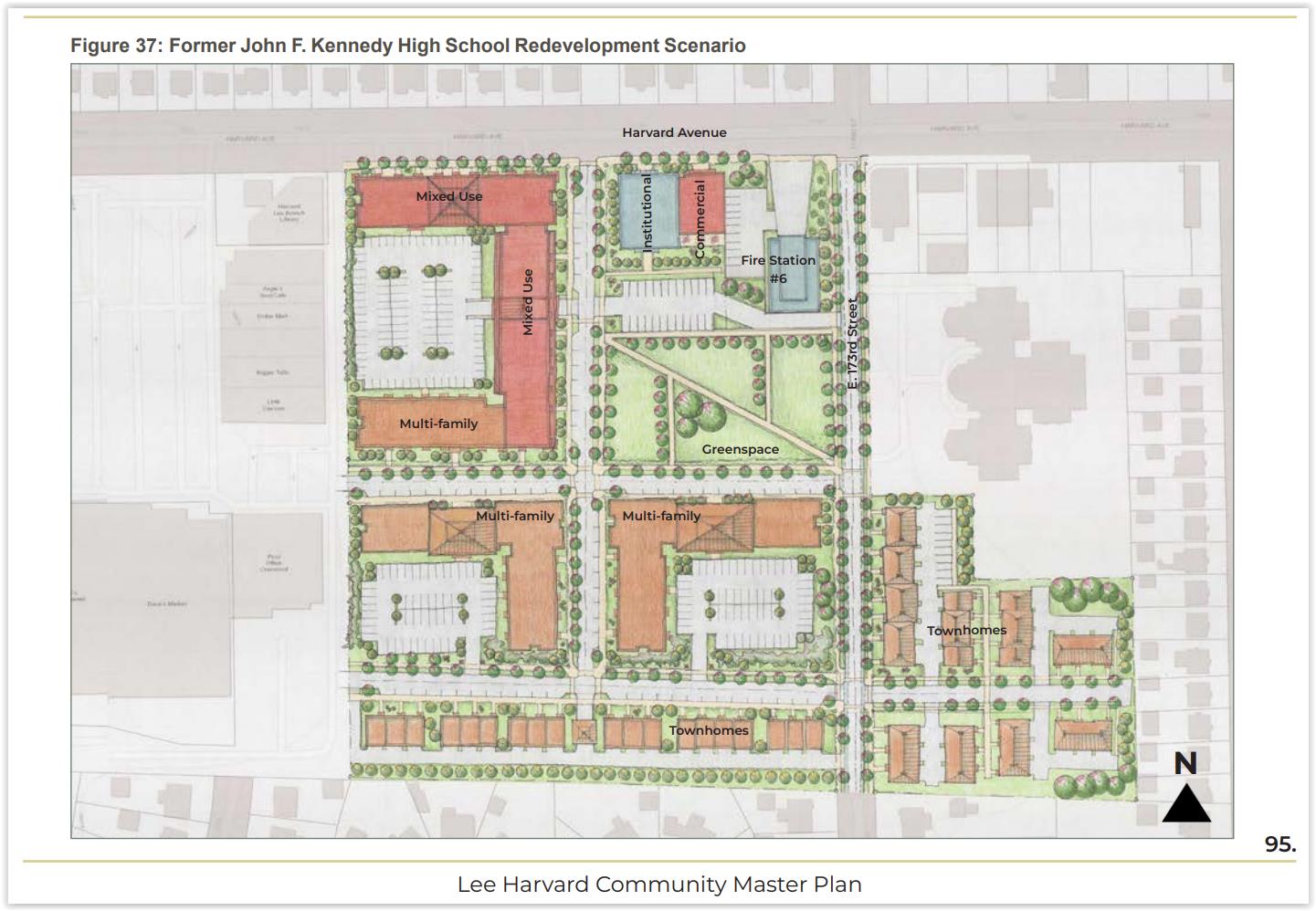
A design concept for the potential reuse of the old JFK High School in Lee-Harvard shows a new walkable town center with new streets, park, shops topped by apartments, multi-family residential buildings and townhomes (APD Urban Planning + Management).
More conversions are the Audubon Junior High, 3055 Martin Luther King Jr. Dr., the Robert Fulton School, 3291 E. 140th St., and the Empire School Redevelopment at 9113 Parmalee Ave. in Glenville. The latter involves a complete makeover into 63 apartments.
At 650 E. 140th in Collinwood, Longfellow School reopened as senior housing two years ago. In June, Hawthorne School, 3575 W. 130th St. in the Jefferson neighborhood, reopened with 37 apartments.
The Cleveland school district plans to close or merge another 29 schools, vacating 18 buildings in a plan announced earlier this month. Enrollment in the district has dropped by half in the past two decades with competition from charter school, smaller families and families moving out of Cleveland.
In total, 12 schools nationwide were successfully transformed into residential buildings last year. Looking forward, 74 other schools across 59 cities are slated for redevelopment in the years to come, thus creating 9,081 units, RentCafe’s report said.
END