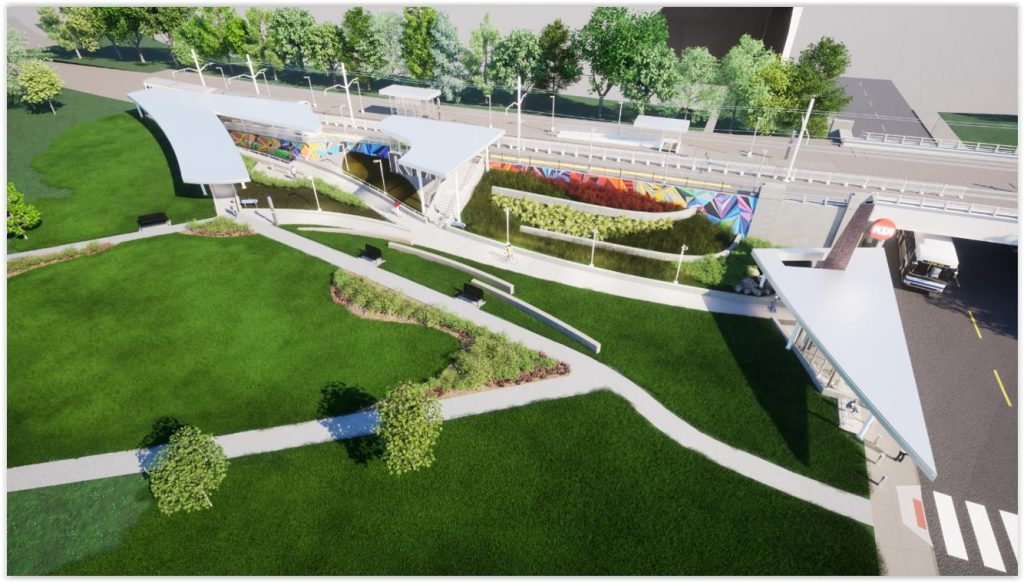
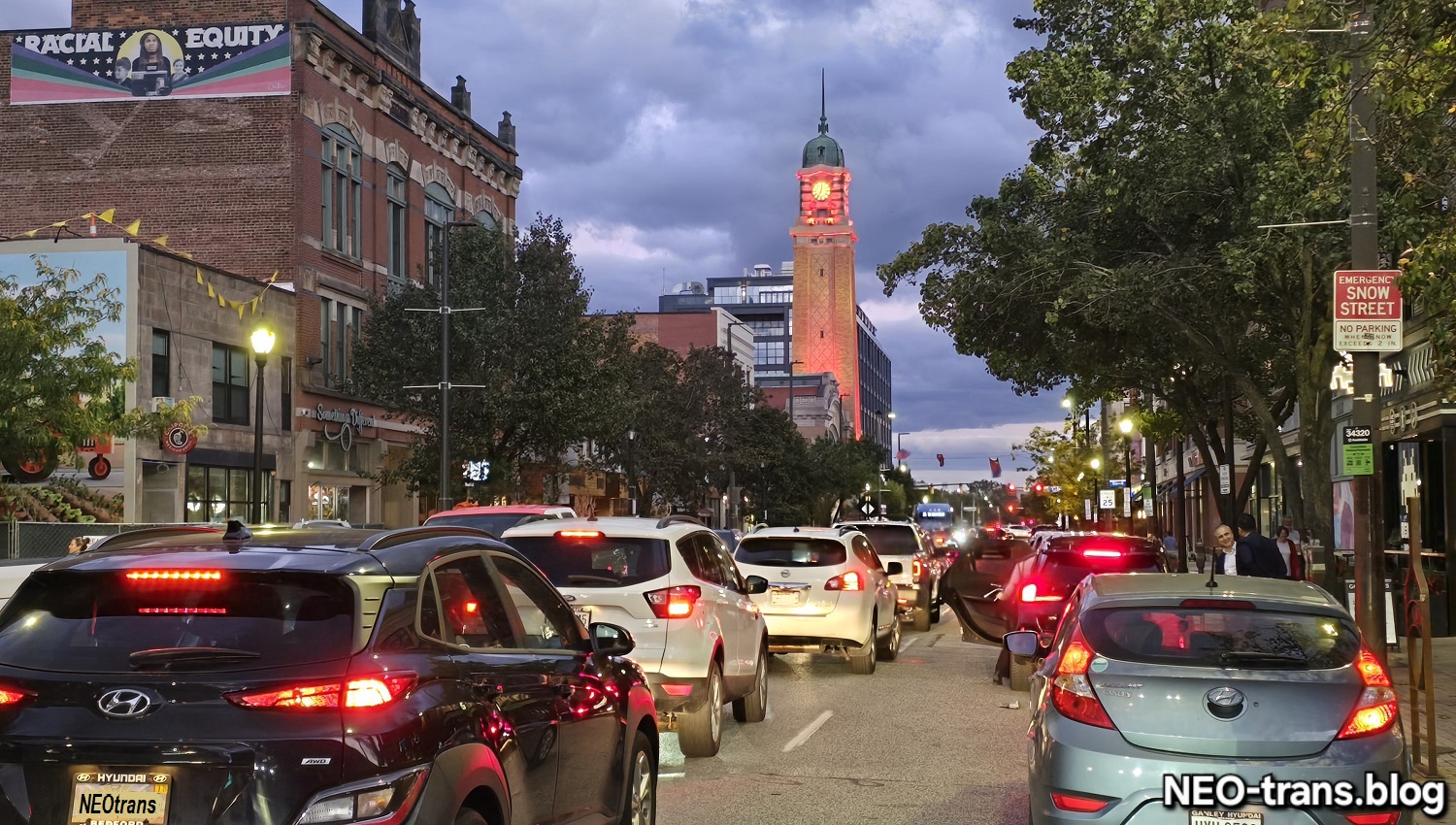
West Side Market stands at the center of the bustling Market District in Cleveland’s Ohio City neighborhood. And its continued renovation got a $5 million boost today in the form of Ohio Historic Preservation Tax Credits (NEOtrans). CLICK IMAGES TO ENLARGE THEM.
West Side Market, Cleveland Milling win max credits
Ten redevelopment projects in Cuyahoga County were awarded historic preservation tax credits today by the Ohio Department of Development. In total, those represent nearly one-third of all winning projects statewide and two Cleveland projects won the $5 million maximum of historic credits.
Those two max winners were the West Side Market at Lorain Avenue and West 25th Street in the Ohio City neighborhood and the Cleveland Milling Company, 1646-56 Merwin Ave. on the Columbus Road Peninsula in the Flats.
They were among more than $75 million in tax credits awarded in this latest round, said Lydia Mihalik, director of the Ohio Department of Development at a press conference today at the West Side Market.
The state’s investment in these properties are intended to preserve 45 historic buildings across the state, spread among 33 tax credit-winning projects representing approximately $681 million in public and private investment. Of that, 10 winning projects are in Cuyahoga County and especially in Cleveland.
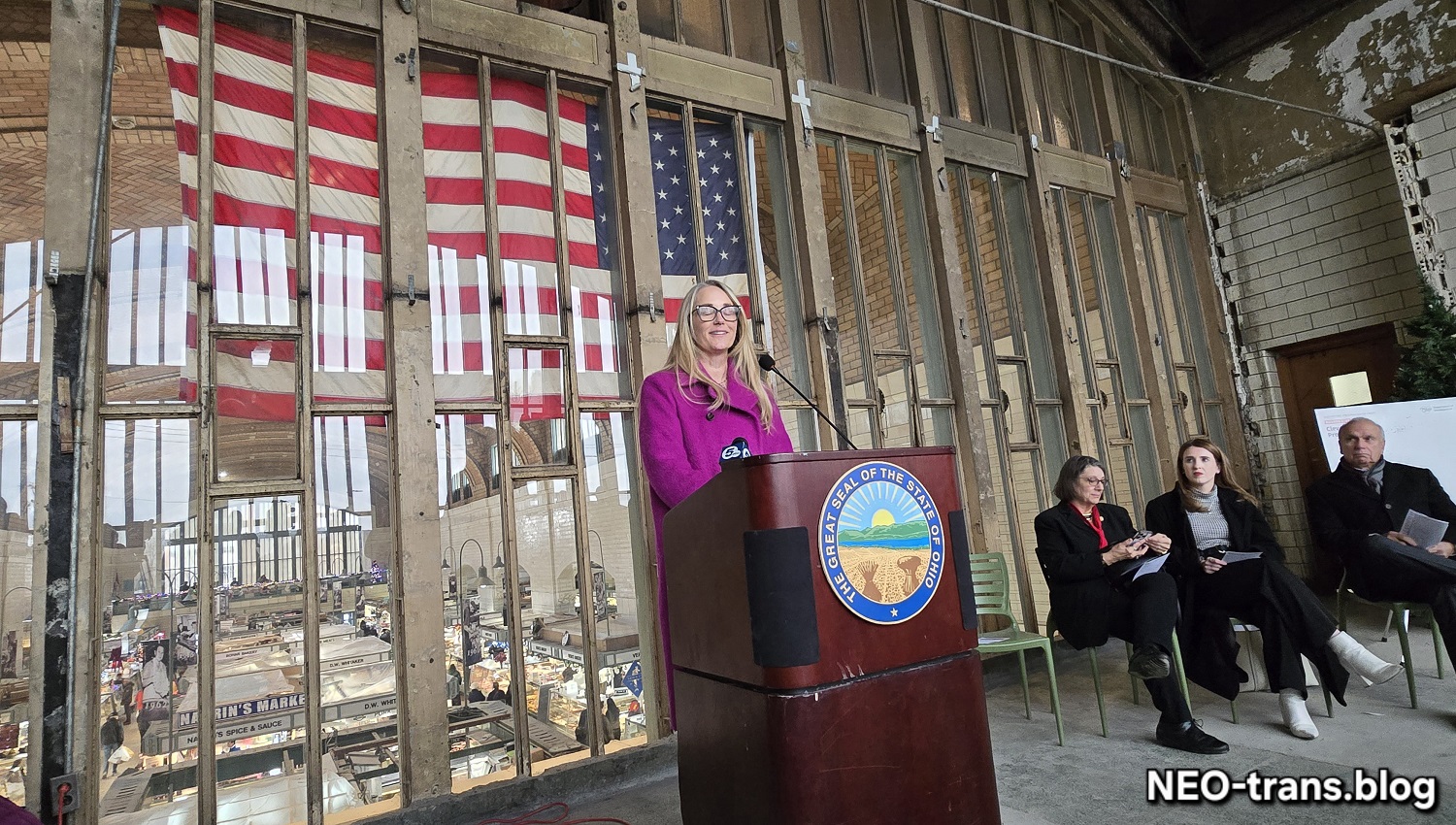
Ohio Department of Development Director Lydia Mihalik announces the latest round of Ohio Historic Preservation Tax Credits at the West Side Market. She is flanked by state lawmakers Sen. Nickie Antonio, Rep. Bride Rose Sweeney and Rep. Daniel Troy (NEOtrans). CLICK IMAGES TO ENLARGE THEM.
“Cleveland’s historic landscape is not only intact, it is thriving,” Mihalik said to a large group of public- and private-sector representatives. “And every one of you here today is a part of that story through this round of the Historic Preservation Tax Credit program.”
One of those was Jessica Trivisonno, Mayor Justin Bibb’s senior advisor for major projects. As a senior strategist, she recently oversaw the stabilization of the West Side Market until it was handed off to the non-profit Cleveland Public Market Corporation to manage.
The 1912-built West Side Market has more than 70 food-related vendors. Trivisonno said the historic credits will protect a place that anchors a community, supports small businesses and tells a story of who we are as a city.
“I might be biased because I worked on the West Side Market for two years, but I don’t think there’s a better example of that than where we are today,” she said. “For more than a century, the West Side Market has stood as one of Ohio’s most iconic public markets architecturally. As you can see, it’s wonderful.”
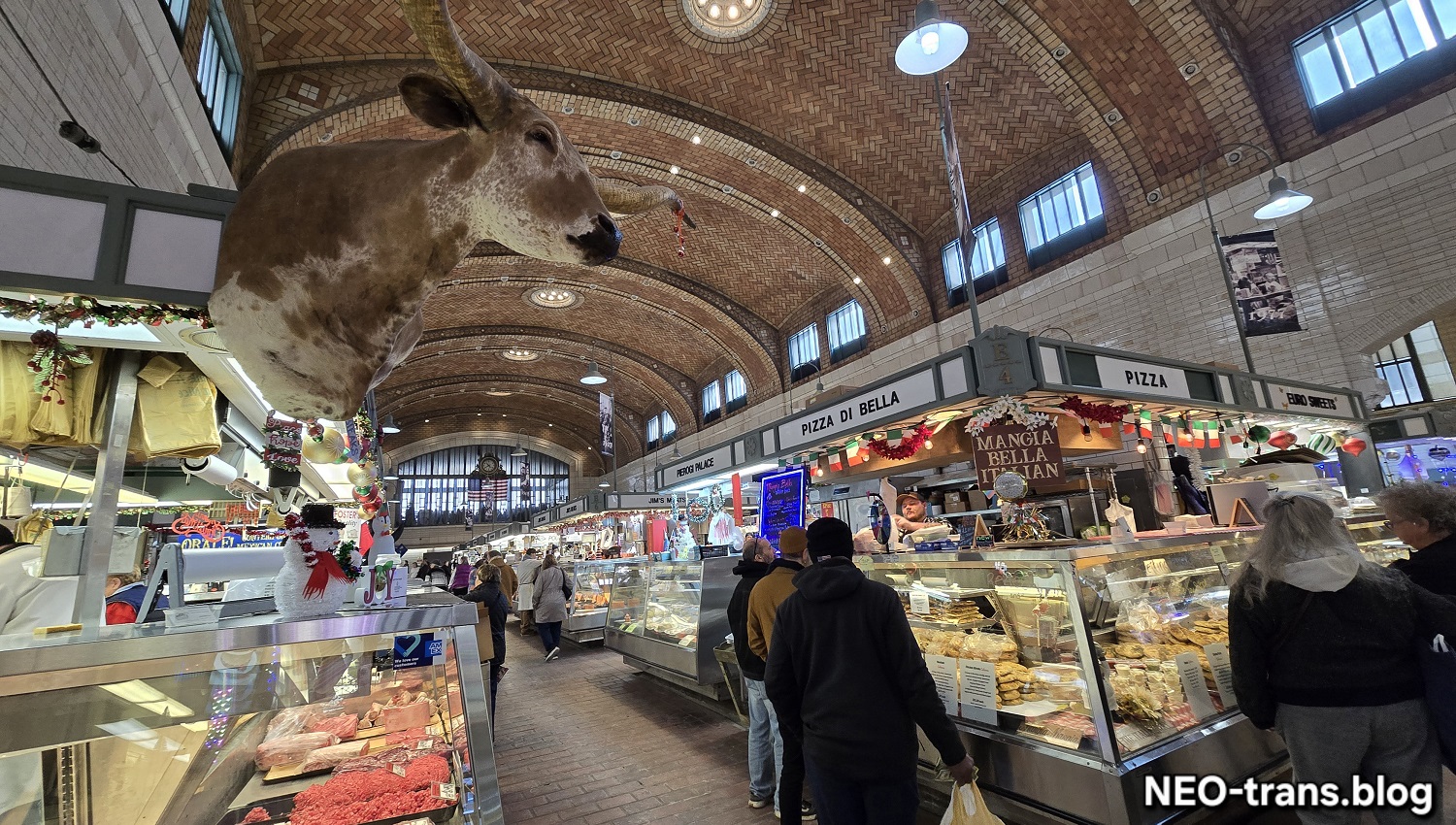
Holiday shoppers browsed the many food-related offerings of more than 70 vendors at the West Side Market (NEOtrans).
The $5 million max credit will support renovations totaling more than $71.33 million. That work will enhance infrastructure, accessibility, and building systems while activating underutilized spaces. New event spaces, a courtyard, and food hall will be added.
The other max credit awarded to a Cleveland will boost a newly reported development, The $61.6 million Cleveland Milling Company redevelopment in the Flats, near the Center Street bridge, will convert a vacant flour mill into a mixed-use development featuring hotel accommodations and commercial tenants.
Cleveland Metroparks is the property owner and will lease the site to a partnership of Ceres Enterprises LLC of Westlake and LaPine Development LLC of Shaker Heights. Ceres Enterprises, along with LaPine Development, have built and operated seven hotels in Ohio and Indiana.
“The Cleveland Milling Company project represents the first phase of a broader redevelopment effort intended to reimagine and revitalize the historically industrial Columbus Peninsula in Downtown Cleveland,” the state historic tax credit application noted.
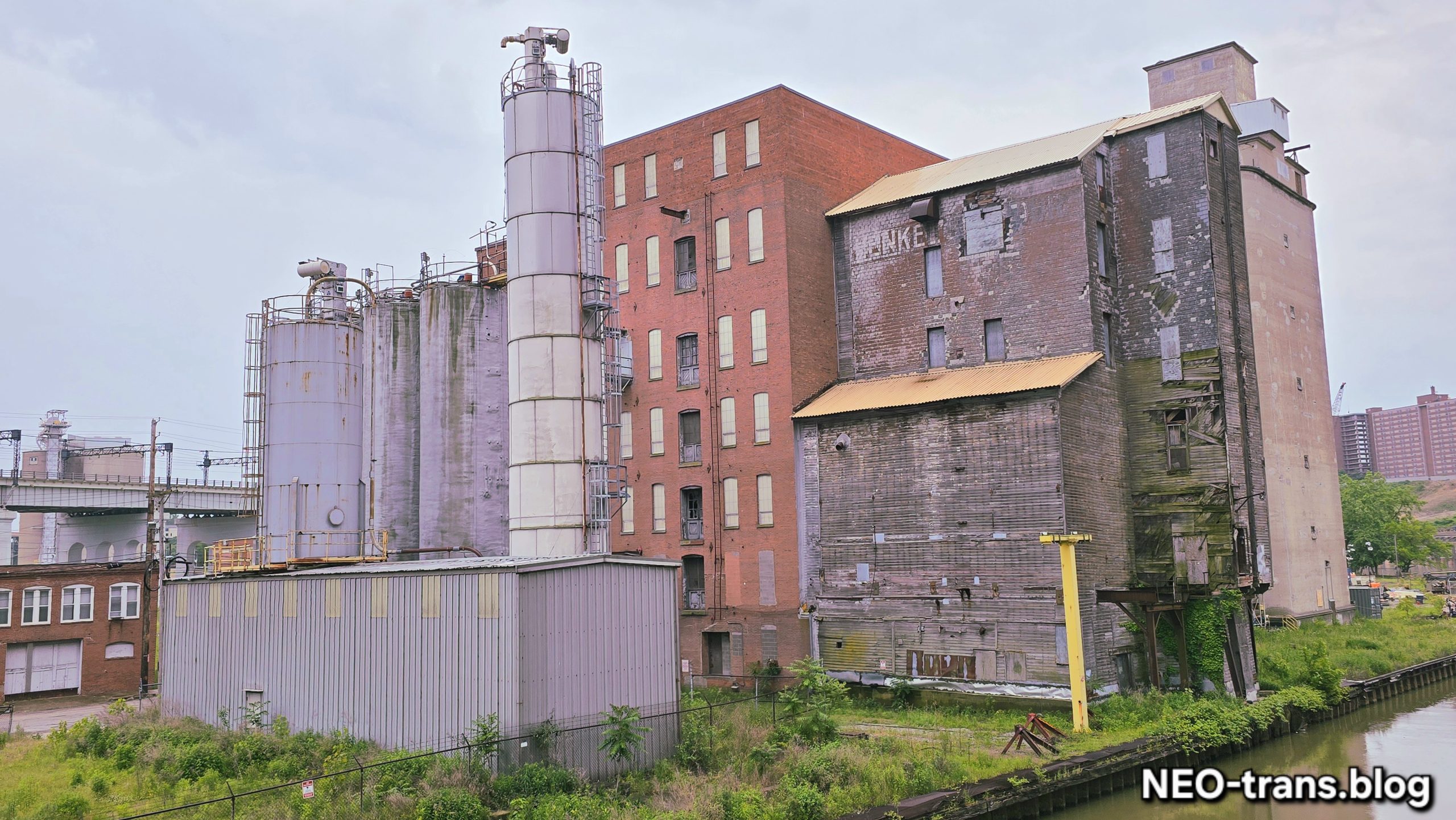
The Cleveland Milling Company was most recently known as the Grain Craft flour mill, located along the Cuyahoga River in the Cleveland’s Flats. It will be renovated into a hotel, restaurants, cafes and other businesses (NEOtrans).
The project will be “creating a mixed-use district to complement Cleveland Metroparks’ planned improvements to an adjacent park and associated construction of a multi-purpose trail along the Cuyahoga River,” it continued. Mixed uses include restaurants, retail and even a data center.
With the state tax credit, 100 percent of the project’s financing is in place, Ceres’ application noted. Redevelopment of the mill’s multiple structures totaling 120,000 square feet is due to start in January 2027 and be completed about 2.5 years thereafter.
Other Cuyahoga County projects winning Ohio Historic Preservation Tax Credits today were:
In downtown Cleveland, the New England Building, 629 Euclid Ave., won $3.25 million in historic tax credits to support the building’s $41.5 million updating and transition from one hotelier to another.
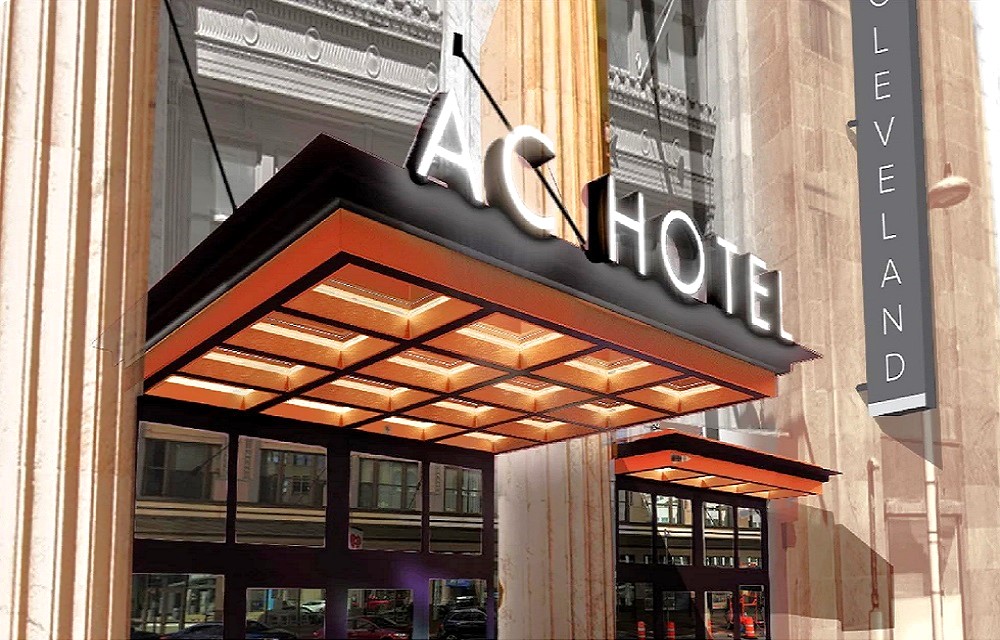
Renovations will start this winter to convert the Holiday Inn Express in Downtown Cleveland into the first AC Hotel by Marriott located in the city’s central business district (SA Group).
Since 1999, the 1896-built New England Building has accommodated a Holiday Inn Express. It will become the first AC Hotel in Downtown Cleveland. The building will gain an upgraded lobby, refreshed accommodations, and restoration of historic storefronts to enhance its downtown presence.
Also downtown, but in the Warehouse District, the Miller Building, 1281 W. 9th St., will be renovated for $1.3 million thanks to $312,500 in state tax credits.
Constructed in 1886, the Miller Building showcases Eastlake-style brick and stone masonry. The existing bar and restaurant on the ground floor will remain while the long-
vacant upper three floors will be converted into five apartments.
On the east side of downtown in the Superior Avenue Historic District, the State Chemical Manufacturing Co./ Superior St. Baptist Church, 2435-41 and 2445-51 Superior Ave., are due to get a $11.1 million rehabilitation, boosted by a $1.1 million historic tax credit award.
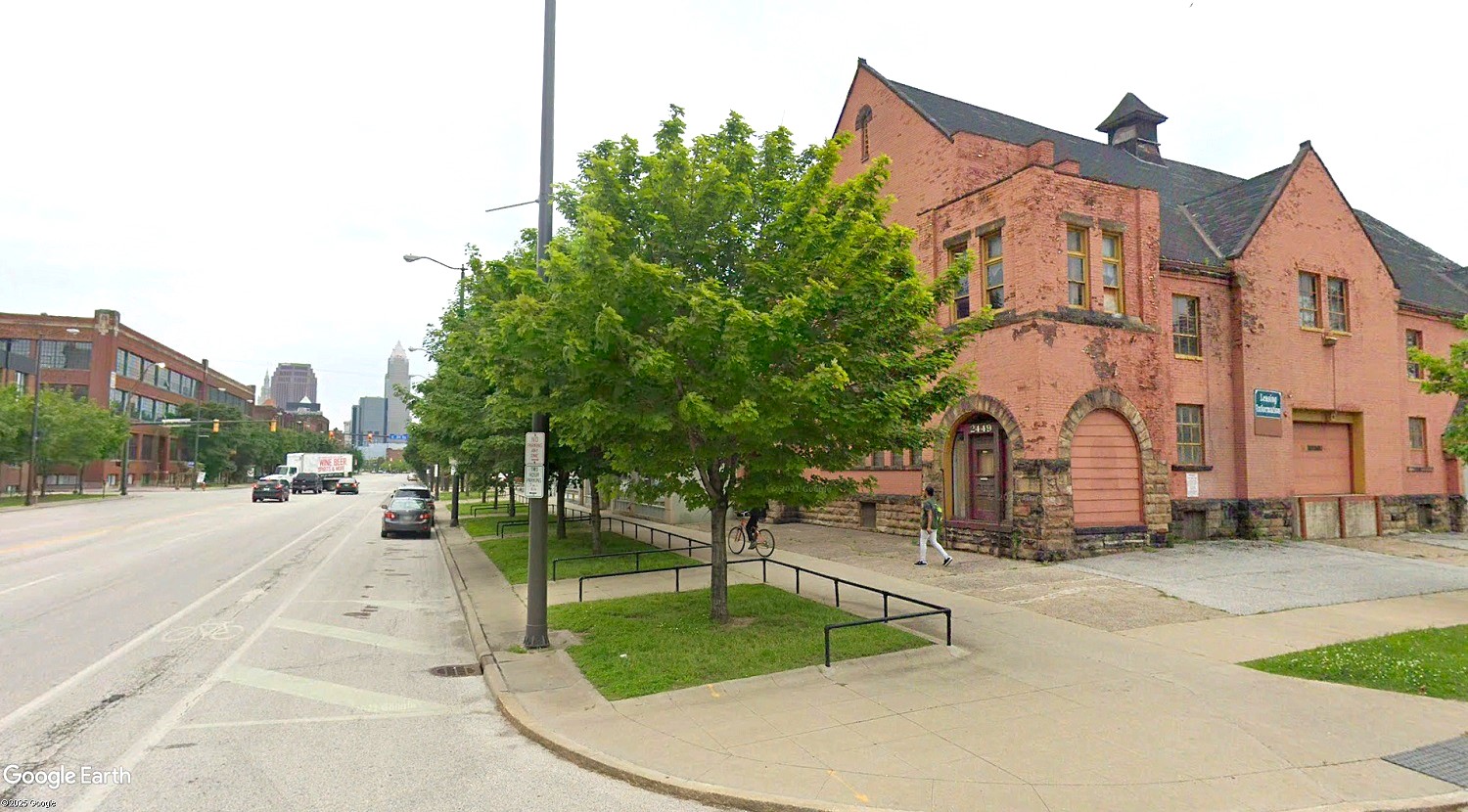
The Superior Avenue Historic District will gain more renovated buildings with updates to the State Chemical Manufacturing Co./ Superior St. Baptist Church seen at right (Google).
This project includes two vacant neighboring buildings that were built in the early 20th century. The structures were connected in the 1940s as the church moved out and the chemical company next door incorporated the building into its operations.
After rehabilitation, the buildings will feature restaurant, event, gallery, and office spaces, contributing to the area’s ongoing revitalization that includes a new headquarters for CrossCountry Mortgage, new Cleveland Division of Police headquarters, plus new apartments and cafes.
The Case Building, 1450-58 W. 25th St., Cleveland, won $960,000 to support a $6.8 million redevelopment of the historic building for law office use, while retaining the historic windows and constructing a compatible new storefront that respects the building’s architectural character.
Situated within Ohio City’s West 25th Street-Detroit Avenue National Register Historic District, the Case Building has housed a wide array of commercial tenants over the decades — from showrooms and rug sellers to utility companies and an auto parts distributor.
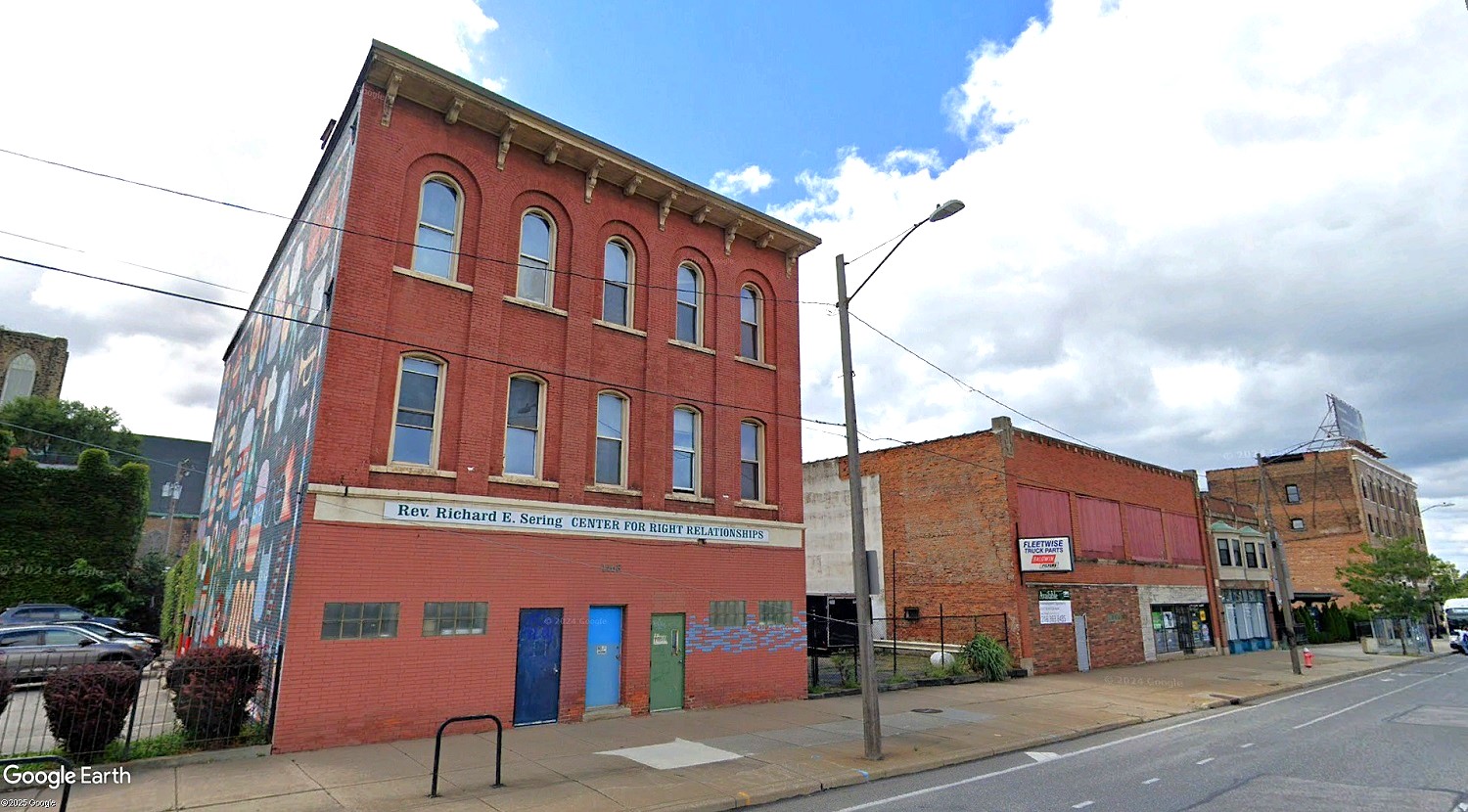
The two nearest buildings are the three-story S.N. Nelson Block and the two-story Case Building. Separately, these redevelopments won historic tax credits today (Google).
The building next to the Case Building won credits, too. The S.N. Nelson Block, 1468-72 W. 25th St., was awarded $813,000 for a $6.75 million renovation project.
Built in 1868 by S.N. Nelson, this Italianate-style commercial building will see its upper floors converted into five residential units and the ground floor into commercial space. Three new townhouses will also be added to the parcel.
Over in Cleveland’s MidTown neighborhood, a new attempt at redeveloping the former Holiday Inn, 3614 Euclid Ave., got a $3.3 million boost from the state’s historic tax credits. A previous plan proposed renovating it as a Delta by Marriott Hotel.
Now, a $33 million renovation of the 1965-built, 10-story hotel is envisioned to be converted into 198 residential units with dedicated amenity spaces. All mechanical systems will be upgraded, including new elevators to improve accessibility and functionality.
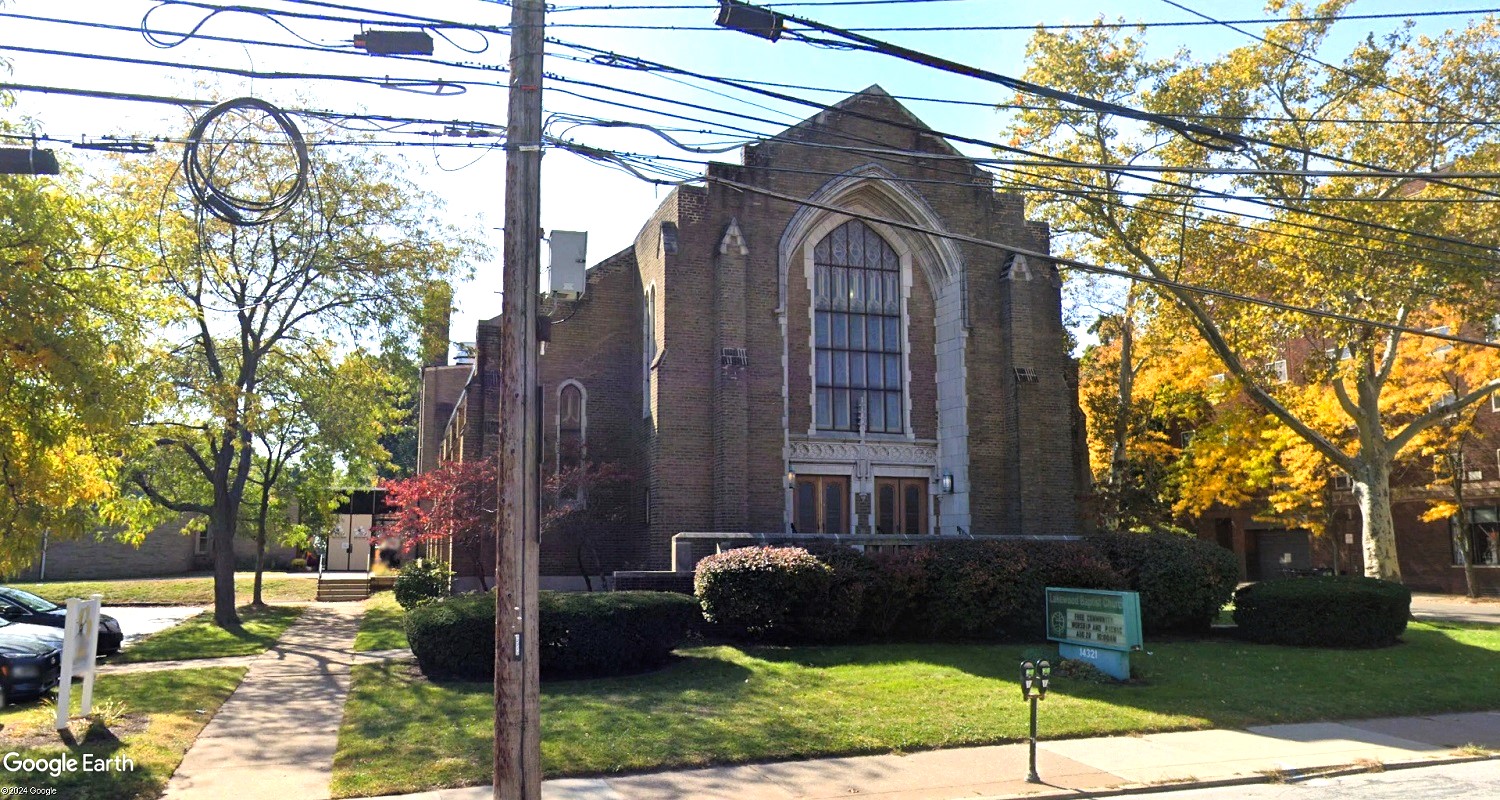
By winning an historic tax credit award today, the Lakewood Baptist Church may have been saved from the wrecking ball (Google).
The Lakewood Baptist Church, 14321 Detroit Ave., recently proposed to be demolished, will instead be rehabilitated into a daycare and early childhood learning center.
With a projected cost of $6.17 million, a $1.5 million historic tax credit will renovate the 108-year-old church with classroom and recreation spaces. The original stained glass and woodwork will be preserved alongside upgrades to safety and mechanical systems.
In Cleveland’s Westown neighborhood, the former McKinley School, 3349 W. 125th St., got a $1.82 million tax credit boost. It will support a $18.26 million renovation of the 1921-built school.
It will remain a school — the Global Ambassadors Language Academy, a K-6 language immersion charter school. Renovations will address water damage and reconfigure interior spaces to include a new cafeteria.
END