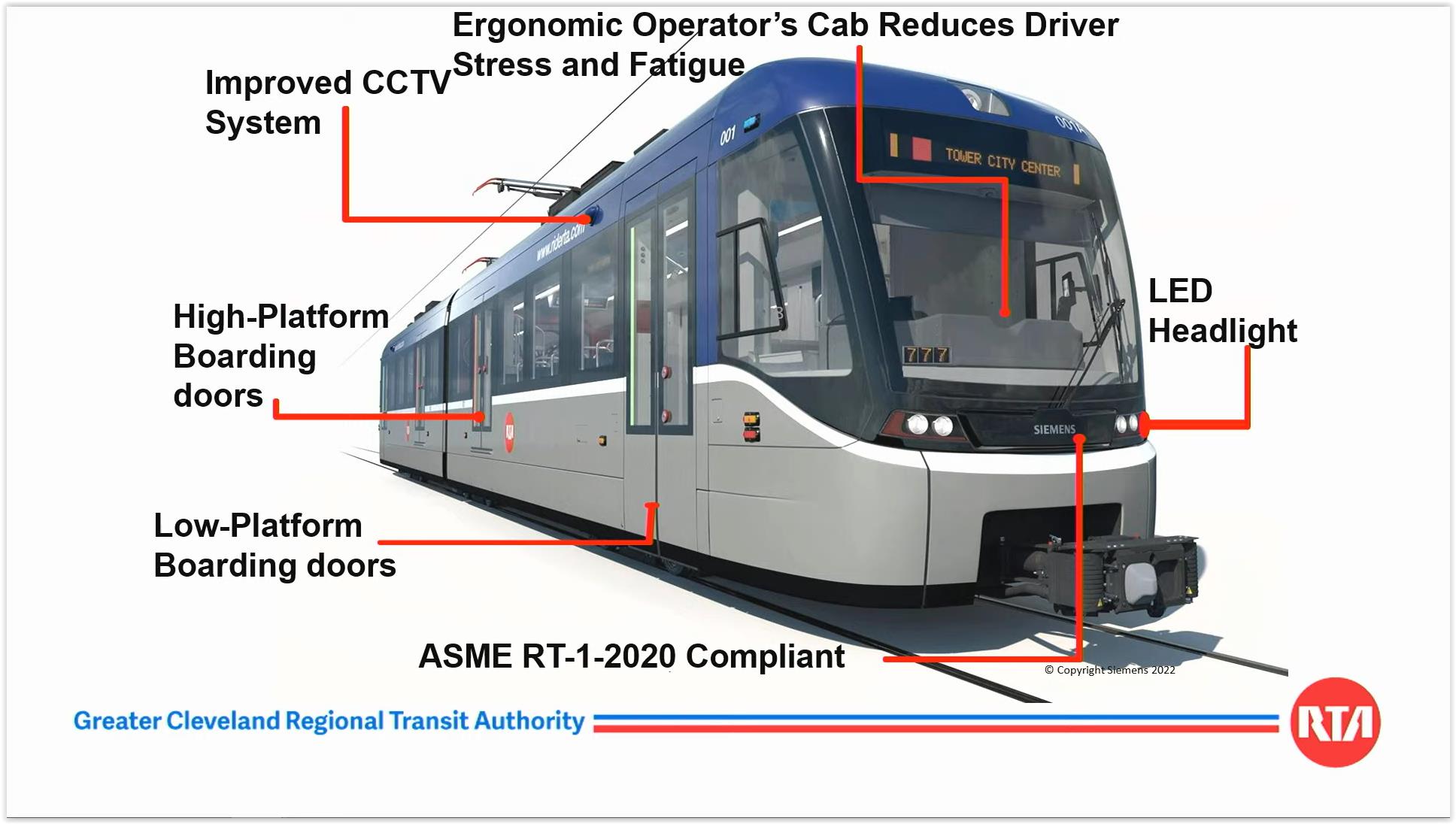
The first new rapid transit trains in Cleveland since the Reagan Administration are due to arrive here in June. But the general public won’t be able to ride them in regular service until the following summer (Siemens Mobility). CLICK IMAGES TO ENLARGE THEM.
Stations to be modified for new trains

Among 45 U.S. cities with urban rail transit systems, Greater Cleveland has the nation’s the oldest train fleet. The first tangible evidence of that changing will arrive in June when the Greater Cleveland Regional Transit Authority (GCRTA) is expected to receive its first new rapid transit railcars since 1985.
That and other railcar-related announcements were made today at a series of GCRTA Board of Trustee committee meetings where trustees also recommended awarding tens of millions of dollars in bids to contractors to modify rail stations and maintenance facilities to accommodate the new trains. The GCRTA Board could approve the recommendations at its Jan. 20 meeting.
In its proposed recommendations, GCRTA staff outlined the preliminary steps for introducing the trains into regular service after facility modifications are made, operating and maintenance crews are trained and the trains themselves are tested prior to being cleared for passenger service. Siemens Mobility is manufacturing the new trains at its USA plant in Sacramento.
The Operational Planning & Infrastructure Committee recommended hiring primary contractor Schirmer Construction LLC and a subcontractor Forest City Erectors for $11.1 million to retrofit 22 platforms at 14 stations along the 18-mile Airport-Downtown-Windermere Red Line, said Donald Tereba, GCRTA’s engineer and project manager of facilities.
Most of the work involves widening the platforms for the new trains that are 15 inches narrower than the 1984-built Tokyu trains that run on the Red Line. GCRTA limits the gap between station platform edges and train doorways to no more than 3 inches to comply with federal disabled access requirements, Tereba explained.
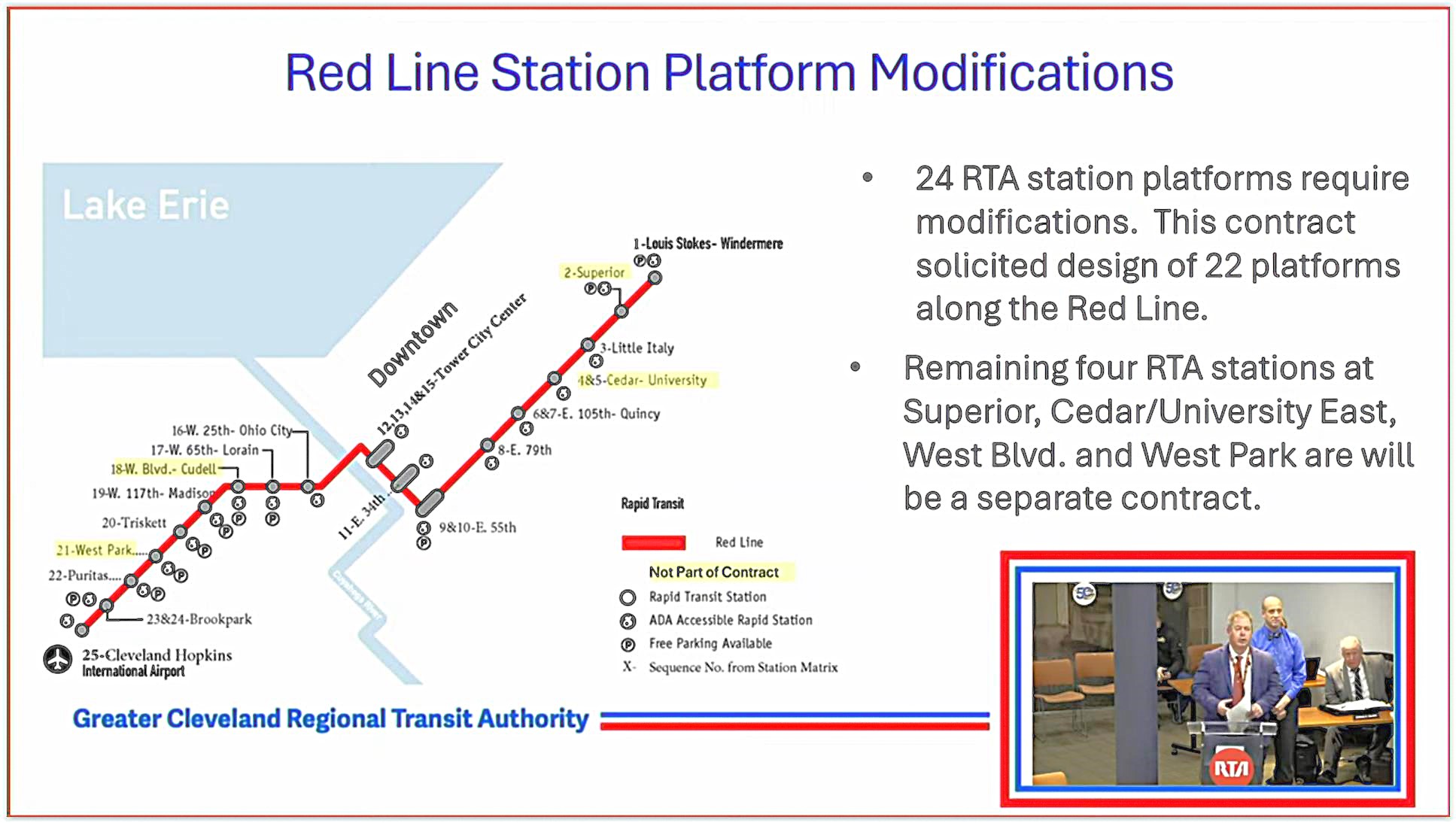
All 18 stations on the Airport-Downtown-Windermere Red Line will see their platforms widened by 7.5 inches next to each track to account for GCRTA’s new, more narrow trains. Four of them, highlighted in yellow, require more extensive repairs and will be the subject of a separate platform modification contract later this year (GCRTA).
Initially, crews will install brackets below the edges of the platforms before July 2027 as well as making structural repairs to some platforms, replacing the tactile edge surfaces along the tops of platforms and, at three stations, lengthening platforms. Those three stations with shorter platforms are Brookpark, East 55th Street and Windermere. The new trains are 10 feet longer than the Tokyus.
“Some of the station platforms have been rehabbed in the last 10 to 15 years — they’re in fairly good shape,” Tereba said. “Some of them are in very poor shape. We figured as long as we’re out here working, the areas that need restoration and repairs, we’re going to do them at this time.”
The final piece, a composite strip, will be added and will widen the platforms. Once added, the Tokyus will not be able to use the Red Line anymore. The strips will be installed during two anticipated two-week shutdowns of the Red Line, tentatively scheduled for July 2027.
The east-side Red Line will be shut down for two weeks first. Then a second two-week shut down will occur on the west-side Red Line. After each shutdown, the new trains will begin operations on each half of the Red Line. The work includes four platform edges at the multi-track station at Tower City Center downtown.
That timetable is tentative because it is not yet proven. To prove the concept, GCRTA will turn the center track on the west half of the Tower City station into a test site.
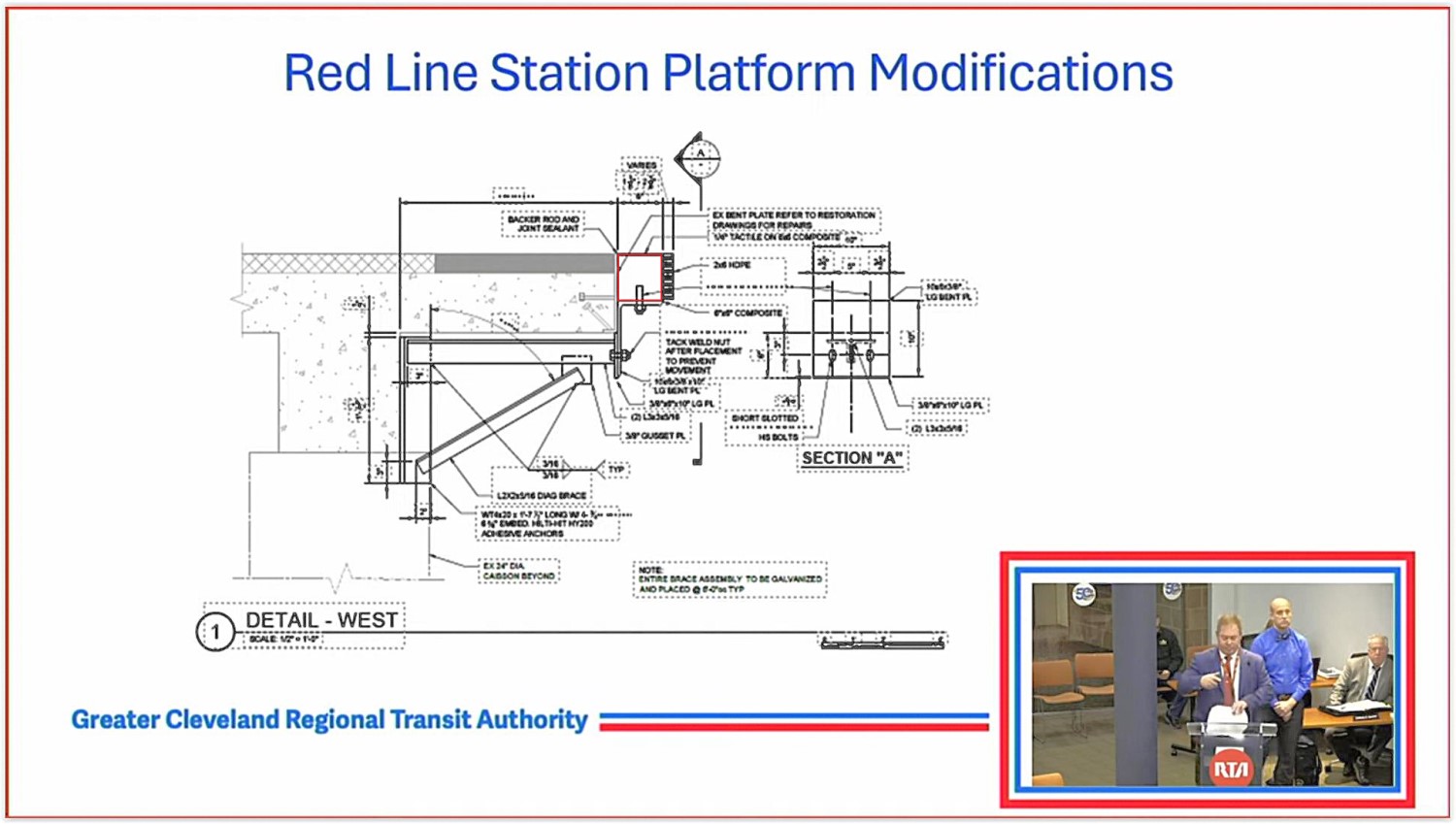
A view of how the station platforms will be widened with a supportive bracket, composite strip and other materials. All of the materials except for the composite strip, highlighted in red, will be added with the existing trains running. The composite block that widens the platforms will be added during two tentative two-week shutdowns of the Red Line east and west of downtown (GCRTA).
“We are going to spend a month doing a proof of concept where the contractor will put in the bracketing, they will test the modular pieces, and we will have them do some dry runs on how long it takes to install and de-install when we have a new railcar actually here,” said Michael Schipper, GCRTA’s deputy general manager of engineering and project management.
“Once we do that, then we’ll have a better idea about how long we have to do the shutdowns on the east and west ends,” Schipper added. “We’re going to have 18 months to prepare for these very intensive work periods on the east and west.”
GCRTA’s $450 million, 60-railcar replacement program is its most expensive endeavor ever and is funded in part by capital construction grants from the state and federal governments. When complete, the entire three-route, 34-mile rail system will have been standardized with a single railcar fleet.
That promises reduced operating and maintenance costs plus the ability to run any train on any line, including from Shaker Heights to Cleveland Hopkins International Airport.
The Red Line was built 1955-68 as a grade-separated, heavy-rail metro line. The Blue and Green lines, linking downtown’s waterfronts and Shaker Heights, began in 1920 as a streetcar line that operated on its own rights of way east of East 34th Street.
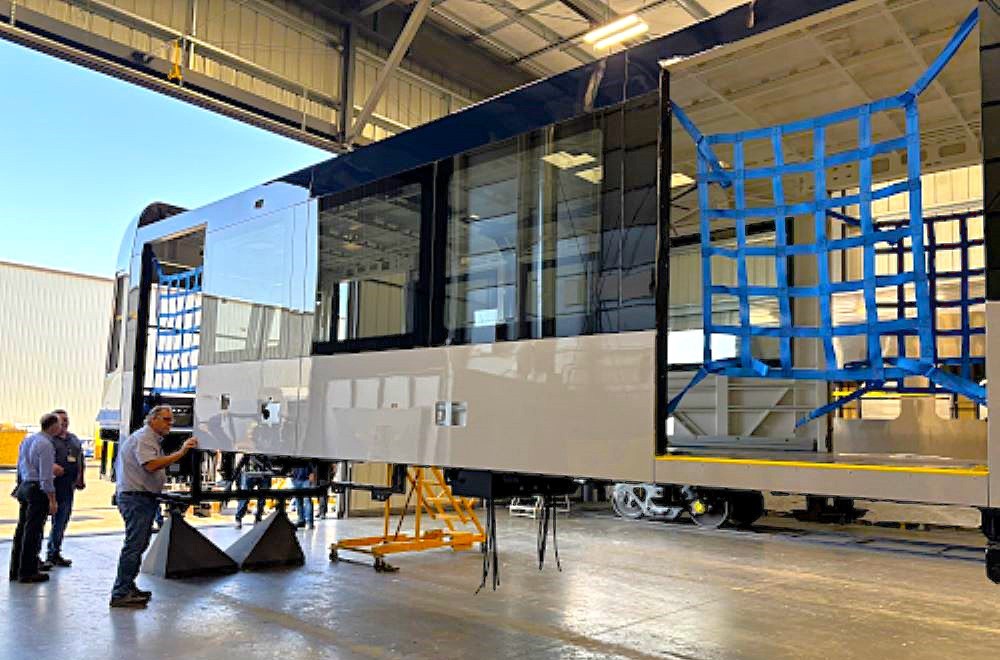
Last year, GCRTA staff visited the Siemens Mobility plant in Sacramento to check on the manufacturing progress of the trains the authority ordered. Next week, GCRTA staff will return to the plant to make a final review of the work before the first trains are scheduled to be delivered in June (GCRTA).
Its early-1980s Breda-built light-rail trains operating on the Blue and Green lines will be replaced by the new Siemens trains starting in August 2028. But the slightly newer Tokyu cars operating on the Red Line were determined to be decaying more quickly and thus will be replaced first.
“This is a significant investment for our community,” said GCRTA Trustee Shanelle Smith Whigham. “This is an opportunity to leverage this new investment to excite people to take more transit.”
Later this year, GCRTA will bid out more extensive repairs and modifications to the Superior, Cedar-University, West Boulevard and West Park stations. Tereba said those station platforms are in worse condition.
Also today, a GCRTA board committee recommended to the full board approval of a $9.5 million contract to Standard Contracting & Engineering Inc. to modify GCRTA’s Central Rail Maintenance Facility on Grand Avenue in Cleveland for the new railcars.
The facility has repair pits below the tracks because GCRTA’s Tokyu and Breda railcars have their air conditioning, power control units and other equipment below the floors of both types of trains. On the new railcars, the same equipment is placed on the roof.
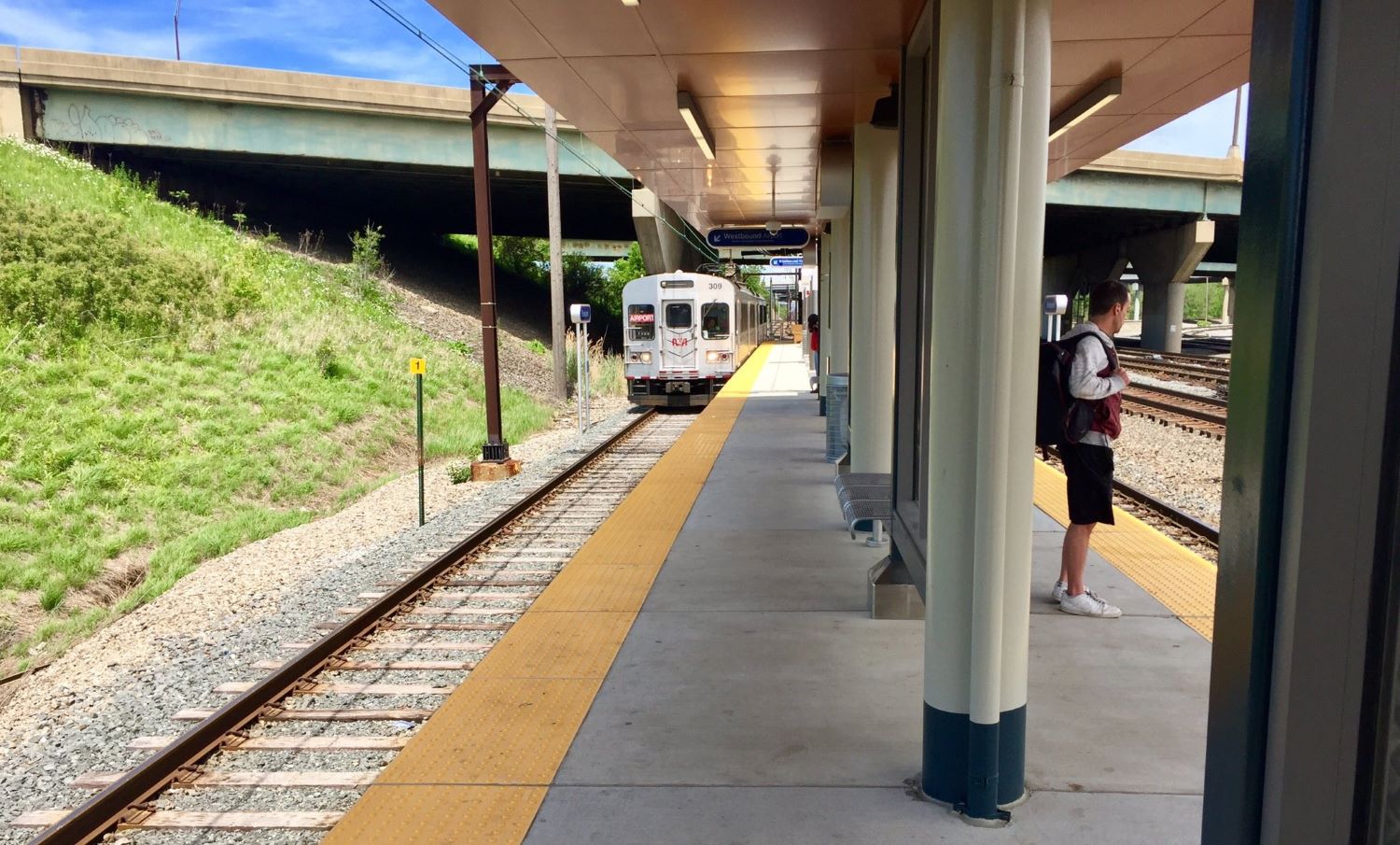
Trackside platforms at all Red Line stations will have to be widened to reduce the gap between the platform’s edge and the doorways on the Greater Cleveland Regional Transit Authority’s new, narrower trains. The new trains will also be longer so some stations, like Brookpark shown here, will need to have their platforms lengthened (Tom Horsman).
So next to three shop tracks, Standard would construct four new service balconies, six new overhead monorail cranes and auxiliary power supplies to support railcar diagnostics when the overhead electric wire is off.
Additionally, a railcar-related change order was recommended to the design of the East 79th Blue-Green Line station whose reconstruction began in May 2025 by R.L. Hill/Platform Contracting Joint Venture. It has two platforms and two so-called “mini-high” platforms.
The locations of its mini-high platforms need to be moved because GCRTA wants disabled patrons to board at the front of trains where the operator is. Mini-high platforms allow disabled patrons who can’t climb the train’s steps to access the train from a low-level platform.
The new railcars can be coupled together and operated by only one employee. Currently, when a second railcar is used on the Blue and Green lines, a second employee is needed to staff it, open the doors and collect fares.
This and a previous change order will push the cost of the $10.5 million East 79th Blue-Green lines station replacement project to just over $11 million and extend its projected August 2026 completion by about one month.
END