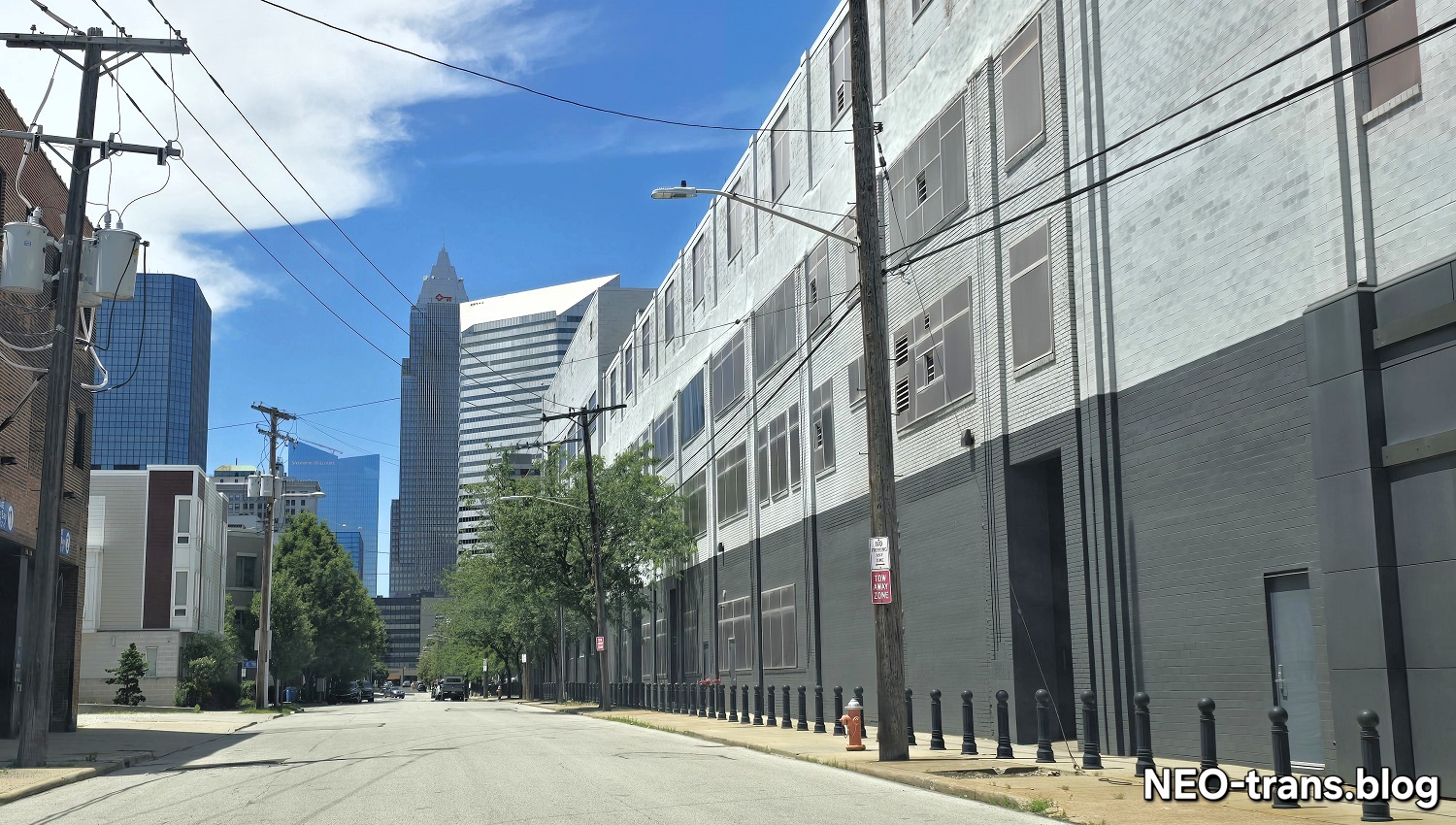
Within its existing building shell at right, which is as long as the new Sherwin-Williams headquarters is tall, the Cleveland H5 Data Center plans to expand its capacity on Rockwell Avenue downtown (NEOtrans). CLICK IMAGES TO ENLARGE THEM.
Project may be affected by moratorium

Plans were submitted today for the expansion of an existing data center in Downtown Cleveland that could be affected by the city’s proposed moratorium on data centers. Unlike a newly proposed data center that was rejected by the city last month, this latest project involves expanding within the walls of an existing structure.
The architect for H5 Data Centers’ Cleveland facility, 1625 Rockwell Ave. in Downtown Cleveland, filed a permit application for carrying out $30 million worth of work inside its 351,000-square-foot structure. The area to be improved within the structure measures 59,720 square feet, the application shows.
“This project includes, but is not limited to: the data center fit-out on floors two and four of Building 4; minor toilet room alterations to floor three of Building 3; associated site work required to support new generators,” wrote Kendra Sorensen, an interior designer at The Foundation Architecture based in Valley City, in the application.
A data center fit-out — often called a white space build-out — transforms a raw data center shell into a functional, secure, and operational environment ready for servers, noted CPG, a data center consultant.
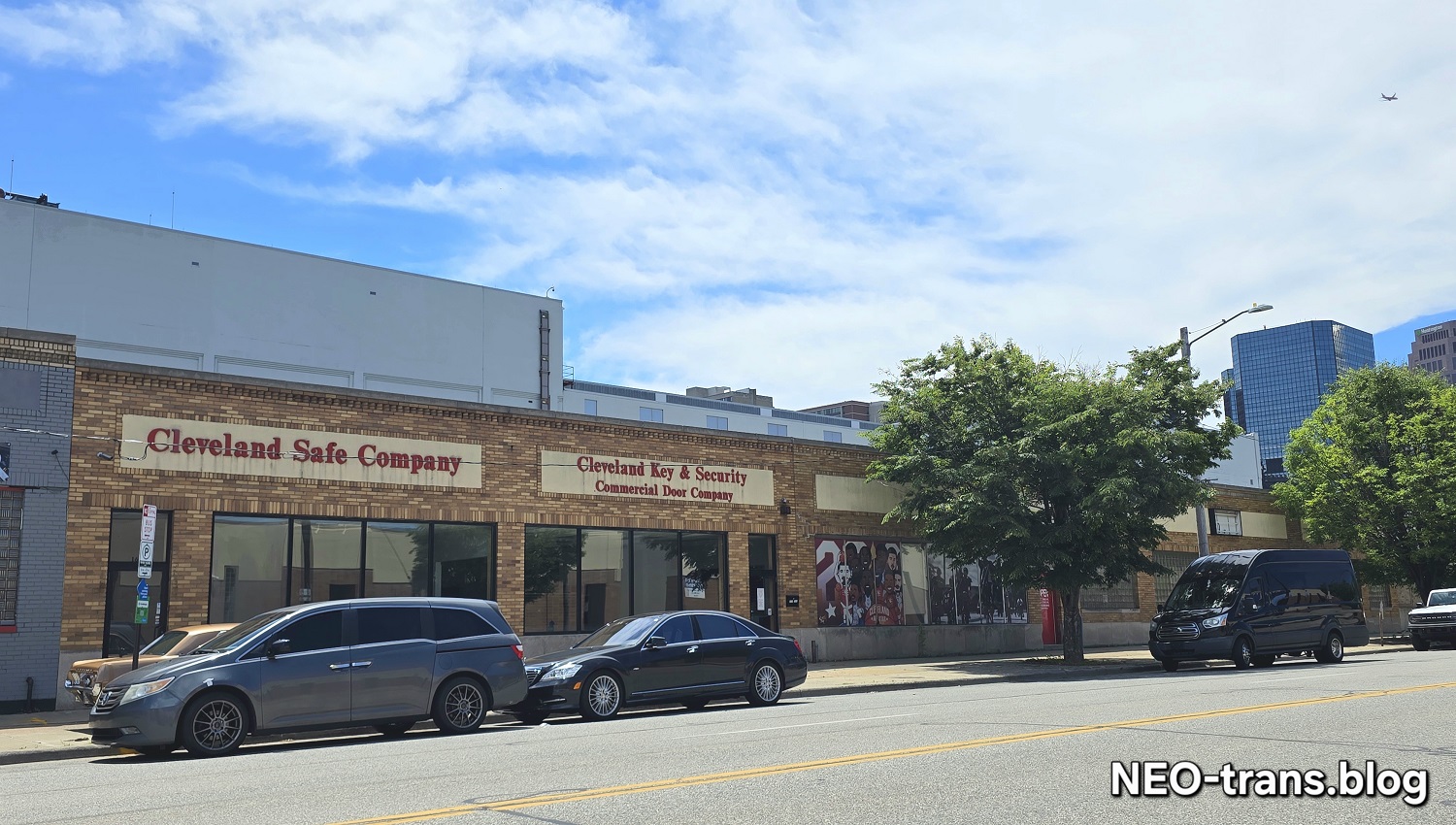
These storefronts along St. Clair Avenue aren’t safe for much longer. The H5 Data Center plans to demolish them for an expansion that includes placing additional backup generators here, behind a decorative wall along the sidewalk (NEOtrans).
That firm said such a project typically involves designing and installing mission-critical power, cooling, cabling, and containment systems optimized to support high-density, information technology hardware.
This expansion is related to the pending demolition of several commercial buildings with storefronts along St. Clair. In April, NEOtrans broke the story that CLE-Infrastructure LLC, an affiliate of H5 Data Centers structures, applied to the city for a permit to demolish 1522-1540 and 1616 St. Clair.
Although that permit application is still pending, most if not all of the businesses located in those buildings have since been evicted. NEOtrans reached out to H5 Data Centers for comment but hasn’t yet heard back.
Those structures would be demolished and replaced by a wall along St. Clair to disguise the presence of the new back-up electrical power generators. The work would be similar to H5’s existing walls around its active generator yards along St. Clair.
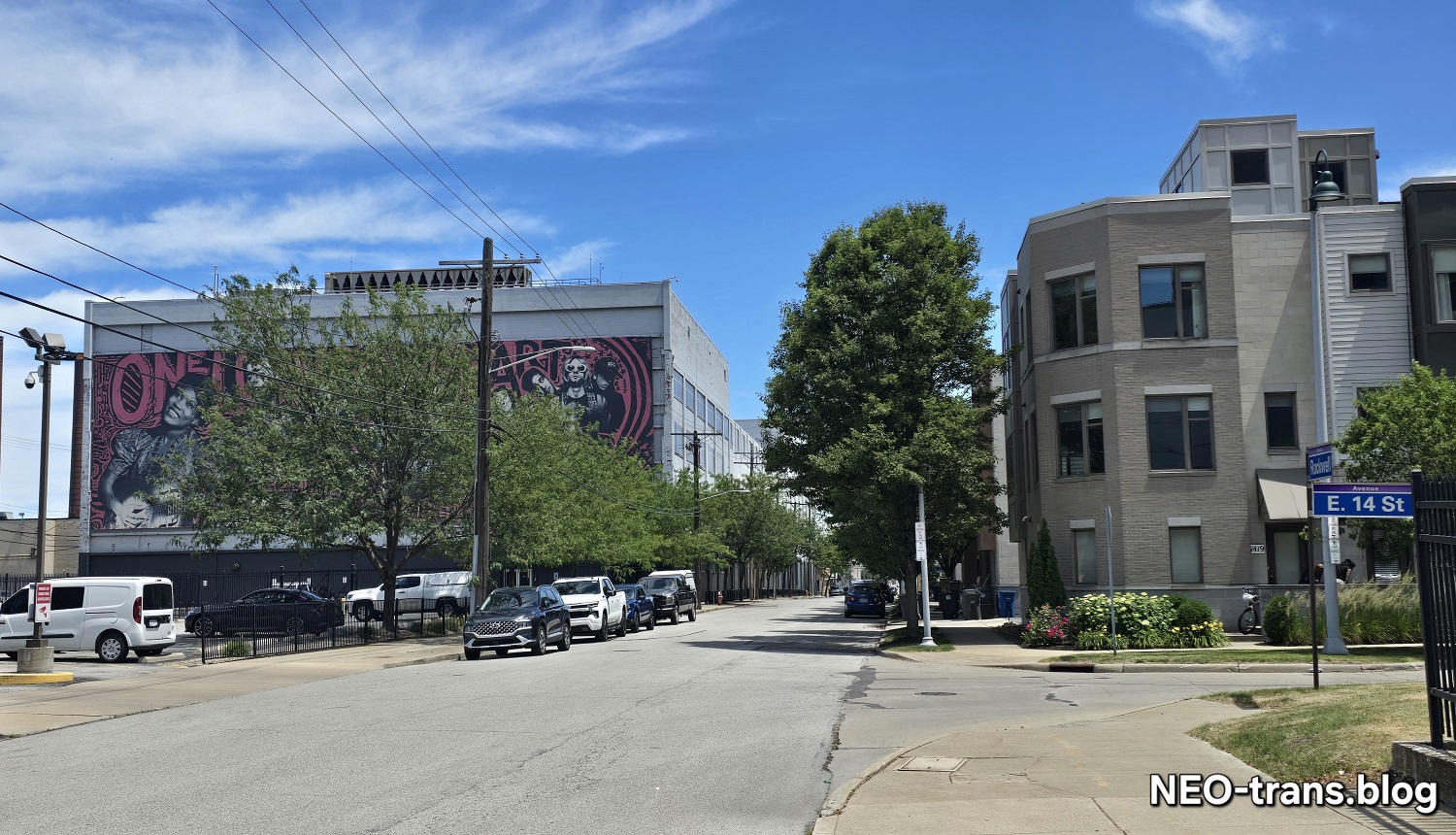
In 2022, City Planning Commission approved plans for H5 Data Center to retrofit the exterior of its historic buildings and to expand westward with an additional building constructed on a portion of its parking lot.
That newly built structure would have held the additional generators which H5 is now seeking to accommodate by demolishing the buildings along St. Clair.
The buildings containing the H5 Data Center were constructed in stages from 1920 to 1978 for The Frankelite Co. lighting factory, 1425 Rockwell. Frankelite faded out operations at the plant in the late 1980s.
The western, most decayed portion of the factory was demolished in the 2000s for parking. The surviving portions of the old Frankelite plant were converted to a data storage facility in the late 1990s because of its proximity to high-capacity fiber-optic telecommunication cables.
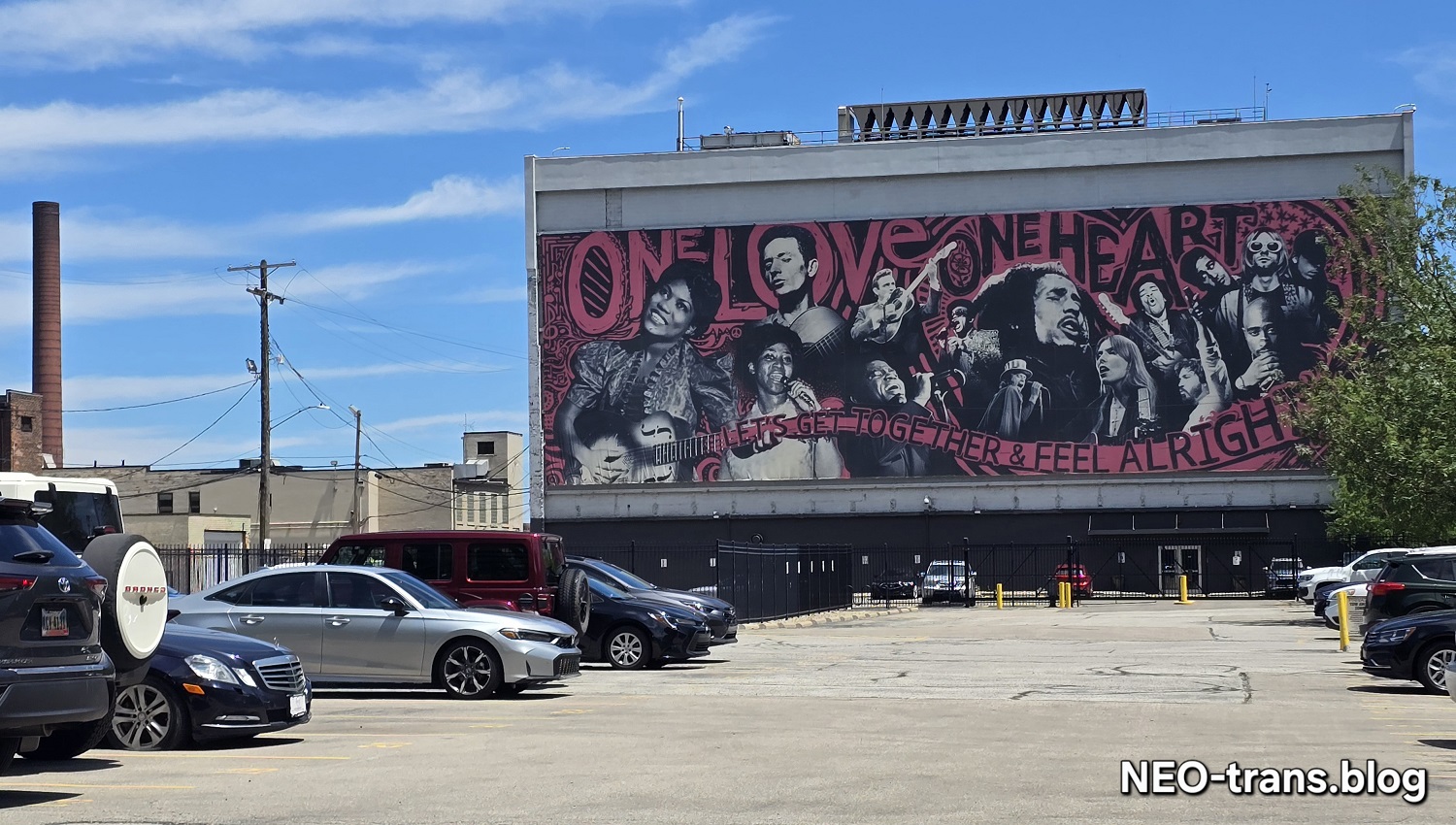
The west end of the H5 Data Center property was where a portion of the old Frankelite lighting plant was demolished. And it was where the data center planned to expand in 2022 (NEOtrans).
Cleveland City Council is considering legislation that would establish a moratorium on issuing new permits or certificates of occupancy for data center uses within the city of Cleveland.
“A moratorium on the review and issuance of zoning permits, certificates of occupancy, and other license or permit applications, including licenses or permits issued by the Department of Public Utilities, for data centers is necessary to enable this council to consider reasonable regulations or prohibitions of the operation of data centers in the city,” the legislation notes.
The moratorium, if passed, would also give Cleveland City Council time, up to May 1, 2027, to review the city’s codified ordinances to consider the impact of data centers on utility infrastructure, said the legislation’s author Ward 15 Councilman Charles Slife.
He was not available for comment on the H5 Data Center expansion or how the moratorium might affect it. Neither was Ward 8 Councilwoman Stephanie Howse-Jones; the data center is located in her ward.
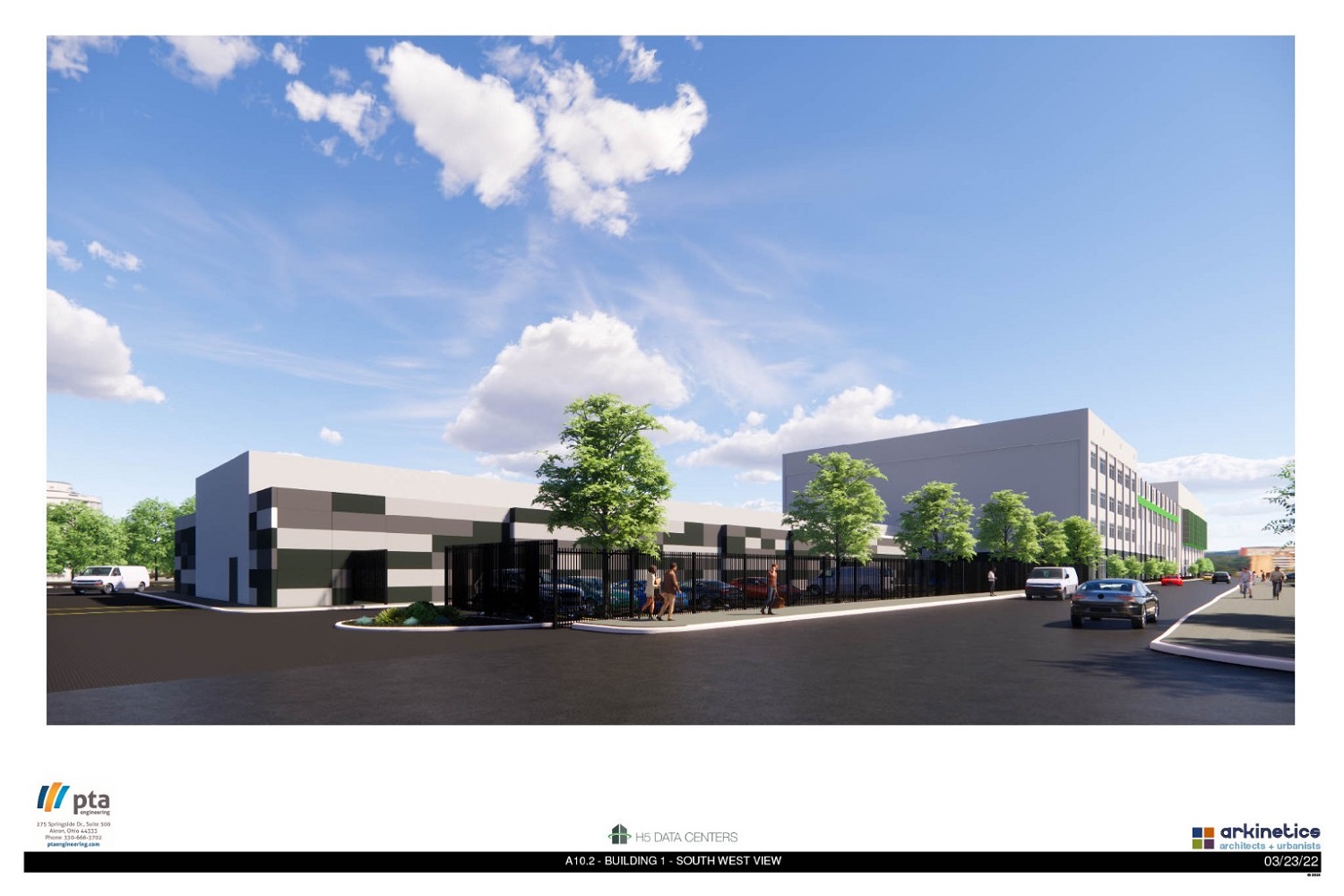
This 2022 rendering, looking east along Rockwell Avenue, shows the new building at left that H5 Data Centers planned to house its new generators. And it shows how the historic buildings would have been clad in a new facade to, in part, help keep the interiors cooler (Arkinetics).
The data center moratorium may not be passed until council returns from summer recess on Aug. 19. It is scheduled to hold one regular council meeting between now and then — July 15.
Last month, NEOtrans broke the story of a new $1.6 billion hyperscale data center planned for a 35-acre former trucking facility site in Cleveland’s Slavic Village neighborhood. That 300,000-square-foot facility would actually be smaller in floor space than the existing H5 Data Center structures downtown.
However, the power usage of the Cleveland H5 Data Center is much less. Its actual power usage is unknown, but it has access to a maximum power capacity of 10 megawatts, according to datacenter.com. The Slavic Village data center would have used 150 megawatts of electricity.
The city rejected the application for the new data center because site plans were not included in the application. However it is not unusual for a new construction project to open a project file on the city Building Department’s Web portal without the planning documents submitted at the outset.
END