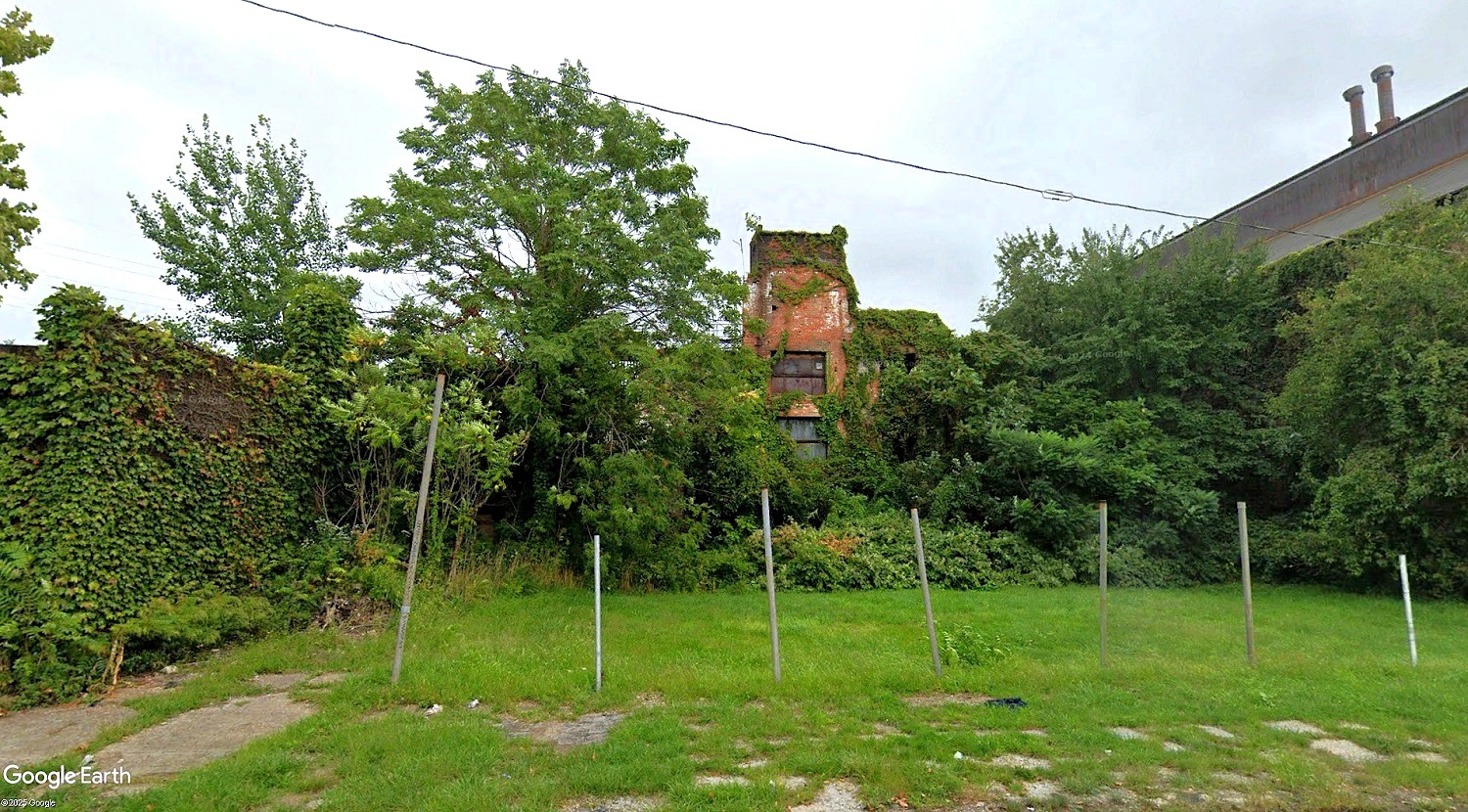
Disappearing under Mother Nature’s blanket is Cleveland’s industrial past, seen here at the former Cleveland Cooperative Stove Co. on East 67th Street south of Central Avenue. But it’s not turning over to developable land fast enough to benefit residents in a timely manner. That’s where Ohio Brownfield remediation funding comes into play to clear and clean properties so they can be returned to productive use (Google). CLICK IMAGES TO ENLARGE THEM.
Big Brownfield bucks offered by state
Returning vacant, polluted industrial sites to productive use in Cleveland and other established communities is typically not cost-effective for private investors to tackle. Yet leaving them rotting and fallow is not an option either.
That’s why the Ohio Brownfield Remediation Program is so important to the region’s urban core. And the next round of grants available from the program will be the largest one yet. It should make up for the last one, which was the smallest yet for Cuyahoga County.
Ohio Gov. Mike DeWine and Ohio Department of Development Director Lydia Mihalik today announced approximately $120 million in grant funding will soon be available to help more of Ohio’s communities clean up contaminated properties and prepare them for future development.
Applications for the latest round of grant funding from the Ohio Brownfield Remediation Program open Aug. 11.
Created by the DeWine Administration in 2021, the program helps local leaders clean up industrial, commercial, and institutional brownfield sites that are abandoned, idled, or underutilized due to a known or potential release of hazardous substances or petroleum.
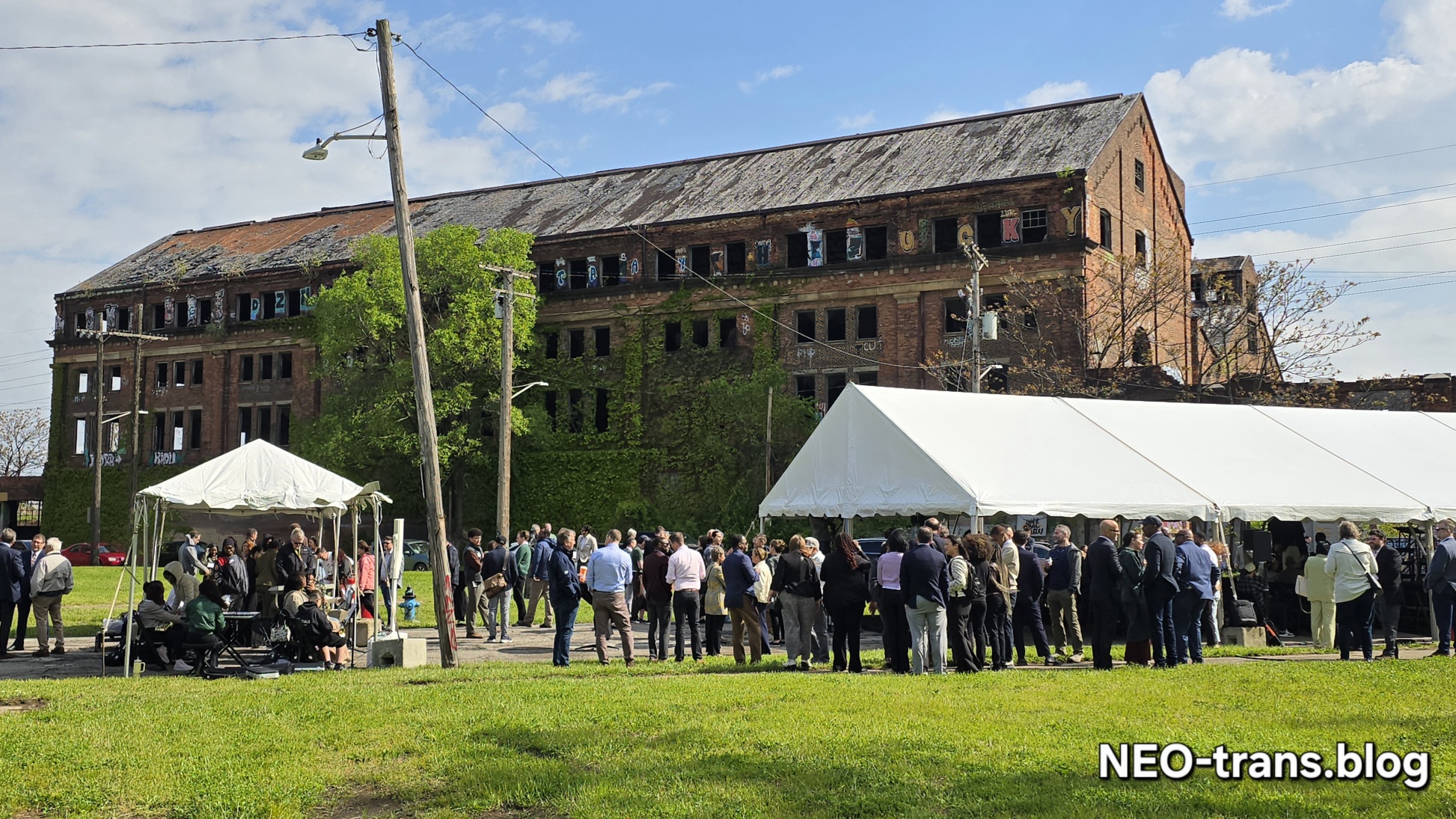
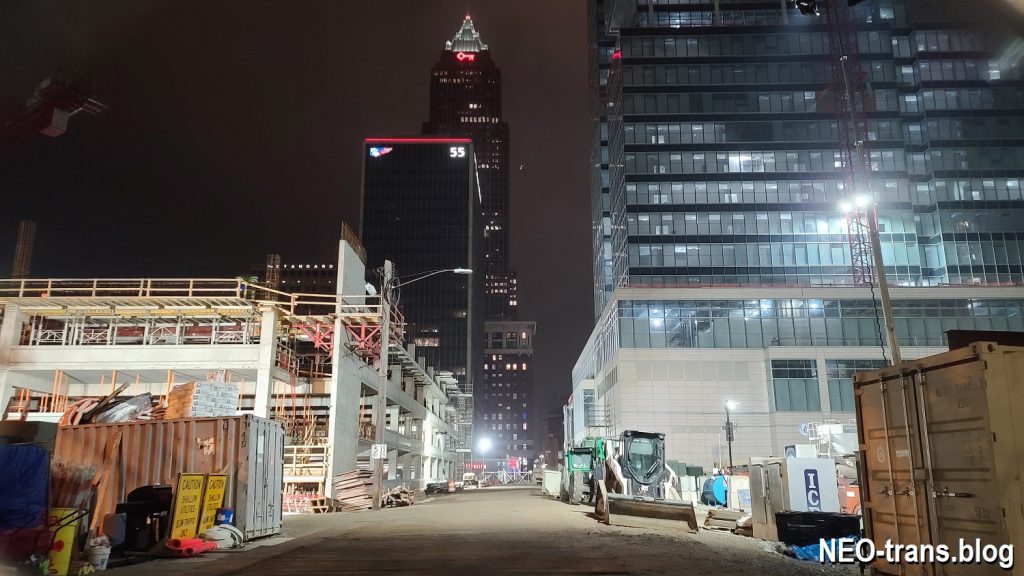
A party amid desolation was held on Ashland Avenue in May when the Midline redevelopment district was announced to repurpose the heart of Cleveland’s obsolete industrial base into job-producing sites. Brownfield grants are considered as essential to that effort (NEOtrans).
“The Brownfield Remediation Program is a powerful tool for communities across the state to give old or abandoned properties a vibrant new life,” said DeWine in a written statement.
“I encourage local communities to take advantage of this program to turn abandoned or blighted properties into new, useful projects,” he said.
Since its inception, the Brownfield Remediation Program has awarded nearly $800 million to support 904 projects in 87 counties. Two Cuyahoga County projects were awarded grants in May — West Side Market’s renovation and the former Cleveland Cooperative Stove Co. site in the Midline district.
This round of funding was made possible with support from the Ohio General Assembly in the most recent biennium budget bill, House Bill 96, which allocated a total of $200 million toward the program.
Projects that assess or remediate brownfield properties are eligible for funding. Entities that contributed to the contamination of properties are not eligible to apply.
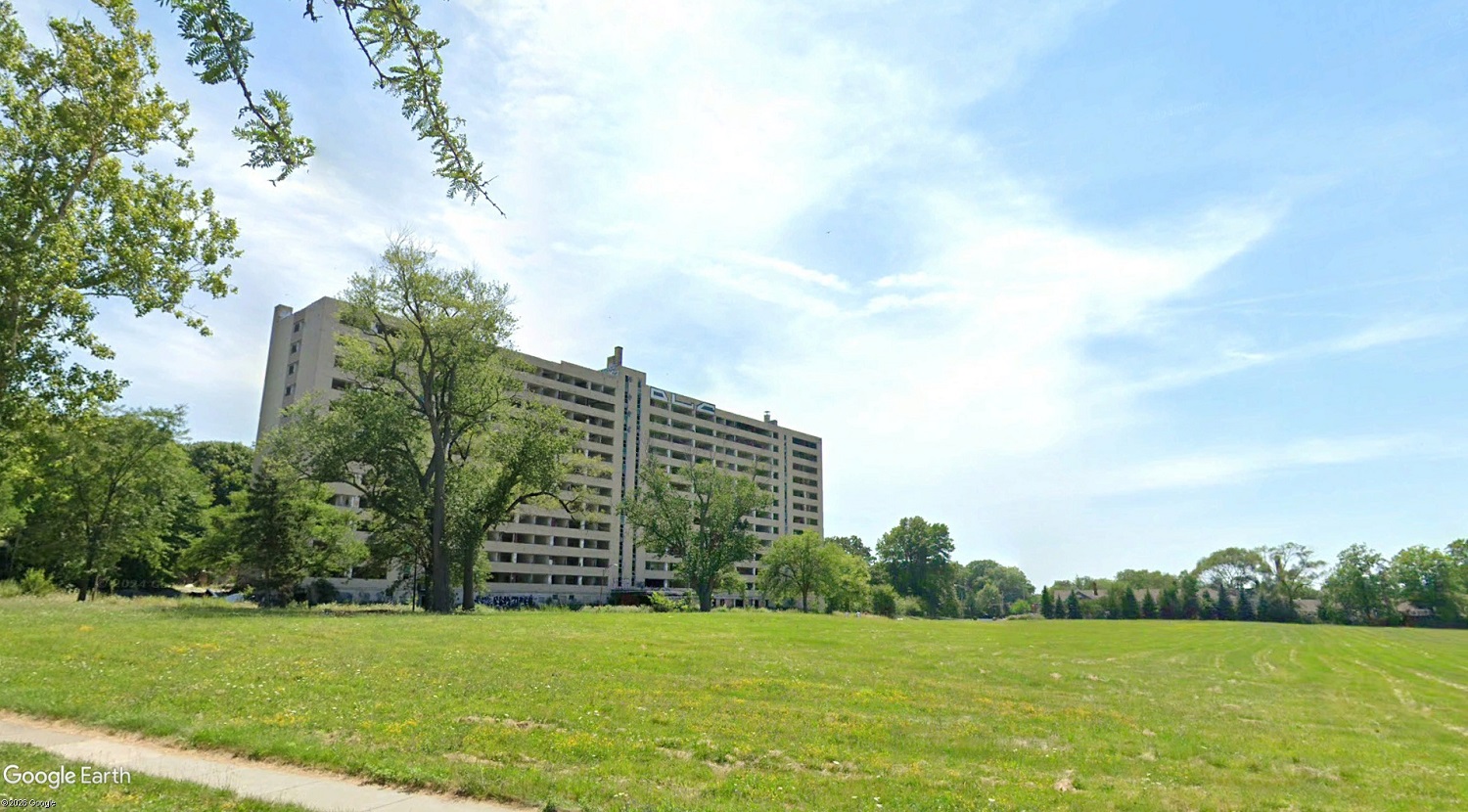
Brownfield funds aren’t just for repurposing old industrial sites. They’re also for repurposing communities. East Cleveland’s former Huron Road Hospital site in the foreground can’t attract investment as long as the vacant Huron Place Apartments stand next to it. So Brownfield funds are part of the mix to take the building down (Google).
“There’s nothing quite like seeing the pride return to a community when a long-neglected eyesore becomes a vital contributor to a neighborhood’s future,” said Mihalik.
“The Brownfield Remediation Program continues to prove that strategic investments in site cleanup can create opportunities that benefit Ohio for generations,” she added.
The Brownfield Remediation Program is part of DeWine’s Ohio BUILDS Initiative, which focuses on supporting targeted solutions that impact quality of life, such as water infrastructure improvements, broadband expansion, brownfield redevelopment, and the demolition of blighted buildings.
Applications will open from 10 a.m. Aug. 11, through 5 p.m. Sept. 11. Development will host an informational webinar for prospective applicants at 10 a.m. Aug. 4, covering eligibility, the application process, guideline updates, and a question-and-answer session.
END