
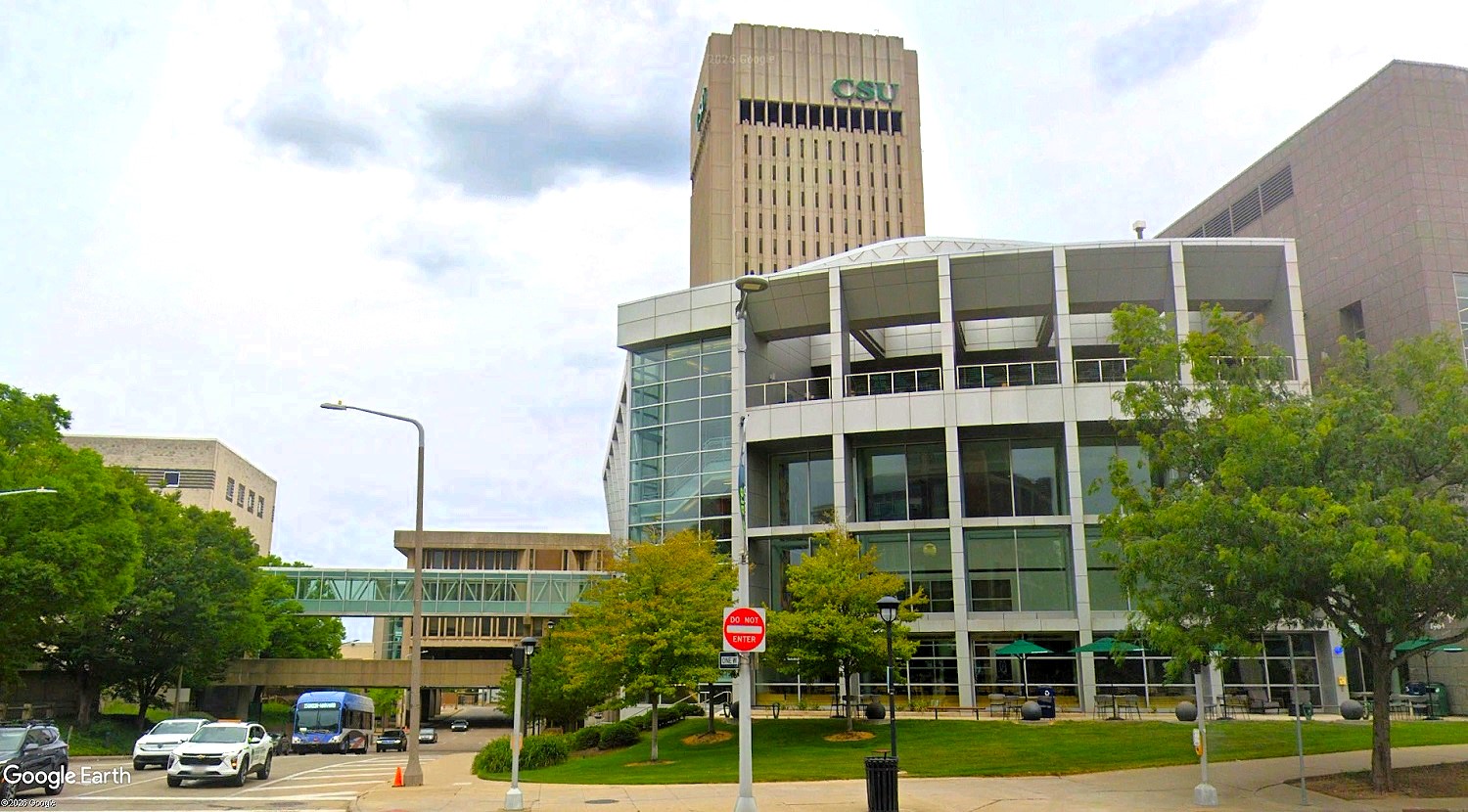
Transit buses are an ever-present feature around the Cleveland State University campus in Downtown Cleveland. About 40 percent of CSU students take advantage of its U-Pass public transit program which is again being targeted for termination by university officials (Google). CLICK IMAGES TO ENLARGE THEM.
Students told to seek aid from Academic Coach
As Cleveland State University (CSU) students prepared return to classes in Downtown Cleveland for the Fall Semester starting this Monday, some were surprised to learn that its U-Pass for discounted rides on public transportation was no longer available.
CSU officials confirmed that the university’s agreement with the Greater Cleveland Regional Transit Authority (GCRTA) for the Universal Access Program, or U-Pass, expired at the end of Spring semester 2026 and was not renewed for the Fall.
In the past, students were charged a per-semester fee so they could have unlimited rides on GCRTA buses and trains for that semester. But in the last few days, when students inquired about the U-Pass, they were met with a new, limited, less-clear approach.
“We are offering two emergency 5-ride passes to assist students with this transition,” said an e-mail from CSU’s Parking & Transportation Services (PTS) to inquiring students who then shared it with NEOtrans.
“You just need to complete the form linked here: GCRTA 5 Trip Bus – Fill out form,” the e-mail continued. “Passes can be issued once the form is submitted and verified by PTS staff — limit two per person per semester, while supplies last.”
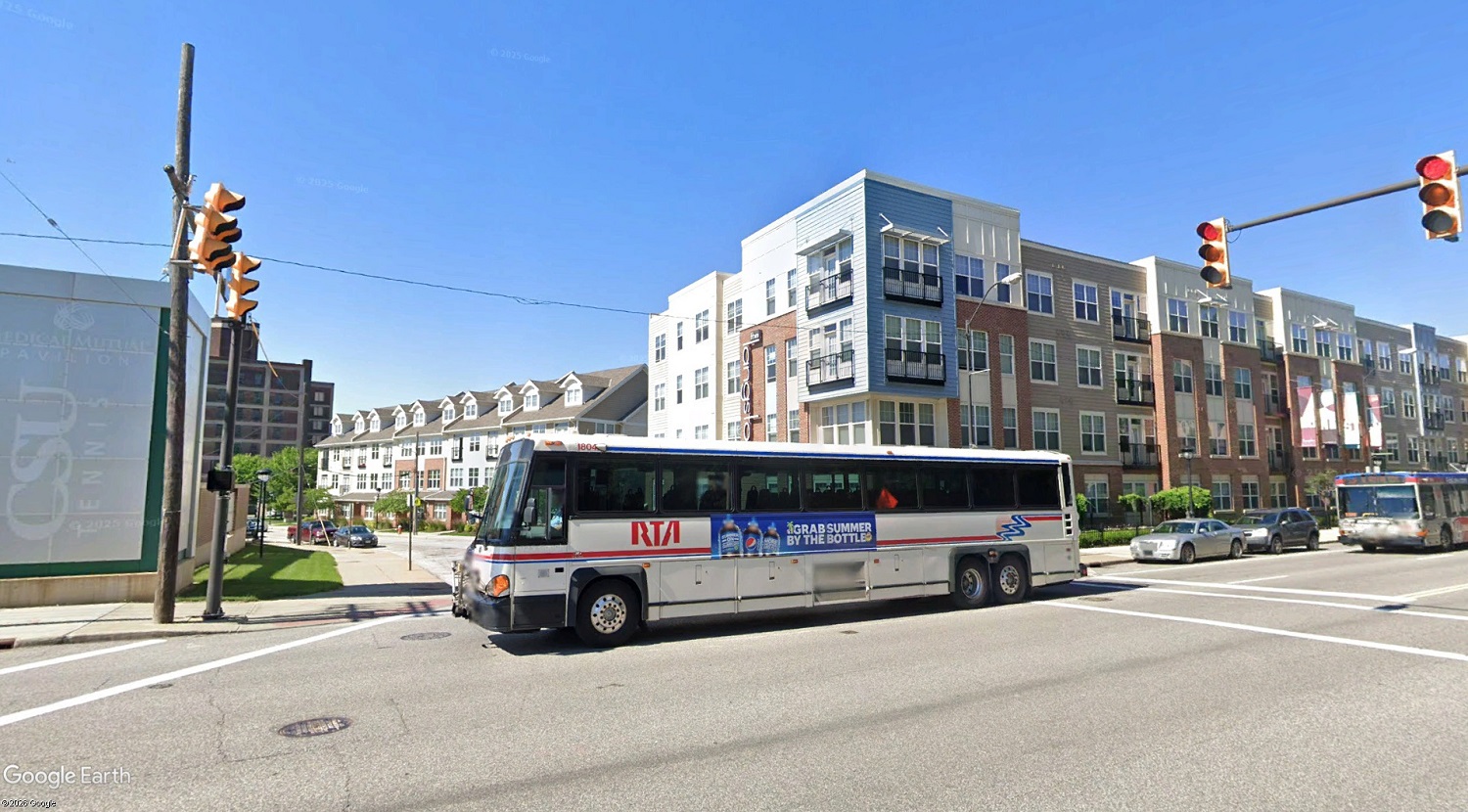
Here, transit buses roll on Chester Avenue past university housing and the Malaga Tennis Courts at left (Google).
“That’s really disappointing to hear about the U-Pass not being offered,” said CSU student Alex Jackson. “I saw an email on Aug. 14 about the emergency 5-ride offer, but I didn’t see any mention of the U-Pass not being continued.”
NEOtrans asked CSU officials about the U-Pass’ demise — the second year in a row it was canceled. Last year, CSU was met with student opposition that caused officials to continue the U-Pass, while charging only those students who requested the pass.
“Cleveland State University has put in place a plan to support its students who use public transit without creating an ongoing expense for those students who do not,” a CSU spokesperson said in an e-mail to NEOtrans. The spokesperson also shared a written statement from the university.
“Cleveland State University is ready to assist students with their public transit needs. The university offers funding for eligible students who need financial assistance to help them remain in school, which includes funds for public transportation,” the statement began.
It continued, “We encourage students to contact their Academic Coach to learn more about their options, including community resources that are available to students.”
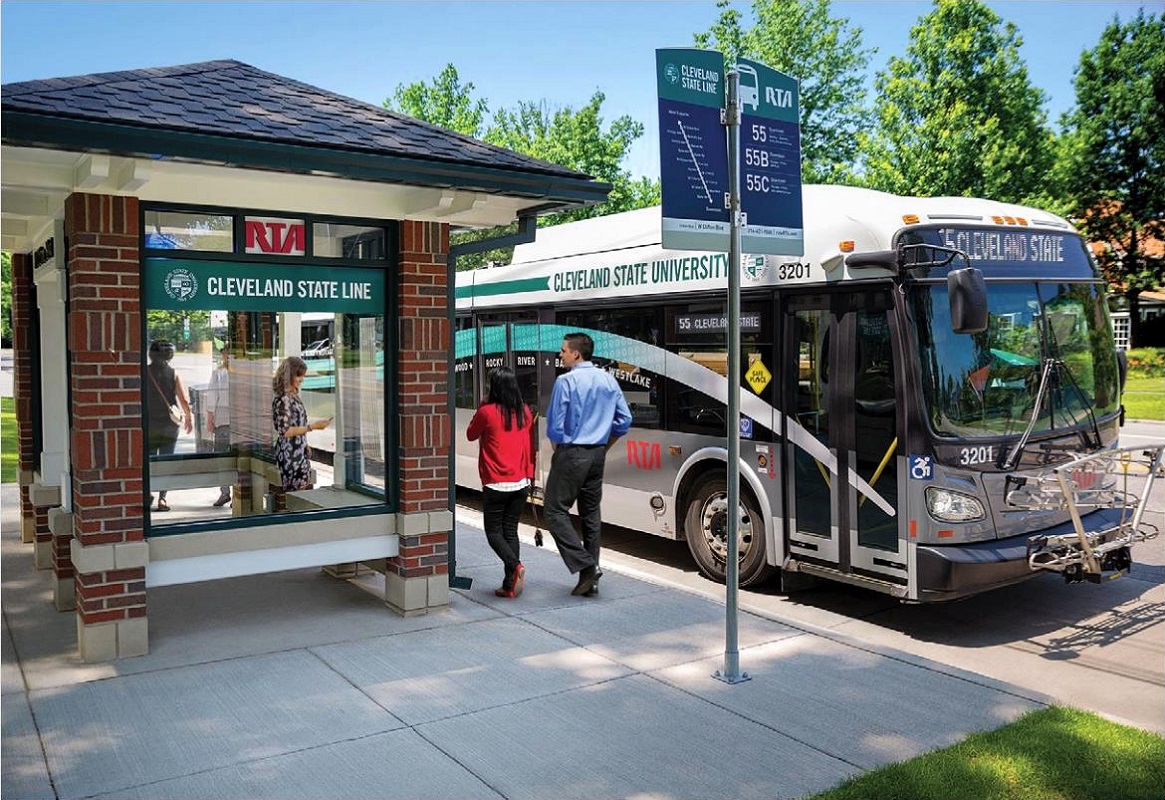
Cleveland State University and the Greater Cleveland Regional Transit Authority have had a long history of partnerships including the university sponsoring the bus rapid transit route on Clifton Boulevard through western Cleveland and Lakewood (GCRTA).
“CSU values public transportation as an opportunity for everyone, and we will continue to educate our students on the options that are available so they can use their financial resources wisely,” the statement concluded.
Until last year, all credit-earning CSU students were charged for the GCRTA U-Pass as part of their general student fees, granting them a GCRTA transit pass each semester. About 40 percent of CSU students utilized this benefit.
But when CSU President Laura Bloomberg announced the end of the U-Pass last year, she blamed a new state law. She said it didn’t allow CSU to charge this fee for all students as a part of its billing process.
Ohio Gov. Mike DeWine’s office called CSU’s justification a “ridiculous reading” of the law. Most Northeast Ohio colleges and universities provide U-Passes to all students and bill all students for the fringe benefit which they can use for non-university transportation as well.
Previously, all CSU students enrolled in one or more credit-hour per semester were eligible to receive the U-Pass. That changed last year so that students had to be enrolled full-time which ranged from 9-12 credit-hours depending on their undergraduate or graduate status.
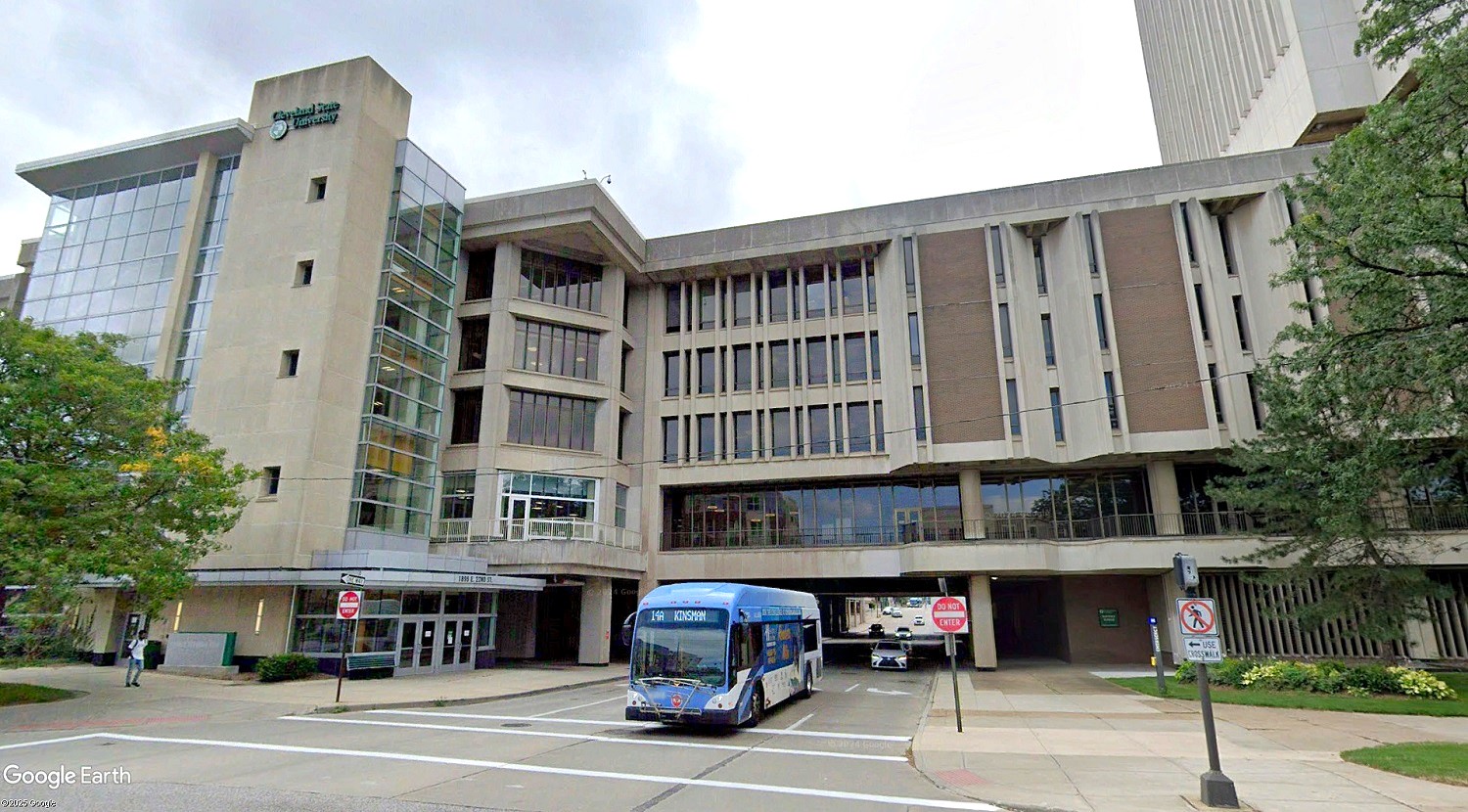
A Greater Cleveland Regional Transit Authority bus emerges from under Cleveland State University buildings that span East 22nd Street between Euclid and Chester avenues (Google).
To receive a U-Pass, eligible students last year had to visit the PTS office at Berkman Hall. Upon picking up the U-Pass, a student was charged $57.50 for the U-Pass for the semester. That was the same cost to students for the U-Pass as the former general student fee.
Last year’s change saved the university approximately $1.2 million a year while costing GCRTA about $600,000 per year. GCRTA had been paid by the university about $1.4 million before.
It is not known what the financial impact will be for either CSU or GCRTA as a result of this semester’s change in U-Pass policy. GCRTA did not respond to an inquiry prior to publication of this article.
CSU and GCRTA have both been facing a significant financial crunch in recent years. GCRTA has been cutting service frequency and restructuring routes, and will seek a sales tax levy in May 2027. The size of the sales tax levy will be determined next month.
CSU has made significant budget cuts including staff layoffs and cuts to existing programs. Its enrollment has fallen, declining from 16,088 students in 2019 to 12,810 last spring semester.
END