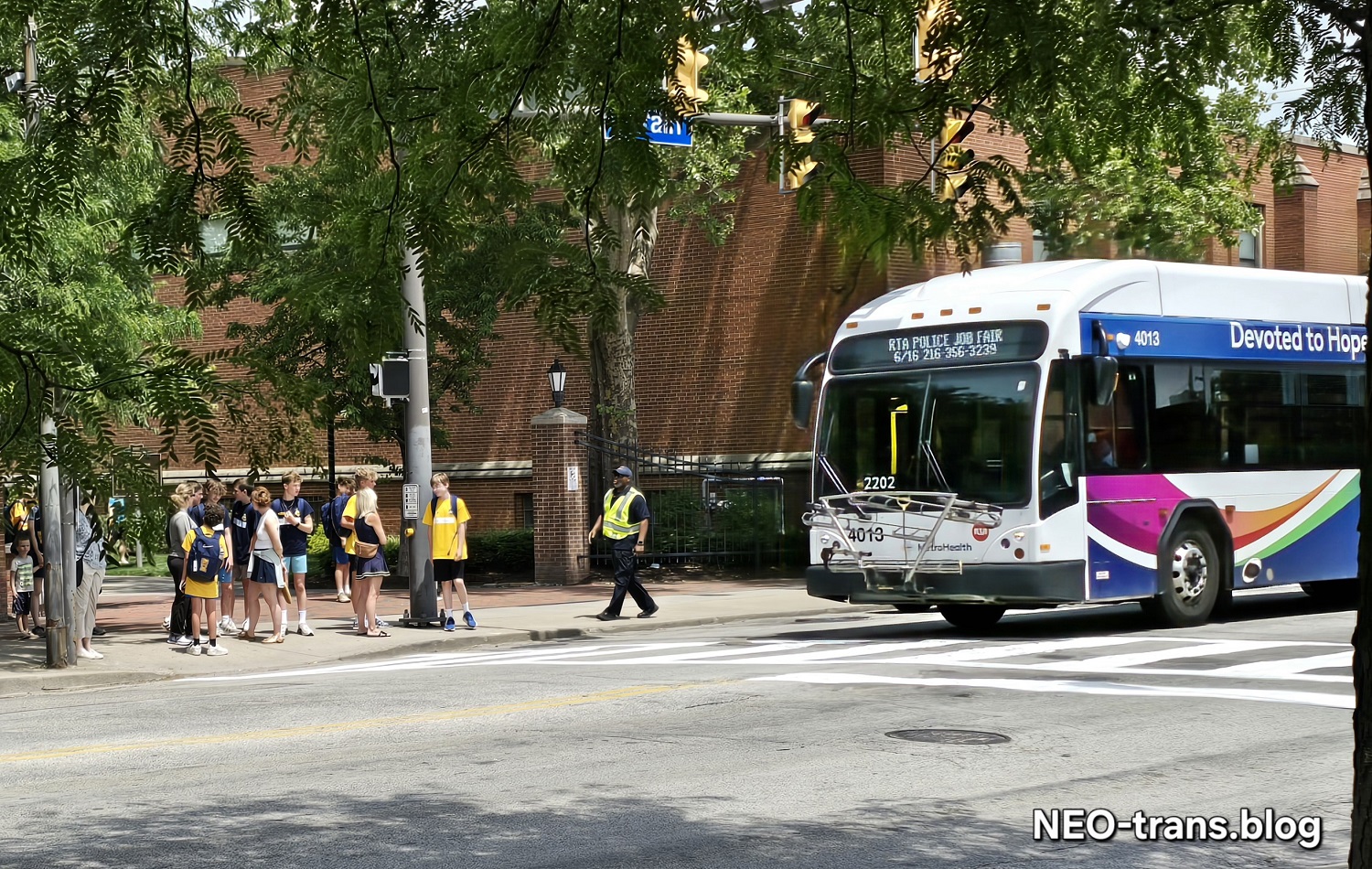
A Greater Cleveland Regional Transit Authority bus rolls by St. Ignatius High School bearing mixed messages. So is the authority’s board, saying transit funding is important but lacks the immediacy to avoid service cuts (NEOtrans). CLICK IMAGES TO ENLARGE THEM.
Two transit futures hang in the balance
The future of the Greater Cleveland Regional Transit Authority (GCRTA) didn’t get much clearer at a special board meeting held today. But the transit agency’s trustees did vote unanimously to support a compromise action that could put a sales tax levy on the ballot in May 2027. The board is due to finalize its decision in September.
The compromise was between two groups of board members that will allow a political action committee to get up and running. One group was led by three suburban mayors who favored November 2027 as the election in which voters would decide the levy.
That would give GCRTA and its new political action committee more time so a campaign could be organized and funded, said Mayors Paul Koomar of Bay Village also the GCRTA board chair, David Weiss of Shaker Heights and Marie Gallo of Parma Heights.
Another group wanted to put a levy before voters this November to avoid service cuts in the face of fading revenues and rising costs. They cited Cleveland Mayor Justin Bibb’s 2021 campaign slogan “Cleveland can’t wait” although Bibb hasn’t yet weighed in on GCRTA’s levy ask.
Either option, if supported by voters, would provide more revenues to fund increased service frequency primarily on existing routes. But even that failed to gain clarity today and won’t until probably September.
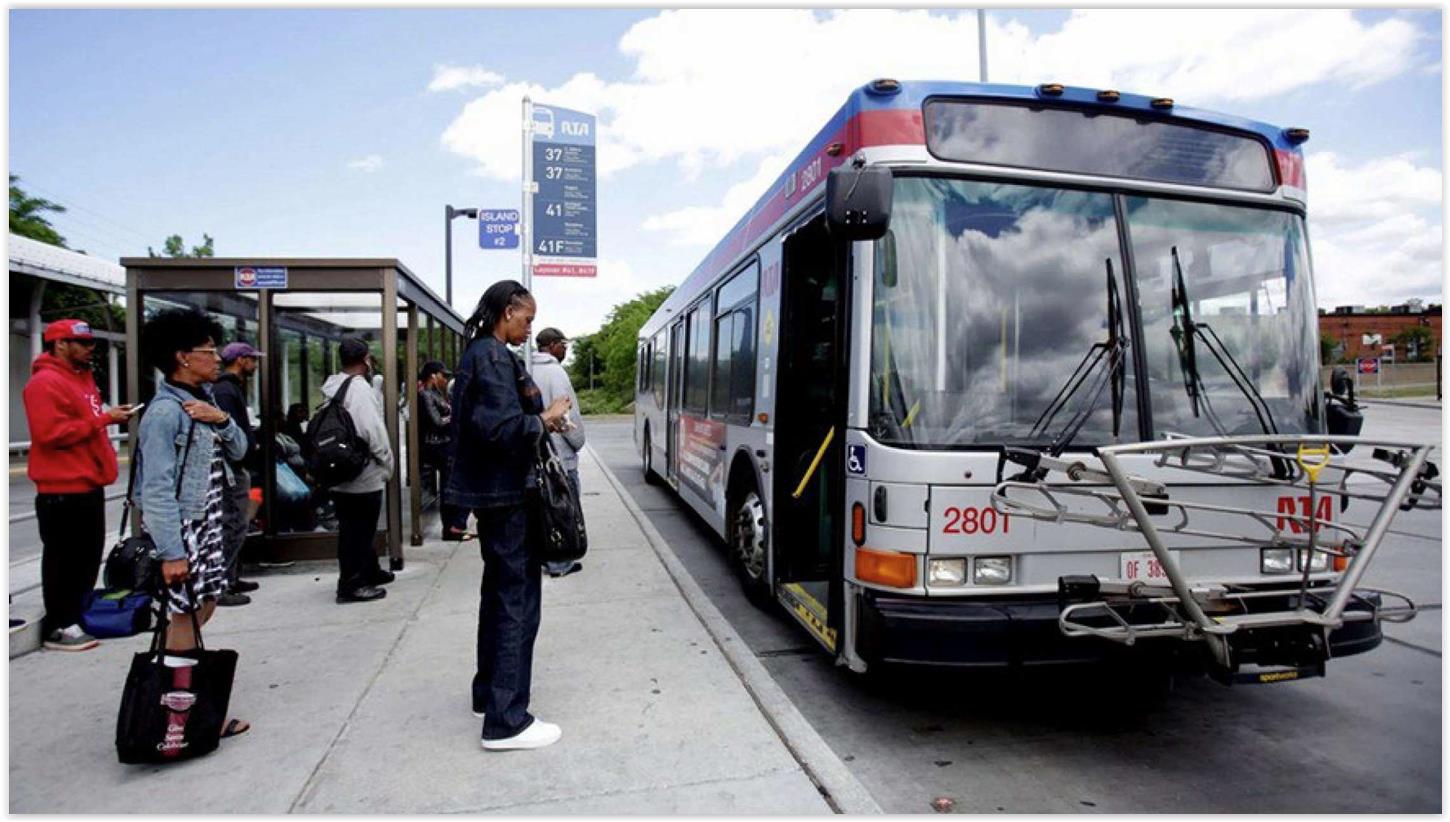
One in four households in Cleveland lacks a car and but only one in three jobs in Greater Cleveland is within a 90-minute one-way transit trip (City of Cleveland).
The resolution that the board of trustees approved didn’t specify the amount of the levy. Instead, it said only “Up to a half-of one percent” permanent sales tax increase which is the most that the sales tax can be legally raised anyway. Two options for raising the sales tax were considered — a quarter-percent and a half-percent.
According to a presentation given last week to the board, GCRTA management said a quarter-percent sales tax hike would generate $70 million per year, allow a modest increase of service frequency on some existing routes and buy a decade of fiscal stability for GCRTA.
But a half-percent increase would generate $140 million per year, stave off fiscal uncertainties for four decades, and allow for a more “transformative” expansion of service frequencies. That means offering a bus or train at least every 10 minutes on 10 routes and and every 15 minutes on another dozen routes.
Plus GCRTA would be able to extend its new, standardized light-rail trains on the Blue and Green from Shaker Heights through downtown, over the Red Line tracks, to Cleveland Hopkins Airport. And it would restore park-n-ride buses from Westlake and North Olmsted to Cleveland.
GCRTA staff recommended the board approve the half-percent sales tax increase for this November’s ballot, but the Cuyahoga County Board of Elections’ filing deadline for that ballot is Aug. 5. Revenue from any levy would not come to GCRTA for at least eight months after a positive vote.
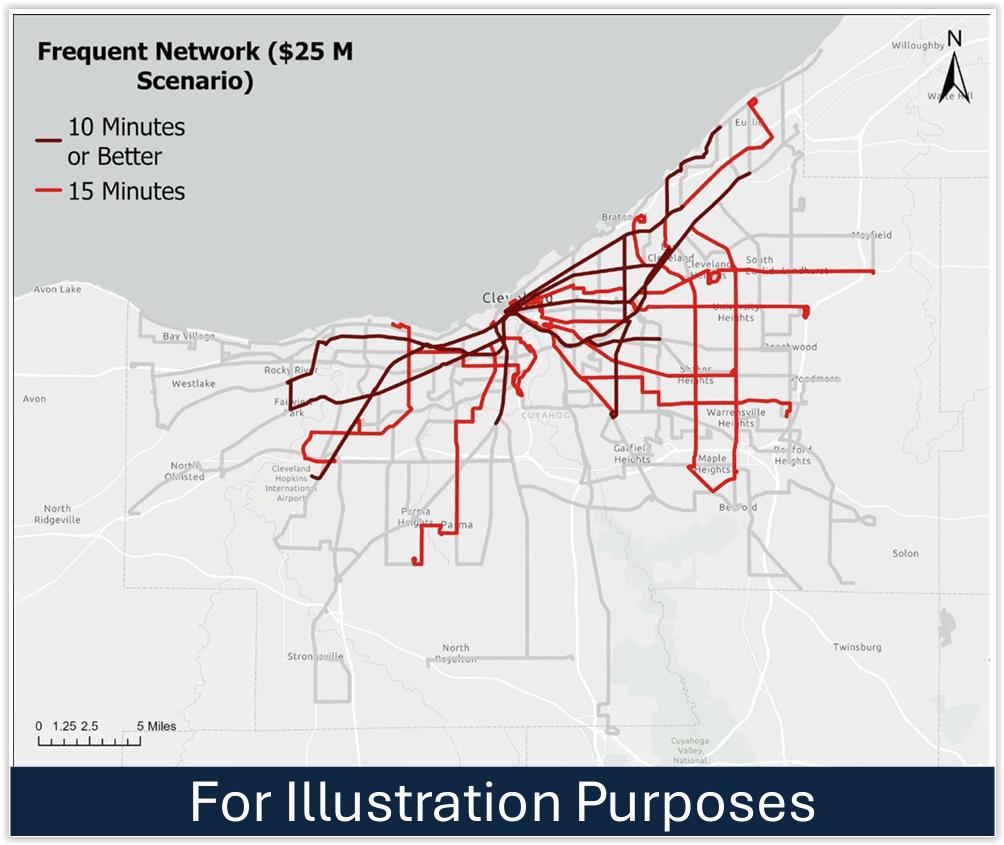
If voters approve a half-cent sales tax levy, 10 routes will see service increase with a bus or train every 10 minutes or better and 12 routes with a bus or train every 15 minutes with transit agency fiscal stability for four decades (GCRTA).
Appearing on the May ballot will be expensive for GCRTA, costing it more than $100,000, as it is not normally a countywide ballot. May is usually reserved for local, special elections. Turnout is often low, and detractors can organize opposition to kill new tax initiatives, said GCRTA CEO and General Manger India Birdsong Terry.
But there was also concerns by GCRTA staff and board members of the levy appearing on a crowded ballot. For example, the Cuyahoga County Board of Developmental Disabilities is seeking a new 2.25-mill, 10-year property tax levy in November to fund social services after recent federal budget cuts.
GCRTA officials wanted to stay away from the November 2028 ballot because it is a presidential election. If its levy attempt fails before then, GCRTA staff say it will be forced to reduce service on two-thirds of routes by 2029.
“The longer that we go, understand that we have opportunities for folks to be coalition builders and detractors,” said Birdsong Terry. “We have one shot at this and we have to make sure it’s right.”
She says that based on her prior transit role atop the Nashville Metro Transit Authority, from 2015-2019. There, she supported the mayor’s $5.4 billion light-rail and mass transit 0.5-percent sales tax levy called “Let’s Move Nashville” on the May 2018 ballot.
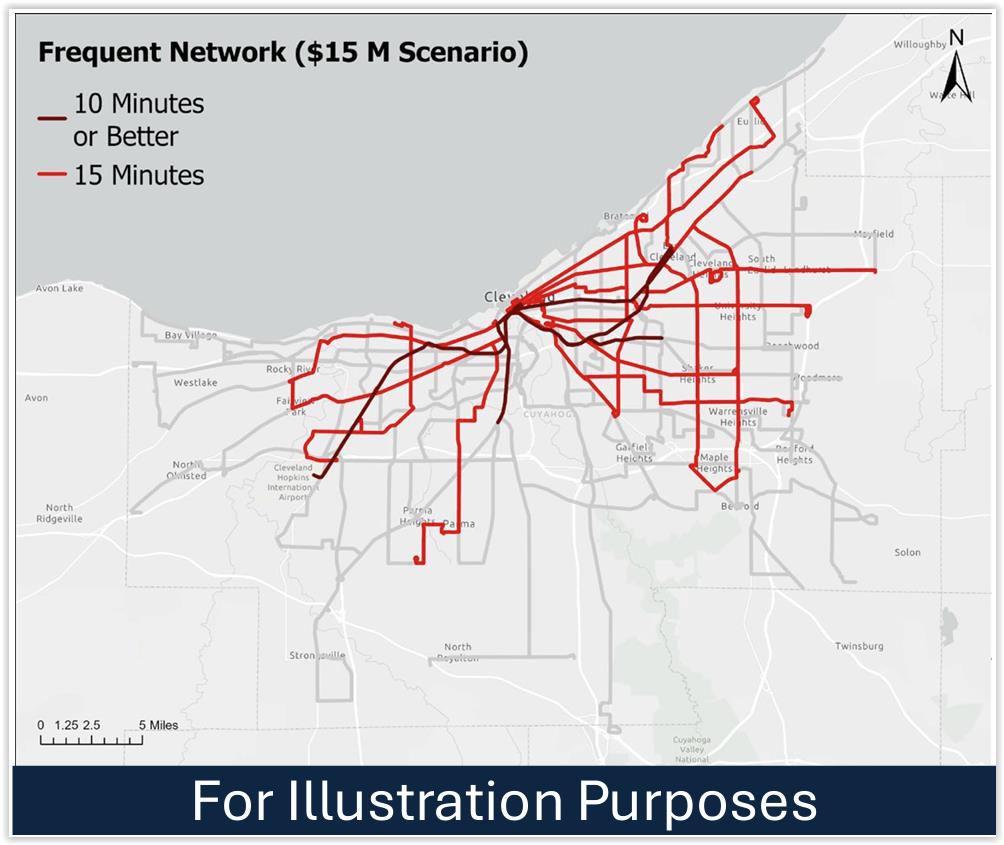
With a quarter-percent sales tax increase, four routes would see service expanded with a bus or train every 10 minutes and 14 routes would see bus services preserved or increased to every 15 minutes with transit agency fiscal stability for a decade (GCRTA).
It would have raised the countywide sales tax to 10.25 percent but was soundly defeated with 64 percent of the vote. Nashville got a second bite at the apple in November 2024 with another 0.5 percent sales tax hike focusing on enhancing existing bus routes which was approved by 66 percent of voters.
“I don’t want the board to erroneously imagine that we would be right back at it (with a new levy after failing) within six months or even within your tenure as board members understanding you typically have three-year appointments,” Birdsong Terry explained.
“Our system will degrade over time, the longer that we wait between bites at the apple,” she added. “It’s not a forgone conclusion that we will win. We hope, we work for it, but I want us to be realistic with that as well. So please position us in a way that prevents lag between going back if we have to.”
As board chair, Koomar was among the strongest voices against putting a levy on the November 2026 ballot, noting the need for getting Greater Cleveland’s business community on board to verbally and financially support a campaign.
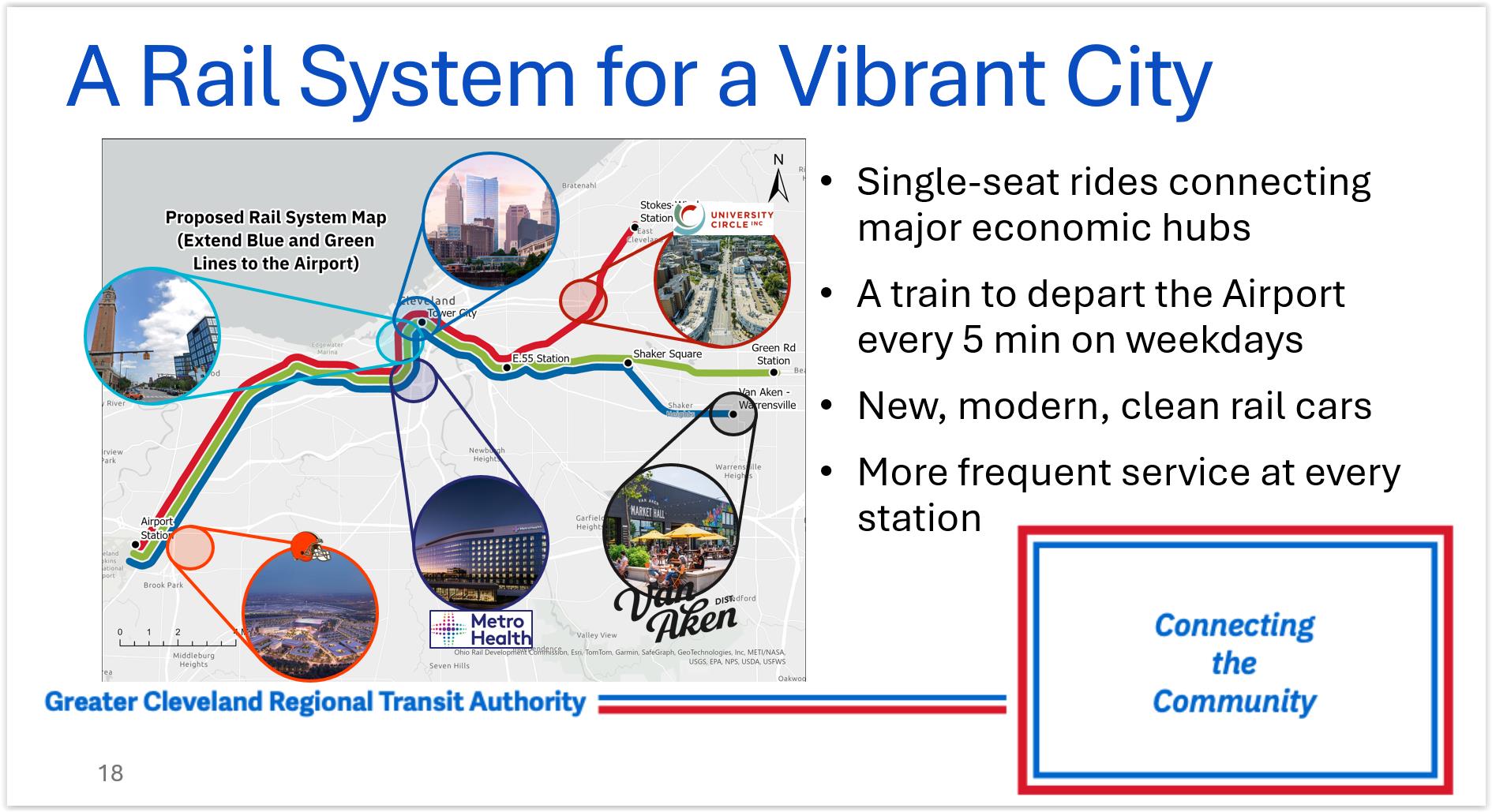
GCRTA also plans to expand rail service with funding from a new transit levy, its first in 51 years, by expanding east-side light-rail service west through downtown to Hopkins International Airport (GCRTA).
Vice Chair Emily Garr Pacetti said she wanted more information before determining the ballot timing and amount. She also didn’t feel comfortable about November 2026.
“I have not seen anything to give me confidence that we as an agency have a compelling vision for the next 20 years of GCRTA let alone that we have communicated that vision to the public,” Pacetti said. “That’s where I think if we move fast and move aggressively, we could be looking at a levy in May.”
Among the most vocal advocates for November 2026 was trustee Jeffrey Weston Sleasman who has worked with the business community as senior director of applied research at The Fund for Our Economic Future.
“The business community is not a homogenous thing,” he said. “There are a lot of small businesses, medium-sized businesses that have no idea this conversation is happening, that will have an opinion and will have a stronger opinion if they lose the transit that apparently their workers rely on.”
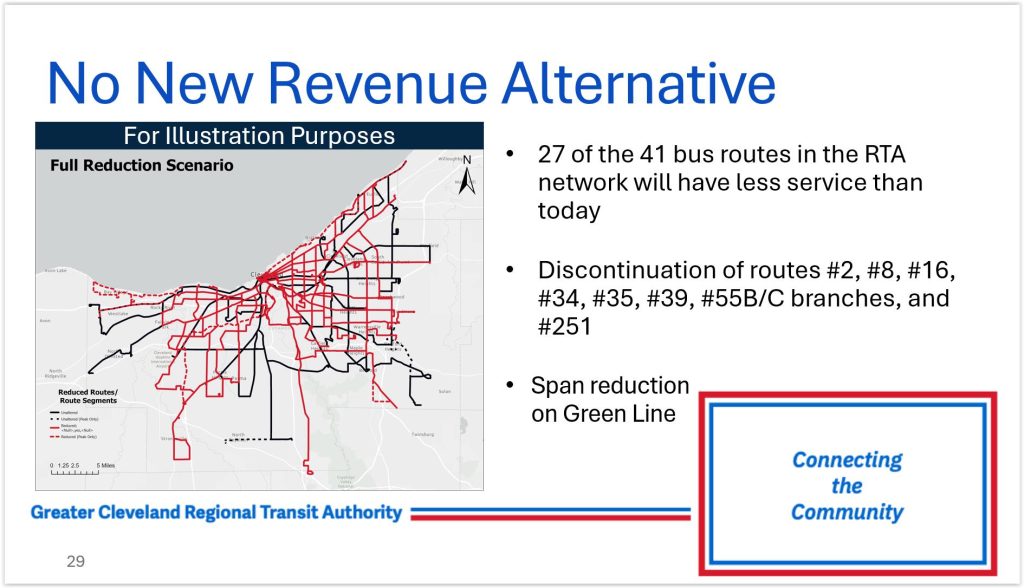
Two-thirds of rail and bus routes in Cuyahoga County would see service decrease by 2029 if a sales tax increase is not supported by voters (GCRTA).
Sleasman cited data from his and other organizations that a region gets five times the growth in economic output for every dollar it puts into transit. A half-percent sales tax levy for transit could produce an extra $750 million in gross domestic product for Greater Cleveland, he said.
“High quality transit means a savings of $1,044 per household, the unemployment rate goes down by 3.1 percent, and the poverty rate goes down 13 percent if you have high-quality transit and commercial vacancies are 2 percent less,” Sleasman added. “If the business community can’t get behind that, I don’t know what to do.”
Trustee Stephen Love, a former program director at the Cleveland Foundation, agreed with Sleasman that a transit levy is a value proposition, but said shaping that value proposition takes time, as other transit agencies with successful levies have done.
“If that’s the transformative work you want to accomplish as a transit agency, I don’t think that happens by moving too expeditiously unfortunately,” Love added. “I think we can only create that transformative civic vision if we do so in collaboration with others.”
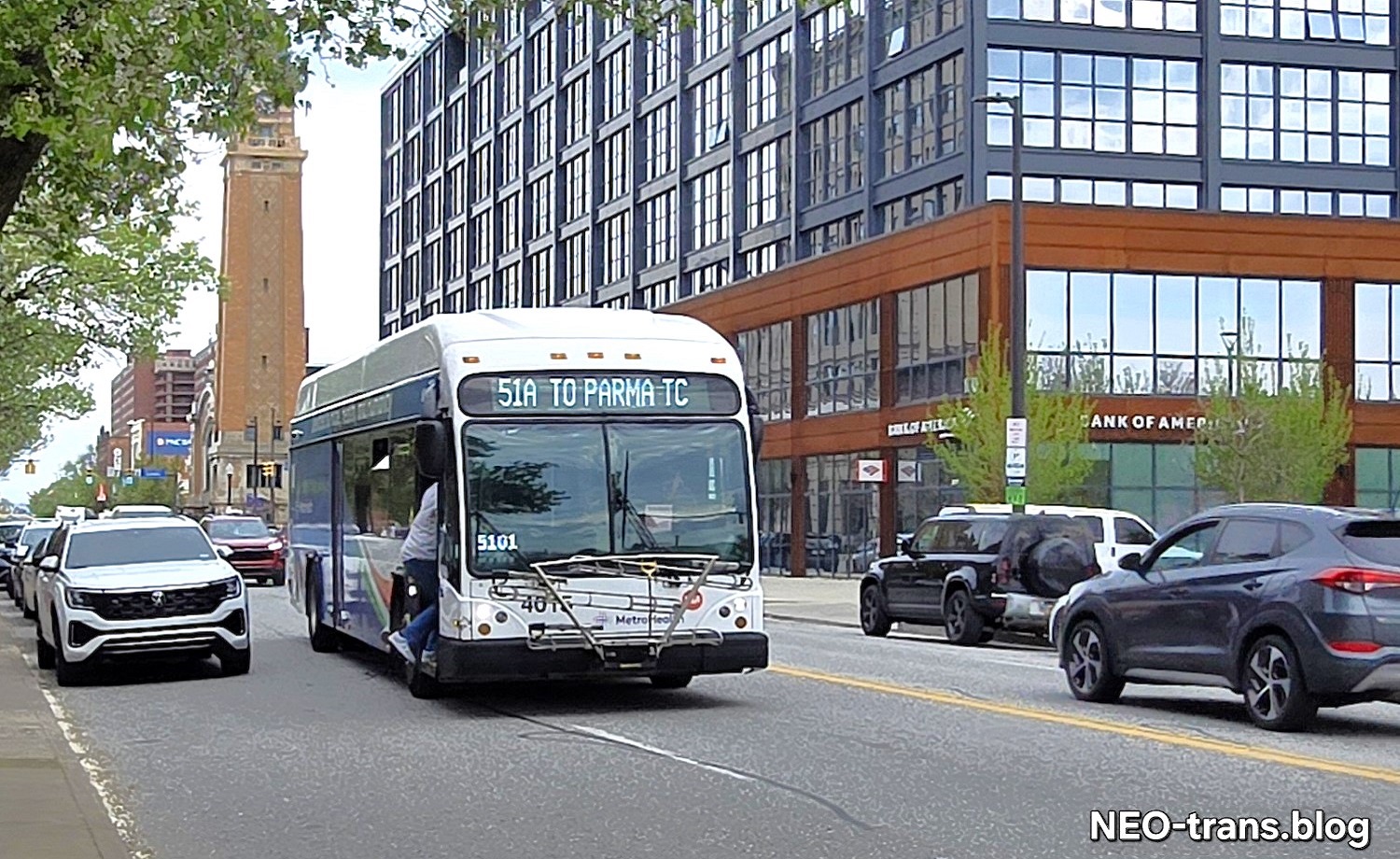
Transit service on multiple corridors starting with West 25th Street will be enhanced with additional funding (NEOtrans).
Trustee Emily Harper, a senior project manager at the Federal Reserve Bank of Cleveland, said other transit agencies that took their time in organizing levy campaigns weren’t facing service cuts.
“The longer we tiptoe around providing direction, the more certain service cuts become and those become a reality and making the lives of our riders and our operators more difficult,” she said.
“This conversation should have happened 18 months ago and we are well behind the eight ball,” said trustee Shanelle Smith Whigham. “I definitely don’t think it’s fair to our clients, our community, those who work for GCRTA for us to wait any longer. We need to make a decision today. It’s the best thing for our riders.”
“Over the last couple of meetings I’ve agreed with Mayor Koomar on the concerns around moving forward with a campaign,” said trustee Anastasia Elder. “My competing concern is additional cuts to our clients and our riders who do not deserve to have additional barriers to transportation. The thought of even waiting or considering November of next year seems dangerous and risky.”
END