
It may look like a park from the air, but the amount of greenspace on Cleveland’s near-East Side is the result of abandonment — something the city is trying to reverse by investing in infrastructure, creating job-ready sites and sponsoring new, affordable housing construction. This view looks west toward downtown, down Payne Avenue, from east of east of East 55th Street (Google). CLICK IMAGES TO ENLARGE THEM.
Goal is to build 200 near-East Side homes

Ohio Gov. Mike DeWine yesterday announced $14 million in grants to support the creation of workforce housing in 10 counties. Cleveland got one of the larger grants which Mayor Justin Bibb welcomed as a recognition of the city’s efforts.
The funding comes from the second round of the Residential Economic Development District (REDD) program, which is providing up to $15 million in grants this fiscal year to help communities expand housing opportunities close to major economic development projects.
In Cleveland, $2 million will support the creation of 200 new housing units in the city’s Housing Innovation District on the city’s near-East Side. The district includes significant portions of the Central, Hough and St. Clair-Superior neighborhoods.
Cleveland City Council in August authorized the district and enabled it with a tax increment financing (TIF) mechanism. The TIF is expected to generate anywhere from $64 million to $182 million for streets, sewers, parks and other public improvements over 30 years.
The Housing Innovation District supports housing demand created by investments by Amazon Services, LLC and the City of Cleveland to foster the continued construction of housing development on the city’s near-East Side.
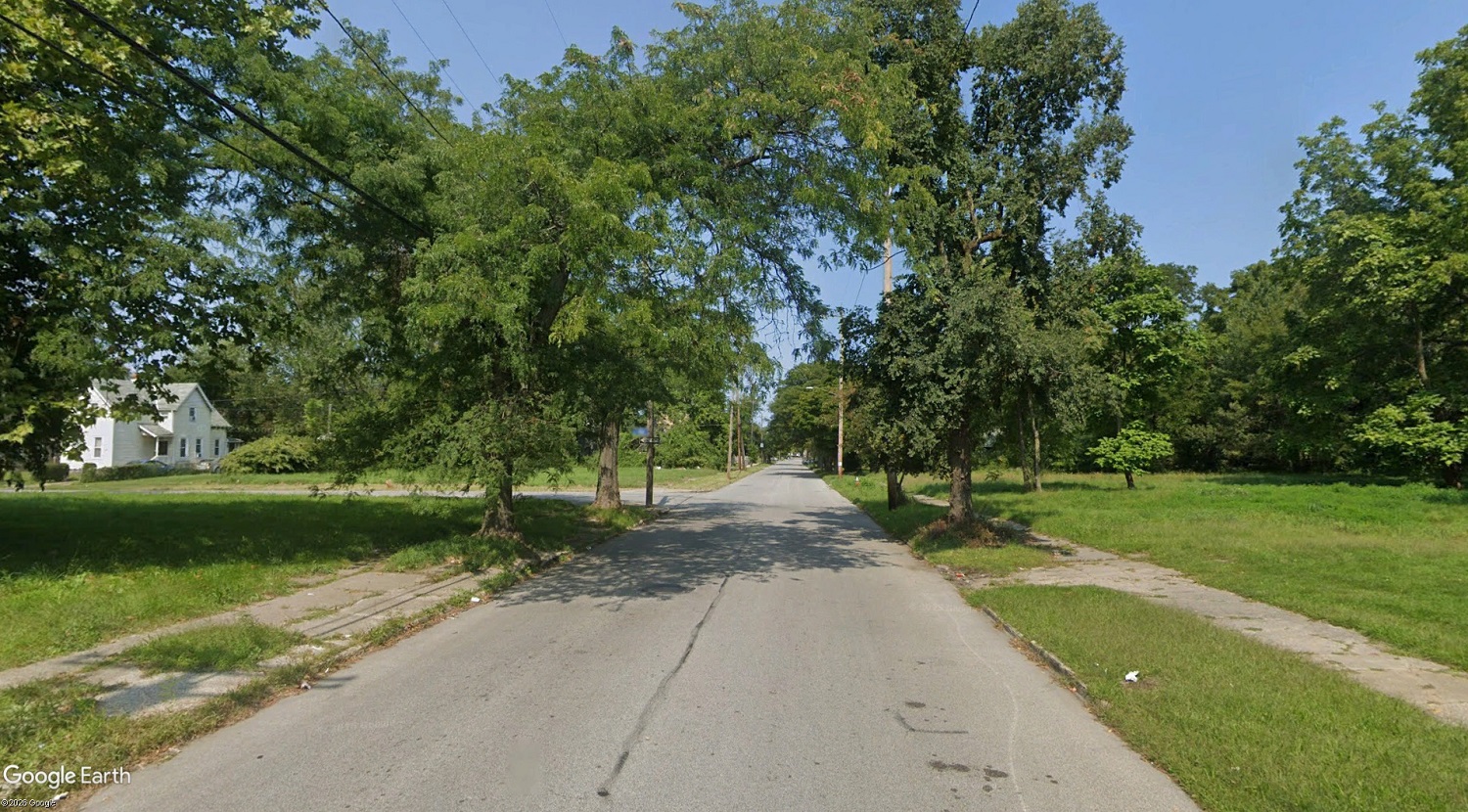
Too much of Cleveland’s East Side looks like this — rural. From nearly 100,000 residents in the 1960s to fewer than 20,000 today turned this crowded area into an urban prairie. This is East 65th Street at Luther Avenue, where the Hough neighborhood meets St Clair-Superior (Google).
“As we continue bringing new jobs and new opportunities to our great state, we need to make sure the people filling those jobs can find a home nearby,” said DeWine in a written statement.
“These awards will help local communities support new growth, and create chances for more Ohioans to live the lives they’ve always wanted,” he added.
“We all know that new businesses can bring tremendous opportunities, but our communities ultimately need the right foundation to make the most of it,” said Lt. Governor Jim Tressel. “These targeted investments will help our local partners prepare for what’s ahead by supporting the housing and infrastructure our workforce needs to succeed.”
The Ohio Department of Development received 32 eligible applications for this round of funding, totaling nearly $69 million in requests. Bibb said Cleveland was fortunate to be awarded one of the few winning requests and will complement other efforts including the new Midline Priority Investment Area.
“This funding is a sign that our Housing Innovation District is much more than just an idea – it’s a real, tangible solution towards homeownership, entrepreneurship, modern housing, and neighborhood stability,” said Bibb.

Looking west from above the Cleveland Midline Priority Investment Area, where 350 acres of land is being assembled, cleaned and marketed for commercial redevelopment to provide new jobs. Coupled with housing investments nearby, the goal is to reinvigorate the near-East Side of Cleveland (Google).
“Thank you to Governor DeWine and his administration for recognizing the importance in this work and choosing to invest in the Cleveland era,” Bibb added.
In addition to Cleveland, Cincinnati, Piketon and Toledo each got $2 million, while Bowling Green, Columbus, Heath, Niles Oberlin and Xenia all got $1 million each from the state.
“Every community has an important role to play in Ohio’s continued growth,” said Ohio Department of Development Director Lydia Mihalik.
“Whether it’s in one of our largest cities or smaller towns, we want all Ohioans to be able to find a good job, a great place to live, and a community they’re proud to call home,” she continued. “That’s what this program is all about.”
The REDD program was signed into law by DeWine last year. Local governments located within 20 miles of a major economic development project were eligible to apply for funding to expand housing-related infrastructure, strengthen public safety and community services, or provide capital to support new housing development.
END