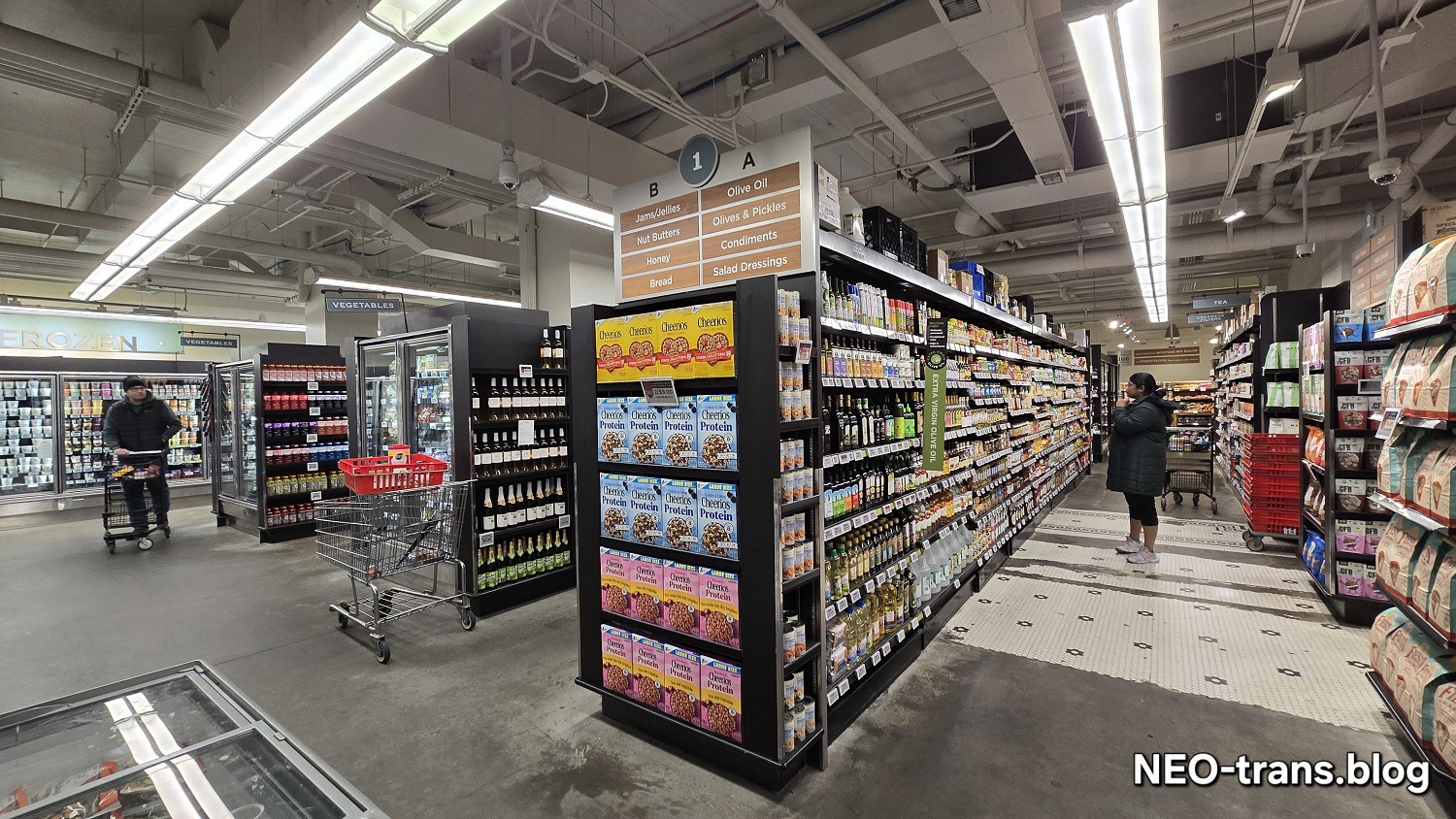
Prior to its closure in July, the Downtown Cleveland Heinen’s store offered a fair amount of choices for a grocer in a central business district. But the loss of half of downtown’s daily office population since the pandemic could no longer overcome recurring financial losses from shoplifting (NEOtrans). CLICK IMAGES TO ENLARGE THEM.
Grocer unlikely to fill The 9’s Rotunda
A long-awaited Downtown Cleveland Grocery Market Snapshot was released today that shows there is demand downtown for a grocery store of roughly the same size as the Heinen’s store that closed in July. But sources who spoke to NEOtrans said The 9’s Rotunda isn’t likely to be the place to host it.
The City of Cleveland and the nonprofit Downtown Cleveland, Inc. (DCI) released the comprehensive analysis of downtown’s grocery market. That analysis identifies opportunities to expand access to fresh food and prepared options for residents, workers and visitors in the city’s urban core.
Developed in partnership with Streetsense, a national retail and real estate advisory firm, the snapshot combines market analysis with direct community feedback to identify viable pathways for meeting downtown’s grocery needs, city and DCI officials said.
The findings point to an opportunity for approximately 28,000 additional square feet of smaller-scale grocery markets. Additional demand is projected to increase to 38,000 square feet by 2036 with the realization of $4 billion in planned downtown developments.
Those include continued residential growth from the likes of Project Scarlet, ErieView Tower, Cosm, Cleveland Clinic Global Peak Performance Center, and additional developments along downtown’s riverfront and lakefront.
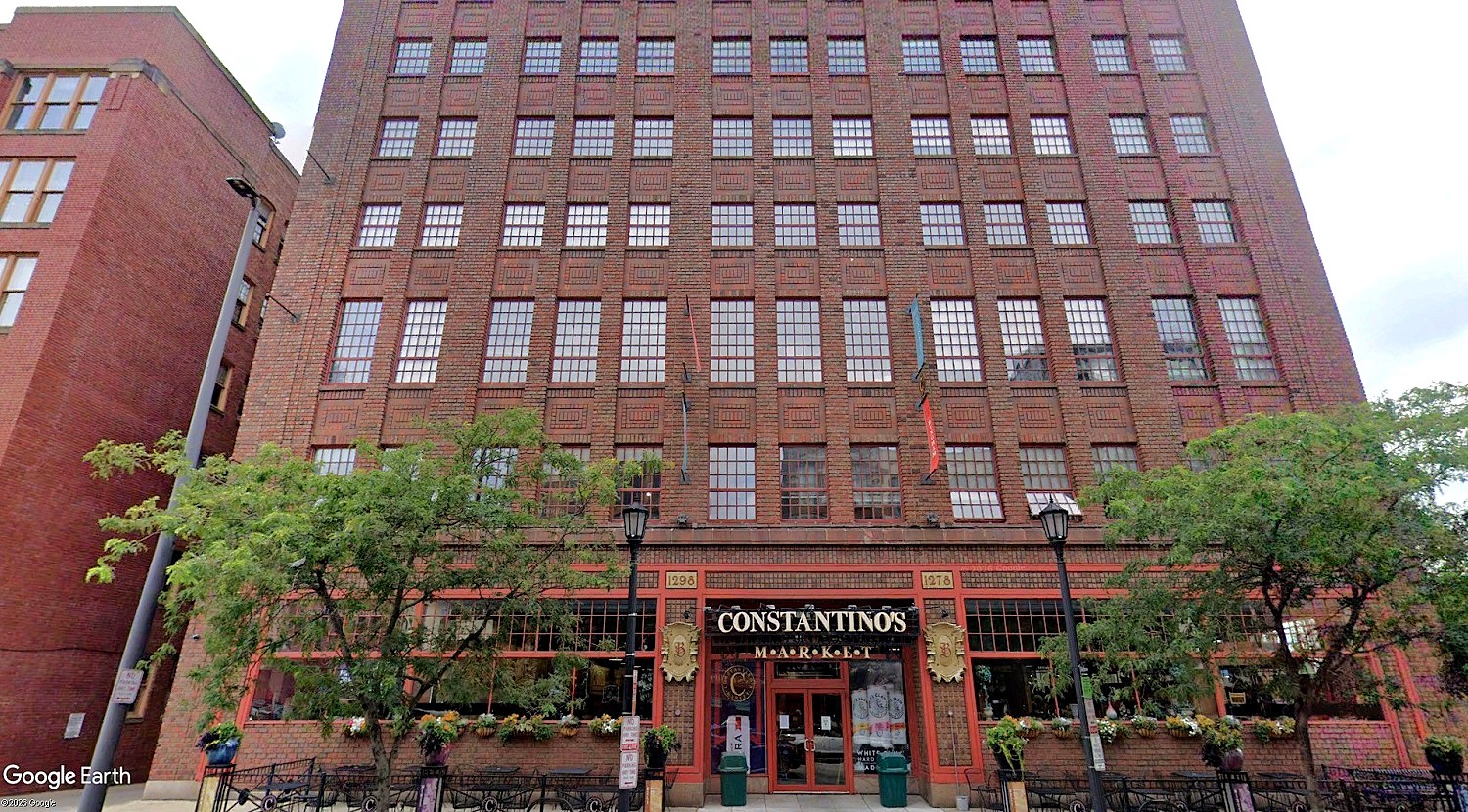
Downtown Cleveland’s remaining grocery store is Constantino’s, a small-format, neighborhood-scale store offering basic grocery items as well as freshly prepared foods and take-out/eat-in meals (Google).
The city and DCI are advancing the two-part approach to ensure grocery access downtown by supporting existing downtown grocery stores and partnering with property owners, brokers, and other stakeholders to attract new, smaller-scale markets across downtown districts.
“Our goal is to make downtown a place where people can live, work, and build their future,” said Mayor Justin Bibb in a written statement. “That means making sure residents can access the everyday essentials without leaving their neighborhood.”
“This analysis gives us a clearer picture of what downtown residents need and where opportunities exist,” Bibb added. “Now it is time to deliver.”
Existing stores that sell groceries in Downtown Cleveland include Constantino’s, 1278 W. 9th St.; Simply Fresh Market, 101 W. St. Clair Ave.; Downtown Convenience, 2013 Ontario St.; and DG Express, 1701 E. 12th St.
Active recruitment of grocery operators is underway to address the unmet demand. However, if downtown is to add to its grocery store offerings, it probably won’t be at The 9’s Rotunda.
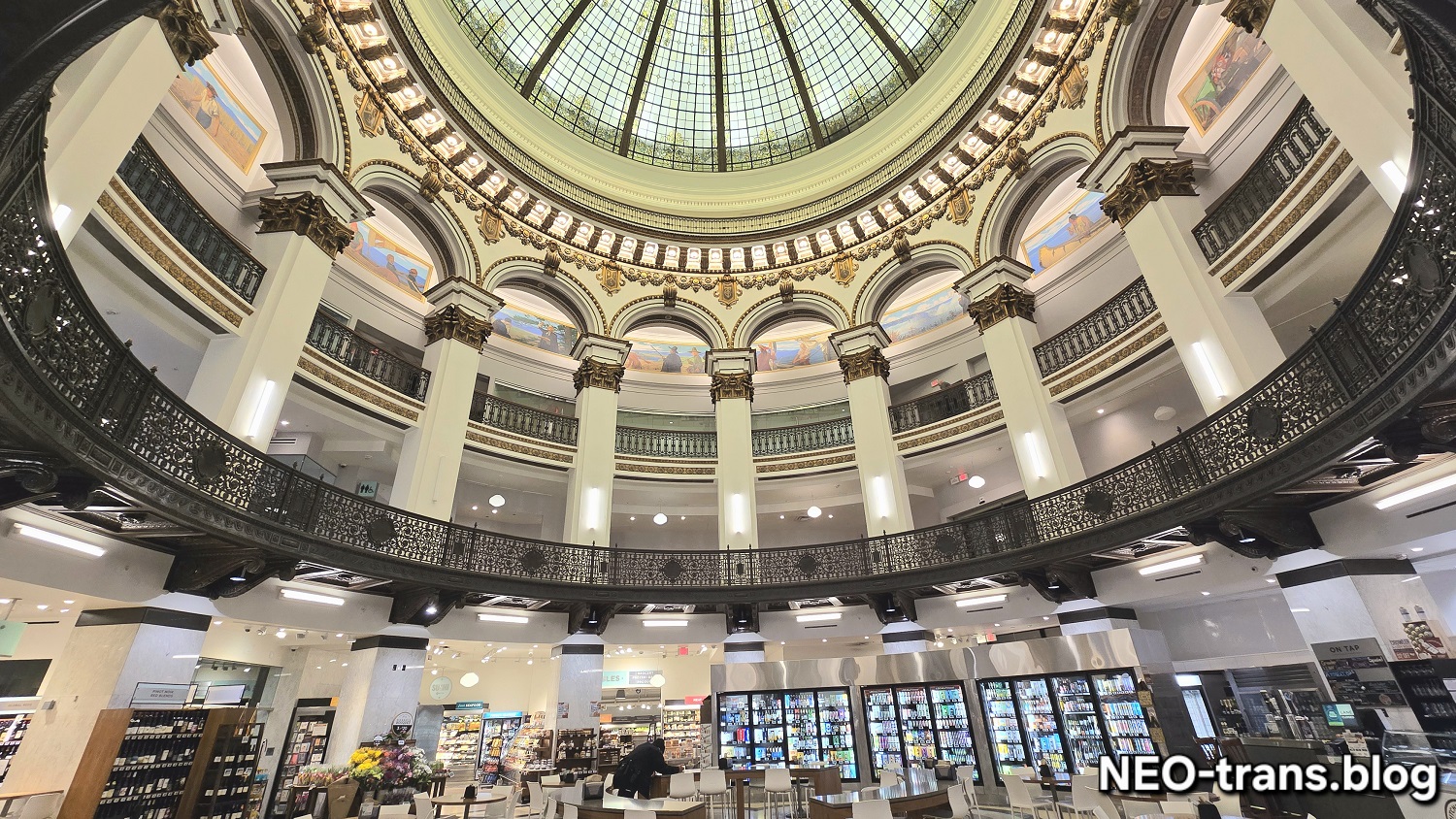
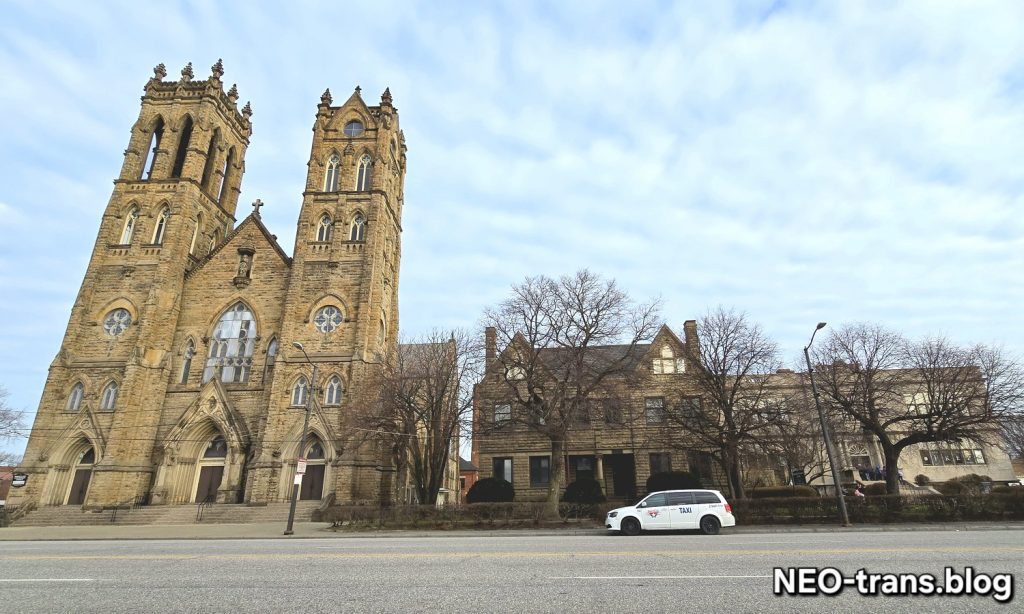
Described by many as the nation’s most beautiful grocery store, the former Cleveland Trust Bank rotunda was not efficient use of floor space for a grocer. It did make for a great lunch spot and used to be busy before the pandemic which caused more than half of all office workers to work remotely or hybrid (NEOtrans).
Sources who spoke to NEOtrans on the condition of anonymity said that the site’s lack of foot traffic, floor layouts, short-term parking for car-hire services, deliveries, and shrinkage were all factors scaring away potential tenants.
The latter, “shrinkage,” is a retailer term for shoplifting. And according to those same sources, Heinen’s downtown store reportedly suffered financial losses of $1.8 million to $2 million per year just from shrinkage during its 11 years in business.
After that store’s closure, Heinen’s operates only suburban stores in Northeast Ohio and Greater Chicago. It was criticized for not adapting its grocery offerings at the downtown store to satisfy an urban market which has different product desires, serving sizes and delivery needs.
Heinen’s officials did not respond to a request for comment.
DCI said its market snapshot was shaped by a survey of 2,206 respondents, a public meeting attended by more than 100 people, and interviews with key community and business stakeholders.
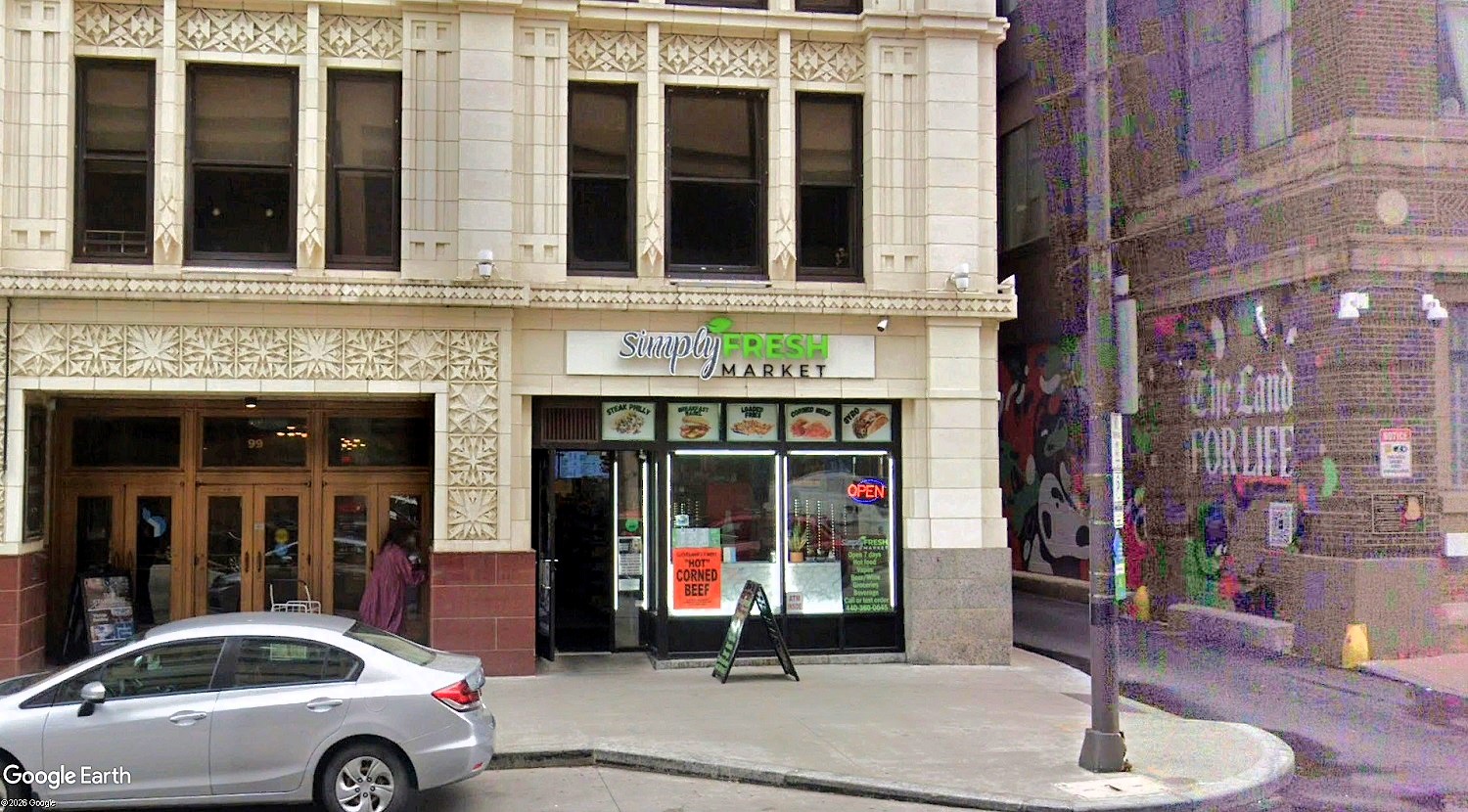
Downtown Cleveland has smaller convenience-style stores that sell some grocery items, such as Simply Fresh Market in the Standard Building, one of many obsolete office buildings converted to residential in the 21st century (Google).
Among the key findings:
· Residents cross-shop multiple stores and formats, regularly including grocery options outside of downtown. Almost 60 percent of residents already use downtown grocery options for shorter trips between larger grocery runs, for prepared foods, and grab-and-go offerings.
· Smaller-format stores provide fresh food and everyday essentials and are achievable sooner. Smaller-scale markets align more closely with today’s demand and the spaces currently available downtown.
· Demand is spread across downtown, as 80 percent of residents prioritize a convenient location. Current grocery demand can support multiple locations across downtown districts, bringing convenient grocery options closer to residents and employees.
· Residents represent a smaller share of downtown’s customer base but generate the majority of grocery sales. Continued residential growth is expected to increase total supportable demand, making larger-format grocery stores an increasingly viable and important strategy in the future.
“Downtown Cleveland has the residents, workers, visitors, and investment momentum to support new grocery options,” said DCI President & CEO Michael Deemer.
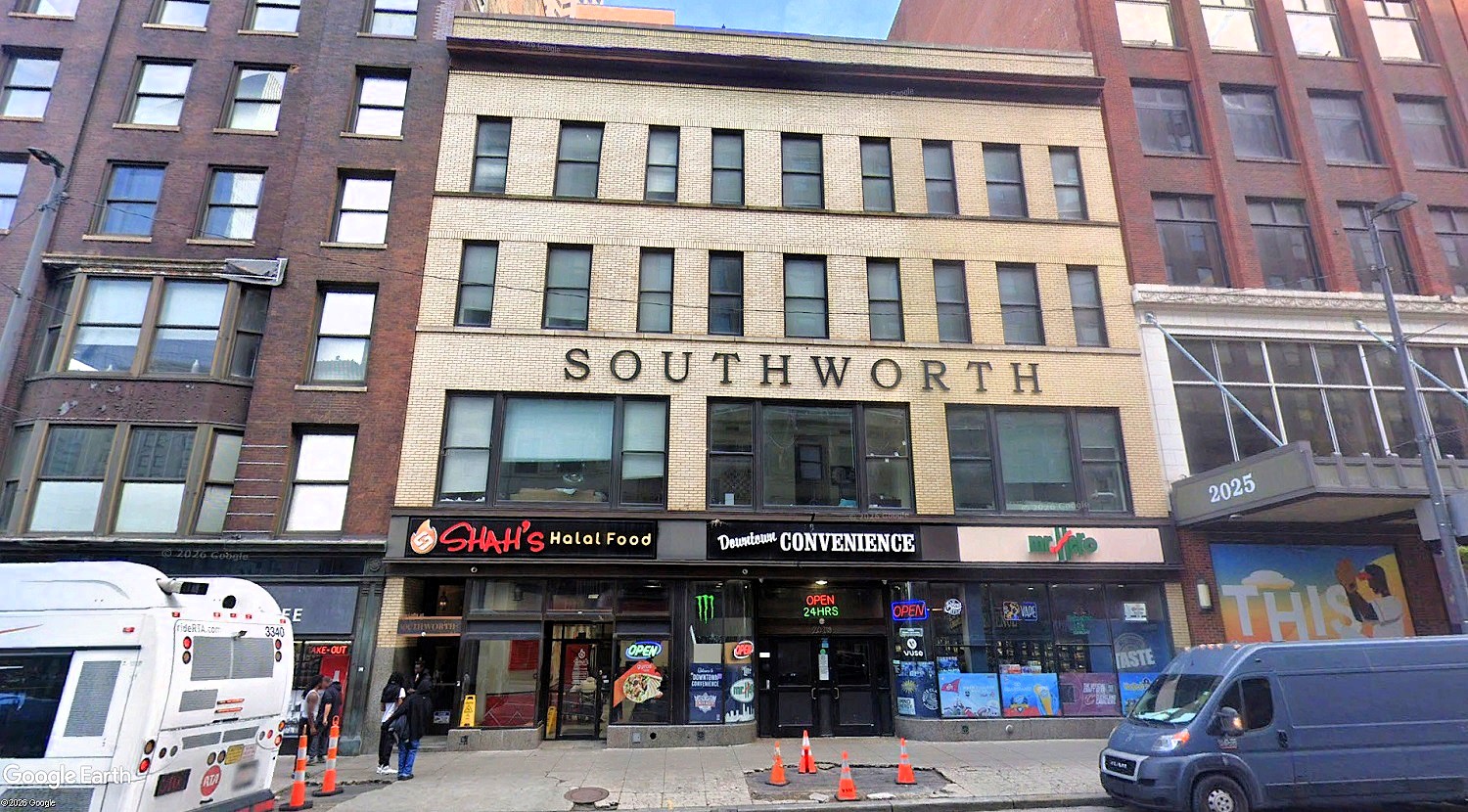
On Ontario Street, just south of Public Square, the small-scale Downtown Convenience store is open 24 hours a day — one of the few downtown stores open around the clock to serve residents and transit riders transferring between buses and trains at Public Square (Google).
“This study gives us the data to work with the City, grocery operators and property owners to identify opportunities that build on downtown’s continued growth.”
The City and DCI will use the findings to guide ongoing retailer recruitment, engagement with existing grocery operators, and conversations with property owners, brokers and development partners.
While this study focused on downtown, access to fresh, healthy food remains a challenge for residents in neighborhoods across Cleveland, and these findings can help inform broader efforts to expand food access citywide.
DCI said the insights and data collected through this collaborative study provide a valuable foundation for understanding food access challenges and developing strategies to address it across the city. But not everyone agrees.
“What a waste of money,” said Terry Coyne, executive vice chairman of real estate brokerage Newmark’s Cleveland office and a frequent DCI critic. “You need to hire a consultant to tell you this? We know what we need. The job is to go and find it.”
END