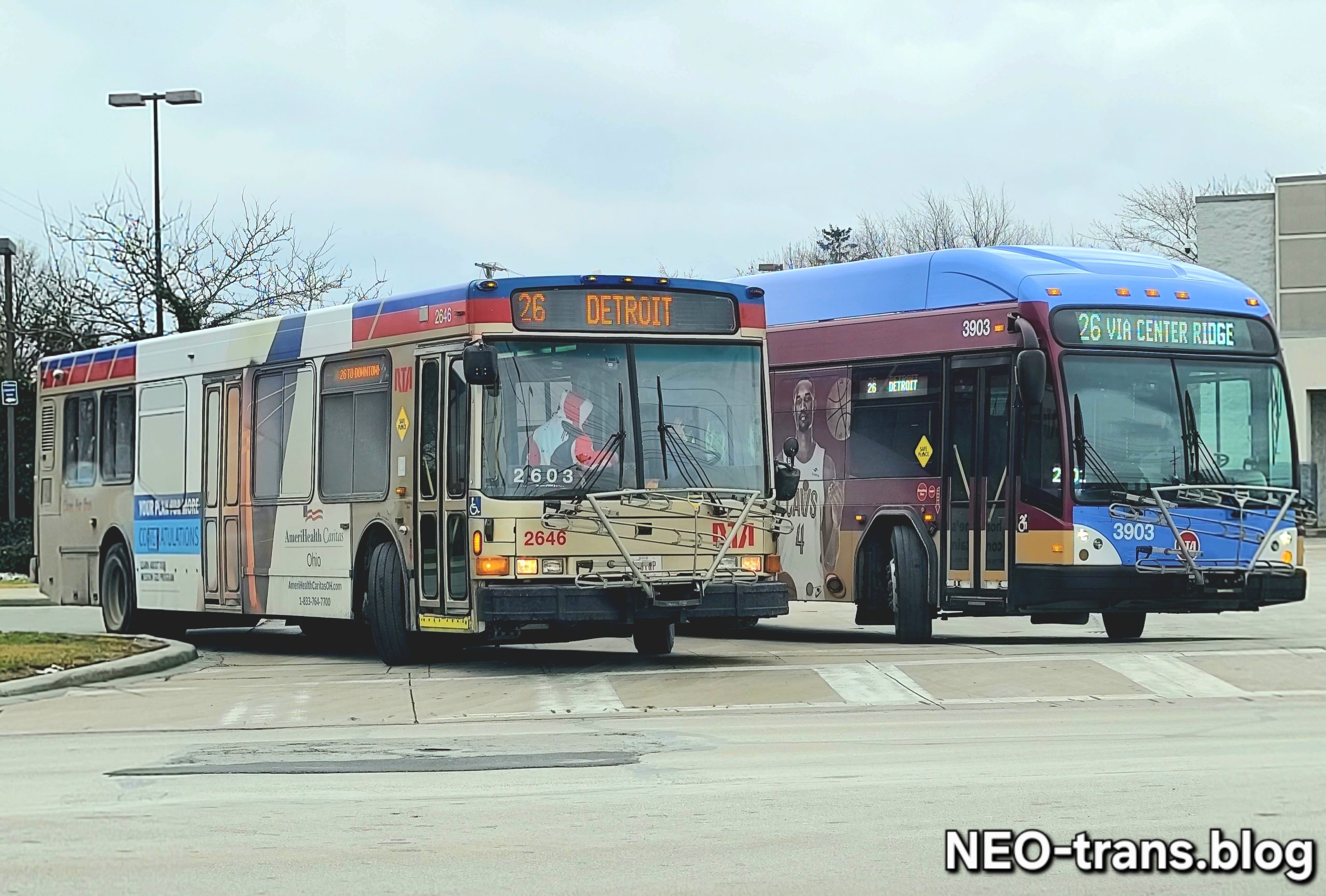
A significant number of Cleveland State University students use and depend on the U-Pass for transit not only to get to classes but to go grocery shopping, go to work and run errands. Without the pass, they faced much higher expenses in trying to get an education and improve their lives (NEOtrans). CLICK IMAGES TO ENLARGE THEM.
Only U-Pass students to be charged
Cleveland State University (CSU) officials announced today that the school will continue to offer students discounted passes to ride Greater Cleveland Regional Transit Authority (GCRTA) buses and trains. But only those students seeking the discount, called the U-Pass, will be charged for it.
The policy change from an earlier and outright discontinuance, announced today in an email, will save the university approximately $1.2 million a year while costing GCRTA about $600,000 per year. GCRTA had been paid by the university about $1.4 million before.
“CSU will be participating in the Student U-Pass program for the 2025-26 academic year,” university officials said today in a written statement. “CSU will continue to provide discounted transit passes for RTA public transit to its students.”
In previous years, all credit-earning students were charged for the GCRTA U-Pass as part of general student fees, granting them an GCRTA transit pass each semester. However, only a portion of CSU students, about 40 percent, utilized this benefit.
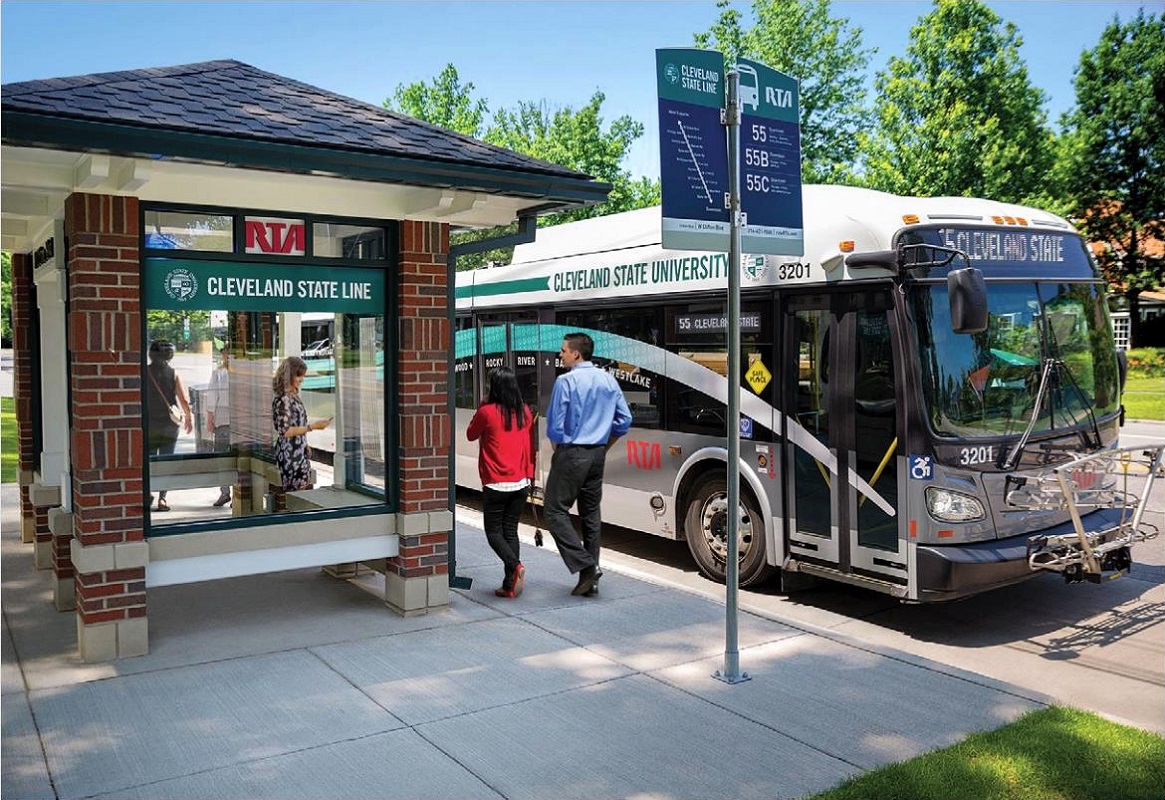
Cleveland State University and the Greater Cleveland Regional Transit Authority have been and strong partners for decades, including the university sponsoring bus rapid transit service on Clifton Boulevard and Lake Road to the West Shore suburbs (GCRTA).
Starting in the Fall 2025 semester, students will no longer have an RTA U-Pass general student fee as part of their semester bill. As a result, students will see a financial savings when compared to previous semesters’ general student fees.
To receive a U-Pass, eligible students can visit the Office of Parking and Transportation Services, located on the first floor of Berkman Hall. At the time of pick-up, the student’s bill will be charged $57.50 for the U-Pass for the semester. This is the same cost to students for the U-Pass as the former general student fee. Eligible students can receive a U-Pass on a semester-by-semester basis, based on their transportation needs in the Fall 2025 and Spring 2026 semesters.
Previously, all students enrolled in one or more credit hour per semester were eligible to receive the U-Pass. Not anymore.
To be eligible for the U-Pass, students must be enrolled full-time. Cleveland State University considers a student enrolled full-time with 12 credits as an undergraduate, 9 credits as a graduate student, or 12 credits as a Law student.
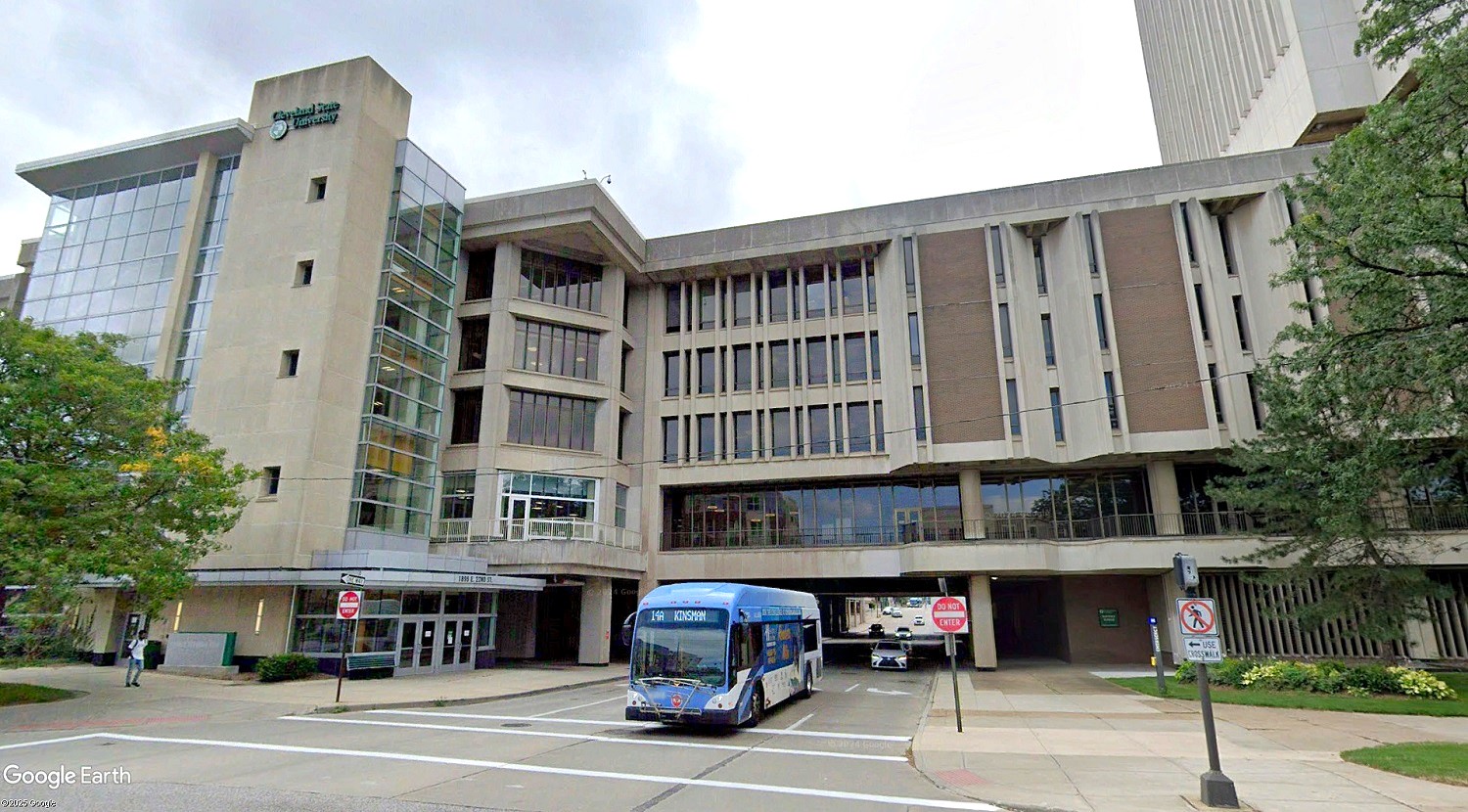
Numerous Greater Cleveland Regional Transit Authority bus routes converge on the main campus of Cleveland State University in Downtown Cleveland (Google).
CSU has been facing a significant financial crunch in recent years. In that time, it has made significant budget cuts including staff layoffs and cuts to existing programs. Its enrollment has fallen, too, declining from 16,088 in 2019 to about 13,544 last spring semester.
Students who have utilized the U-Pass previously but are not eligible should speak with their academic coach or the Division of Student Belonging and Success, CSU said. The academic coaches are prepared to help students explore transit options that work for them, officials added.
“University leadership is so thankful to CSU students who shared their feedback regarding CSU’s participation in the U-Pass program,” the press statement said. “Their input was invaluable as University leaders worked to find solutions that meet the needs of students who do use transit services and students who do not.”
CSU officials said they would also like to thank GCRTA for partnering with the University to develop a solution that allows students access to the U-Pass.
END