
According to plans filed with the city, the owner of the 54-year-old 1100 Superior, Brady Sullivan Properties, is converting floors 3-5, 9, and 13-15 from office spaces to 160 apartments. It just won a maximum historic tax credit from the state to help finance its work (CBRE). CLICK IMAGES TO ENLARGE THEM.
Historic tax credits key to projects’ success
Ohio Gov. Mike DeWine and Ohio Department of Development Director Lydia Mihalik today announced more than $86 million in historic tax credits to support the preservation and revitalization of dozens of historic buildings across the state. Of that, nearly $18.5 million was awarded to seven projects in Cuyahoga County.
Two of those local projects were awarded maximum credits of $5 million each. One is a redevelopment of downtown’s 1100 Superior Ave., built as the Diamond Shamrock office tower in 1972, with 160 apartments by Brady Sullivan Properties.
The other is the Samsel Supply Co., 1235 Old River Rd., on the Flats’ East Bank by GBX Group, featuring residential over ground-floor commercial uses. It is the second time Samsel won historic tax credits.
Both of those projects carry redevelopment price tags of about $52 million each. They were among 37 projects statewide that were awarded Ohio Historic Preservation Tax Credits today to preserve 51 buildings.
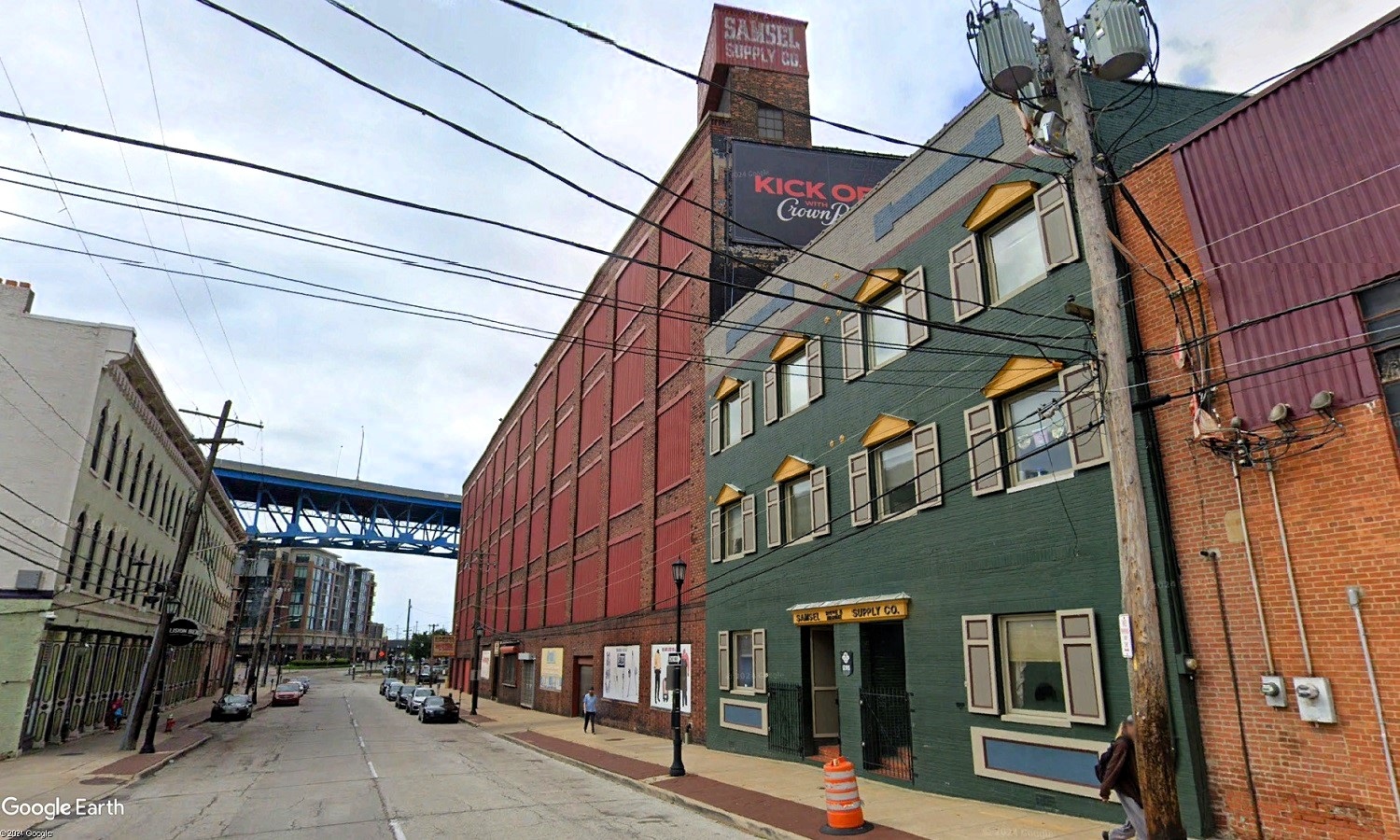
The buildings at right on Old River Road on the Flats East Bank were the home of the Samsel Supply Company for decades. Now, thanks to state historic tax credits, those structures could find new life as a mix of residential over commercial uses (Google).
Only slightly less expensive is a projected $51 million renovation of the 1920s-era Cleveland Club/Tudor Arms, 10660 Carnegie Ave., in Cleveland University Circle. Last rehabbed in 2011, it won a $3.35 million historic tax credit to update and reconfigure the structure and add six guest rooms to its 157-room hotel.
Over in the Midline District on the city’s near-East Side, at 7000 Central Ave., the $25.7 million reactivation of the Wellman-Seaver-Morgan Co. plant with a new manufacturer received a $2.56 million credit. While the new manufacturer wasn’t named, that could occur as early as next week at a planned press conference.
“It’s huge!” exclaimed Brad Whitehead, managing director of the Site Readiness For Good Jobs Fund which acquired the property in 2024. “That (tax credit award) was the missing piece of the puzzle and we are looking forward to reactivating this iconic treasure.”
Renovation of two Downtown Cleveland buildings, combined as the Huron-Ninth project, 834 Huron Rd. and 840-852 Huron, was awarded $1.787 million toward total project costs of $19.47 million. Vacant office and retail spaces will be converted into 28 apartments while keeping The Clevelander Bar & Grill in operation.
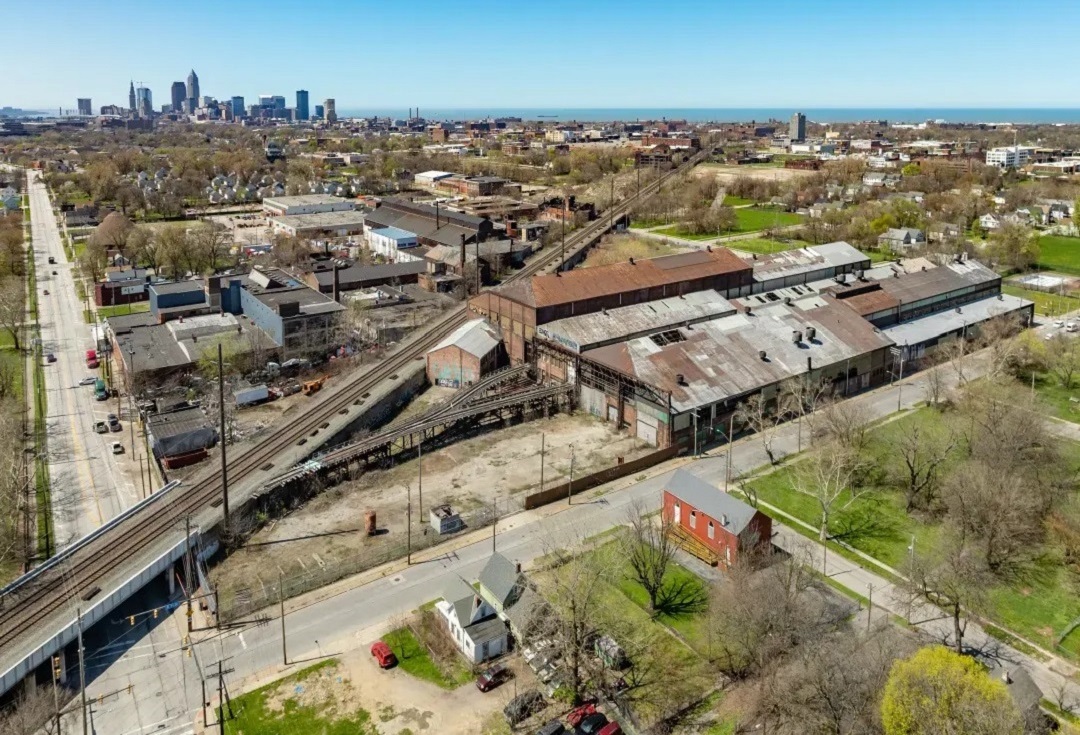
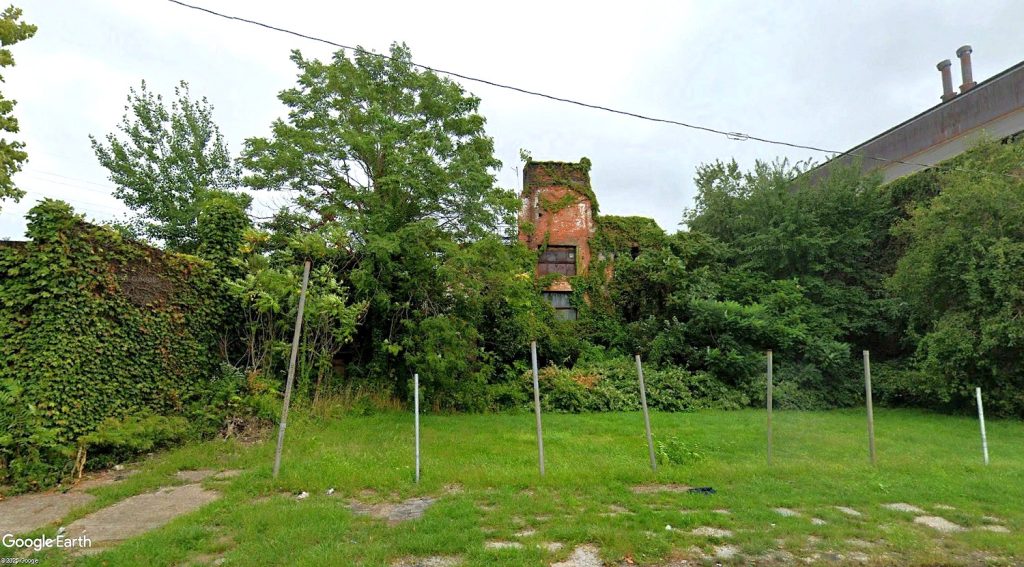
The former Wellman-Seaver-Morgan plant in Cleveland’s Midline industrial redevelopment district is near to being reactivated thanks to it receiving the missing piece to its financial puzzle today (Site Readiness Fund).
The 160-year-old Peter J. Peters Building, 2621 Lorain Ave., in Cleveland’s Ohio City neighborhood, will be renovated for $2.1 million thanks to a $400,000 historic tax credit. It will continue to have ground-floor commercial uses and residences on the upper floors.
Just down the street, also in Ohio City, the Schaefer Wagon Co., 4166-80 Lorain, will be converted from historic manufacturing uses into an arts-focused retail tenant for $4 million. That project also received a $400,000 tax credit to that end.
“These buildings honor the legacy of our communities and reflect the character that makes our state unique,” said DeWine in a written statement. “This program supports Ohio’s future by creating jobs, attracting new businesses, and revitalizing the areas that need it most.”
The projects are expected to leverage approximately $753 million in private investments in 12 municipalities across the state of Ohio.
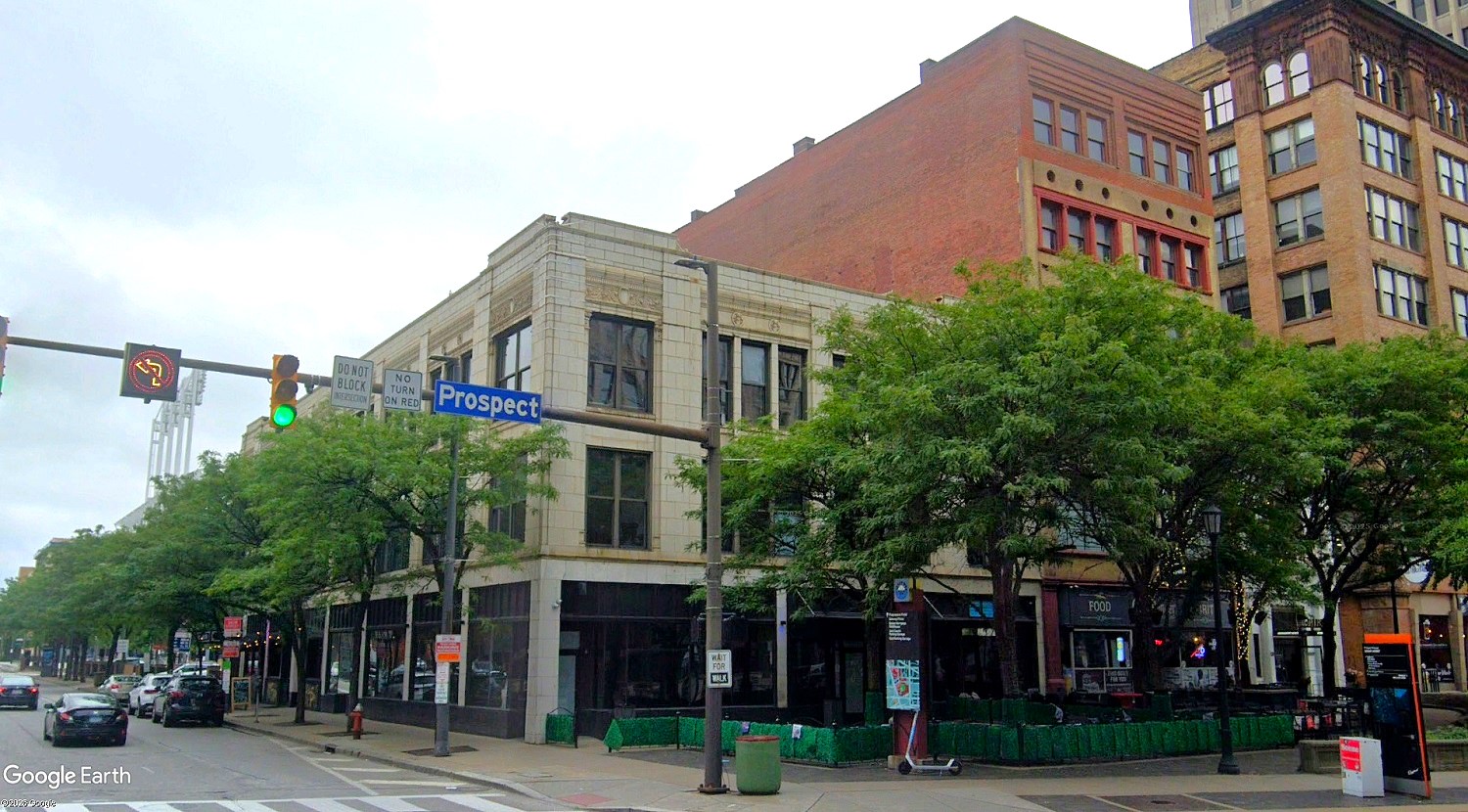
In the Huron-Ninth project, these two buildings at the high-profile southwest corner of East 9th-Prospect-Huron in Downtown Cleveland are to be renovated into 28 apartments with ground-floor commercial including keeping The Clevelander Bar & Grill in operation (Google).
“Historic preservation is a powerful economic development tool that helps communities unlock the potential of underutilized properties and attract future private investment,” Mihlaik said.
“These tax credits are creating new opportunities for housing, small businesses, and local destinations — bringing new jobs, energizing downtowns, and preserving each community’s unique character,” she added.
Developers are only issued the tax credit once project construction is complete and all program requirements are verified. The Ohio Historic Preservation Tax Credit program is administered in partnership with the Ohio History Connection’s State Historic Preservation Office.
END