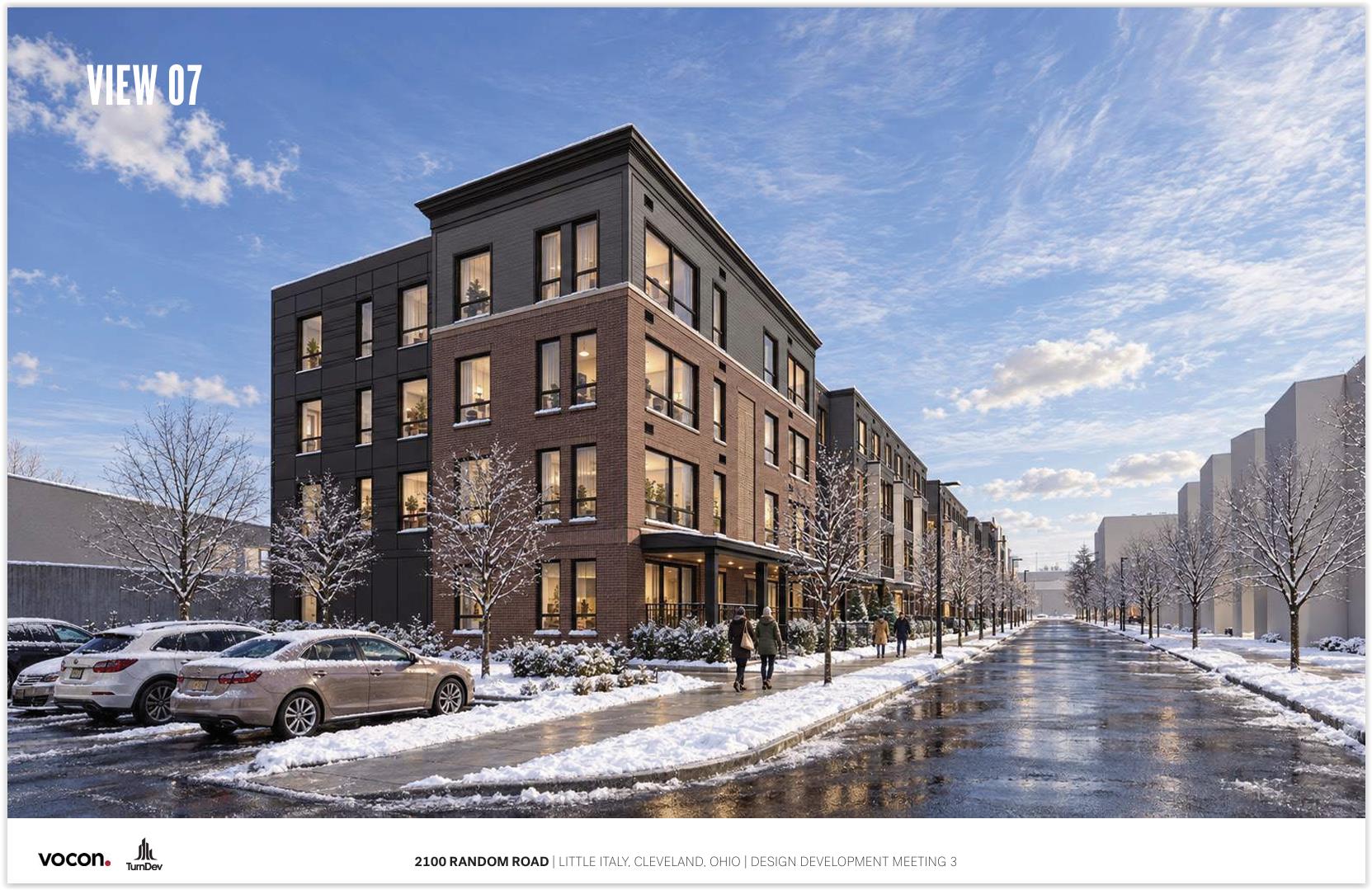
The proposed development of the former Singer Steel site on Random Road in Cleveland’s Little Italy with a 119-unit apartment building would make it the largest project in floor area in the neighborhood in many decades. This is the south end of the development nearer to Cornell Road (Vocon). CLICK IMAGES TO ENLARGE THEM.
Neighbors want for-sale homes, market doesn’t
A proposed development that would add a 119-unit apartment building within a short walk to Little Italy’s commercial district and train station may have gotten derailed today at a Cleveland Landmark Commission meeting.
The reason why it “may have” gotten derailed is the commission didn’t vote on the project, called 2100 Random Road. It is still early on in the process and thus it was proposed as a schematic design and not a final, vote-ready application by its developer TurnDev of Beachwood and architect Vocon of Cleveland.
But when the City Council President and Ward 6 Councilman Blaine Griffin along with representatives of the Little Italy Redevelopment Corp. plus a number of residents said they opposed the project, it likely sent it back to the drawing board.
NEOtrans revealed the proposed design and program last month for 2100 Random Road, to be built on the site of the former Singer Steel plant-turned public parking lot. Only the steel skeleton of that plant still stands and is proposed to be demolished. TurnDev acquired the property in November 2024.
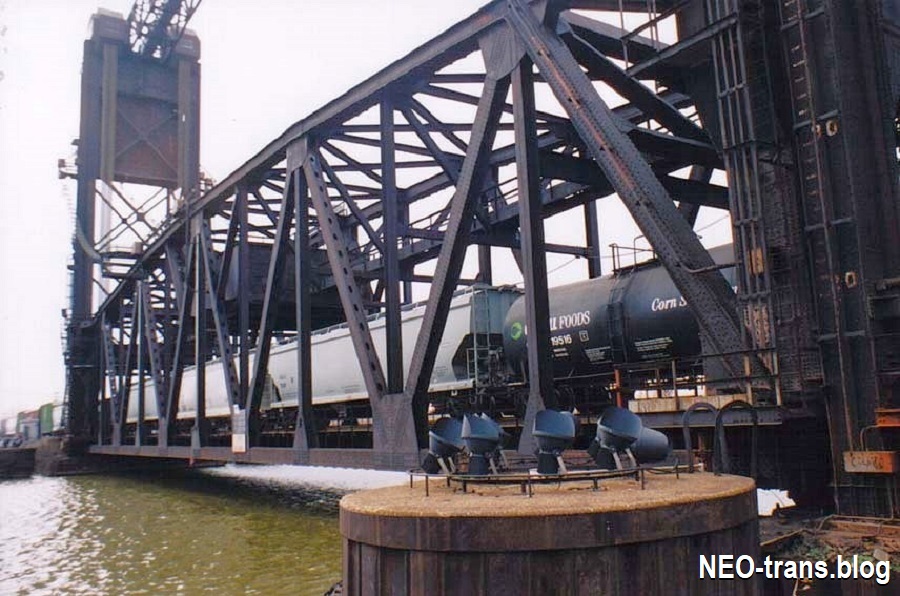
Prior to 1944, it was the Ohio Cut Stone Co. which made monuments for the neighboring Lakeview Cemetery and hired Italian immigrants to do the work. The factory also carved the Guardians of Traffic statues for the Lorain-Carnegie Hope Memorial Bridge, opening in 1932.
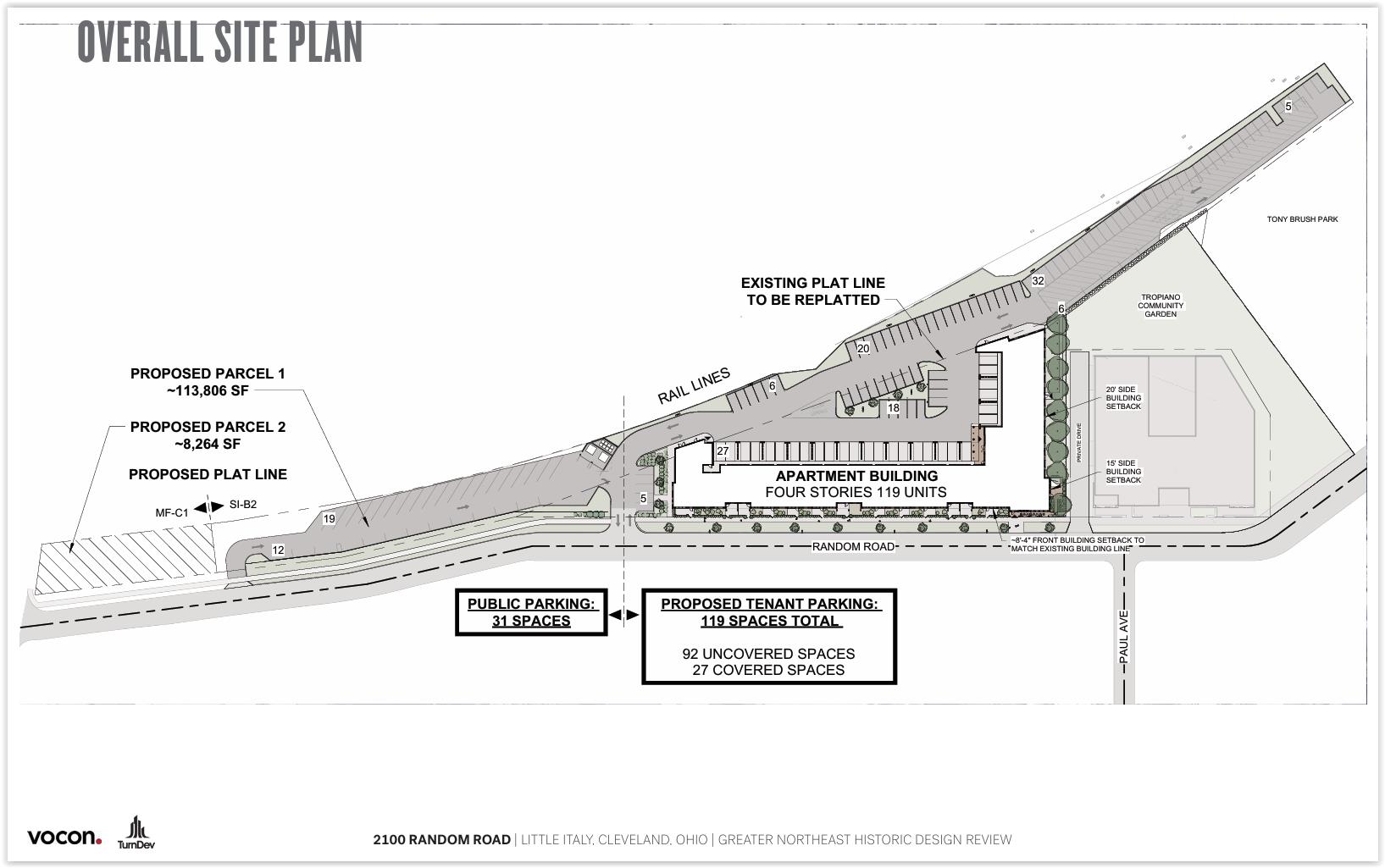
This updated site plan shows not only the location of the proposed 2100 Random Road apartment but also its parking and a 31-space lot at left for the public (Vocon).
But Griffin and others said the development’s design didn’t do enough to honor that history. And, for a more challenging hurdle to overcome, opponents said the project should offer for-sale, owner-occupied housing, not more rental units.
“The problem that this project brings is that Little Italy has seen a proliferation of these types of apartment buildings over the last few years,” Griffin said. “Because of that proliferation of apartment buildings, it’s starting to lose its character. Little Italy is starting to look like Legacy Village instead of being the authentic neighborhood it was intended to be.”
He agreed that the remainder of Singer Steel needs to be demolished. But he also lamented that there’s so much development happening in that part of his ward and almost nothing in the other 75 percent where he can’t get someone to “build a birdhouse.”
“Wouldn’t it be special if we actually paid homage to the people who actually developed that neighborhood — to actually have a home ownership model?” Griffin said. “I think we have the right developer and the right group of people. But I just don’t think this project fits in that area. We have too many apartments that are now starting to become Airbnb’s and other issues around the area.”
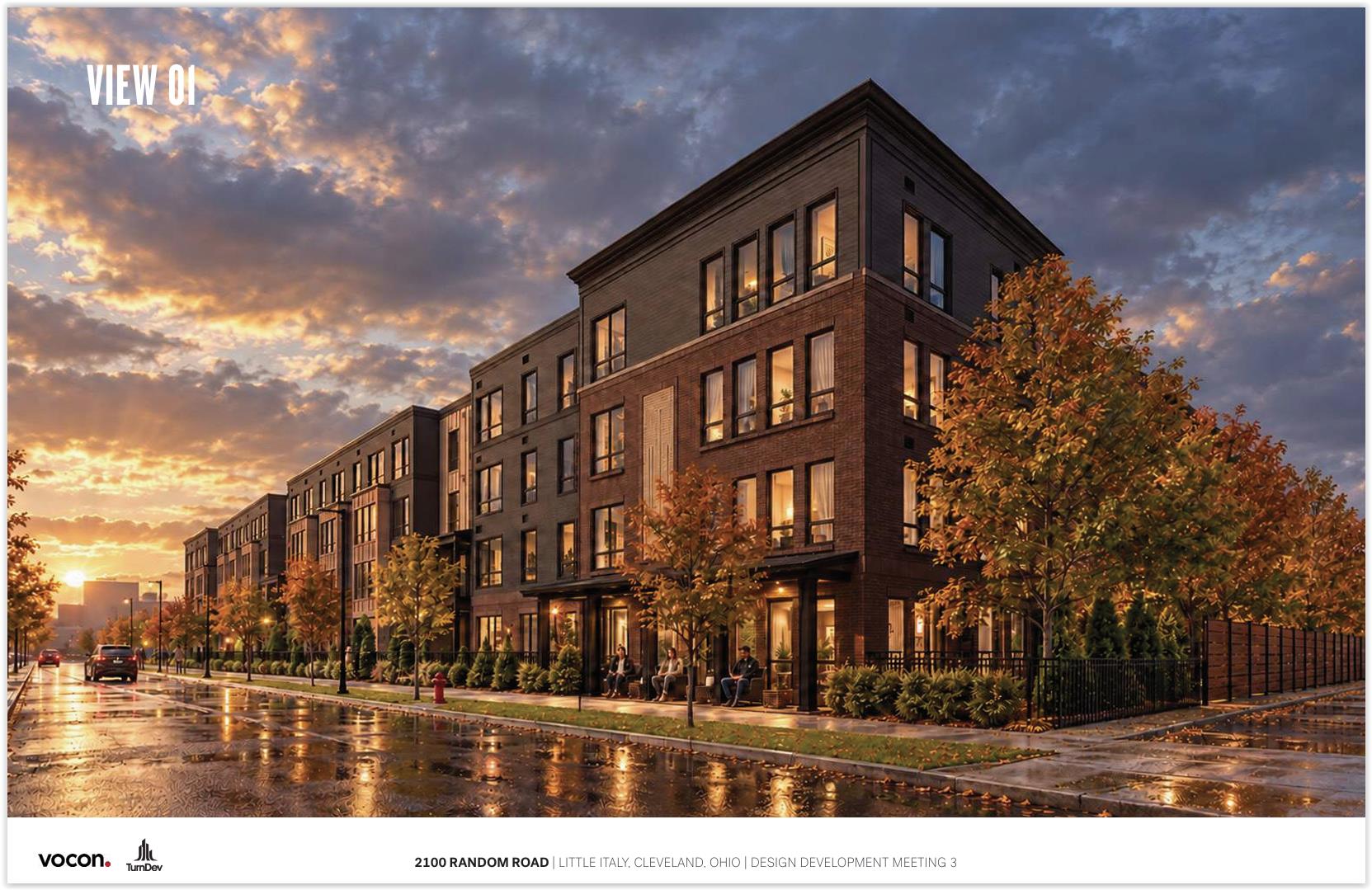
At the north end of the proposed development, nearer to Mayfield Road, the ground-floor corner is proposed to have a lobby. The facade of the building is broken up to reduce the imposing scale of its massing (Vocon).
The proposed apartment building is just over a 500-foot walk from the Mayfield Road commercial corridor of Little Italy and just under a 1,000-foot walk from the Greater Cleveland Regional Transit Authority’s (RTA) Red Line rapid transit station.
Joseph Rosalina, president of the board of the Little Italy Redevelopment Corp. (LIRC), and Ray Kristosik, executive director of LIRC, urged more development of for-sale, owner-occupied housing.
They said the neighborhood had too many rentals already but couldn’t get meetings with the development team to present their ideas. Earlier in today’s Landmarks Commission meeting, they referenced another developer who presented plans for a townhouse development at Shaker Square.
“The seven or eight townhomes in Shaker Square got 15 (community) meetings,” Kristosik said. “We had a community meeting after the project went to design review (on Oct. 20 at the Northeast Design Review Advisory Committee).”
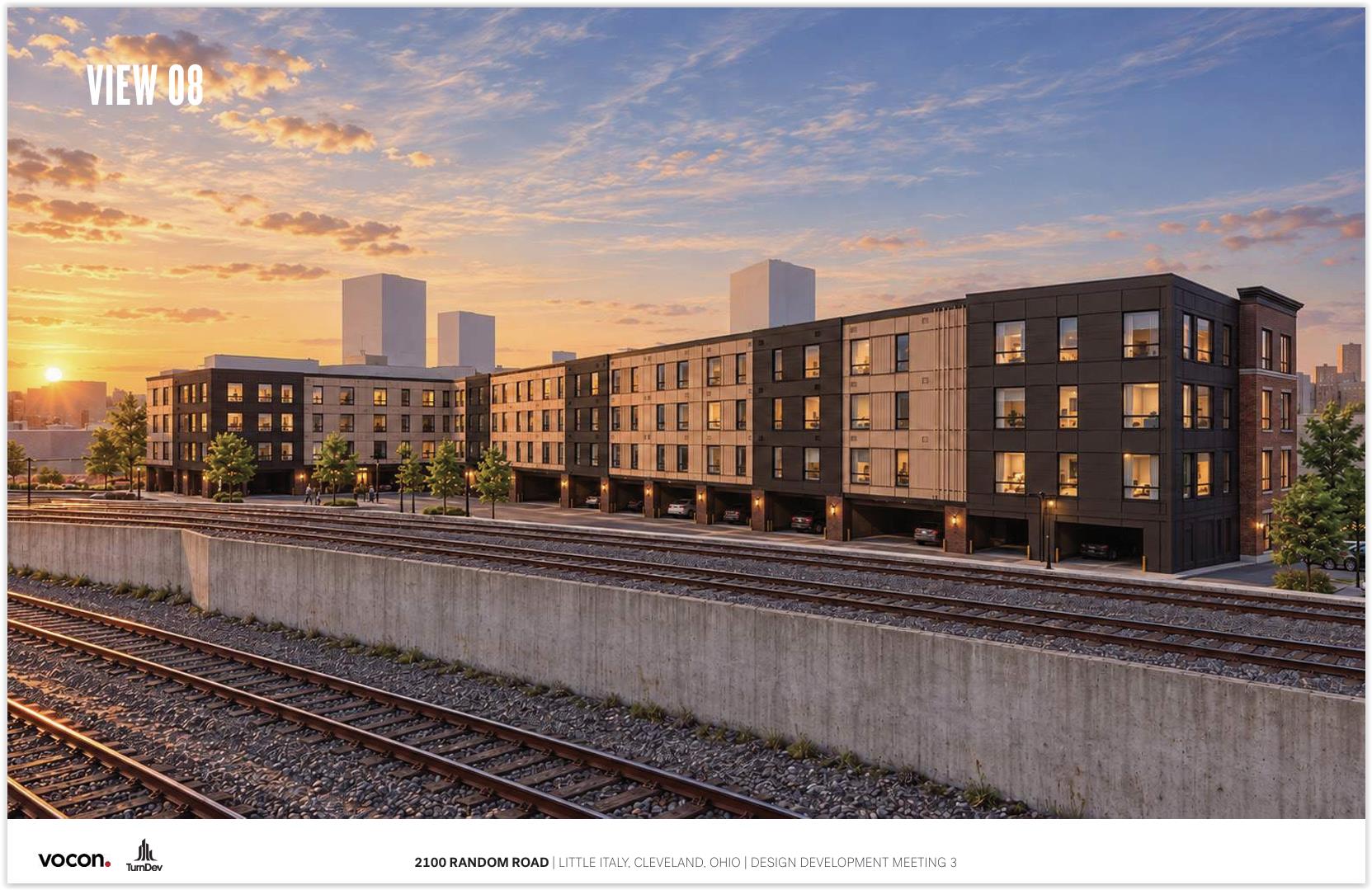
The view of the proposed development from the Red Line rapid transit and railroad tracks (Vocon).
“Right now it’s very difficult to build single-family homes with (high) interest rates,” Thomas Flynn, director of construction at TurnDev. “The demand is not there. We were thoughtful about this property. I’ve driven by this site for 50 years and it’s an eyesore. We would like to knock it (Singer Steel’s skeleton) down.”
He said that some of the local opposition may be due to concerns over a loss of parking. The site currently has about 80 parking spaces used by University Hospitals during the day and the public at night and on weekends.
Proposed are 119 spaces for apartment residents and at least another 31 spaces for the public. More could be added beyond the south end of the site near Cornell Road on former railroad land acquired by TurnDev.
“I don’t think they want to knock it down because then they have nowhere to park,” Flynn said. “We have offered to keep it as a parking lot until our next development. We think we would be an asset to the community.”
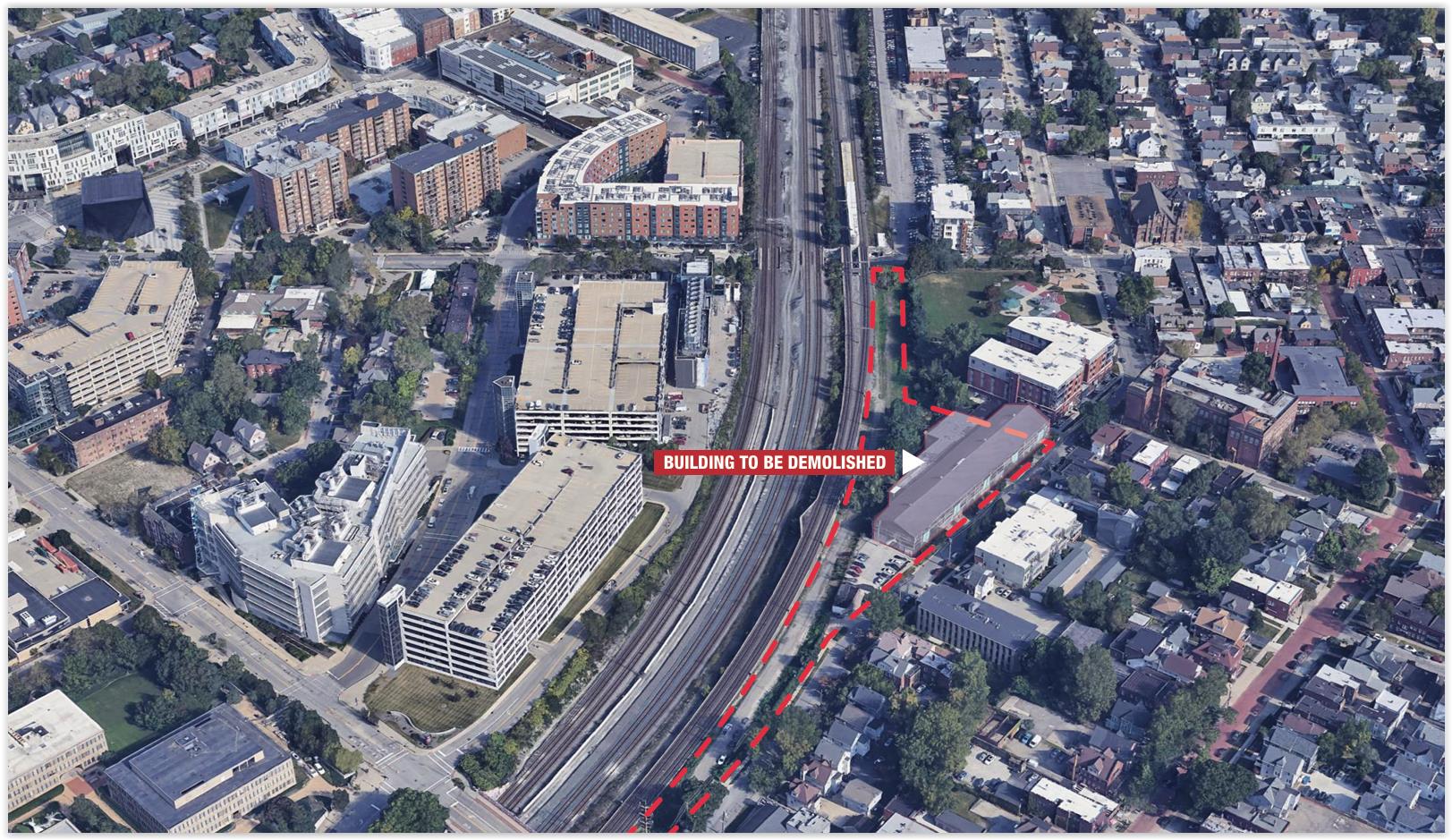
Site of the proposed development and its parking areas as well as the former Singer Steel building that is proposed to be demolished (Vocon).
Landmarks Commission members said they recognized that there’s some fundamental differences between what’s being proposed and what the community is looking for. They encouraged the development team to revisit this with the community to get the divergent views in alignment.
“We’re just grappling with really wanting to drive enough density to help continue the success of that commercial corridor (on Mayfield) and to try to fuel additional ridership on RTA,” said Michael Christoff, studio director at Vocon.
He said that neighborhoods which are currently successful are balancing residential density, pedestrian access to vibrant commercial districts, transit access and parking. But he noted that finding that right balance is difficult to achieve.
“I think we’re going to have lots of really hard conversations to try to find a way to do something that balances all of that,” Christoff said. “We do want the neighborhood to be excited about the project. But there’s also lots of contextual things we’re trying to solve for, too.”
END