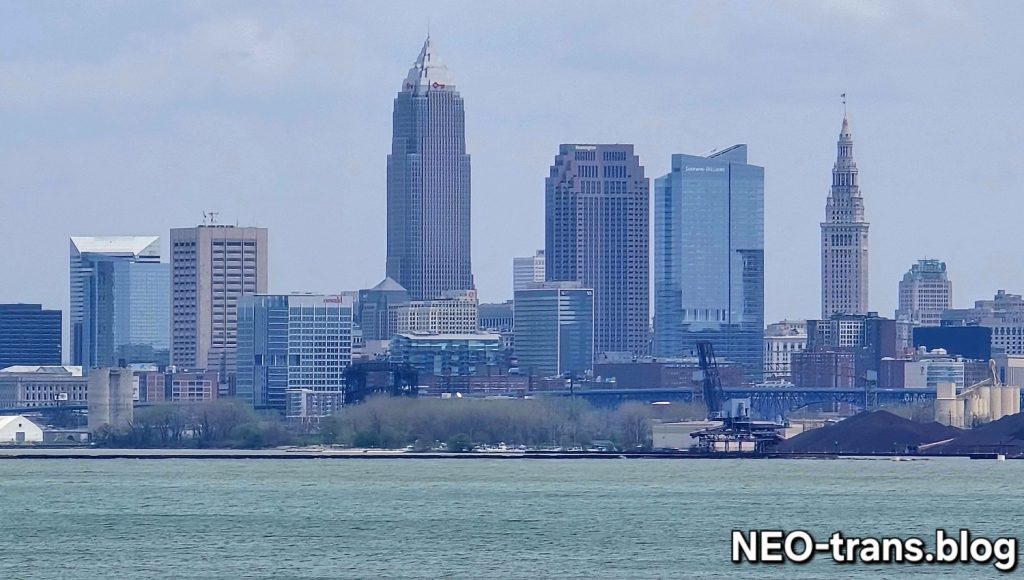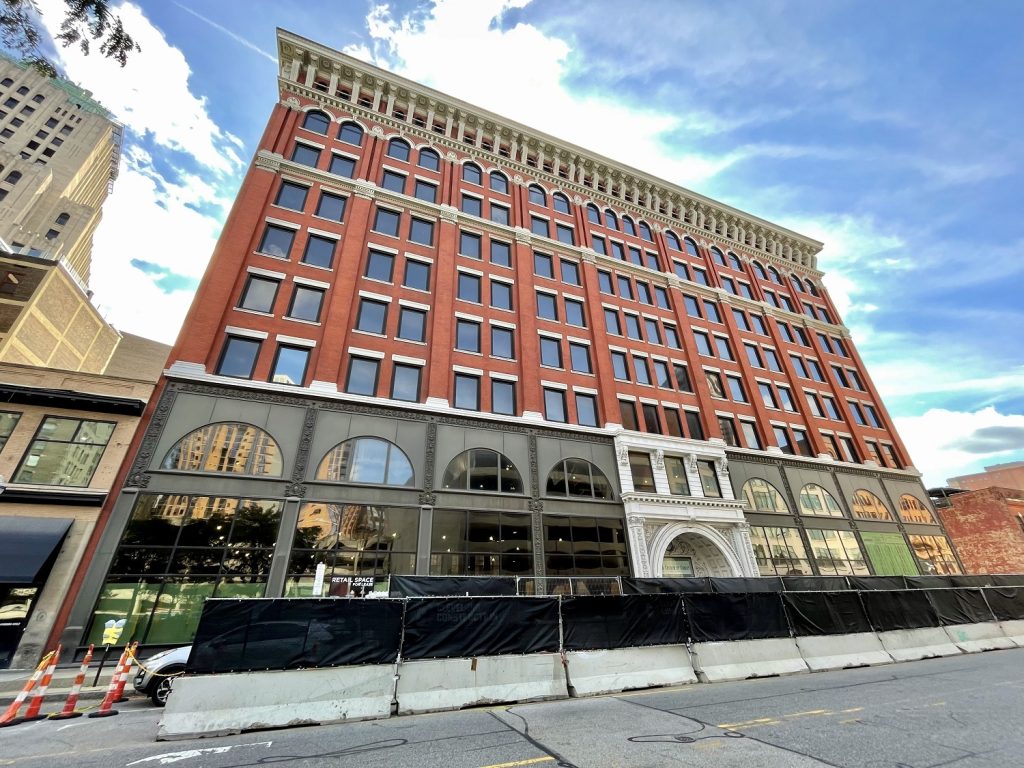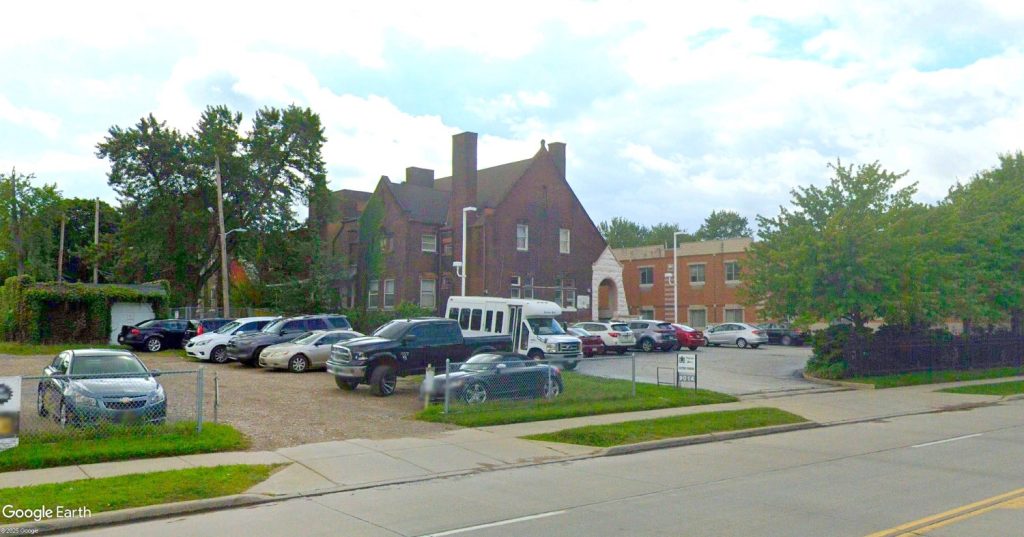
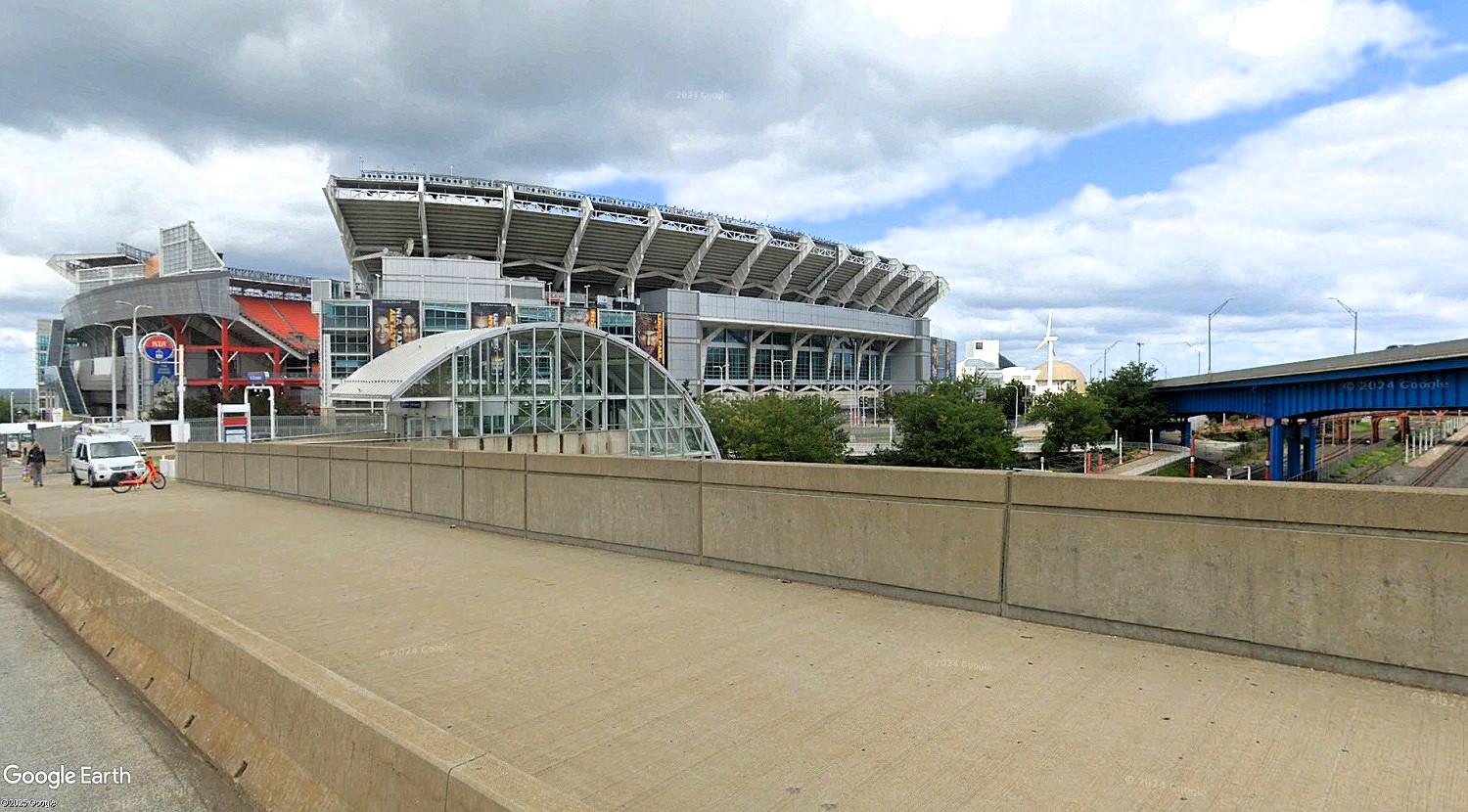
Just about everything visible in this Downtown Cleveland lakefront view is due to be erased in less than a decade. Not only does that include Huntington Bank Field but the Waterfront Line station, the blue Shoreway bridge at right and even the West 3rd Street bridge from which this streetview was captured. West 3rd’s bridge will be replaced with a span that accommodates a new lakefront boulevard (Google). CLICK IMAGES TO ENLARGE THEM.
Council to decide how some funds to be used
Cleveland’s Design-Review Committee of the City Planning Commission was the first committee tasked by City Council to hear details on the proposed settlement between the city and the owners of the Cleveland Browns football team. But it was clear from some members that the deal left them wanting — for more details, more money and more time.
The time aspect was why the commission was being asked to review this proposed settlement today in a special meeting outside of its usual schedule. The goal is to get the settlement signed by Nov. 24 to secure an initial payment of $25 million from the Haslam Sports Group (HSG) by a proposed Dec. 1 deadline.
An ordinance to authorize Mayor Justin Bibb’s administration to enter into an agreement with HSG was presented by Bibb’s staff to council at its regular meeting on Monday. The total amount of settlement funds, $100 million, was presented as a take-it-or-leave-it offer. How council chooses to use 20 percent of the funding, however, may be decided by them.
“The settlement we are talking about today is not a ala cart situation,” said Jessica Trivisonno, Bibb’s senior advisor for major projects. “We can’t pick and choose which pieces we want to approve and disapprove. It is really a complete package we are bringing to this commission and City Council.”
The ordinance authorizes the mayor and the directors of law, parks and recreation, port control, and/or the office of capital projects to enter into agreements and/or amendments to the Lease by Way of Concession with the Browns to effectuate terms and conditions in a settlement term sheet regarding the relocation of the Cleveland Browns to suburban Brook Park.
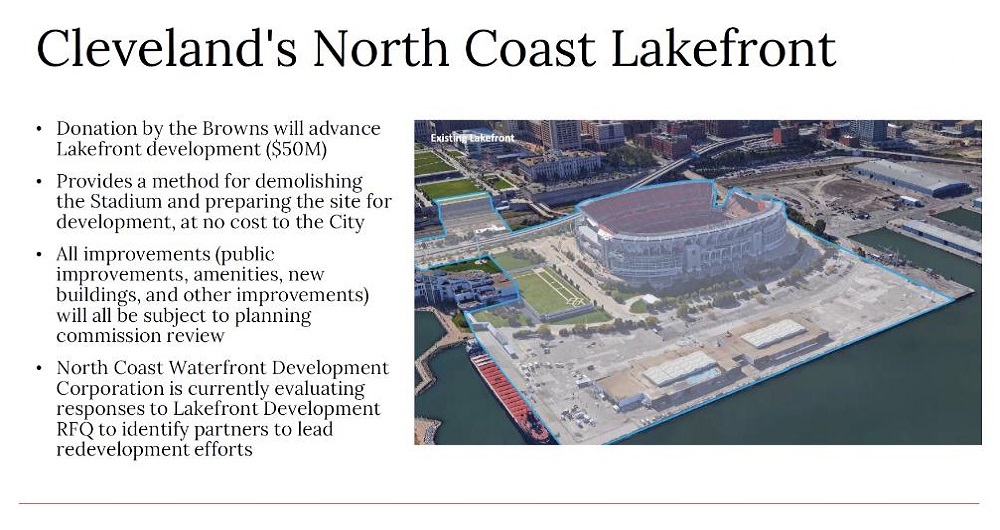
A slide in a presentation given today to the Planning Commission by a member of Mayor Justin Bibb’s staff (City of Cleveland).
It also would achieve the demolition of the city-owned Huntington Bank Field where the Browns play their homes games, yet allow the Browns to stay for two years beyond the end of their lease if there are construction delays in Brook Park, a story first broken by NEOtrans.
And it would fund the designing and constructing of lakefront and neighborhood improvements and by accepting gifts and grants from HSG and others. While Trivisonno said she welcomes council’s intention to have the settlement thoroughly vetted through its committees, she noted that timing was an issue.
The key pieces are $30 million from HSG to demolish the 1999-built Huntington Bank Field plus any cost overruns in making the site development-ready. The $25 million to be paid by Dec. 1 will go toward lakefront redevelopment, as will another $5 million per year paid by HSG over five years starting Jan. 1, 2029.
“I anticipate that will be used for things like planning and design, other site work necessary to facilitate redevelopment of the site — public amenities, park space, streets, roads — public improvements that are necessary to facilitate redevelopment of the North Coast,” Trivisonno said.
She added that any lakefront-related projects funded by HSG — public improvements, amenities, new buildings — will be subject to Planning Commission review. And Trivisonno noted that the settlement does not entitle HSG to any lakefront development, let alone to obviate a lakefront request for qualifications (RFQ) process currently underway.
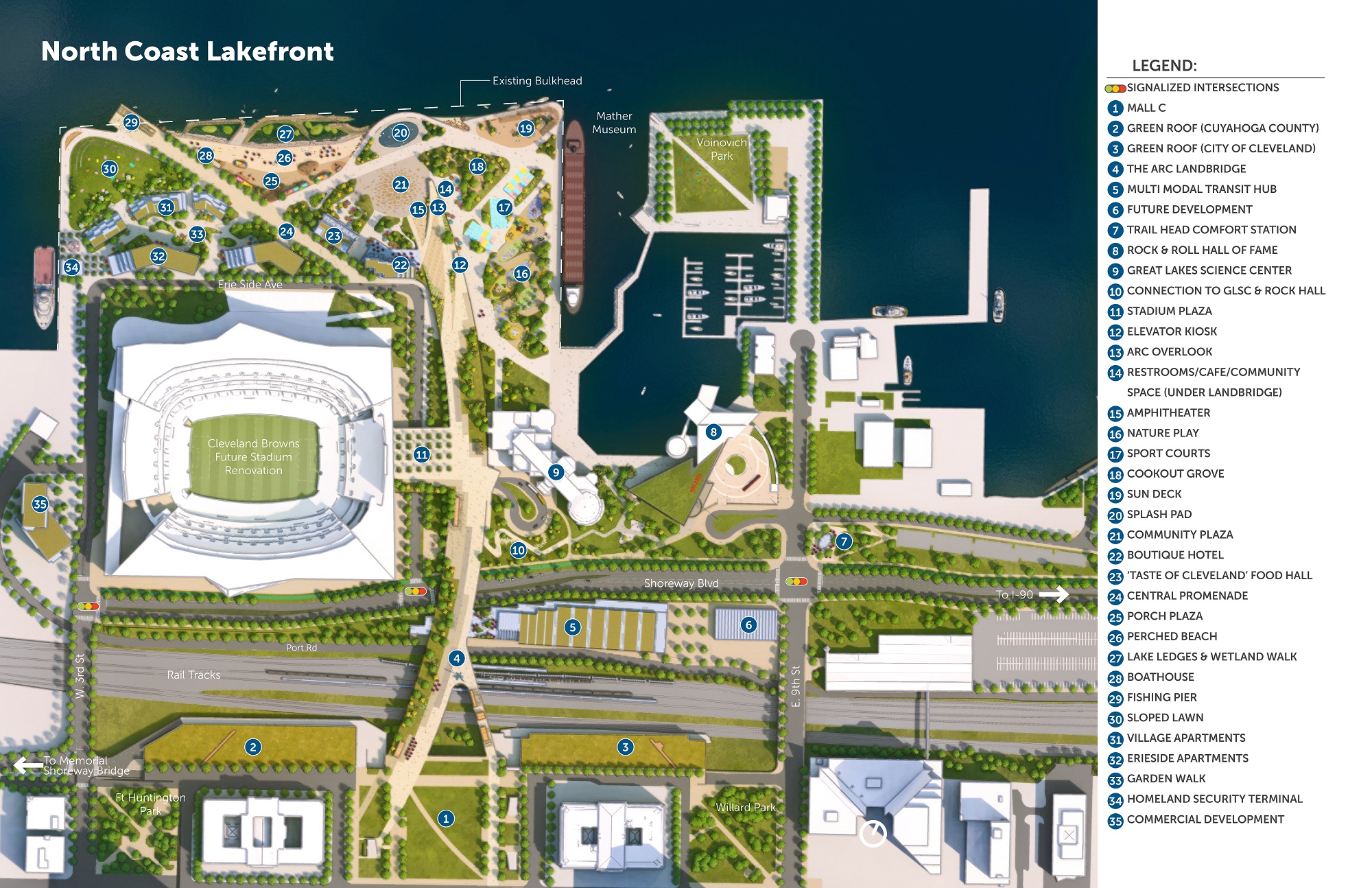
The city’s downtown lakefront masterplan will start to be updated next month by replacing the stadium with a new use proposed by the winning respondent to the city’s request for qualifications (FO).
The city and the nonprofit North Coast Waterfront Development Corp. (NCWDC) issued an RFQ in July for prospective end users of 50 acres of city-owned lakefront land including the current site of Huntington Bank Field. The RFQ’s winner will be announced as early as next month.
Also in the settlement, HSG will provide no less than $2 million per year over 10 years for “community benefits projects” citywide. How that $20 million in total would be handled is up to City Council to decide. It’s the only non-lakefront-specific funding in the $100 million settlement.
But the lone councilperson on the Planning Commission, Ward 17’s Charles Slife of West Park-Kamms, was also the commission’s lone vote against recommending that City Council pass the settlement ordinance.
“Developing the lakefront is a goal that I share for the city of Cleveland but I don’t think it is going to be the cure-all that’s going to fix everything,” Slife said. “I worry that we are focusing a lot of attention downtown to the detriment to other parts of the city.”
He noted that $2 million per year divided up among all of the city’s wards works out to just $133,000 per year per ward. Slife said that a single 1,000-foot-long residential site street in his ward, Hipple Avenue, was resurfaced for a similar amount two years ago.
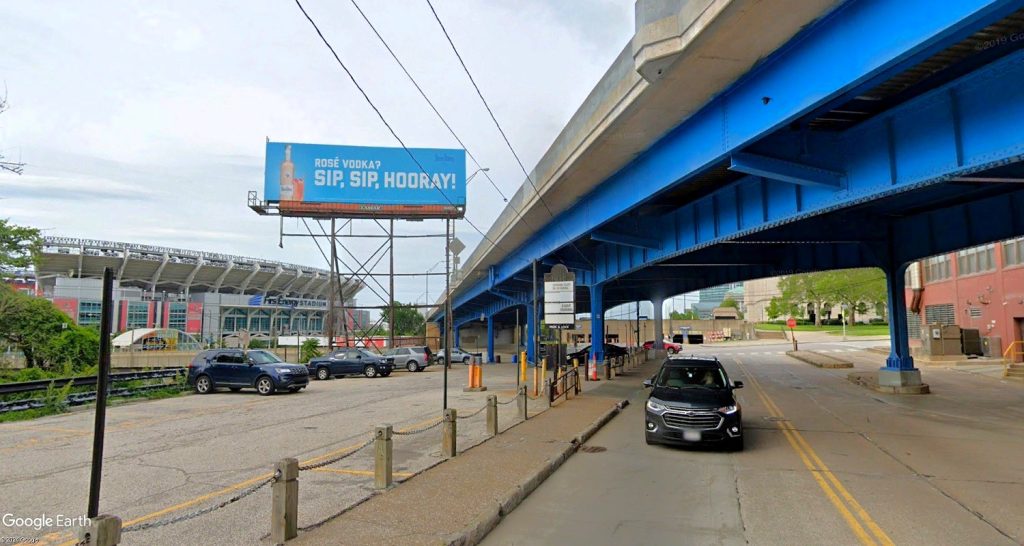
A scene that could look very different in a decade or less is set along Summit Street, below the to-be-demolished Shoreway east of here with Huntington Bank Field seen in the background. Another structure named Huntington stood to the left of Summit more than 200 years ago — Fort Huntington, named after Ohio’s third governor (Google).
Slife commended the administration for getting the Haslams to pay for the stadium’s demolition — a responsibility that was the city’s per the lease. But he asked about the allegations that the city still has $30 million in debts to pay on the stadium’s 1999 construction and why HSG wasn’t asked to retire that remaining debt.
“My understanding is that the debts associated with the stadium were 30-year debts (that) lined up with the lease term for the Browns stadium and that lease ends in 2029,” Trivisonno said.
She noted that the city has no financial commitment in this settlement, including in helping Brook Park’s stadium project or any public infrastructure needed for it. Trivisonno said the city will use its “normal course of business to make comments” that address infrastructure projects rather than take “a more litigious approach to any concerns we might have.”
Design Review Committee Chair Lillian Kuri asked if the stadium demolition funding could be used to renovate or repurpose the stadium for a new use. But Trivisonno said the administration is focused on redeveloping the stadium site and the rest of the lakefront with housing, amenities and public spaces.
“Developing the lakefront has been an unfulfilled dream for Clevelanders for over 100 years and it’s going to take substantial investment from us to do that,” she said. “It is going to be a substantial project but one that we believe wholeheartedly is well worth it to see through the promise of Cleveland’s lakefront and North Coast and activate that 50 acres 365 days a year, to have a new lakefront development neighborhood in the city of Cleveland.”
END